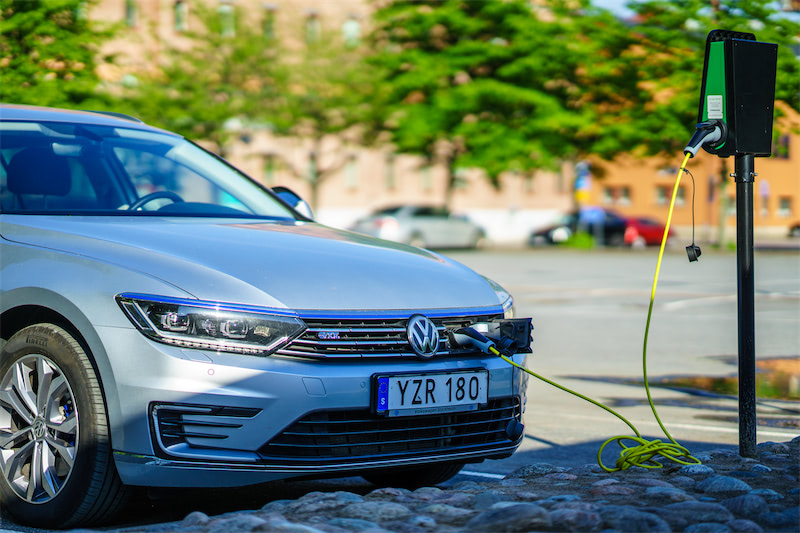
In H1 2026, the explosive demand from downstream EV and ESS batteries, combined with core raw material prices hitting bottom and rebounding, drove the lithium battery electrolyte and key material segments into a performance realization period.
Top-tier players saw both revenue and net profit double; loss-making firms turned profitable or narrowed losses.On the evening of August 20, four publicly listed firms in electrolyte and its key materials (solute, solvent, additive) collectively disclosed their H1 results: two reported substantial gains in both revenue and net profit, one turned from loss to profit, and one saw a significant narrowing of losses.
Among them, Tinci (002709) posted the highest increase, with net profit surging nearly 10 times YoY. In H1, the company achieved revenue of 14.71 billion yuan, up 109.28% YoY; net profit attributable to shareholders was 2.861 billion yuan, up 967.91% YoY.
Tinci stated that in H1, demand for ESS batteries continued to explode, and its lithium battery electrolyte sales grew strongly, surpassing 440,000 mt in volume, up ~41% YoY, of which ESS battery electrolyte sales increased over 100% YoY. With the ramp-up and volume production of its overseas OEM plants, electrolyte sales to clients outside China saw strong growth, with overseas electrolyte sales up over 126% YoY, achieving full coverage of core clients.
Another electrolyte giant, Capchem (300037), also achieved a doubling of net profit. In H1, the company posted revenue of 7.463 billion yuan, up 75.66% YoY; net profit attributable to shareholders was 984 million yuan, up 103.33% YoY.
In H1, benefiting from the development opportunities brought by the rapid growth of the high-tech industry and the continued fast recovery of the new energy lithium battery industry, Capchem strengthened the deep synergy between technology and market in its three main business segments. Production and sales of major products rose rapidly, operational efficiency of key projects steadily improved, and overall performance grew significantly YoY.
Electrolyte solvent producer Weiyuan (600955) reported H1 revenue of 5.601 billion yuan, up 21.75% YoY; net loss attributable to shareholders was 22.4003 million yuan, significantly narrowing from a loss of 168 million yuan in the same period last year.
In H1, with the commissioning of its 250,000 mt/year electrolyte solvent project, Weiyuan's "propane dehydrogenation - propylene oxide - electrolyte solvent" new energy industry chain achieved full chain integration, enriching the company's industrial layout and diversifying its main product structure.
LiPF6 producer ST Tianji (002759) turned from loss to profit. In H1, the company achieved total revenue of 2.254 billion yuan, up 111.11% YoY; net profit attributable to shareholders was 226 million yuan, up 531.39% YoY, compared to a loss of 52.3608 million yuan in the same period last year.
In H1, ST Tianji's LiPF6 business benefited from the rapid development of the energy storage industry and the NEV industry, with operating scale continuing to grow substantially. LiPF6 production increased 24.73% YoY, and sales increased 45.84% YoY. The selling price of its LiPF6 fluctuated significantly, with a higher average price in Q1 and a pullback in Q2.
LiPF6 leader DFD (002407) also disclosed its semi-annual report this week. In H1, the company achieved total revenue of 7.036 billion yuan, up 62.55% YoY; net profit attributable to shareholders was 512 million yuan, up 897.19% YoY.
DFD has now formed a diversified product matrix with LiPF6 as the core, coordinated development of new-type electrolyte materials such as lithium bis(fluorosulfonyl)imide and NaPF6. All new-type electrolytes have built kt-level production lines, while continuously iterating R&D on next-generation electrolyte materials to adapt to future battery technology changes. Its core product LiPF6 currently has an annual capacity of 65,000 mt, outperforming the industry average in key indicators such as purity, stability, and transportation safety. Clients cover major domestic electrolyte producers, and it exports in volume to core markets outside China such as South Korea, Japan, and Europe, with production and sales consistently ranking in the top tier of the industry.
In the electrolyte additive segment, HSC New Energy Materials (688353), Fuxiang (300497), and Furi (002083) have recently disclosed their semi-annual reports, all achieving substantial performance growth.
HSC New Energy Materials achieved H1 revenue of 792 million yuan, up 126.51% YoY; net profit attributable to shareholders was 223 million yuan, up 451.48% YoY, turning from a loss of 63.4065 million yuan in the same period last year; basic EPS was 1.44 yuan/share. The company plans to distribute a cash dividend of 3 yuan (pre-tax) for every 10 shares.
HSC New Energy Materials entered the lithium battery electrolyte additive market in 2003. In recent years, it has actively expanded capacity for electrolyte additives. It currently operates six production sites: Zhangjiagang Phase I, II, III, IV, and wholly-owned subsidiaries Taixing HSC and Xianghe New Energy. With the commissioning of its Phase III project, VC and FEC products have reached an annual production capacity of 14,000 mt of electronic-grade products and 6,500 mt of industrial-grade products.
Fuxiang achieved H1 revenue of 888.2522 million yuan, up 72.59% YoY; net profit attributable to shareholders was 176.9434 million yuan, up 2,660.26% YoY.
In the new energy lithium battery electrolyte additive business, Fuxiang seized the industry's prosperity cycle and steadily advanced the technological transformation of VC capacity, increasing it from 8,000 mt/year to 10,000 mt/year. In H1 2026, VC and FEC products saw simultaneous volume and price increases, driving substantial performance growth. In H1, the company's lithium battery electrolyte additive sales volume reached 5,904.89 mt, with a capacity utilization rate of 98.41%.
Furi achieved H1 revenue of 2.918 billion yuan, up 12.78% YoY; net profit attributable to shareholders was 403 million yuan, up 64.01% YoY; basic EPS was 0.43 yuan.
Furi stated that in H1, the electrolyte additive business fully benefited from the rapid expansion of downstream lithium battery industry demand, achieving both volume and price growth and a significant increase in profit, becoming the core driver of the company's performance growth.
Volume and price growth drive performance recovery; H2 high prosperity to continue
Based on the disclosed semi-annual reports, the overall performance recovery of listed firms in electrolyte and its key materials was mainly driven by simultaneous volume and price increases.
On the demand side, the global new energy industry demand exploded, with ESS battery growth particularly outstanding. Expansion into markets outside China also made breakthroughs, driving a surge in lithium battery electrolyte demand. Data from the China Automotive Power Battery Innovation Alliance showed that in H1, China's cumulative sales of EV and ESS batteries reached 979.4 Gwh, up 48.6% YoY. From a demand estimate, in H1, China's ternary battery electrolyte demand was 174,000 mt, while LFP battery electrolyte demand was 1.312 million mt.
According to SMM, in H1, China's total electrolyte production reached 1.416 million mt, up 56% YoY compared to H1 2025; LiPF6 production was approximately 166,600 mt, up about 46.2% YoY from H1 2025.
With demand heating up, top-tier electrolyte producers signed huge long-term orders with downstream battery giants, with capacity utilization rates nearing full production.
On the price side, the optimized supply-demand pattern in the industry drove product prices up. Electrolyte prices rebounded significantly from the low point in early 2025. SMM data showed that in H1, the price trend at various stages of the electrolyte market was dominated by the resonance of different cycles of solvents, LiPF6, and additives, presenting an overall pattern of "cost decline and weak prices in early year, mid-year additive tight balance driving cost recovery and prices stabilizing upward."
Taking VC as an example, its price bottomed out and rebounded, climbing from about 50,000 yuan/mt in early 2025 to over 150,000 yuan/mt at the end of June 2026, and further rising to over 220,000 yuan/mt starting July.
Looking ahead, SMM analyzed that downstream power battery enterprises are actively stockpiling for the traditional "September-October peak season," while the high prosperity of the ESS market continues. Together, these drive a steady increase in battery cell operating rates and output levels. Transmitted to the electrolyte end, producers generally adopt a production-based-on-sales model. With the increase in downstream orders, the industry's operating rate also rose simultaneously.
On the cost and price front, continued downstream demand recovery will further tighten the supply-demand pattern of core additives like VC, with short-term tightness persisting. LiPF6, supported by lithium carbonate cost, is expected to stay high with narrow sideways movement. Overall, supported by rigid core raw material costs, electrolyte prices are likely to continue the trend of drifting higher in H2.
China Securities Co., Ltd. recently pointed out in a research report that by the end of 2026, VC nominal capacity will reach 192,000 mt, while effective supply may be only 115,000 mt. New capacity is concentrated for release in Q4 2026, so short-term supply remains tight.
Conclusion
Overall, with the arrival of the peak season for EV and ESS battery stockpiling, optimization of the industry's supply-demand structure, and mismatched pace of new capacity release, H2 will likely continue the trend of simultaneous volume and price increases for electrolyte and its key materials, driving a comprehensive recovery in profitability for enterprises in the industry chain.
![[SMM News Flash] PLS Group Turns Bullish on Lithium Cycle, Nears FID on Pilgangoora Capacity Doubling](https://imgqn.smm.cn/usercenter/wzbHd20251217171731.jpg)
![[SMM News] Lithium Argentina, Ganfeng Finalize PPG Joint Venture; Ganfeng to Invest $180 Million in Lithium Argentina](https://imgqn.smm.cn/usercenter/lzgUR20251217171731.jpg)