SMM 08.24 NEWS
According to the latest data from the General Administration of Customs of China, in the first seven months of 2026, China's cumulative alumina imports reached 2.644 million tonnes, surging 570.8% year-on-year, while cumulative exports totaled 1.914 million tonnes, up 21.7% year-on-year. The cumulative net import volume stood at 729,000 tonnes, maintaining an overall net import position, though the pace of expansion has shown clear signs of deceleration.
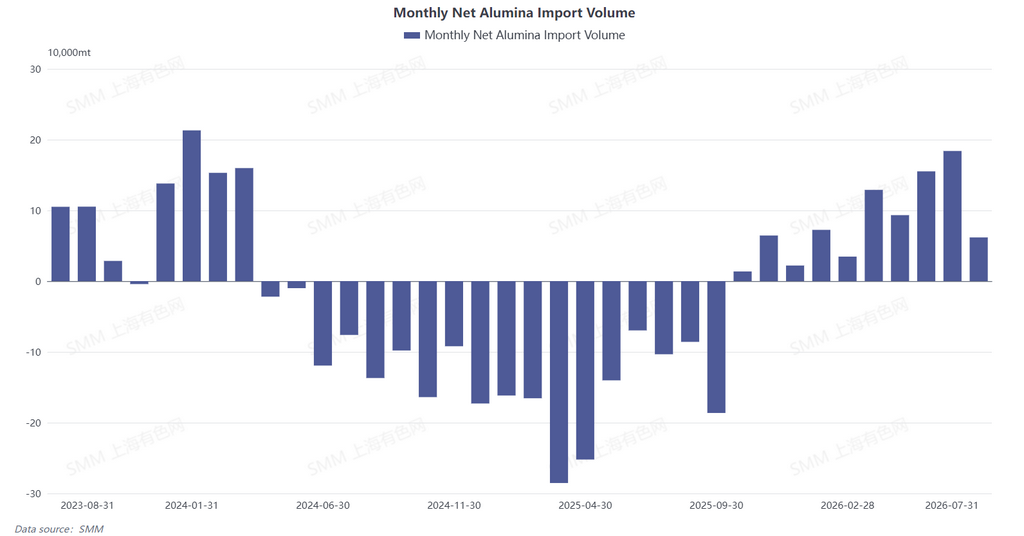
On a monthly basis, July net imports came in at just 62,000 tonnes, a sharp decline of 66.4% from the previous month, with the contraction largely driven by the import side. Industry sources attribute this drop to the recent rally in international alumina prices, which has significantly compressed the domestic-international price spread. As import margins turned unfavourable, buying interest from Chinese traders weakened considerably. Meanwhile, Australia — China's largest supplier — saw its July exports to China drop to 302,000 tonnes, down 26.6% month-on-month, as some cargoes were redirected to higher-priced destinations such as the Middle East, further weighing on shipment schedules to China.
In terms of import origins, Australia remained the dominant supplier, shipping 1.945 million tonnes to China in January–July, accounting for 73.6% of total imports, followed by Indonesia with 458,000 tonnes, or 17.3%. The two countries together represented 90.9% of China's total alumina imports, maintaining a highly concentrated supply structure. However, aggregate import volumes have been trending downward on a monthly basis.
On the export front, Russia continued to be the top destination for Chinese alumina, receiving 1.201 million tonnes in the first seven months, or 62.7% of total exports. In the Middle East, Oman stood out as the sole destination in July, with exports reaching 107,000 tonnes, up 7.6% month-on-month, driven by regional demand for bagged alumina, which is primarily transported overland from Oman. Nevertheless, as previously transshipped Chinese-origin cargoes in the region are gradually absorbed, export volumes to the Middle East are expected to ease in the coming months.
Looking ahead, despite the current lack of arbitrage incentives, the lag effect from vessel schedules and port arrivals suggests that China's alumina trade is likely to remain in a net import position in August. However, given the combined impact of shrinking import arrivals and rising overseas diversion, the net import volume is expected to continue narrowing, thereby alleviating the supply-side pressure on the domestic alumina market.

![Net Imports Plunged 66.4% MoM in July, Price Spread Narrowing Curbs Import Appetite [SMM Analysis]](https://imgqn.smm.cn/usercenter/zjiqN20251217171650.jpg)