LME copper traded in a wide range last week, falling from $14,396/mt to $13,856.5/mt before recovering to around $14,100/mt. Scrap payabilities initially declined as copper prices surged but later recovered unevenly across grades.
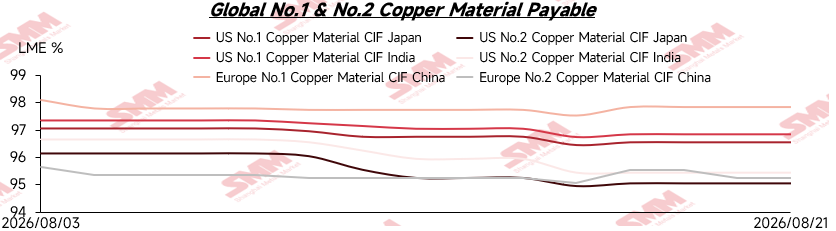
According to SMM market research, Millberry payability has returned to 98%-99%, while No. 1 copper scrap is quoted at 95.5%-96.5% and No. 2 at 94.5%-95.5%. Market tightness is therefore concentrated in clean, high-grade material.
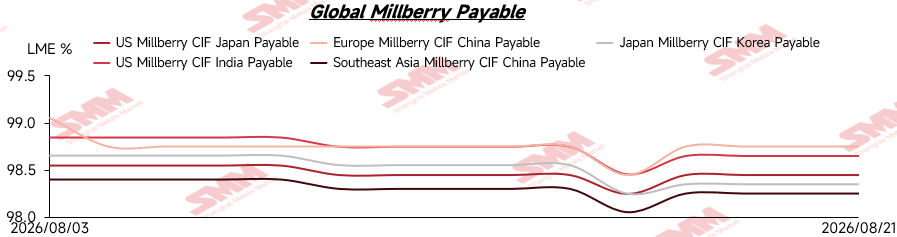
Millberry can substitute for copper cathode with limited pretreatment. Tight spot cathode availability and high physical premiums have strengthened its value to copper rod producers. The LME cash-to-three-month premium recently reached $545/mt, further supporting high-grade scrap.
Recent SMM visits to Chinese recycled-copper companies also found generally low inventories. Most remaining stocks were No. 1, No. 2 and mixed scrap, while Millberry was particularly scarce. New supply depends on cable replacement, industrial production and equipment dismantling, and cannot increase immediately in response to higher prices.
Meanwhile, high copper prices raise the processing losses, financing costs and recovery risks associated with lower-grade scrap. Modest downstream demand and smelter maintenance have therefore encouraged buyers to reduce No. 1 and No. 2 payabilities.
A separate supply risk also deserves attention. Invoice and tax-compliance issues have prevented some domestic copper scrap from entering formal trading channels. SMM estimates that approximately 600,000 mt of non-invoiced scrap may have accumulated outside the formal market.
This material is unlikely to be released all at once. However, if tax and invoicing rules become clearer, a concentrated release could pressure domestic scrap prices and reduce Chinese bids for imported material. Its potential impact is becoming more important as global recycled-copper demand rises and policies such as the EU Waste Shipment Regulation tighten international scrap flows.
SMM expects Millberry payability to remain resilient in the short term. The recovery of No. 1 and No. 2 scrap will depend on downstream demand, smelter operations and inventory consumption, while the release of China's accumulated non-invoiced scrap could become a key medium-term market variable.