SMM News on August 17:
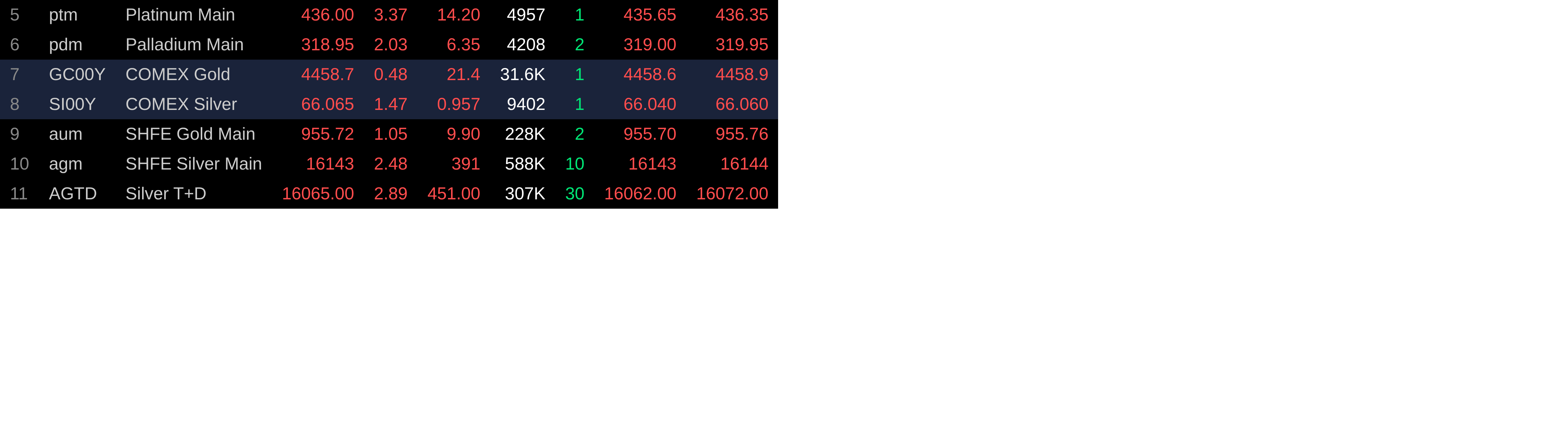
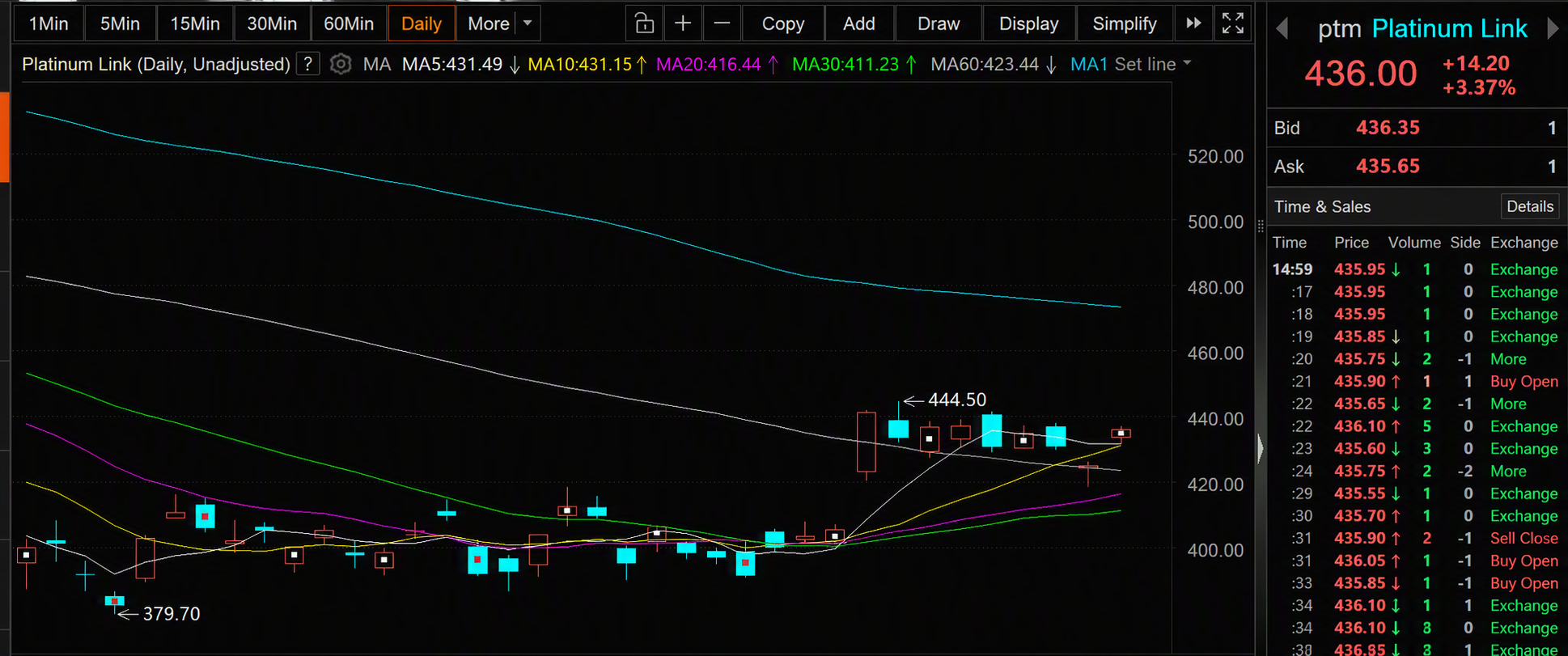
Weaker-than-expected US economic data led the market to lower expectations for US Fed interest rate hikes, with the US dollar index pulling back to around 99.5. Coupled with medium and long-term support from geopolitical safe-haven demand and central bank gold purchases, rising international gold and silver prices lifted China’s futures market, in turn boosting sentiment in the precious metals sector of A-shares. As of around 15:10 on August 17, COMEX gold rose 0.48% to $4,458.7/oz; the most-traded SHFE gold contract gained 1.05% to 955.72 yuan/g; COMEX silver climbed 1.47% to $66.065/oz; the most-traded SHFE silver contract increased 2.48% to 16,143 yuan/kg; and silver T+D rose 2.89% to 16,065 yuan/kg. In addition, the most-traded platinum futures contract surged 3.37% to 436 yuan/g, while the most-traded palladium contract advanced 2.03% to 318.95 yuan/g.
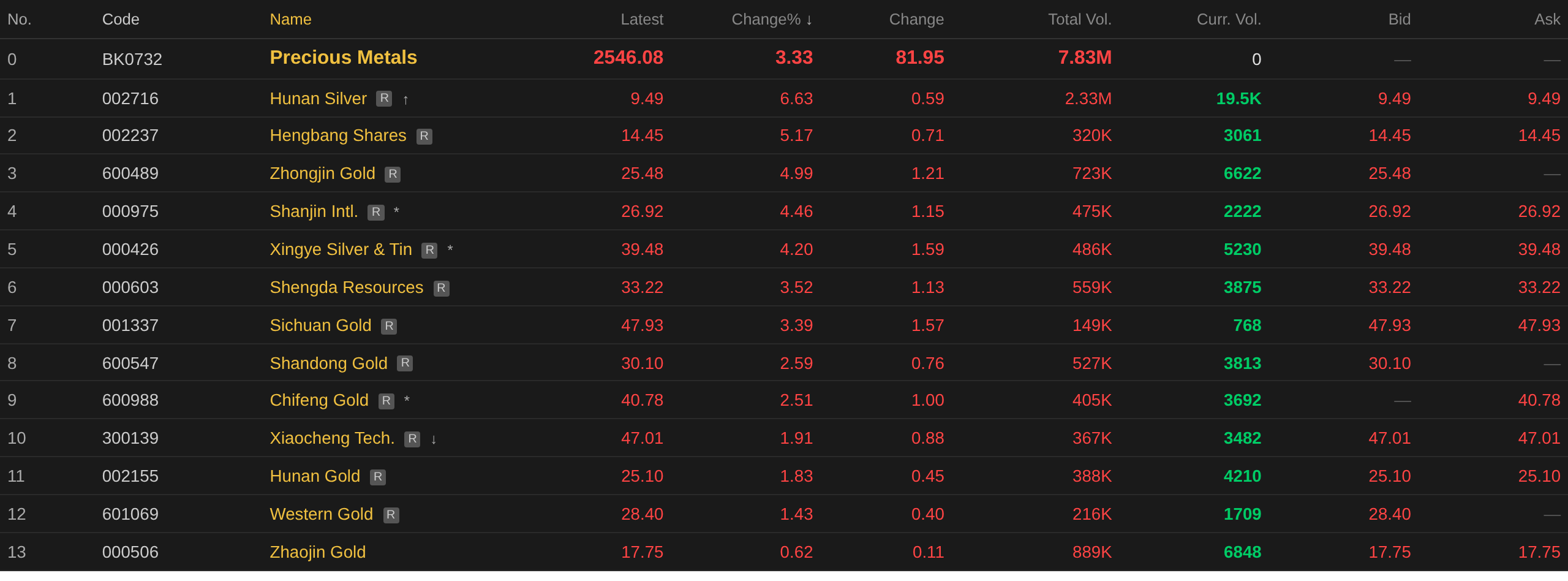
Equities: As of the close on the 17th, the precious metals sector rose 3.33%. Among individual stocks, Hunan Silver jumped 6.63%, while Shandong Humon Smelting, Shandong Gold International, Zhongjin Gold, Xingye Silver&Tin, and Shengda Resources posted leading gains.
Spot Market
Silver
On August 17, the morning ex-works reference average spot price for SMM 1# silver was 16,021 yuan/kg, up 3.21% from the previous trading day.
In the spot market, higher silver prices suppressed downstream purchasing demand, and the market saw strong wait-and-see sentiment today. Against the backdrop of a widening spot-futures price spread, suppliers became more cautious in quoting, with transactions mainly driven by rigid demand from some acceptance needs, overall leaning toward parity. In Shanghai, early-session quotations were mainly at TD -5 to +10 yuan/kg, with insufficient purchasing momentum and transactions skewed toward the lower end. In Shenzhen, some national-standard cargoes clustered around a slight discount to parity. Today’s premiums quotations against the SHFE the most-traded contract 2610 were a discount of 70-50 yuan/kg.
Overall, silver prices rebounded slightly today, but with the news flow lacking further upward momentum, prices are expected to move sideways in the short term. In the spot market, higher silver prices continued to curb follow-up demand, and downstream buyers were mostly on the sidelines at the start of the week.
Platinum
On August 17, the average spot price of platinum was 431 yuan/g, up 2.62% from the previous trading day. Mainstream quotations for platinum were a discount of 3-2 yuan/g against the PT2610 contract. Driven by today’s rise in futures, suppliers slightly widened their discount quotations versus the previous trading day, but downstream consumption remained weak, and purchase willingness was limited after the futures rally, with procurement mainly consisting of small lots for rigid demand. Suppliers faced obstacles in selling high-priced cargoes, and the bargaining room in actual deals widened somewhat. Warehouse warrant premiums were relatively high, and mainstream quotations mostly hovered around a discount of about 1.5 yuan/g to the most-traded contract. Overall, platinum spot market trading remained sluggish today.
Views From Various Parties
On the outlook for precious metals, some institutions were relatively optimistic while others were more cautious. The views of several institutions are as follows:
Everbright Futures believed that multiple US inflation readings cooled and consumption weakened, prompting the market to lower its expectations for a September rate hike. Gold prices last week generally shot up but then met resistance and pulled back. In the short term, upside resistance for gold was evident; however, stagflation, geopolitical risks, and central bank gold purchases provided support, leaving limited room for a sharp pullback. On the US Fed, divisions within the US Fed remained apparent: Richmond Fed President Barkin supported keeping rates unchanged, while Cleveland Fed President Hammack reiterated a rate-hike stance. The market was also watching for comments from Wosh; his speech at the global central bank annual meeting at month-end in August was expected to be exceptionally important and could provide some guidance for the September policy meeting. On the geopolitical front, the contest and negotiations over the Strait of Hormuz were still ongoing. After the US July nonfarm payrolls unexpectedly weakened, CPI and PPI both came in mild, further confirming a marginal easing of inflation pressures. The market’s extreme pricing for a September rate hike pulled back markedly from earlier highs, which also drove a notable rebound in gold prices. However, as the data were released and the probability of a rate hike declined, the market again became “confused” about the outlook, and profit-taking pushed gold prices somewhat lower. In addition, reports said the Japanese government supported the Bank of Japan’s recent rate hike, and the next window for a hike was likely to fall in September or October, triggering a brief bout of liquidity-panic sentiment in the market. In the short term, gold faced substantial resistance in the upper range and needed time to digest it, along with further catalysts from news flow. Nevertheless, it could be expected that deepening US stagflation, persistent geopolitical risks, and continued increases in holdings by China’s central bank would all provide structural support for gold, keeping the probability of a sharp pullback relatively low. (Zhitong Finance)
CICC Wealth Futures: The US-Iran issue remained in stalemate. Iran stated that the US must not enter the Persian Gulf, the Gulf of Oman, or the Strait of Hormuz in the future; however, Trump announced that the Strait of Hormuz was about to become US territory, and the impact of geopolitical factors had yet to be eliminated. In addition, attention should be paid to the US dollar: the US dollar remained weak recently, with the fundamental reason being that US missteps on the military, geopolitical, and financial fronts reduced the US dollar’s safe-haven value. Coupled with midterm election pressure, expectations of passive fiscal tightening, and the trend of “UK gilts-ization of US Treasuries,” the US dollar could weaken further in the medium term, and the year’s high may have already been seen. Overall, gold still had supportive factors in the macro backdrop, and gold prices were expected to retain short-term upward momentum after the pullback.
CITIC Securities stated that base metals this week saw some profit-taking at their respective key resistance levels, and base-metals equities also experienced profit-taking. However, given that commodity prices still had significant drivers for further gains, it recommended being more patient with base metals. Gold prices were temporarily under pressure at the $4,500 threshold, but both employment and inflation data reduced the likelihood of rate hikes ahead of the midterm elections, and gold prices remained in a favorable window. A rare high premium emerged on the spot copper side, highlighting an extremely tight inventory situation; copper prices were on the verge of breaking to a new all-time high, and equities—priced at only a little over 10x PE based on a 100,000-yuan copper price—provided a sufficient margin of safety, making the allocation value proposition stand out. (Zhitong Finance)
In the latest report released last Thursday, UBS strategists said that falling real interest rates would drive investors back into the gold market, while a weaker US dollar and strong central-bank demand for gold purchases would jointly push gold prices toward the $5,000/oz threshold in H1 next year. (Zhitong Finance)
Citadel Securities strategist Scott Rubner, for the first time since 2026, recommended that investors allocate to structured gold positions, saying the current precious-metals market was forming “one of the most attractive upside opportunities in months”. Rubner believed that gold and silver were simultaneously benefiting from multiple tailwinds, including a shift in US Fed policy expectations, continued central-bank gold buying, quant funds still positioned as bears, the options market releasing bullish signals, and retail funds previously drawn by the AI trading wave potentially flowing back in. In his view, multiple factors were creating a rare resonance, and the precious-metals market could enter a new uptrend phase.
StoneX senior analyst Matt Simpson said that improving Middle East peace prospects lowered market inflation expectations, pushing gold prices further higher from a consolidation range that had lasted for weeks and sat above $4,000. The US Department of Labor was set to release the non-farm payrolls report tonight. Simpson added: “Regardless of the non-farm payrolls data, $4,000 has proven to be a solid support level—I suspect bulls are waiting for a pullback to seize the opportunity and drive gold prices in a rebound to $4,600. The non-farm payrolls data may bring some fluctuations in the short term, but price action has already shown the direction; gold seems to want to rise.”
World Gold Council: In July, positive momentum factors offset negative risk factors, leaving gold prices flat in July. Looking ahead, a second wave of high inflation similar to that in the late 1970s cannot be ruled out. But that in itself does not mean gold will surge, as it will depend on real interest rates, the US dollar, growth expectations, demand from Asian investors, and how central banks respond.
Kelvin Wong, Senior Market Analyst at OANDA, said: “The link between gold and oil prices still exists, because oil prices have a huge impact on inflationary pressures in the global economy. If we can see a clear roadmap for further de-escalation of the (Middle East) situation, gold prices may continue to rise.” (Jinshi Data APP)
A CITIC Securities research report said that since the beginning of this year, gold prices shot up and then fell rapidly, but we believe gold is still in a major bull market, driven by the accelerating expansion of the US fiscal deficit, hard-to-bridge geopolitical rifts amid de-globalization, and continued support from ongoing gold purchases by global central banks. Therefore, we believe this round of decline in gold prices is only a temporary adjustment within a bull market. The current pullback has approached historical extremes, and around $4,000/oz is highly likely to be the bottom area for this cycle. Looking ahead, the impact of the Strait of Hormuz situation on gold prices is expected to shift from suppression to support, US Fed monetary policy may be more optimistic than market expectations, and together with a surge in US military spending pushing up the deficit, gold prices are expected to return to an upward channel within the year.
Everbright Futures, looking ahead to August, said the short-term trend in gold prices depends on how the US-Iran situation evolves. If the conflict continues or spillovers expand, market sentiment may turn weaker again, and under expectations of liquidity risks, gold prices may continue to underperform; but if there is a substantive breakthrough in negotiations, gold prices may stabilize in the short term and see a rebound-driven repair. At that time, if financial markets both inside and outside China recover in tandem, it can be further confirmed. However, it can be expected that with support from rigid central bank buying and allocation demand, even if another pullback occurs, the downside room will be relatively limited. In addition, the Jackson Hole global central bank symposium at the end of August may see Walsh outline a medium-term policy framework; before that, the US CPI data on the 12th will be a key validation indicator. Overall, gold may show a solid bottom and be in a sentiment-repair phase, warranting a cautiously optimistic view. The core risks are that the US-Iran conflict again drives oil prices to climb above $90/oz, US inflation data rebounds far above expectations, and the probability of a September rate hike continues to rise, which may continue to suppress market sentiment; however, judging from the performance of financial markets outside China and oil prices, neither strongly supports a full-scale escalation of the US-Iran conflict.
A Reuters poll showed that after gold prices pulled back sharply from record highs in January, analysts cut their gold price forecasts for the first time since the end of 2023, but most still expect central bank buying and concerns about fiscal sustainability to provide support. In a survey of 29 analysts and traders conducted over the past three weeks, the median forecast for 2026 gold prices was $4,509 per ounce. This was below $4,916 three months earlier and marked the first downward revision in 11 quarters. The average forecast price for 2027 was $4,610, versus $5,100 in the previous survey. Gold prices hit a record high of $5,595 per ounce in January, but in Q2 they saw a sharp pull back as the Iran war intensified energy inflation and pushed up expectations for rate hikes, posting the worst quarterly performance since 2013. Since the outbreak of the war, spot gold has fallen by about 22%. (Jinshi Data APP)
ING analysts Warren Patterson and Ewa Manthey noted that gold prices rose on Monday because a sharp drop in oil prices eased inflation concerns and weighed on the US dollar and US Treasury yield. The steep fall in oil prices on Monday alleviated inflation worries and the outlook for further monetary tightening. The move followed a pause in US-Iran hostilities. Lower oil prices also pressured the US dollar and US Treasury yield, improving the outlook for non-interest-bearing assets ahead of this week’s US Fed meeting. The market is now focused on the US Fed and the upcoming release of US inflation data for further guidance on the interest-rate outlook. If yield remains subdued, gold prices should continue to find support around current levels. However, any hawkish surprise from the US Fed could limit further upside room in the near term.
Commerzbank: Cut its year-end gold price forecast to $4,500 per troy ounce. Platinum prices are expected to reach $2,000 per troy ounce by the end of the year, versus a previous forecast of $2,100.
Citi said its base case showed that, despite Q3 historically being a seasonal peak for stockpiling, India’s gold imports would remain subdued in Q3. This was due to ample scrap supply, cautious consumer sentiment, and a discount in local prices, which curbed demand for fresh imports. However, Citi still set its 0–3 month short-term gold target at $4,500. The bank said this target assumed easing tensions in the Strait of Hormuz and a less hawkish turn by the US Fed; in the near term, many risks could still drive gold prices to retest lower levels, including major re-escalation, AI-driven de-risking, and a persistently hawkish stance from the US Fed.
Analysts at ANZ Research said in a report that physical gold demand for the metal and buying by central banks were supporting the gold market. The analysts added that while gold prices faced near-term headwinds from expectations of US Fed tightening and a firm US dollar, after months of exchange-traded fund outflows, gold investment positioning looked very thin, suggesting that room for further declines could be limited. A high-interest-rate environment typically weighs on non-yielding assets such as gold. (Zhitong Finance)
Goldman Sachs said that, despite pressure from expectations of a more hawkish US Fed, central bank buying is expected to provide a floor for gold. Demand remains strong; the bank estimated that central banks purchased 81 mt of gold in May, with the three-month average monthly purchases at 67 mt—well above the pre-2022 average of 17 mt. Goldman analysts said, “We believe the trend of central banks increasing gold holdings will continue for many years, as they hedge geopolitical and financial risks through reserve diversification.” The bank forecast that average monthly purchases in this year and next will be 50 mt and 40 mt, respectively. (Jinshi Data APP)
Soojin Kim, an analyst at Mitsubishi UFJ Financial Group, said, “Recent price action suggests the market is placing greater emphasis on the possibility that US interest rates will stay high for longer, rather than gold’s traditional safe-haven demand. This leaves gold vulnerable to pressure unless geopolitical risks further translate into a broad deterioration in financial market sentiment.” (Jinshi Data APP)
Asset manager Fidelity International said it plans to rebuild its gold position, which it reduced earlier this year, at an appropriate time in the future, believing that gold’s long-term drivers remain strong. Ian Samson, a multi-asset portfolio manager at Fidelity International, said recently, “We plan to increase our gold holdings again; it’s just a question of timing.” He said he cut his gold allocation to neutral from January to February this year, when a multi-year bull market in gold abruptly ended. Samson expects the gold market to re-enter a bull market at some point in 2027. The rationale for a return to a bull market would only be undermined if “governments return to fiscal discipline and central banks are truly committed to pushing inflation back down,” “but I don’t think we’re in that world right now.” Samson also said that continued gold purchases by central banks (a key driver of the previous gold bull market) will continue to support gold prices.
Recommended Reading:
![Precious Metals Remain Range-Bound as Macro Enters Key Validation Window [SMM Precious Metals Macro Analysis]](https://imgqn.smm.cn/usercenter/yhuhG20251217171735.jpg)