Under Invoice Cost Pressure, "High Price Spread, Low Trading Volume" Pattern Solidified [SMM Copper Scrap Weekly Review]

Published: Aug 14, 2026 09:35
[SMM Analysis: Under Invoice Cost Pressure, the "High Price Spread, Low Transaction Volume" Pattern Solidifies] This week (Aug. 10-13), the price difference between copper cathode and copper scrap swung wildly within the 4,400-5,200 yuan/mt range. SMM data showed that the invoice tax rate for tax-inclusive copper scrap already reached 12%. Domestic tax-inclusive copper scrap was in scarce supply, and enterprises scrambled for input VAT invoices, pushing the invoice tax rate up from 10.5% all the way to 11.5%-12%. Meanwhile, the finished secondary copper rod market was highly competitive, and prices could not be raised......

SMM, August 14:

       This week (Aug 10-13), the price difference between copper cathode and copper scrap swung wildly in the range of 4,400-5,200 yuan/mt. According to SMM data, the tax-inclusive invoice rate for copper scrap has reached 12%. Supply of domestically produced tax-inclusive copper scrap is scarce, and enterprises scrambling for input invoices drove the invoice tax rate up from 10.5% to 11.5%-12%. Meanwhile, competition in the finished secondary copper rod segment is fierce and prices cannot be raised, so scrap utilization enterprises can only pass pressure upstream by lowering copper scrap purchase prices. This is the main reason for the rapid expansion of the price difference this round—not demand-driven, but caused by tax costs being passed up the industry chain to the upstream copper scrap raw material segment. Suppliers' shipment pace amid copper price fluctuations showed a "rush to cash in" pattern. As delivery of the front-month futures contract neared, the price spread between futures contracts widened to 800 yuan/mt. Scrap utilization enterprises shifted pricing to the September contract. With the forward contract in a clear downtrend, purchase willingness was muted. Supplier offers were unchanged from yesterday, and overall market transactions were moderate.
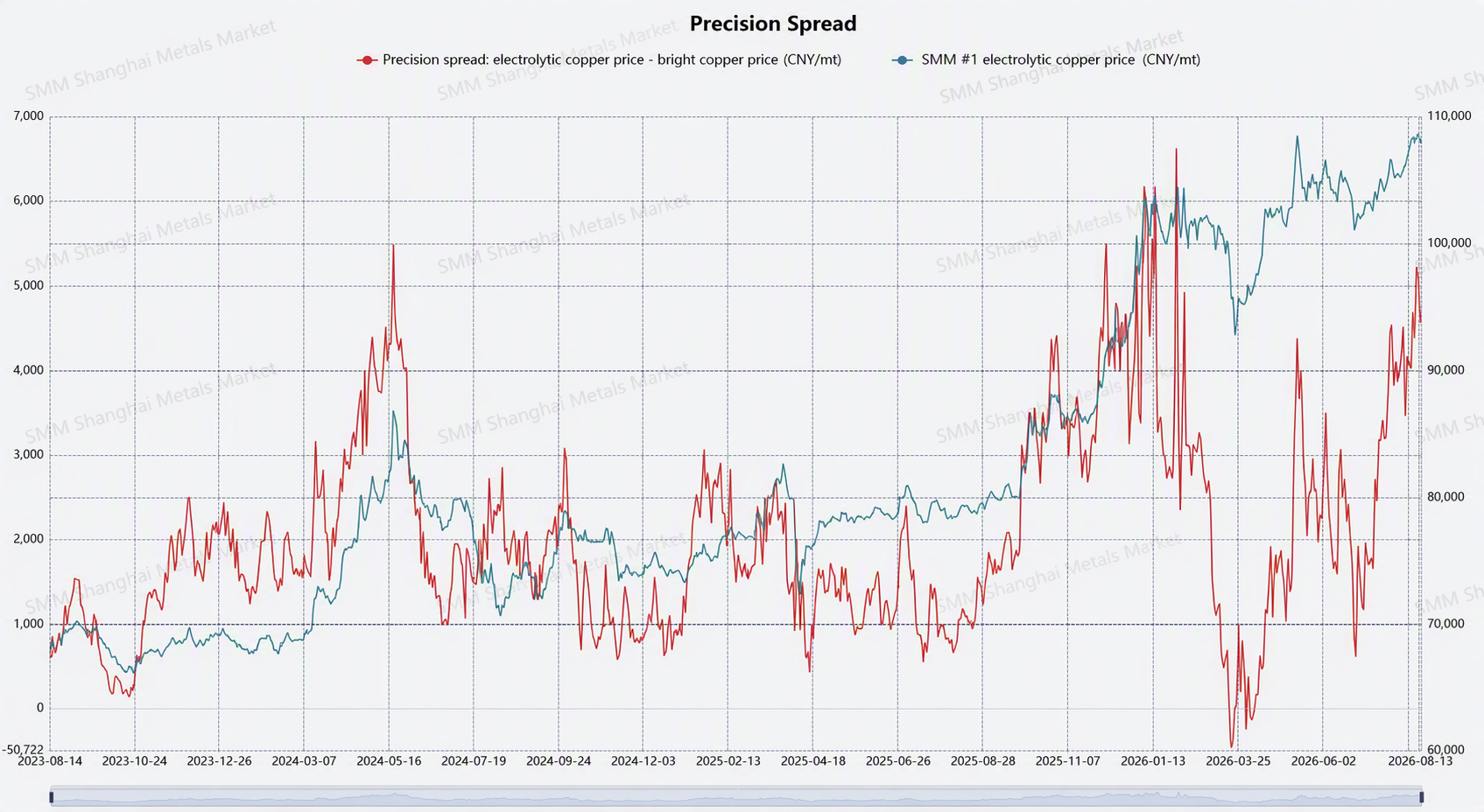
       On the import supplement side, the payable indicator for overseas copper scrap stayed at high levels. Imported copper scrap deductions continued to rise and import costs remained high. Although the US BIS requirement of 100% domestic sales for black mass and tungsten scrap does not directly involve copper scrap, the policy signal has been clearly sent. The trend toward tighter cross-border flows of high-grade copper scrap is basically established. Overseas supply has shown no obvious incremental inflow into China, providing limited relief to the domestic tightness.

       Overall, the core tension in the copper scrap market this week has deepened from last week's "restocking-driven market" to "the twin pressures of invoice costs and arbitrage inventory." On the surface, the substitution advantage of copper scrap is unprecedented, but after the tax-inclusive invoice rate rose to 12%, the actual cost ultimately borne by scrap utilization enterprises did not decline in tandem, and the price spread dividend was swallowed by tax costs. At the same time, inventories accumulated by rod producers from earlier arbitrage-linked purchases and the capital tied up in them have caused them to lose the motivation to keep chasing high prices and buying at elevated levels. The market has fallen into a weak equilibrium of "suppliers eager to sell, rod producers waiting for lower prices." If the copper scrap market continues the high-level stalemate of "supply willing to sell, demand not buying," a genuine recovery in physical consumption will require a pullback in copper prices to release end-user orders, or a substantial decline in invoice costs to rebuild a reasonable profit margin for rod producers. Otherwise, the "artificially high" price difference between copper cathode and copper scrap will persist, and the release of copper scrap substitution for copper cathode will remain constrained.


Data Source Statement: Except for publicly available information, all other data are processed by SMM based on publicly available information, market communication, and relying on SMM's internal database model. They are for reference only and do not constitute decision-making recommendations.

Images in this article contain AI-translated captions for reference only.

For any inquiries or for more information, please contact: lemonzhao@smm.cn
For more information on how to access our research reports, please contact:service.en@smm.cn
Related News
Off-Season Continues, Production Enthusiasm at Copper Billet Enterprises Dampened.
15 mins ago
Off-Season Continues, Production Enthusiasm at Copper Billet Enterprises Dampened.
Read More
Off-Season Continues, Production Enthusiasm at Copper Billet Enterprises Dampened.
[SMM Brass Billet Flash] The traditional off-season of the downstream copper billet industry continued. Orders from end-use industries showed no notable improvement, and only small-volume restocking on demand was maintained. Destocking of finished brass billet products was slow, and finished product inventories at sampled enterprises stood at 5.14 days this week, up slightly WoW. As copper prices continued to climb, raw material costs for brass billet processing enterprises rose; however, product price pass-through lagged, corporate profits were continuously squeezed, and the production enthusiasm of most enterprises was dampened.
15 mins ago
Raw Material Inventories at Copper Billet Enterprises Remain Low
20 mins ago
Raw Material Inventories at Copper Billet Enterprises Remain Low
Read More
Raw Material Inventories at Copper Billet Enterprises Remain Low
[SMM Brass Billet Flash] According to SMM, the current tight supply situation for recycled brass raw materials has not eased. Raw material prices remain elevated, tracking copper prices. Days of raw material inventories at sampled enterprises stood at 3.49 days, still at a low level, and enterprises remain cautious about raw material stockpiling.
20 mins ago
High Raw Material Costs Squeeze Profits, Brass Billet Operating Rate Extends Decline
22 mins ago
High Raw Material Costs Squeeze Profits, Brass Billet Operating Rate Extends Decline
Read More
High Raw Material Costs Squeeze Profits, Brass Billet Operating Rate Extends Decline
[SMM Brass Billet Flash] During the week of August 7-13, the weekly operating rate of SMM-surveyed brass billet producers was 48.52%, down 0.16 percentage point WoW and down 1.25 percentage points YoY, continuing its downward trend. Off-season market conditions are unlikely to reverse quickly, and the recovery in actual downstream orders still lacks drivers. Meanwhile, copper prices fluctuated at highs, and the tight supply of recycled brass raw materials persisted. High raw material costs will continue to squeeze corporate profits and curb production willingness. SMM expects the weekly operating rate to edge down further to 48.46% next week, down 1.37 percentage points YoY.
22 mins ago
Register to Continue Reading
Gain access to the latest insights in metals and new energy
Already have an account?Sign in here
Under Invoice Cost Pressure, "High Price Spread, Low Trading Volume" Pattern Solidified [SMM Copper Scrap Weekly Review] - Shanghai Metals Market (SMM)