I. Overall Market Review
During the week, China’s platinum group compounds market showed notable structural divergence and a “retreat after rapid rise” pattern. The market was driven mainly by fluctuations in overseas market prices and overseas policy events. Platinum and palladium compounds experienced a period of sharp gains before pulling back under pressure; rhodium-based products rose steadily; iridium and ruthenium-based products remained independent and stable.
The core contradiction in the current market is the mismatch between a sharp increase on the cost side and persistently weak demand. Upstream NYMEX platinum and palladium prices jumped sharply, directly pushing up domestic raw material costs for chloroplatinic acid and palladium chloride to fresh highs for the period. However, downstream sectors such as automotive catalysts, pharmaceuticals, and petrochemicals were in the high-temperature maintenance off-season, with insufficient end-user operating rates and sluggish spot trades. Downstream enterprises mostly adopted a strategy of restocking only as needed and lacked sustained buying support, causing platinum and palladium products that had surged earlier to generally pull back under pressure, while industry processing fees moved lower overall. Iridium, ruthenium, and rhodium-based products were less affected by spillover and merely moved sideways with mild gains.
II. Price Trends by Product
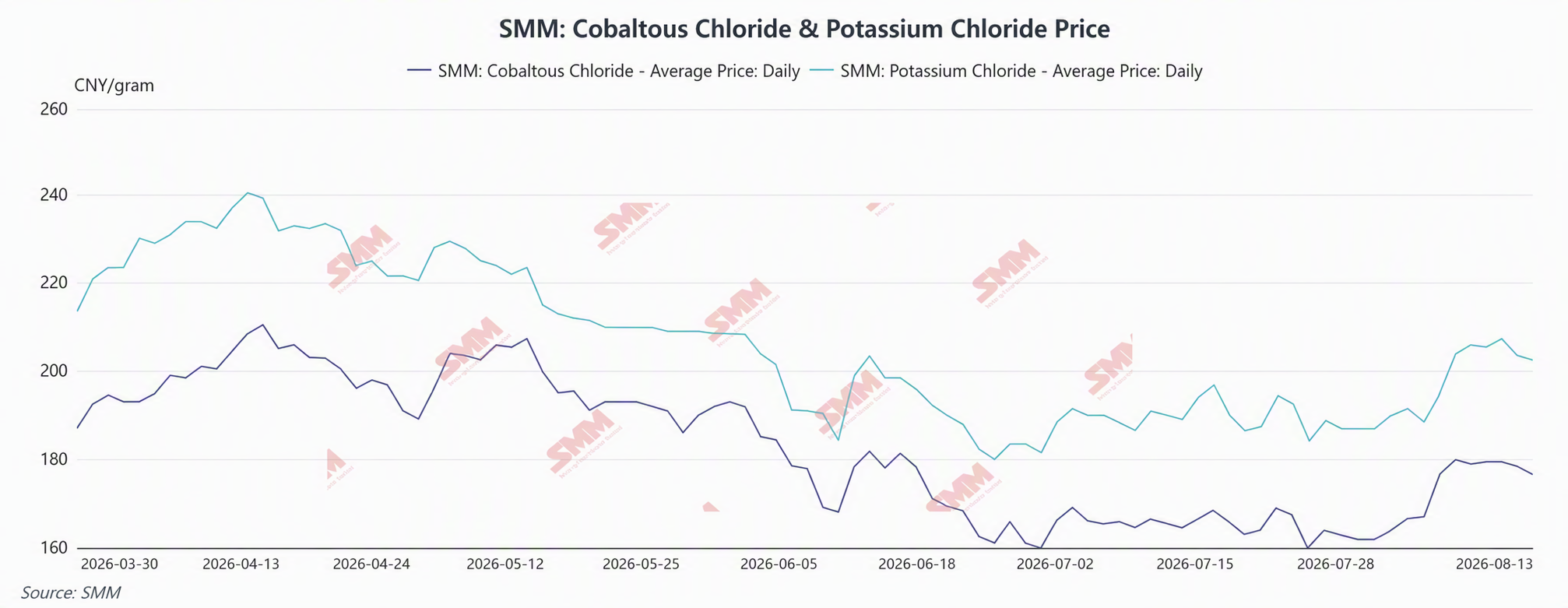
1. Chloroplatinic Acid: Wild Swings, Correction from Highs
The price trend showed three stages: “stable—surge—pullback.” In the early stage, trading was sluggish due to the off-season, and prices were steady; in the middle stage, driven by soaring overseas platinum prices and a confluence of bullish sentiment related to tariffs and geopolitics, prices jumped quickly to new highs for the range; in the later stage, high prices dampened downstream purchase willingness and there was no incremental capital, causing market momentum to fade, and prices consolidated at highs on a subdued note.
2. Palladium Chloride: Leading Gains, Under Pressure at Highs
Its trend was highly correlated with chloroplatinic acid, but its gains were more notable. Driven by a surge in international palladium prices, production costs rose sharply, and prices broke strongly through key levels to set recent highs. However, also constrained by weak downstream demand in the off-season, prices lacked sustained support after the rapid rise and eventually ended with high-level consolidation and a slight correction.
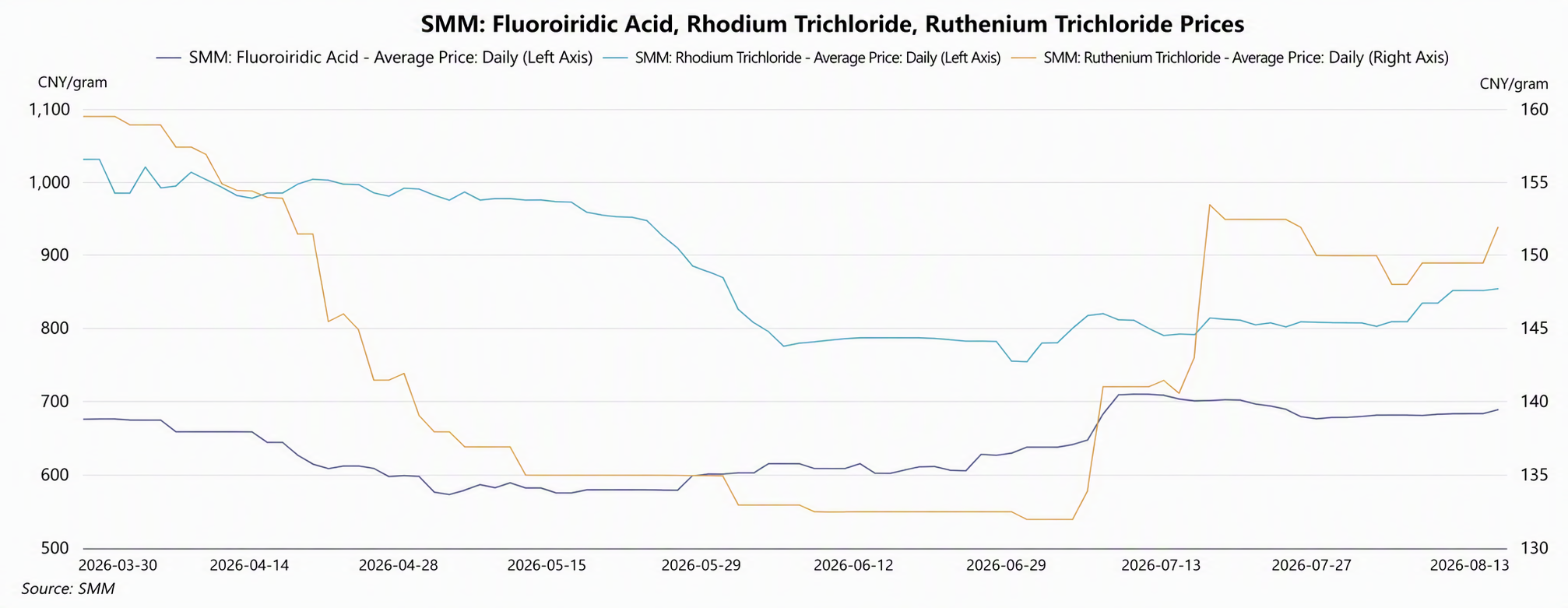
3. Rhodium Trichloride: Steady Strengthening, Mild Uptrend
The market was independent of the sharp fluctuations in platinum and palladium and was generally firm. Supported by a slight rise in upstream raw material costs, enterprises tentatively raised their quotes. Although constrained by off-season demand, the upward pace was mild and orderly, with no extreme fluctuations, showing a healthy pattern of steady gains.
4. Chloroiridic Acid and Ruthenium Trichloride: Independent Trends, Stable Operation
The two products were largely unaffected by the surge in sentiment around platinum and palladium. Chloroiridic acid moved independently in a mild, slow uptrend with minimal fluctuations; ruthenium trichloride remained in low-level sideways movement, ending the period with only a small gain. Both had independent supply-demand patterns, with no trend-like sharp rises or falls throughout the period, and were the most stable.
III. Core Operating Logic
1. Costs and Sentiment Dominated Prices
The core driver of the surge in platinum and palladium compounds was cost transmission from soaring overseas raw material prices, coupled with events such as overseas tariff and geopolitical expectations, which heated up speculative sentiment and amplified short-term fluctuations. In contrast, iridium, ruthenium, and rhodium products were relatively independent due to weak linkages.
2. Off-Season Demand Capped Gains
Concentrated maintenance by downstream end-users caused rigid demand to contract sharply, creating a mismatched pattern of “high prices and weak demand.” Enterprises generally implemented light inventory strategies, with no concentrated stockpiling, directly causing platinum and palladium products lacking fundamental support to quickly come under pressure.
3. Profit Margins Squeezed from Both Sides
Sharp rises in upstream raw material costs and weak downstream demand squeezed corporate profits from both directions. To stimulate transactions and relieve inventory pressure, producers and traders generally lowered processing fees; pricing concessions to facilitate transactions became the industry norm.
IV. Market Outlook
In the short term, China’s platinum group compounds market will continue to show a pattern of cost-led prices, constrained demand, and structural divergence:
First, chloroplatinic acid, palladium chloride and other products will continue to consolidate at highs on a subdued note. Going forward, prices will remain highly dependent on overseas market trends; however, before downstream demand in the off-season recovers, high prices will lack sustained support and momentum for a one-sided advance will be insufficient. Prices are expected to be mainly range-bound with slight corrections.
Second, niche products such as rhodium trichloride, chloroiridic acid and ruthenium trichloride are subject to limited external disruption and, with mild support from raw material costs, prices are steady with a modest upward bias. However, they are also constrained by off-season demand, so a strong trend-driven rally is unlikely in the short term; overall, they are expected to be dominated by narrow fluctuations and a mild, slow uptrend.

![[SMM Hydrogen Cost Daily Review]202607812](https://imgqn.smm.cn/usercenter/WyqWW20251217171729.jpg)