Entering Q3, the battery-grade nickel sulphate spot market appears to be "losing vitality," with reduced transaction frequency and relatively weak price trends. SMM believes this is primarily driven by a combination of three factors: weakening cost support, a gradually loosening supply-demand pattern, and a shift in market structure. This article will discuss these three factors in detail.
I. Cost Side: Weakening Nickel Prices and Raw Materials Together
In terms of nickel prices, August marks the period for the release of additional quotas in Indonesia, which has tempered market expectations of a significant shortage of Indonesian nickel ore. Coupled with the ongoing "shadow" of macroeconomic interest rate hikes, nickel prices have weakened.
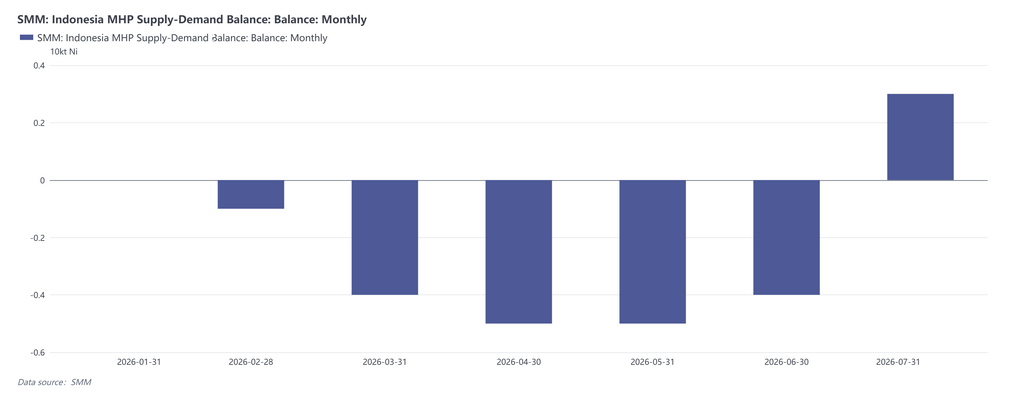
On the MHP payables front, following the concentrated arrival of sulphur in Indonesia, the supply of Indonesian intermediate products is expected to continue rising. According to SMM data, Indonesia's MHP supply-demand balance turned positive in July for the first time in a month. Meanwhile, downstream nickel and cobalt salt prices (especially cobalt salts) remain relatively weak, and downstream players are under pressure from losses, showing lower acceptance of high payables. Consequently, MHP payables remain under pressure overall. The market availability of high-grade nickel matte remains tight, and its payables are expected to hold steady.
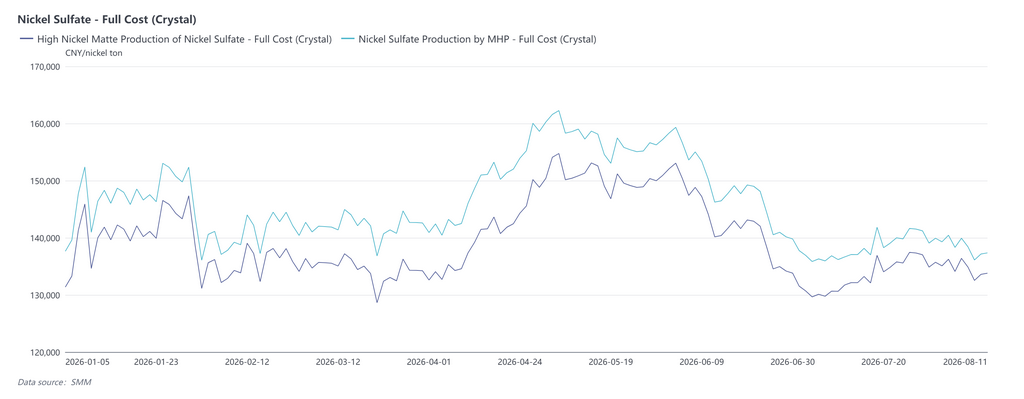
With both nickel prices and raw material payables declining, the spot production cost of nickel sulphate in August is expected to weaken overall from a spot cost perspective.
II. Supply Side: High Raw Material Flexibility, Production Schedules Expected to Rise
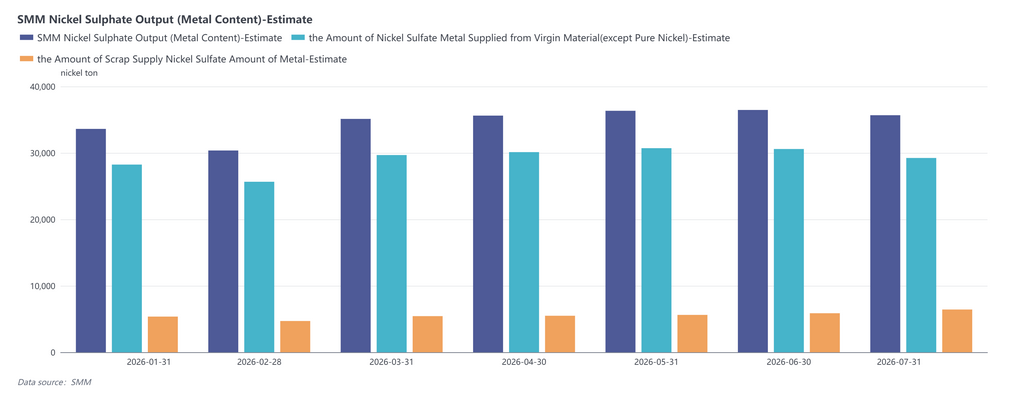
Since Q2, although MHP production schedules fell sharply at one point, nickel sulphate supply levels remained relatively stable, and no prolonged undersupply emerged. In Q3, as intermediate product production schedules gradually recover, this trend is expected to become more pronounced. According to SMM data, while battery-grade nickel sulphate production in July dipped 2% MoM due to production cuts or maintenance at some salt plants, August output is expected to rise over 8% MoM, returning supply to high levels. Total battery-grade nickel sulphate production from January to August 2026 grew 33% YoY.
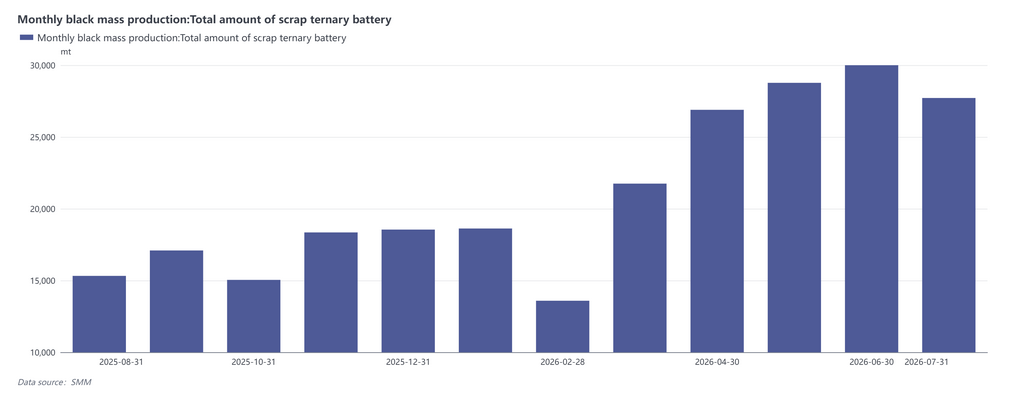
Behind this steady output lies strong supply flexibility in nickel salt raw materials. In addition to the adjustments using refined nickel raw materials and the substitution between high-grade nickel matte and MHP discussed in previous articles, recycled materials have also contributed a significant supply scale for nickel sulphate this year. On the one hand, after China opened up imports of lithium battery black mass last year, recycled raw materials have been able to be imported steadily, providing incremental raw material for recycled nickel sulphate. On the other hand, as the scale of ternary battery decommissioning gradually expands, and with some companies launching new recycling projects this year, the overall supply scale of black mass in the industry has risen. According to SMM data, the output from pulverising scrap ternary batteries in July doubled compared to the same period last year, providing significant flexibility for nickel sulphate supply.
III. Demand Side: NMC Demand Supports Overall Consumption Volume but Fails to Directly Drive External Spot Purchases
NMC demand exceeded expectations this year, serving as a key reason nickel sulphate maintained a relatively high premium. Consumption of nickel sulphate by downstream enterprises is expected to remain elevated in Q3. On one hand, with the September-October peak season for auto sales approaching, top-tier downstream players hold favorable demand expectations for mid-to-high nickel materials, driving higher production schedules at associated precursor plants. On the other hand, overseas high-nickel orders secured by leading firms have also stayed at high levels, supported by robust demand in Europe and other regions and by installation rush strategies triggered by adjustments to battery cell export tax rebate policies. According to SMM data, demand for battery-grade nickel sulphate in the new energy sector rose 1.55% MoM in July and is expected to grow a further 0.9% in August.
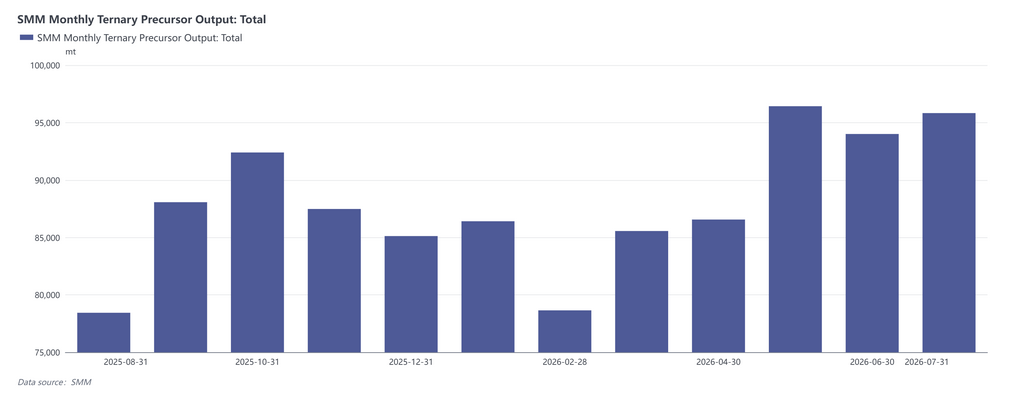
However, the top-tier precursor enterprises with relatively strong orders are highly integrated, with several possessing refined nickel production capacity and ample flexibility to adjust in-house nickel sulphate output. As a result, the downstream demand increase provides limited direct stimulus to spot nickel sulphate procurement. According to SMM data, the combined production schedule of the five leading integrated and semi-integrated enterprises rose 11% MoM in August, and in-house output can meet over 80% of their raw material needs, meaning the incremental demand for externally purchased nickel sulphate was not significant.
IV. Market Structure: Expanding Long-Term Contract Scale Squeezes Spot Order Space
A notable structural shift in the Q3 nickel sulphate market is the expansion in the scale of long-term contracts. SMM estimates show that monthly spot orders for nickel sulphate stood at roughly 3,500-4,500 mt in metal content in 2025 and Q1 this year. Against the backdrop of rising NMC demand, this scale has shrunk to around 2,000 mt in metal content in Q3. At the start of the quarter, spot orders were expected to gradually retreat from monthly just-in-time procurement to a supplementary role for long-term contracts in corporate purchasing strategies, with additional purchases made only when clear downstream demand increments or raw material supply disruptions occur. This has suppressed market activity in August and early September. Moreover, with no significant decline in nickel sulphate supply, downstream acceptance of spot prices remains generally low.
The expansion of long-term contracts stems from two factors. First, the high volatility in nickel prices and raw materials this year has intensified decision-making pressure on enterprises for spot orders, prompting a tendency to lock in demand through long-term contracts. Second, after persistent overcapacity, few new entrants have emerged, and industry supply chains have stabilized, with upstream and downstream enterprises gradually forming steady cooperative relationships. In the long term, the overall scale of long-term contracts is still expected to trend upward.
V. Market Outlook
As mentioned above, the supply and demand of nickel sulphate spot orders has shifted from relative tightness in Q2 to a slight surplus. From August to early September, prices are expected to be generally in the doldrums; after the downstream demand for the 'September-October peak season' becomes clear in September, the spot order market activity may recover to some extent, driving a rebound in nickel sulphate prices.