On August 6, the U.S. Bureau of Industry and Security (BIS) introduced a 100% domestic sales requirement for lithium-ion battery black mass and tungsten scrap, effective from August 27, 2026 to August 27, 2027. The move signals a stronger U.S. push to retain strategic secondary resources domestically.
Copper scrap was not included in the latest measure, although the U.S. has already proposed encouraging 25% of high-quality copper scrap to remain in the domestic market and has discussed a potential export licensing system.
SMM believes a black-mass-style 100% domestic sales requirement for copper scrap is unlikely in the near term. The main reason is that U.S. secondary copper processing capacity is still insufficient to absorb all domestic scrap supply. More than 40% of U.S. copper scrap is already consumed domestically, but exports remain an important outlet. Restricting exports too quickly could lead to inventory accumulation, weaker scrap prices and lower recycling incentives.
The Recycled Materials Association (ReMA) has raised similar concerns, arguing that export markets remain an important outlet for materials that cannot yet be processed domestically and that excessive restrictions could discourage investment in recycling infrastructure.
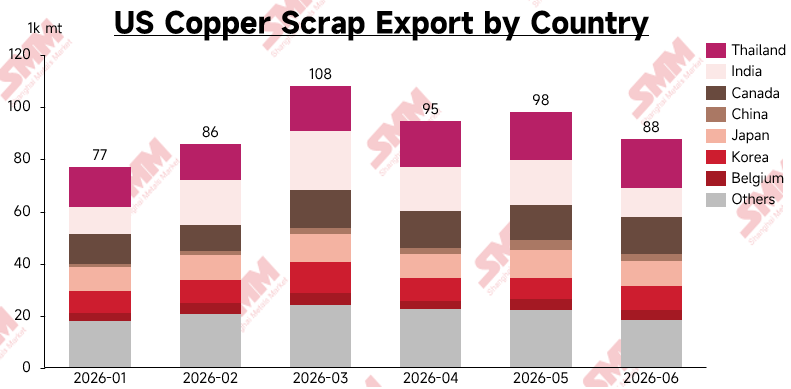
However, U.S. domestic copper scrap consumption is likely to rise as new secondary smelting, recycled copper rod and complex feedstock processing capacity comes online. This could gradually reduce the amount of high-quality scrap available for export.
The key issue for the global copper scrap market is therefore not that scrap generation will stop growing, but that new supply cannot increase rapidly, while freely tradable high-grade scrap is becoming increasingly scarce. Millberry and No.1 copper are already becoming harder to source as local consumers compete more aggressively for premium material.
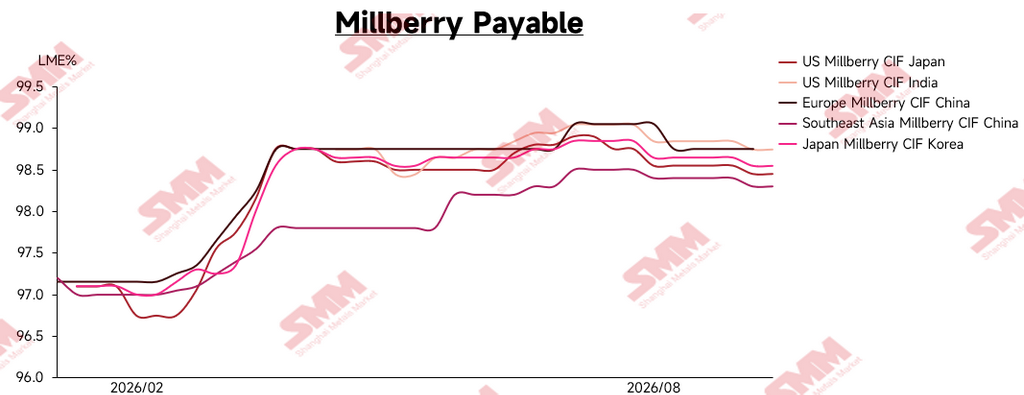
This trend is also reflected in pricing. Despite the recent rise in copper prices, Millberry pricing coefficients have remained resilient, supported by tight supply and low inventories across major consuming regions. SMM expects high-grade copper scrap prices and coefficients to remain elevated in the near term.