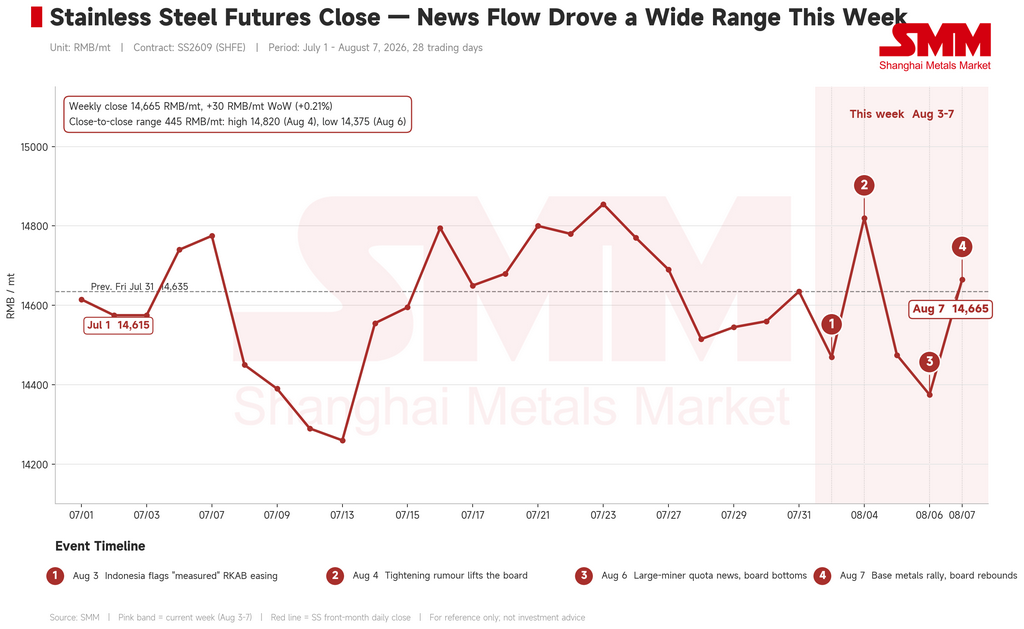
China's benchmark stainless steel futures contract (SS2609 on the Shanghai Futures Exchange) closed the week at RMB 14,665/mt (about $2,160/mt), up RMB 30/mt or 0.21% week on week, after a session-to-session range that saw the contract settle as low as RMB 14,375/mt (about $2,117/mt) on Thursday. The week's direction was set almost entirely by Indonesian nickel ore policy headlines rather than by stainless fundamentals.
Indonesian quota headlines drove the tape in both directions
Indonesia's RKAB system sets annual production and sales quotas for miners; a supplementary approval round is currently underway, and it governs how much laterite nickel ore reaches the market in the second half. On August 3, Indonesia's energy and mineral resources minister said the government would apply a "measured relaxation" to RKAB, and the market initially traded it as tightening: SHFE nickel jumped to RMB 132,650/mt (about $19,535/mt) on August 4, pulling stainless up with it.
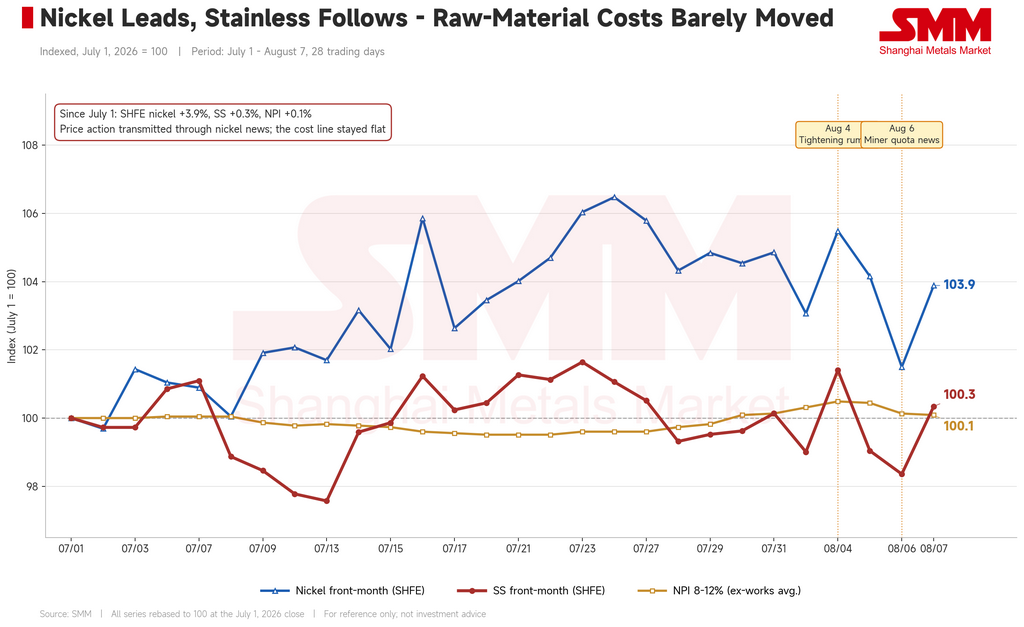
Two days later the trade reversed. Reports that a major Indonesian miner expects a large supplementary allocation sent SHFE nickel down to RMB 128,230/mt (about $18,884/mt), and stainless followed to its weekly low. The same policy thread was priced in opposite directions within four sessions.
Macro stayed a background drag
The US Federal Reserve held rates steady but kept a hawkish tone, with several officials openly discussing a hike. US July ADP private payrolls came in at just 44,000, well below the 70,000 consensus, which pulled hike expectations back and softened the dollar mid-week before caution returned ahead of the payrolls report.
Destocking against the seasonal grain
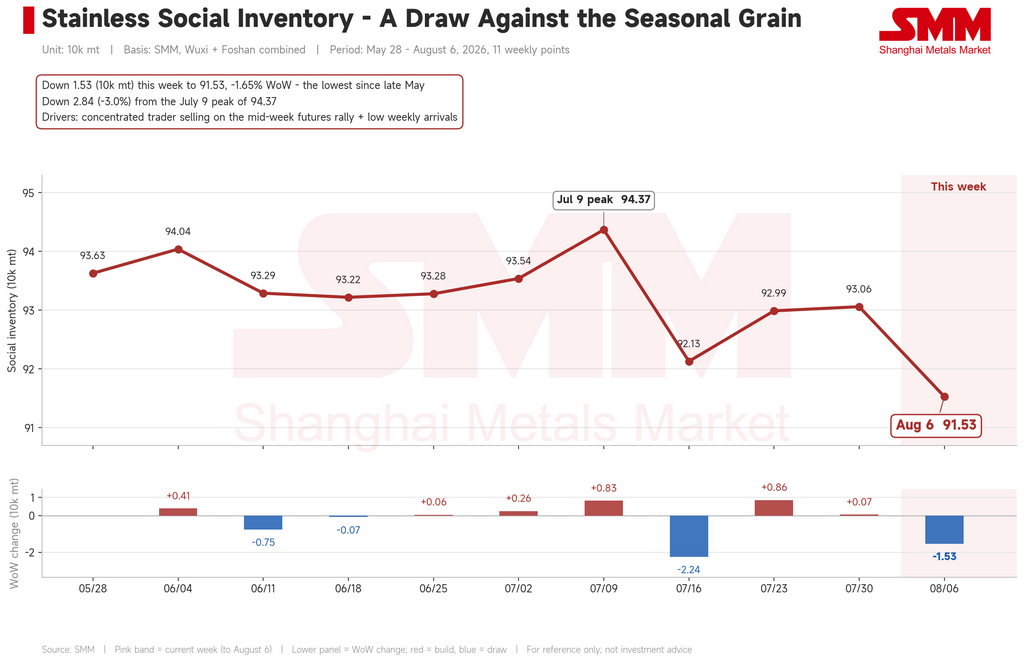
Combined social inventory in Wuxi (Jiangsu) and Foshan (Guangdong), China's two main stainless trading and distribution hubs, fell to 915,300 mt as of August 6, down 1.65% from 930,600 mt a week earlier. That reverses the recent mild build and is unusual in the low-demand summer season. Spot prices held up far better than futures, with mill list prices steady and trader quotes cut only modestly on down days.
Costs split; mill margins narrow
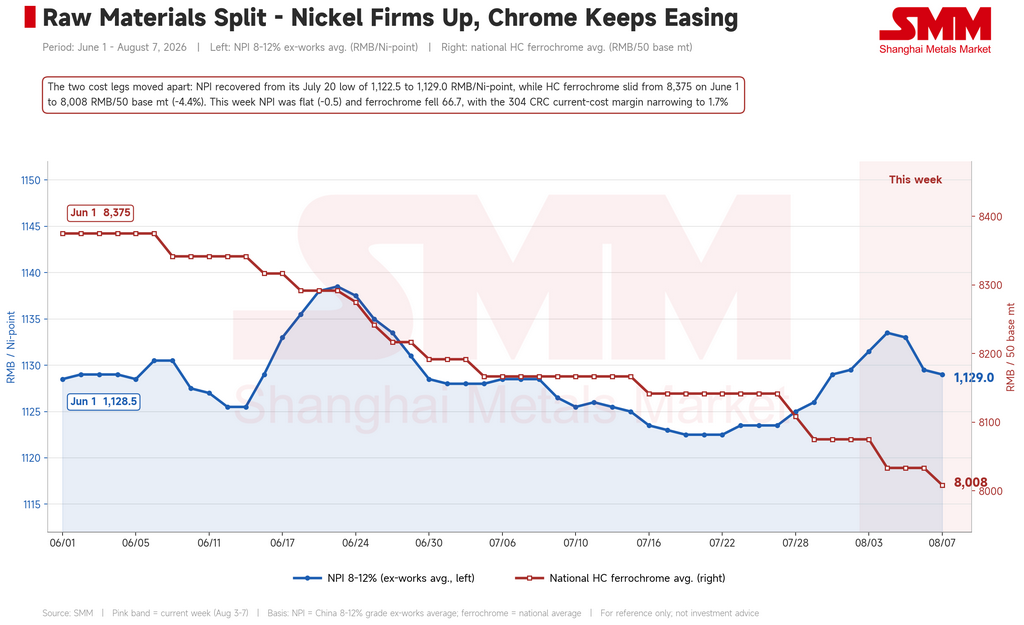
Nickel Pig Iron (NPI) was essentially flat at RMB 1,129 per nickel point (about $166.3), while high-carbon ferrochrome slipped to RMB 8,008 per 50 base mt (about $1,179). With finished prices falling faster than the raw material basket, the 304 cold-rolled coil margin narrowed to 1.7% on current-cost accounting — thinner, but still positive, so no production cuts are being forced.
Outlook
Range-bound trading is the base case near term. The upside is capped by seasonal demand weakness and rising August output as previously idled mills restart; the downside is limited by firm nickel-linked costs and inventories that are no longer building.