[SMM Rebar Production Schedule] Losses on Production Coupled with Cash Flow Pressures, August Rebar Planned Production Continues to Decline.

Published: Aug 7, 2026 13:18
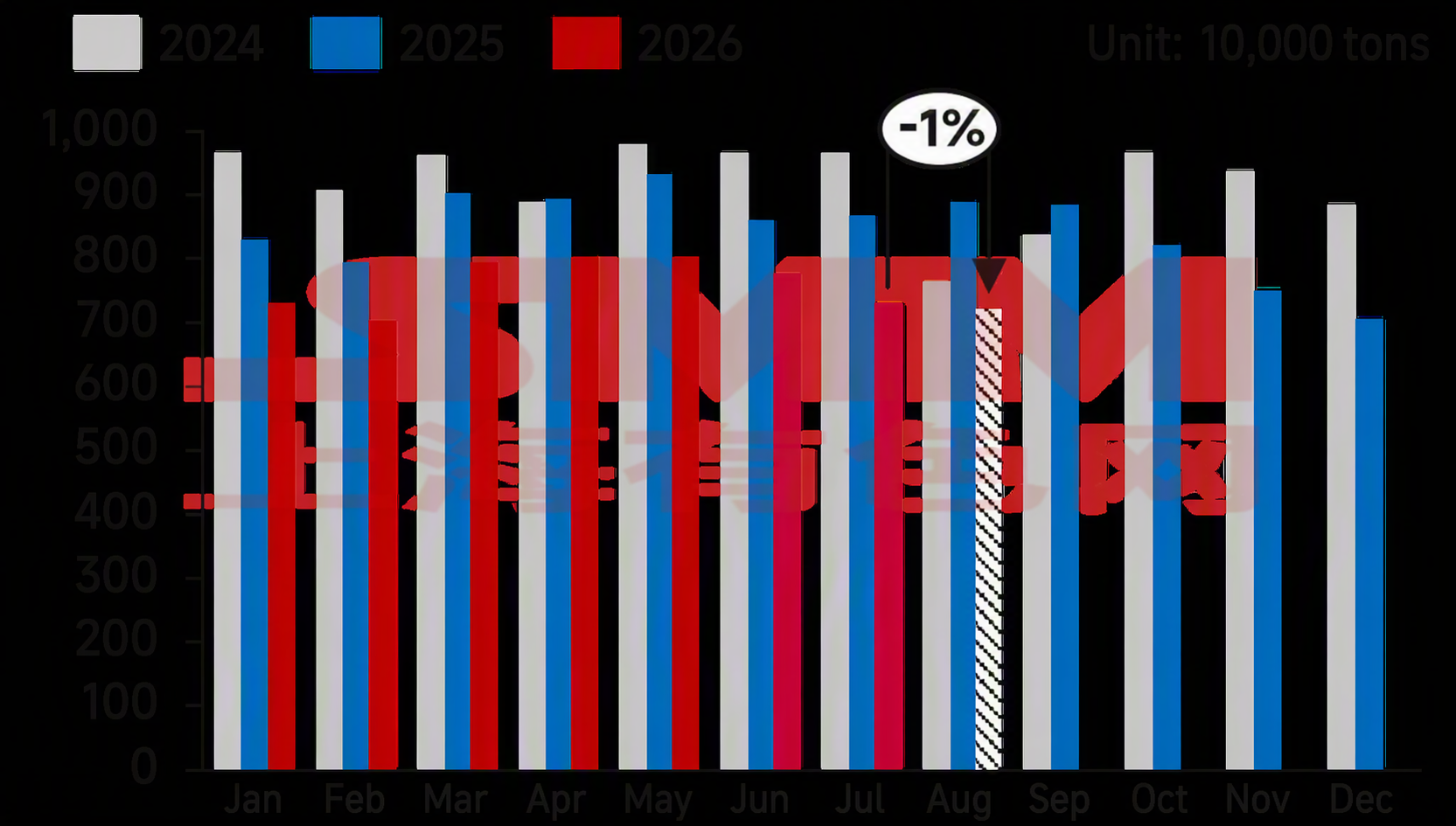
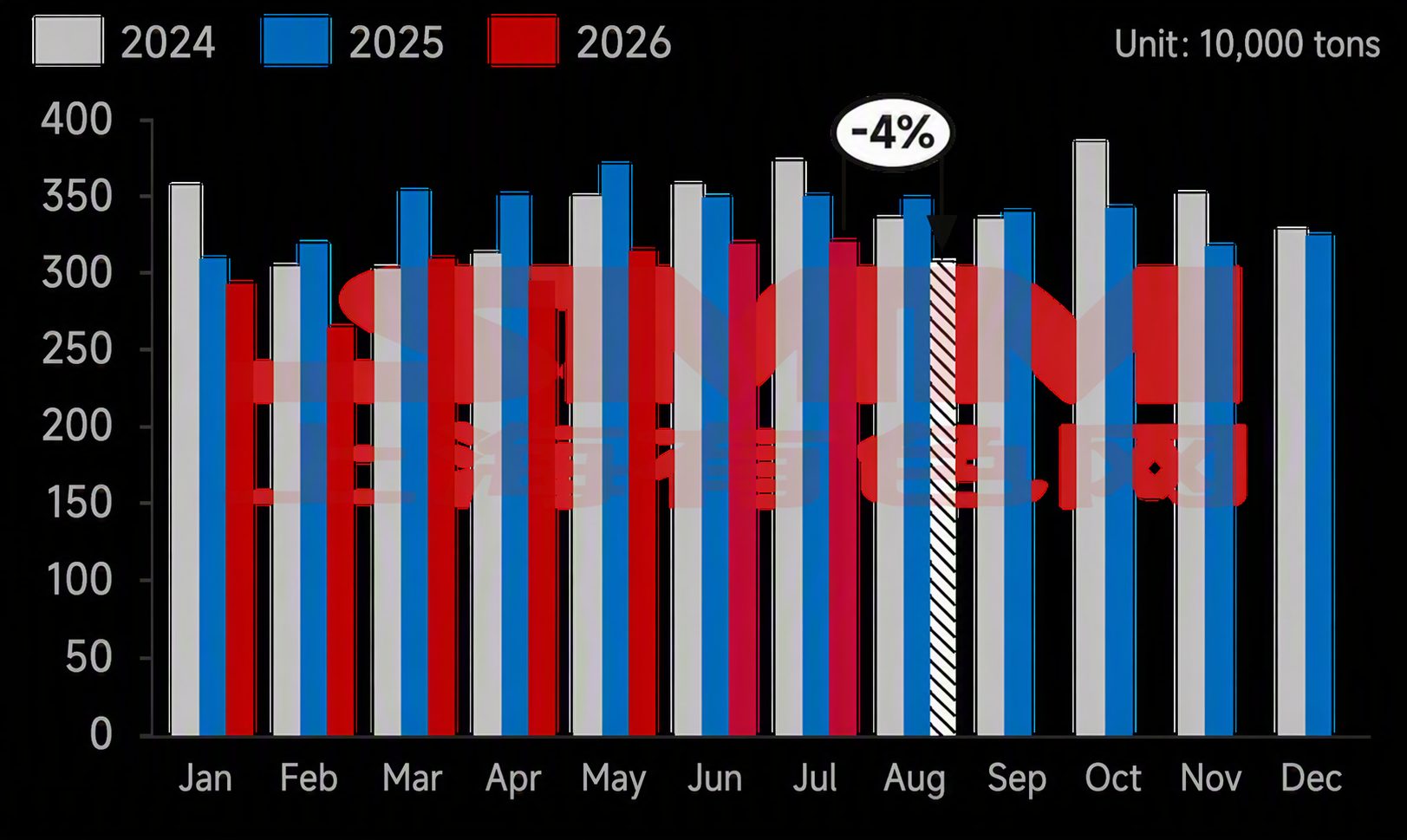
August rebar planned production at 7.2229 million mt, down 96,100 mt or 1.31% from July actual output. August wire rod planned production at 3.0722 million mt, down 120,800 mt or 3.78% from July actual output. Export planned production of long products at sampled steel mills in August was 590,000 mt, down 63,000 mt MoM, with billet export planned production at 320,000 mt, down 30,000 mt MoM.

Starting from October 2025, new steel mill export schedule data was added; the planned production of rebar and wire rod includes exports but excludes steel billet exports.

According to SMM survey of 56 sample key steel enterprises:

  • August planned rebar production was 7.2229 million mt, down 96,100 mt or 1.31% from actual production in July.
  • August planned wire rod production was 3.0722 million mt, down 120,800 mt or 3.78% from actual production in July.

Chart 1-2: Mainstream Building Materials Steel Mills' Rebar & Wire Rod Production Schedule (56 Mills)
Source: SMM

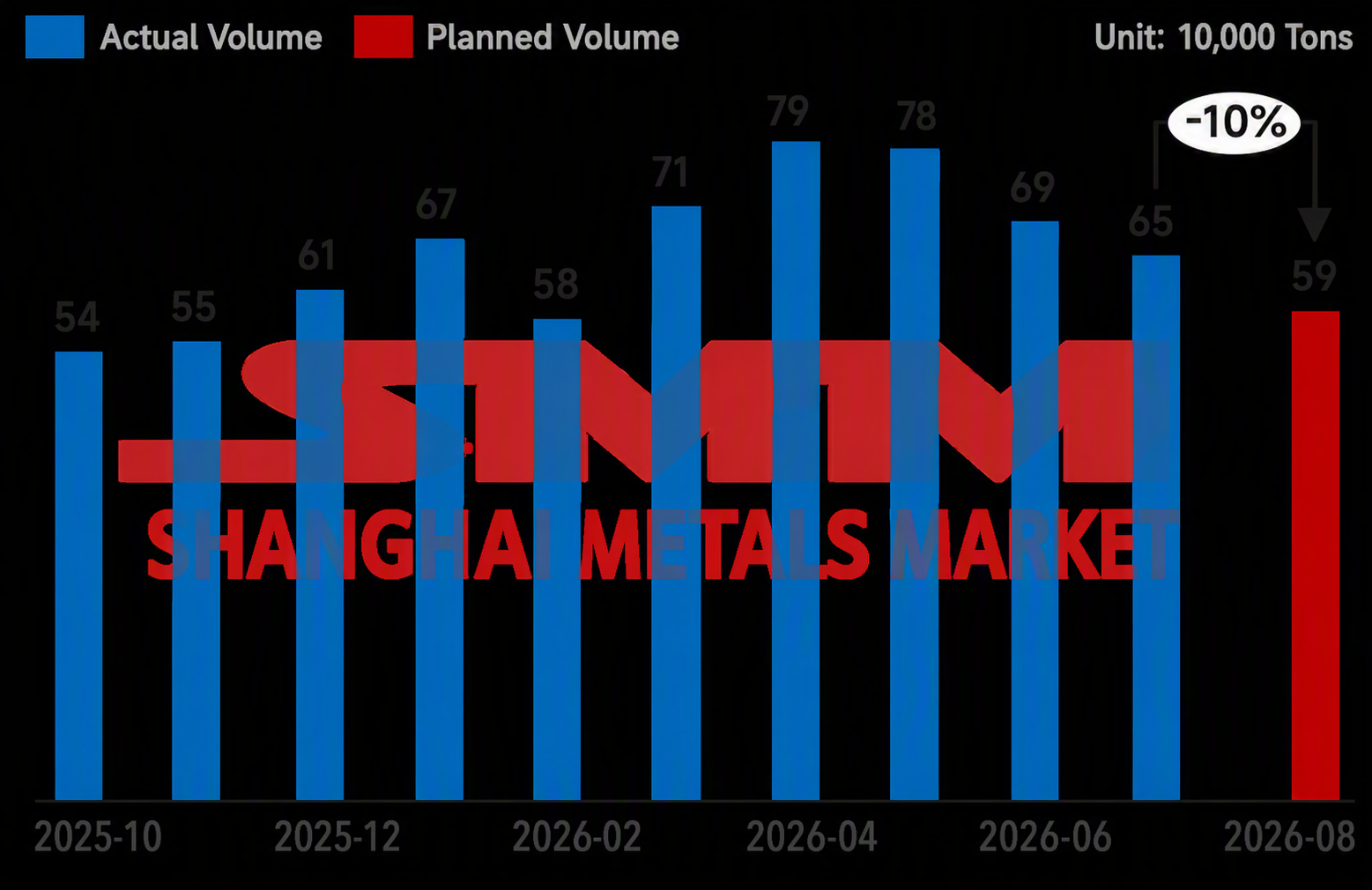
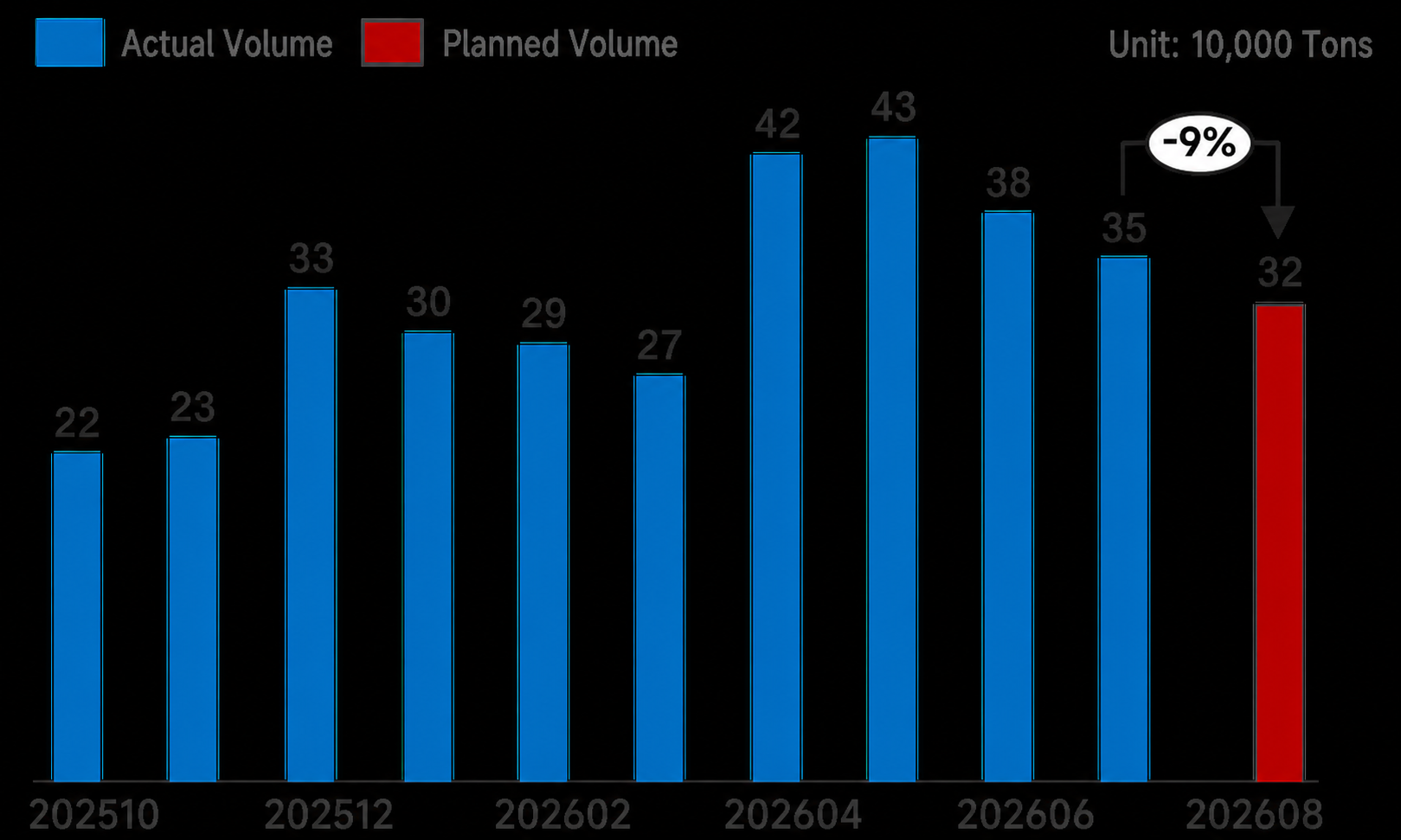
  • August long steel export schedule of sampled mills was 590,000 mt, down 63,000 mt MoM, of which billet export schedule was 320,000 mt, down 30,000 mt MoM.

Specifically, the decline in August long steel export schedule was mainly in billet, while rebar and coiled rebar orders continued to edge down. Recently, domestic export prices fell steadily, and overseas buyers became more cautious in purchasing willingness, with a strong wait-and-see sentiment; besides, recurring issues in the Strait of Hormuz navigation disrupted inquiries and procurement pace of some Middle Eastern clients, weighing on overall order intake performance. By region, billet orders at mills in Northeast China were not yet fully filled, and if domestic demand performance was not ideal, mills might take more orders; in East China, mills increased billet orders while rebar and coiled rebar orders decreased, mainly because a few mills, considering poor domestic demand, actively lowered prices to take billet export orders. Additionally, a few mills scheduled rolling line maintenance plans for August, reducing available rebar and coiled rebar order volume.

Chart 3: Sample Mills' Long Steel Export Schedule (Including Billet)
Source: SMM

Chart 4: Sample Mills' Billet Export Schedule
Source: SMM


By region:

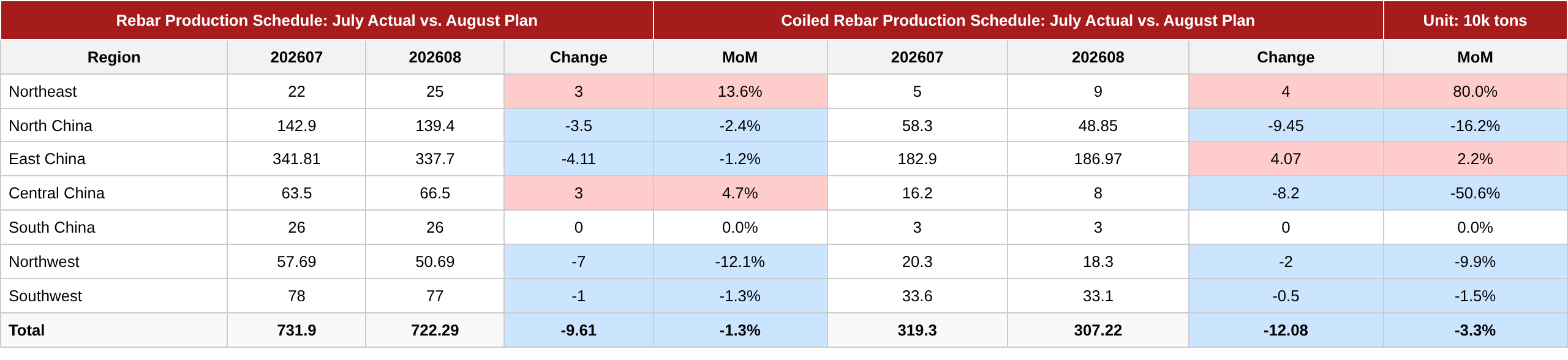
Table 1: Rebar and Coiled Rebar Production: Last Month's Actual vs This Month's Planned
Source: SMM

Northeast: Some mills reported that export billet order prices were not favorable, and export orders decreased, so some hot metal was diverted back to the building materials sector, with a relatively noticeable increase in wire rod.

North China: Current low profitability, combined with high inventory pressure at some mills, caused short-term risk of negative cash flow; some mills started blast furnace maintenance in early August, simultaneously conducted maintenance on wire rod rolling lines, resulting in a significant reduction in wire rod production in the region.

East China: Production conditions among regional mills diverged significantly. A Jiangsu-based mill conducted blast furnace and rolling line maintenance in July and resumed normal production in August, leading to a marked production rebound; a Shandong mill, considering building materials profitability lower than hot coil and maintaining a bearish outlook on the market trend, significantly reduced its August planned production; additionally, some other mills in the region scheduled maintenance plans for August, so overall planned production still had downside room.

Central & South China: Some producers flexibly adjusted production pace, held expectations for demand improvement in mid-to-late August, and planned to slightly increase rebar output; however, some mills planned to suspend wire rod rolling lines in August due to sluggish wire rod transactions.

Northwest China: Mills in the region suffered from poor production profitability, and some conducted blast furnace maintenance in August, leading to a notable decline in output.

Southwest China: Mills in the region mostly maintained prior production levels, with output changing little.


Cost side:

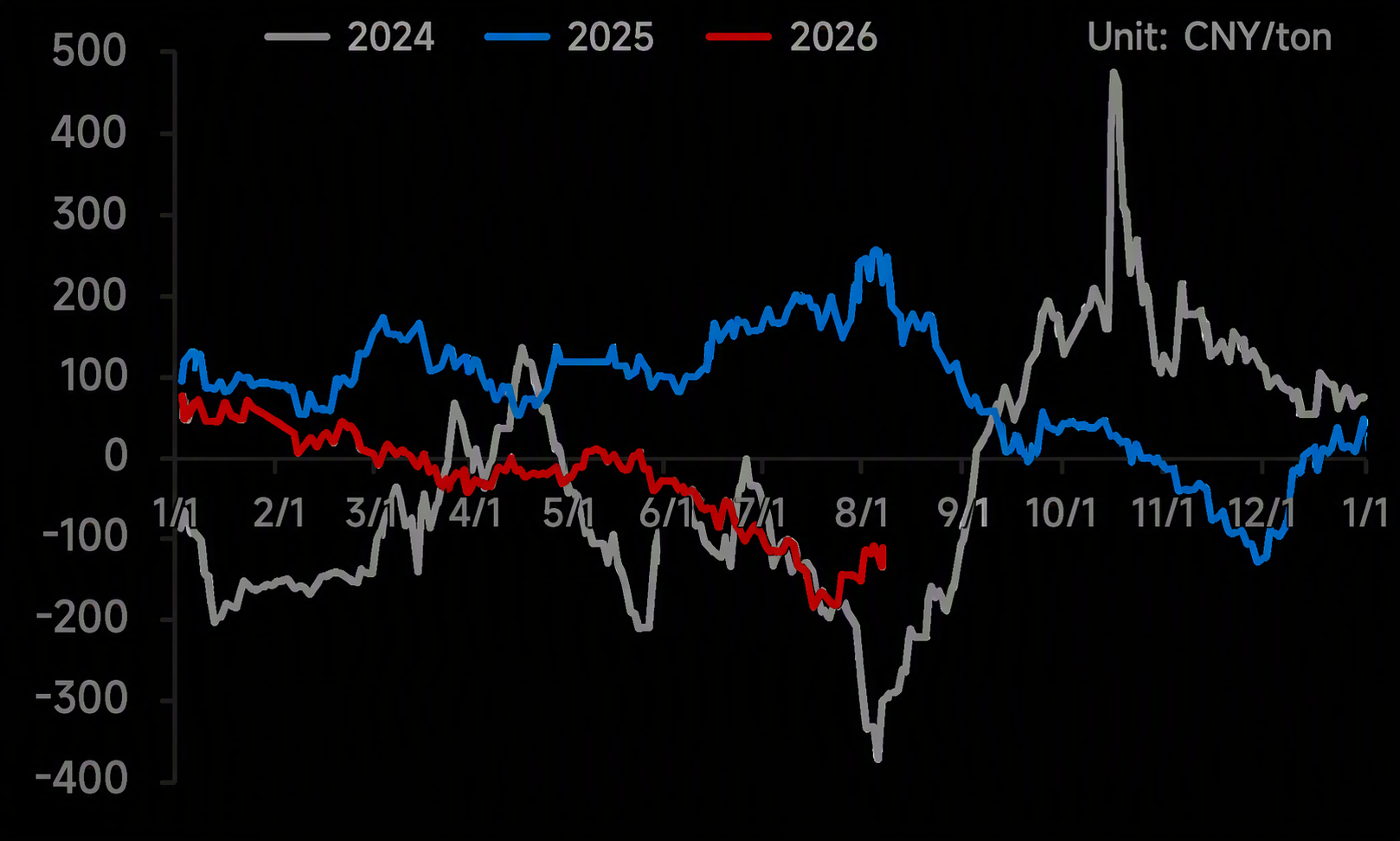
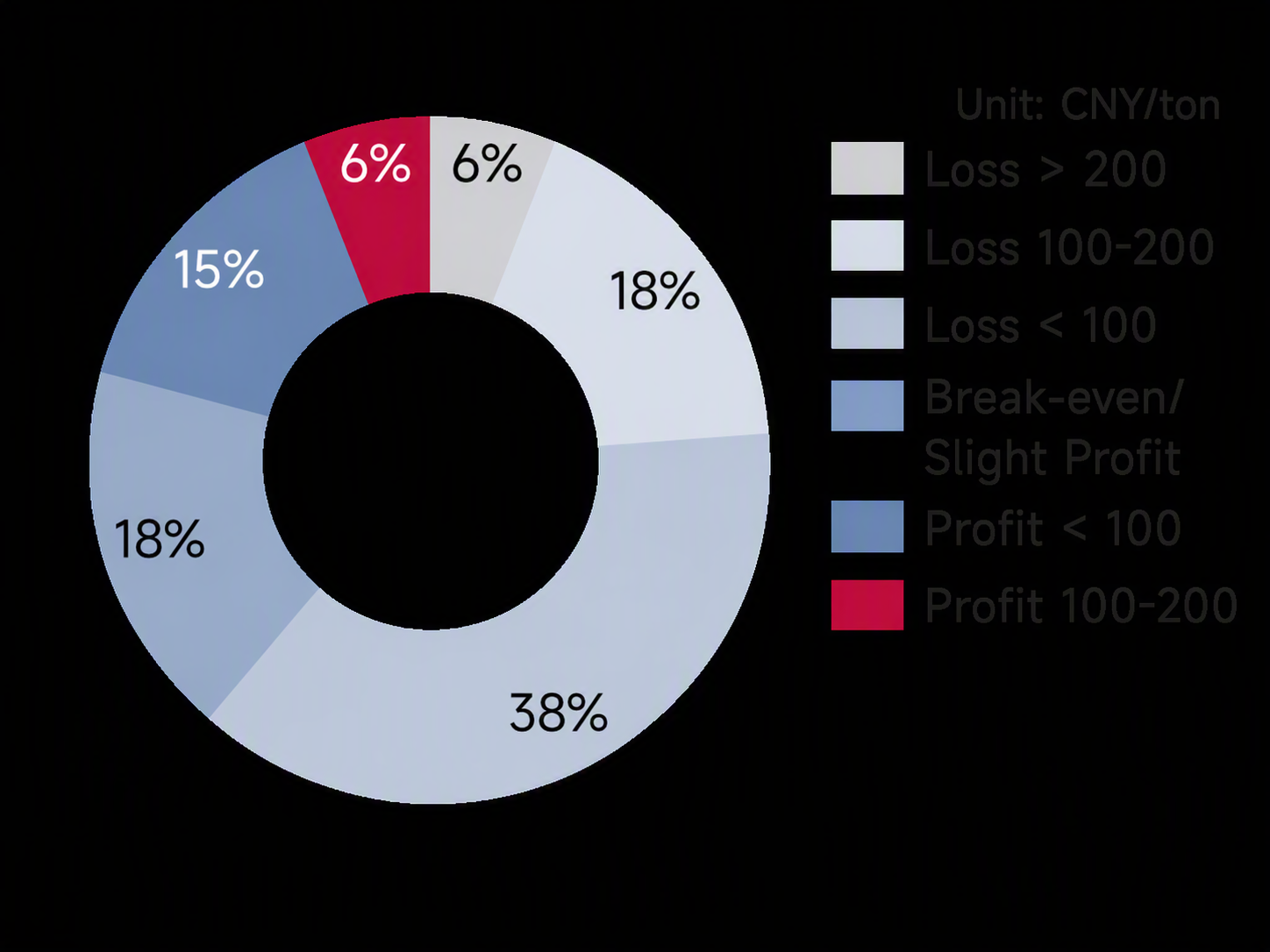
The third round of coke price cuts was implemented, with a fourth round expected later, while iron ore prices hit a bottom in stages, weakening cost support. Earlier, spot price declines outpaced those of raw materials, widening mill losses. Currently, the steel mill profitability ratio stands at 21.4%, deteriorating further MoM.Prevailing profit levels now range between -200 and 0 yuan/ton.

Chart-5: Real-time profit trends for rebar production at steel mills from 2024 to date
Source: SMM

Chart-6: Marginal profit conditions for rebar at sample steel mills
Source: SMM


Looking ahead:

Some steel mills have already fallen into losses, reducing production enthusiasm. Among them, mills in Northwest, North, and East China, burdened by unprofitable operations and high in-plant inventory pressure, recently planned maintenance on blast furnaces and rolling lines, so planned construction steel output in August will decline further. Wire rod demand performed worse than rebar, leading mills in North and Central China to suspend wire rod lines; therefore, the planned MoM decline in wire rod output is larger than that of rebar.

In summary, steel mills remain profit-oriented, showing low enthusiasm for construction steel production during loss-making phases. Coupled with the August demand transition from slack to peak season, output will continue to fall to the lowest level of the year. However, as September arrives, weather-affected demand performance will improve; moreover, with some new projects commencing, overall market demand will recover, and mills' willingness to proactively increase production may rise.

Data Source Statement: Except for publicly available information, all other data are processed by SMM based on publicly available information, market communication, and relying on SMM's internal database model. They are for reference only and do not constitute decision-making recommendations.

Images in this article contain AI-translated captions for reference only.

For any inquiries or for more information, please contact: lemonzhao@smm.cn
For more information on how to access our research reports, please contact:service.en@smm.cn
Related News
[SMM Stainless Steel Daily Review] Strengthening Nonferrous Metals Sector Drives SS Futures to Stop Falling and Rebound, While Weak Spot Stainless Steel Inquiries Limit Upward Momentum
3 mins ago
[SMM Stainless Steel Daily Review] Strengthening Nonferrous Metals Sector Drives SS Futures to Stop Falling and Rebound, While Weak Spot Stainless Steel Inquiries Limit Upward Momentum
Read More
[SMM Stainless Steel Daily Review] Strengthening Nonferrous Metals Sector Drives SS Futures to Stop Falling and Rebound, While Weak Spot Stainless Steel Inquiries Limit Upward Momentum
[SMM Stainless Steel Daily Review] Strengthening Nonferrous Metals Sector Drives SS Futures to Stop Falling and Rebound, While Weak Spot Stainless Steel Inquiries Limit Upward Momentum
[SMM Stainless Steel Daily Review] Nonferrous Metals Strengthening Drives SS Futures to Stop Falling and Rebound, Spot Stainless Steel Inquiry Weak with Limited Upward Momentum According to SMM on August 7, SS futures generally stopped falling and rebounded. The nonferrous metals sector strengthened collectively today, driving SS prices to rise in tandem. As of the midday close, the most-traded SS contract settled at 14,640 yuan/mt. In the spot market, although SS futures gave a clear signal to stop falling and rebound, purchase demand from downstream was largely released in the mid-week when prices were high. Intraday market purchase inquiries remained weak, and the upward momentum of spot offers from traders was very limited. The most-traded SS futures contract. At 10:15 a.m., SS2609 settled at 14,570 yuan/mt, up 105 yuan/mt from the previous trading day. Spot premiums for 304/2B in the Wuxi region were in the 400-750 yuan/mt range. In the spot market, the average price of cold-rolled 201/2B coil in Wuxi held steady; for cold-rolled mill edge 304/2B coil, the average price in Wuxi fell by 75 yuan/mt, and in Foshan by 50 yuan/mt; cold-rolled 316L/2B coil prices in the Wuxi region were flat; hot-rolled 316L/NO.1 coil offers in Wuxi remained unchanged; cold-rolled 430/2B coil prices in both Wuxi and Foshan were flat. This week, stainless steel futures were disturbed by both industry news and capital flows, presenting wild swings overall, with a fierce tug-of-war between longs and shorts. During the week, news about Indonesia's RKAB nickel ore supplementary quota repeatedly disturbed market expectations, and combined with shifts in capital flows on futures, SS futures first rose then fell, once exploring upward during mid-week...
3 mins ago
[Vietnam’s top 10 steel and building-material firms contribute VND 19 trillion to 2025 budget]
10 mins ago
[Vietnam’s top 10 steel and building-material firms contribute VND 19 trillion to 2025 budget]
Read More
[Vietnam’s top 10 steel and building-material firms contribute VND 19 trillion to 2025 budget]
[Vietnam’s top 10 steel and building-material firms contribute VND 19 trillion to 2025 budget]
Vietnam’s 10 largest steel and building-material enterprises are expected to contribute a combined VND 19.04 trillion to the 2025 state budget, down 2.9% year on year but up 40.6% from 2023. Hoa Phat Group leads with VND 12.95 trillion, accounting for about 68% of the Top 10 total, followed by Hoa Sen Group at VND 1.23 trillion, VICEM at VND 1.11 trillion and VNSTEEL at VND 927 billion. Steelmakers accounted for 85.5% of the total, with VAT on imported goods representing a major source of payments for several companies. In contrast, resource taxes, land-related payments and environmental fees made up a significant share of VICEM’s contribution. The figures also reflect diverging market conditions across steel segments: Vietnam’s finished steel output rose 9.6% in 2025, while sales increased 8.7%, supported mainly by domestic demand. Construction steel sales grew 12% and HRC sales rose 28%, while galvanized and cold-rolled steel remained under pressure from weaker exports.
10 mins ago
【Glencore Reassesses South African Coal Growth Projects as Rail Capacity Recovers】
36 mins ago
【Glencore Reassesses South African Coal Growth Projects as Rail Capacity Recovers】
Read More
【Glencore Reassesses South African Coal Growth Projects as Rail Capacity Recovers】
Glencore said it is reassessing coal growth projects in South Africa that had previously been slowed by persistent logistics constraints, as Transnet Freight Rail continues to improve coal transportation capacity. Coal exports through Richards Bay Coal Terminal recovered from 47.21 million tonnes in 2023 to 57.66 million tonnes in 2025, while shipments reached around 30 million tonnes in the first half of 2026. Full-year exports could rise to 60–62 million tonnes, with Glencore expecting rail coal capacity to recover toward approximately 70 million tonnes per year over the next four to five years. The company said improvements in rail infrastructure and the addition of 105 Class 23E locomotives have eased transportation bottlenecks. With Asian energy tightness supporting thermal coal prices, better rail performance is improving the economics of potential South African coal expansion. However, Glencore has not yet formally approved the projects, and no additional production volumes or start-up timelines have been disclosed. If continued rail improvements lead Glencore and other South African producers to restart expansion plans, seaborne thermal coal supply from South Africa could increase over the medium term, potentially adding supply-side pressure to international thermal coal prices.
36 mins ago
Register to Continue Reading
Gain access to the latest insights in metals and new energy
Already have an account?Sign in here
[SMM Rebar Production Schedule] Losses on Production Coupled with Cash Flow Pressures, August Rebar Planned Production Continues to Decline. - Shanghai Metals Market (SMM)