SMM, August 6 –
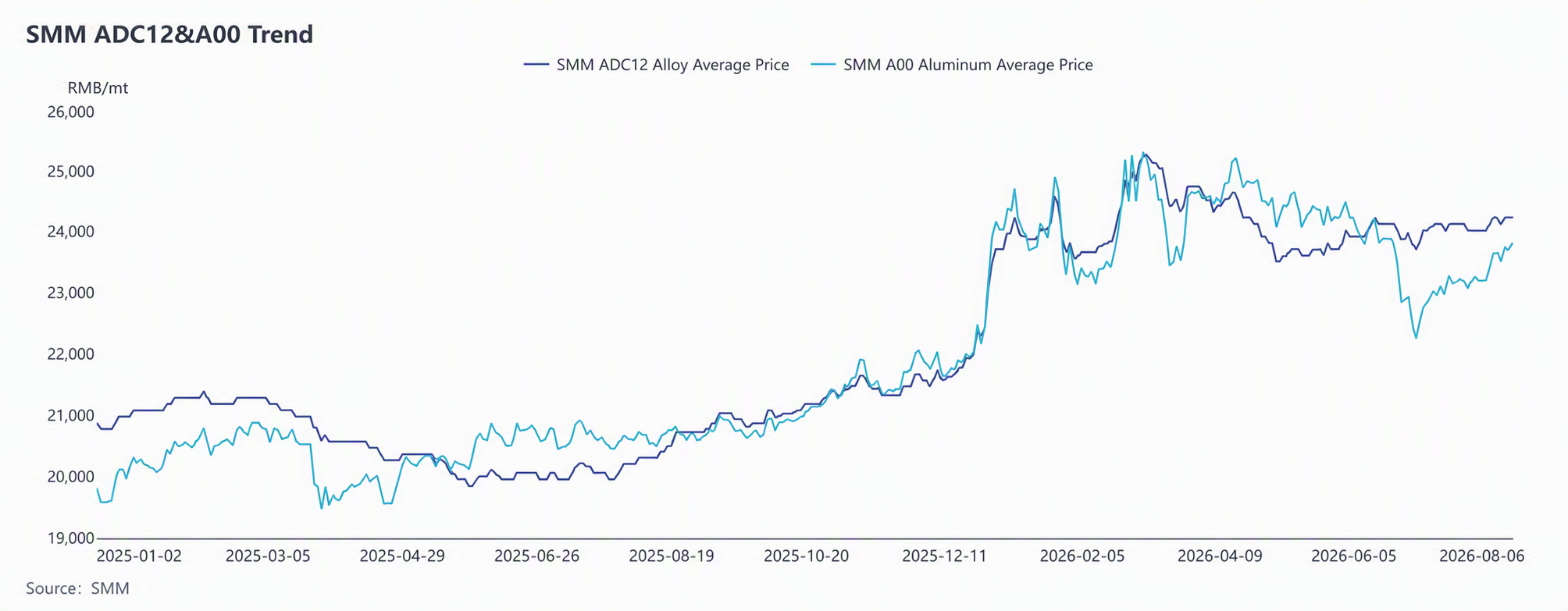
First, let's review the price trend of secondary aluminum alloy in July: In July, ADC12 prices showed a high-level consolidation pattern overall, gradually climbing from 23,700 yuan/mt at the start of the month to around 24,100 yuan/mt in mid-month. Subsequently, constrained by weak off-season demand, prices lacked upward momentum and moved sideways in the 24,000–24,200 yuan/mt range. As of August 6, the price was quoted at 24,200 yuan/mt, up a cumulative 500 yuan/mt from early July. Since July, the price spread between ADC12 and A00 has been narrowing. The spread hit an intra-year high of 1,440 yuan/mt early in the month. Then, as A00 aluminum prices surged rapidly while ADC12’s increase was limited, the spread gradually compressed, narrowing to just 570 yuan/mt by July 31.
Price trends and spreads of A00 and ADC12 in recent years:
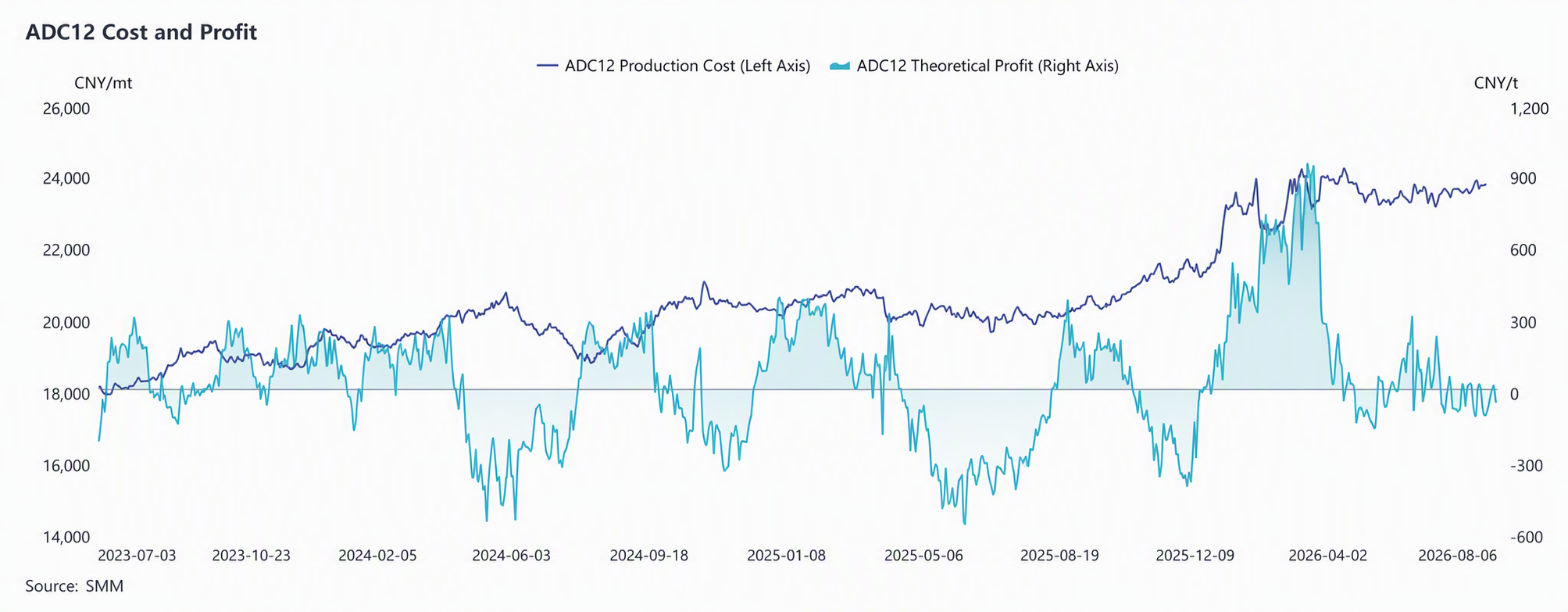
Cost side, SMM’s latest data shows that in July 2026, the theoretical total cost of the ADC12 industry rose 0.4% MoM to 23,518 yuan/mt, with the increase mainly driven by higher aluminum scrap costs.By component, the per-ton aluminum scrap cost in July increased by 105 yuan MoM to 21,265 yuan, maintaining a 90.4% share; copper and silicon costs saw relatively small changes, at 871 yuan/mt and 480 yuan/mt, accounting for 3.7% and 2.0%, respectively.
In July, tight aluminum scrap supply remained the core factor underpinning ADC12 prices. Rising primary aluminum prices drove aluminum scrap prices higher, and the price difference between A00 aluminum and aluminum scrap stayed low, continuously cementing the scrap cost support for ADC12 prices. The market at one point focused on the feasibility of replacing scrap with primary aluminum in ADC12 production, but this route generally lacked economic viability; primary aluminum’s actual cost advantage was not significant, and such replacement was more an expedient measure for enterprises to cope with invoice shortages rather than a cost-driven proactive substitution. As primary aluminum prices strengthened gradually during the month, the substitution window narrowed further, and the scale of substitution did not expand significantly.
National ADC12 theoretical profit/loss trend:
Demand side, in July, overall order performance was moderate, but in late July, impacted by high temperatures, downstream enterprises gradually entering summer holidays, and a slowdown in production pace, end-user procurement enthusiasm weakened, and demand experienced a marginal decline. In early August, due to the high-temperature off-season, room for demand improvement is limited; as the summer holiday period gradually ends in late August, automotive industry chain enterprises will resume production, and order releases are expected to drive marginal improvement in demand. However, the overall recovery pace still needs to monitor end-use consumption and OEM production schedules.
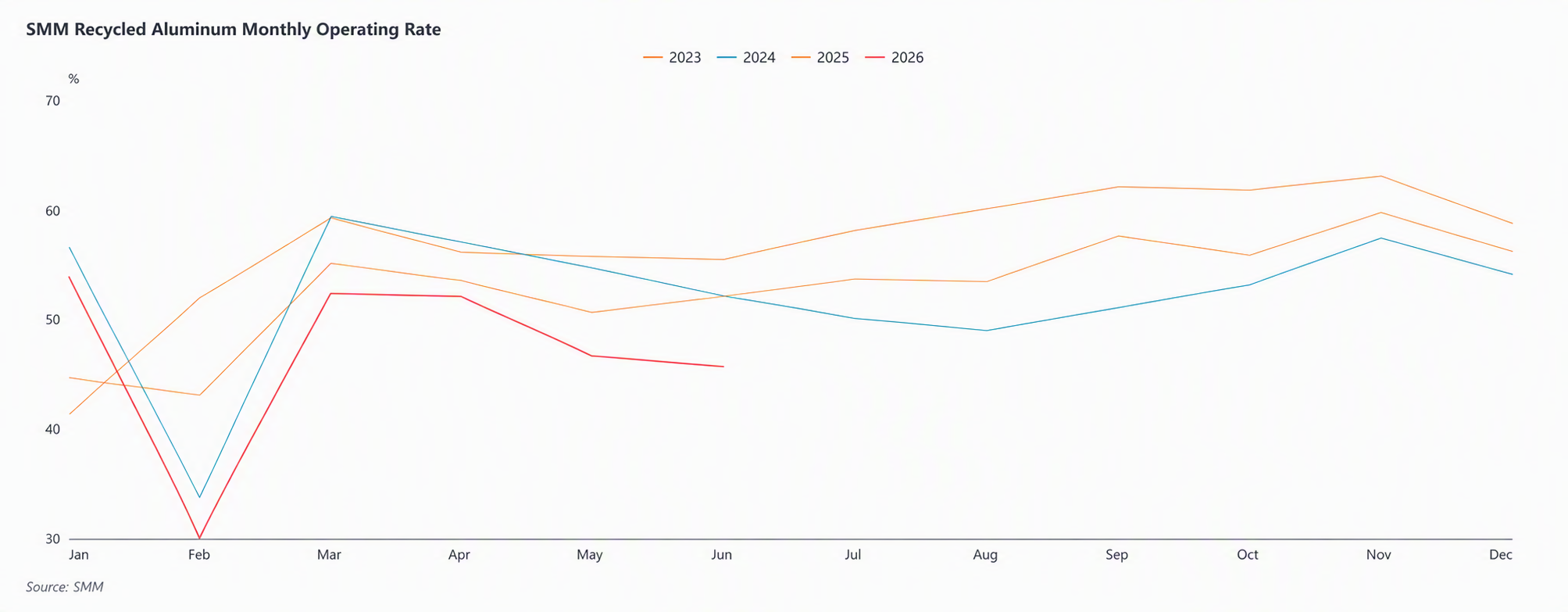
Supply side, in July, the operating rate of the secondary aluminum alloy industry was 46.8%, up 1.2 percentage points MoM but down 6.8 percentage points YoY, with enterprises’ operating rates showing mixed performance. Compliant aluminum scrap and insufficient invoices remain the core factors constraining production. Although policies in some regions have seen marginal easing, the limited invoice quotas exert a weak driving effect on operating rates. Due to significant production cuts from May to June, the industry has limited room for further reductions. Combined with improvements in raw materials and orders for some enterprises, this has driven a slight rebound in the overall operating rate, though it remains below the same period last year. In August, the production of secondary aluminum alloy is expected to remain stable overall, with insufficient basis for a significant increase. Some enterprises with improved raw material supply or better orders have room for a slight recovery in output, but the industry as a whole will continue to operate stably at low levels.
Inventory side, the domestic social inventory of cast aluminum alloy ingots currently stands at 24,000 mt, having destocked for ten consecutive weeks, with a cumulative destocking of 38,000 mt. In the early stage of destocking, the operating rate remained low and new arrivals into warehouse were limited. Combined with a favorable spot-futures price spread, spot dealers were active in selling, leading to rapid inventory destocking. Starting from mid-to-late July, the traditional consumption off-season deepened, and the pace of destocking slowed week by week. In August, the continued strengthening of futures pushed the spot-futures structure from contango to parity or even backwardation, narrowing the advantage of spot dealers in selling, with some low-inventory dealers switching to buying on dips, further damping the momentum of warehouse withdrawals. Looking ahead, low operating rates will continue to constrain new supply, but with weak demand in the off-season, the momentum for destocking is weakening. If the spot-futures structure further shifts to backwardation, spot dealer purchases are expected to increase, and after mid-August, social inventory may shift from destocking to buildup.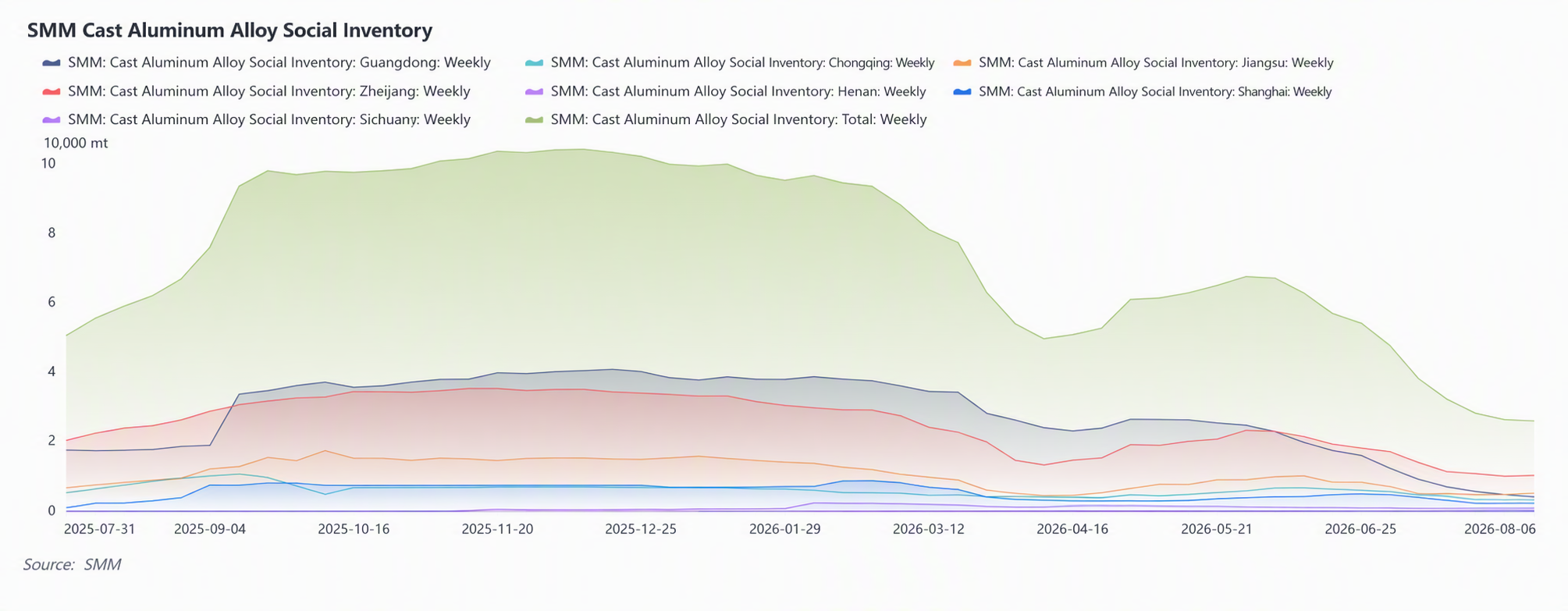
In August, ADC12 prices are expected to continue consolidating at highs. Cost side, the current tight supply of aluminum scrap and high costs of tax invoice compliance will not significantly improve in the short term, and the bottom support for ADC12 remains solid. Demand side, the first half of August is still in the tail end of the traditional off-season, with hot weather and holiday impacts for some downstream enterprises not fully dissipated, leaving limited room for end-user order improvement, and price upticks still lack clear demand drivers. However, as the peak season initiation phase gradually kicks in from mid-to-late August, end-user orders for automobiles and others are expected to see marginal improvements, with the demand side gradually providing support. Supply side, the industry's low operating state is unlikely to recover rapidly, and the tight supply-demand pattern will continue to support prices. Meanwhile, as the price spread between Chinese and overseas markets continues to narrow, import resources are expected to increase, but the near-term supply scale is limited and unlikely to significantly change the supply-demand pattern in China. Overall, ADC12 prices in August are expected to mainly consolidate at highs, with the trading range to watch at 23,700–24,400 yuan/mt. Near-term upside room depends on the strength of demand recovery and aluminum price performance. If peak season orders gradually pick up and supply contraction continues, prices may have further upside potential. But if demand recovery falls short of expectations, the market will maintain a range-bound pattern supported by costs. Going forward, key attention will be paid to the recovery of aluminum scrap supply, changes in tax invoice policies, the pace of import resource inflows, and the launch of orders during the September-October peak season.
![Cost Support and Demand Constraints Coexist, ADC12 Consolidates at Highs [SMM Analysis]](https://imgqn.smm.cn/usercenter/tkWbz20251217171654.jpg)