Titanium Dioxide Inventory Climbs, Prices Weaken in July; Fundamentals Run Bearish
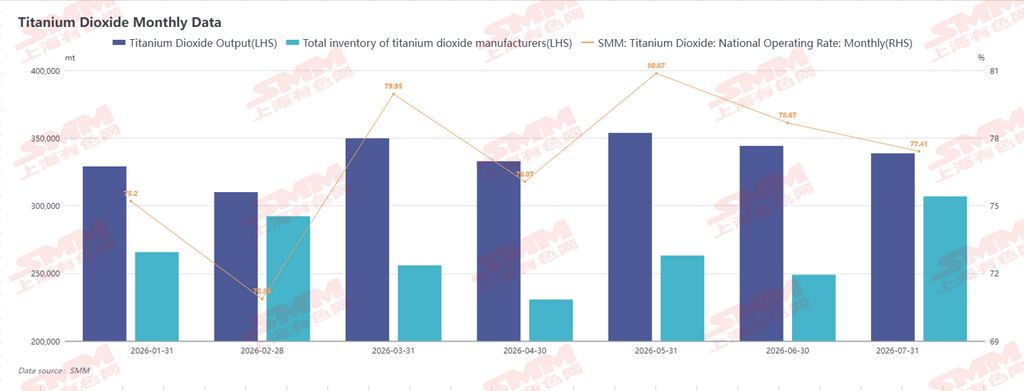
In July 2026, China's titanium dioxide production reached 338,700 mt, edging down 1.59% MoM, while producer inventory rose to 306,800 mt, up 23.26% MoM. In terms of exports, June titanium dioxide exports totaled 185,300 mt, up 21.28% MoM and up 40.43% YoY; H1 cumulative exports were 1.0684 million mt, up 16.56% YoY.
Rutile titanium dioxide closed at 13,600-15,600 yuan/mt, with an average price of 14,600 yuan/mt, down 1,900 yuan/mt from the start of the month.
The domestic titanium dioxide market stayed weak in July, with the price center moving steadily lower. On the supply side, although some producers planned to cut production at month-end, the output reduction was limited, and the overall July operating rate remained at 77.41%, leaving producer inventory pressure to accumulate further. On the demand side, downstream industries such as coatings and plastics were in the traditional off-season, with end-user procurement sluggish and demand support insufficient. To ease inventory pressure, small and medium-sized producers took the lead in cutting prices to sell, and on July 28 some industry leaders also lowered their quotes, further weighing on market sentiment. With prices falling and cost pressure from sulphuric acid and other raw materials, enterprise losses deepened. A few producers cut or halted production, leading to a slight decline in the industry operating rate, but this did not effectively alleviate inventory pressure or mediocre demand, and the market overall remained in the doldrums.
In the short term, the small decline in industry operating rates is unlikely to reverse the supply-strong, demand-weak fundamentals. With the summer break continuing in China and overseas, demand recovery will take time, and the titanium dioxide market is expected to remain in a pattern of edging down. In the medium and long term, key focus in late August and H2 should be on new overseas orders and the pace of recovery at end-user coatings markets. On the cost side, sulphuric acid prices are steady for now. If supply-demand mismatch disturbances emerge later, there is still potential for a rebound.
Titanium Sponge Production Keeps Rising in July, Prices Under Pressure; Supply-Demand Imbalance Hard to Resolve in Near Term
In July 2026, China's titanium sponge production was 27,000 mt, up 5.45% MoM; cumulative production in January-July reached 174,800 mt, up 12.26% YoY. In terms of exports, June titanium sponge exports were 910 mt, and H1 cumulative exports totaled 3,851 mt, up 6.21% YoY.
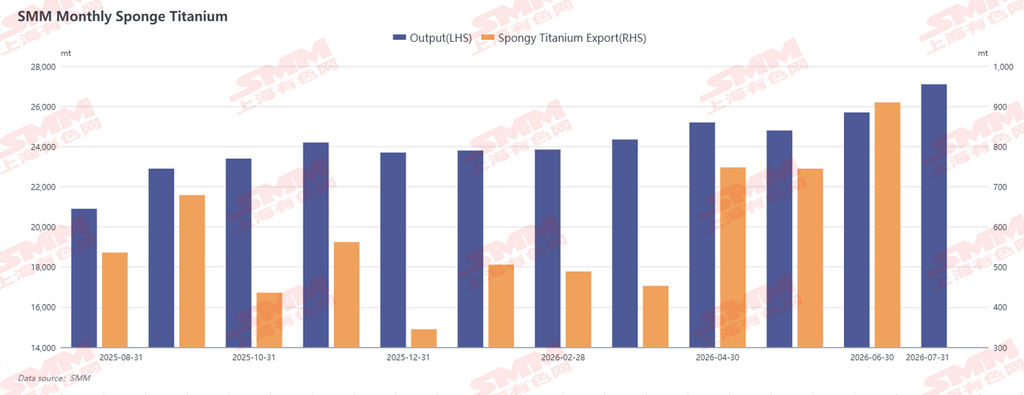
On the price front, grade 0 titanium sponge closed at 45,000-46,000 yuan/mt, with an average price of 45,500 yuan/mt, down 3,000 yuan/mt from the start of the month.
The titanium sponge market maintained a supply-strong, demand-weak pattern in July. On the supply side, inventory pressure for civilian products continued to mount, and with capacity expanding further this year, downstream push for lower prices became more evident in mid-to-late July, with most deals settled near the lower end of price ranges. On the demand side, the domestic trade market entered the traditional off-season, inventory pressure in the titanium materials sector kept accumulating, downstream players largely pushed for lower prices when purchasing raw materials, and exports were affected by summer break off-season with fewer orders. On the policy front, the Ministry of Commerce recently issued an announcement on further improving the reporting and handling of violations in export controls on strategic mineral dual-use items, clarifying the right of all citizens to report and the rewards for verified reporting, effective from July 1. Export supervision on titanium metal products is tightening, and H2 exports are expected to pull back somewhat.
In the short term, titanium sponge enterprises plan to carry out maintenance at end-Q3, but actual implementation remains to be seen. In August, the market is expected to continue the supply-strong, demand-weak pattern, with prices in the doldrums and consolidating. In H2, the overall titanium metal market is set to contract in overseas trade, while domestic trade stays stable. With new capacity gradually coming online, the market surplus pattern is hard to change, and prices are expected to move sideways.
![Titanium Concentrates Oversupply Pattern Unchanged, Market Weakness Continues [SMM Titanium Spot Express]](https://imgqn.smm.cn/usercenter/HGHao20251217171725.jpg)