Iron ore prices drifted lower this week, with the most-traded contract I2609 leading the decline in ferrous metals, hitting an intraday low of 706 yuan/mt, a new year-to-date low. This round of decline was driven by multiple factors: on one hand, policy expectations from the Politburo meeting fell through, causing market sentiment to weaken markedly, and speculative funds accelerated their exit; on the other hand, fundamental pressure continued to intensify—last week, port arrivals of iron ore surged 54% WoW, while in the Tangshan area, stricter environmental protection-driven production restrictions led to a roughly 20% reduction in hot metal output at some steel mills, with daily average hot metal production falling 16,000 mt, clearly shrinking demand and significantly accumulating port inventories. Under the combined weight of weak fundamentals and bearish sentiment, the most-traded contract posted a maximum intraday decline of over 3%. Compared to the drastic correction in futures, port spot cargoes showed relative resilience, with a markedly narrower decline. Particularly noteworthy is that some ore types with structurally tight supply, such as mixed fines and Ukrainian concentrates, saw relatively small price declines due to limited tradeable resources, demonstrating some grade premium resilience.
Chart: MMI 61% Port Spot Price Index
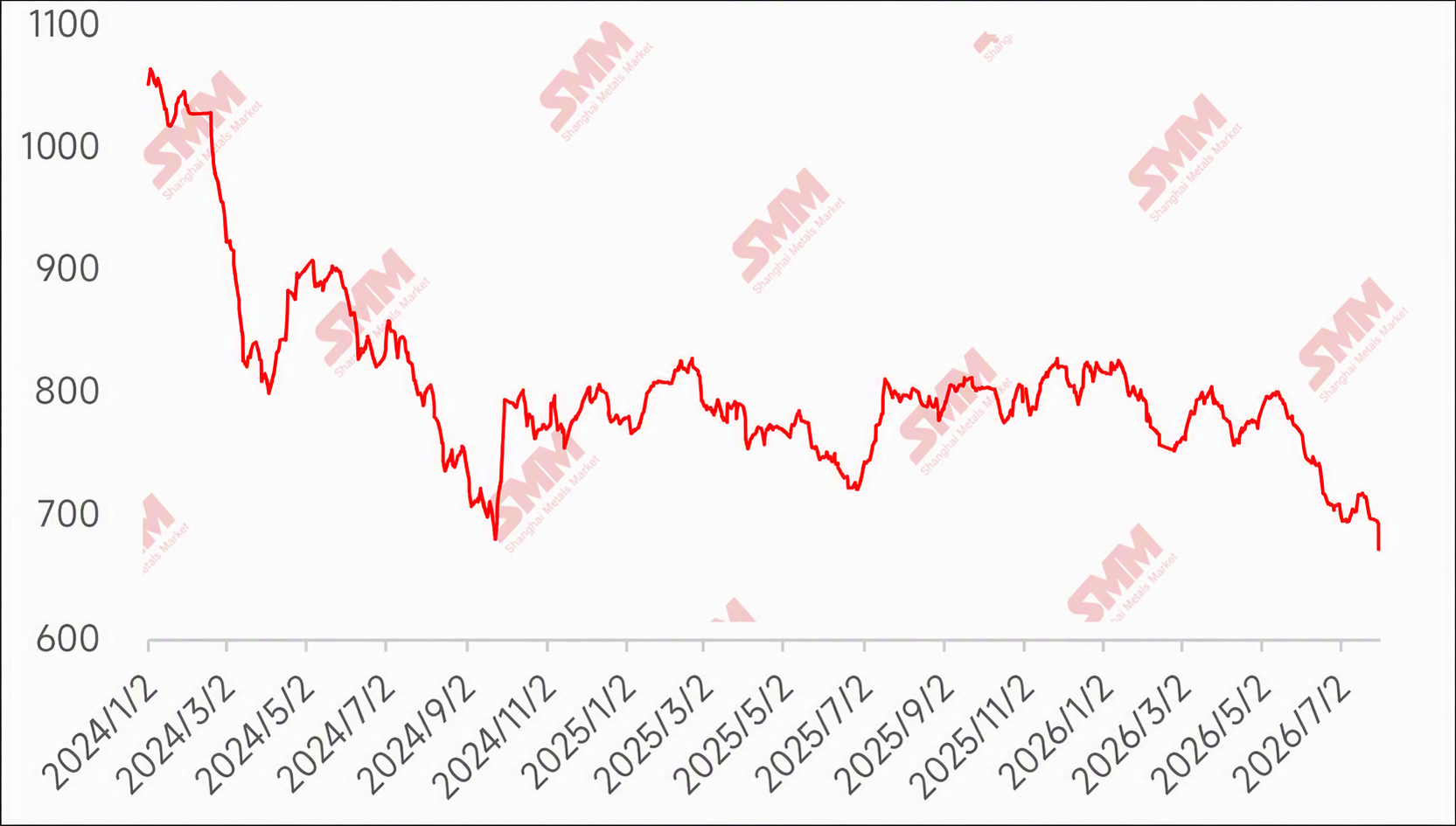
Source: SMM
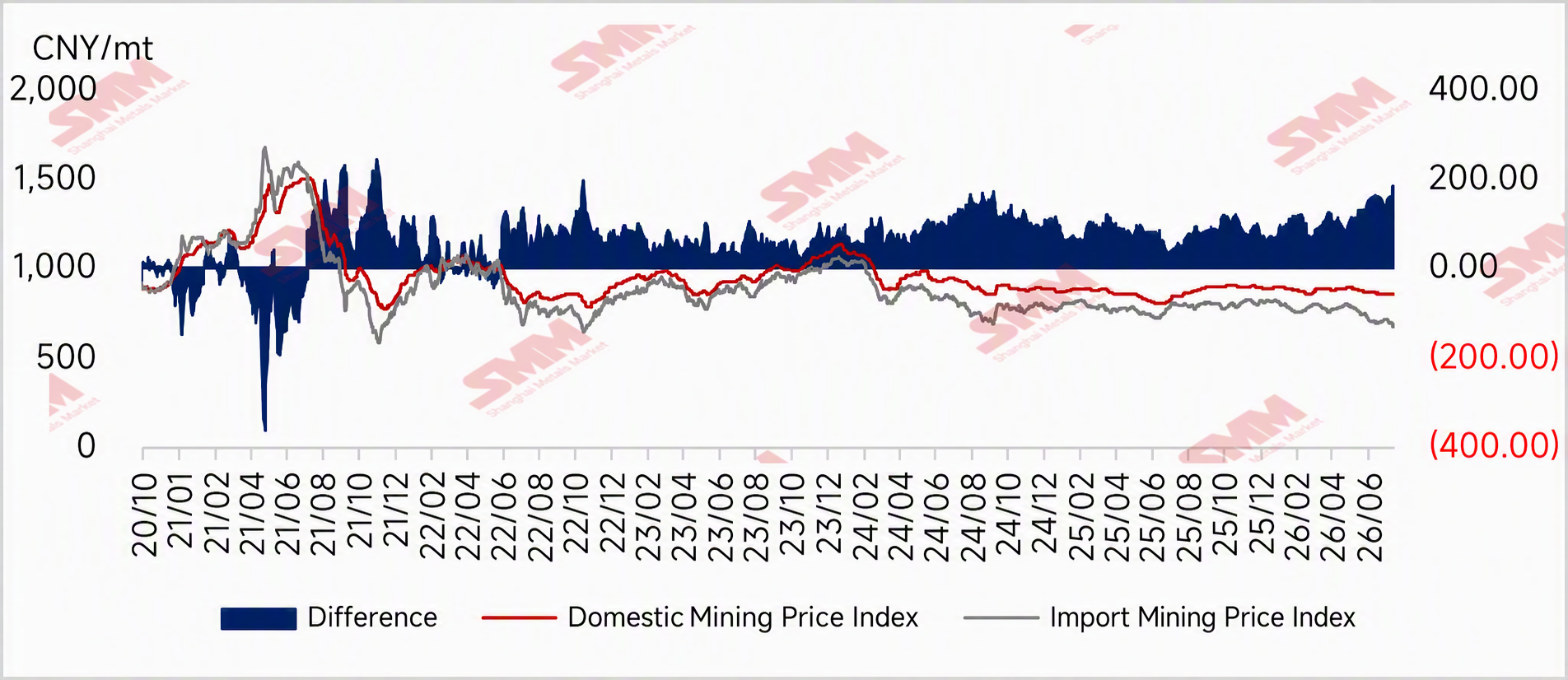
Domestic iron ore concentrates prices edged down this week. From a regional perspective, prices in areas such as Tangshan, Qian'an, and Qianxi in Hebei were relatively stable; those in Chaoyang, Beipiao, Jianping, etc. in western Liaoning fell by 1-5 yuan/mt; while east China saw declines of 10-15 yuan/mt. In the Tangshan area, the domestic ore market was generally stable this week, with the delivered price, tax included, of 66% grade iron ore concentrates on a dry basis closing at 980–985 yuan/mt. Local iron ore concentrates supply remained relatively tight, providing some support to ore prices; steel mills, affected by environmental protection-driven production restrictions, saw weak daily consumption demand and mostly maintained inventory destocking strategies, with supply-demand bargaining persisting in the market. Although an accident occurred at a major mine in east China, its impact on local production was limited, and mining and selecting operations in other areas mostly proceeded normally as planned. Demand side, hot metal output at steel mills declined due to production restrictions, weakening support for iron ore concentrates. Overall, domestic concentrates prices showed a slight downward trend this week.
Chart: Larger Decline in Imported Ore Widened Domestic-Imported Ore Price Spread
Outlook for next week
Imported ore: Looking ahead to next week, environmental protection-driven production restrictions in the Tangshan area are gradually being lifted, and blast furnaces at steel mills are resuming production one after another. Meanwhile, coke prices continued to decline, improving steel mill profitability somewhat, and hot metal output is expected to extend its modest rebound in the near term, providing some support to iron ore demand. However, global iron ore shipments simultaneously rebounded, with a more pronounced increase. Supply-side pressure was significantly greater than demand pressure. Under a loose supply-demand balance, port inventories are expected to continue accumulating, thus capping the upside room for ore prices. Cost side, affected by the escalating US-Iran conflict, rising crude oil prices drove a slight rebound in ocean freight rates, providing some cost support for iron ore prices. Additionally, market pessimism was somewhat released this week, and ore prices dropped more than expected, creating a need for a technical rebound in the short term. But considering overall weak end-use demand, it is hard to provide sustained upward momentum. Ore prices next week are expected to consolidate and stage a corrective rebound, with limited upside room.
Domestic Ore: Looking ahead to next week, some ore dressing plants in parts of North China are expected to resume production, and overall iron ore concentrate output may rebound slightly. However, the tight supply situation is unlikely to improve significantly; demand side, hot metal production of steel mill blast furnaces is expected to see a small increase. Overall, domestic concentrate prices may inch up slightly.
![[Tata Steel Approves 3.54 Billion USD Expansion at Odisha Mill]](https://imgqn.smm.cn/usercenter/hyiDc20251217171715.jpg)
![[SMM Steel] Vietnam HRC Import Price Falls to 510 USD/tonne CFR](https://imgqn.smm.cn/usercenter/EXHJE20251217171720.jpg)
![[SMM Steel] Alang Ship-Breaking Scrap Prices Fall amid Monsoon Disruption and Softer Steel Market](https://imgqn.smm.cn/usercenter/NtHAJ20251217171719.jpg)