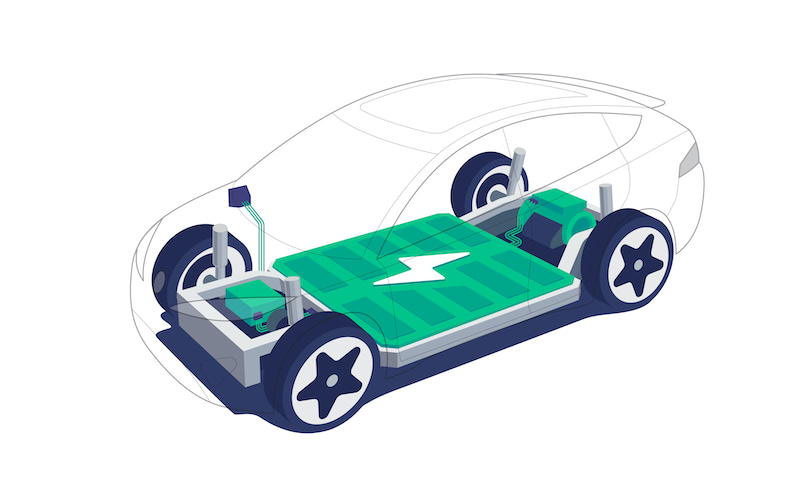
South Africa’s International Trade Administration Commission (ITAC) has proposed expanding the country’s automotive incentive framework to include minerals used in electric-vehicle battery manufacturing, supporting deeper localisation of the domestic automotive and battery-material supply chains. Under the proposal, the existing list of eligible standard materials including aluminium, steel and platinum-group metals would be expanded to cover lithium, graphite, cobalt, copper, iron and rare earths. Eligible materials would need to originate from member states of the Southern African Customs Union (SACU) or Southern African Development Community (SADC).
The proposed framework would recognise 50% of the value of qualifying EV battery materials as local content, potentially improving producers’ eligibility for automotive-sector incentives. The policy aligns with the South African Automotive Master Plan 2035, which aims to increase vehicle production, local content and investment as the industry transitions toward electric mobility. Stakeholders were given four weeks from the notice date to submit comments, meaning the final scope and implementation schedule remain subject to consultation.
SMM comments: The proposal represents a demand-side approach to developing Africa’s battery supply chain, contrasting with Zimbabwe’s supply side policy of restricting concentrate exports to force domestic processing. If implemented, South Africa could emerge as a regional battery material processing or manufacturing hub sourcing feedstock from neighbouring SADC producers, including Zimbabwe and Namibia.
However, the near-term impact on regional lithium trade flows is likely to be limited. Major Zimbabwean lithium assets including Arcadia, Bikita and Sabi Star are controlled by Chinese companies with established China-linked processing and offtake arrangements. It also remains unclear whether spodumene concentrate would qualify directly as an eligible battery material or whether further conversion into lithium sulphate, carbonate or hydroxide would be required. The final rules should therefore be monitored alongside Zimbabwe’s planned January 2027 lithium concentrate export deadline, as the two policies could influence future investment and trade flows within Southern Africa.
![[SMM Weekly Review] This week's hydrometallurgy recycling market: cobalt prices continued to decline, hydrometallurgy recycling trading was sluggish, July 27-30, 2026](https://imgqn.smm.cn/usercenter/GVVKq20251217171728.jpg)
![[Yongshan Lithium Plans to Raise up to RMB 500 Million via Private Placement of A-Shares]](https://imgqn.smm.cn/usercenter/IpglC20251217171727.jpg)
![[Pret to Invest 500 Million Yuan in Upgrading Large‑Form Advanced Battery Production Line]](https://imgqn.smm.cn/usercenter/AYpRQ20251217171727.jpg)