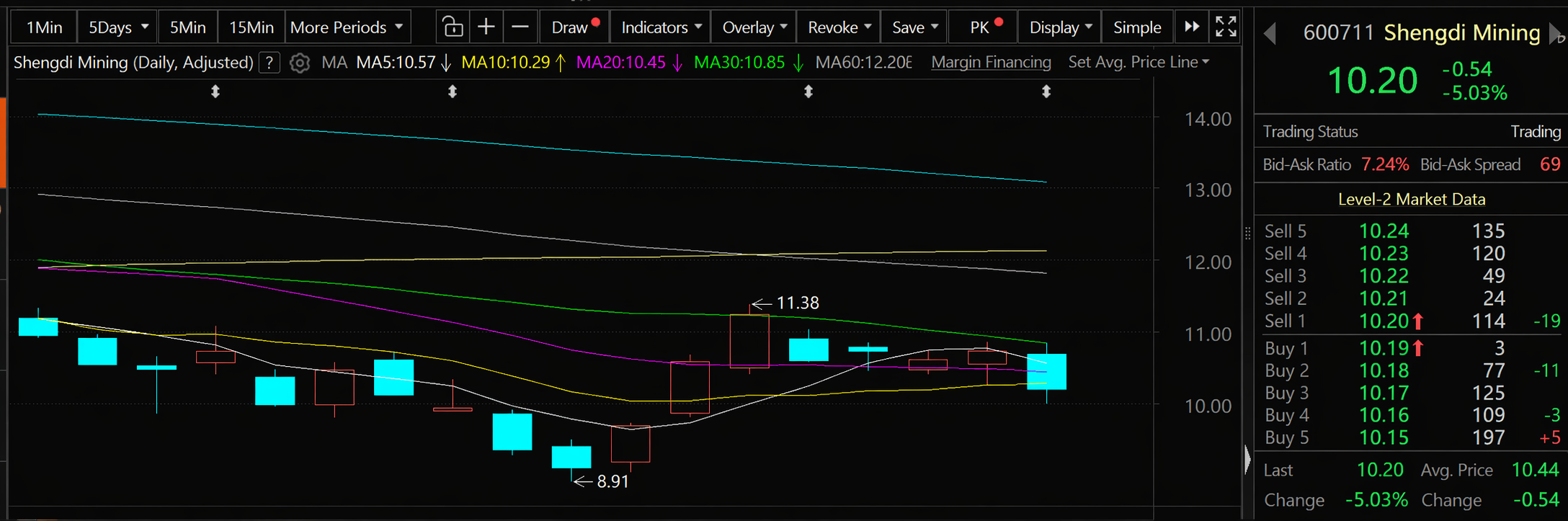
On July 30, Chengtun Mining’s share price declined. As of 13:22 on the 30th, Chengtun Mining was down 5.03% at 10.2 yuan per share.
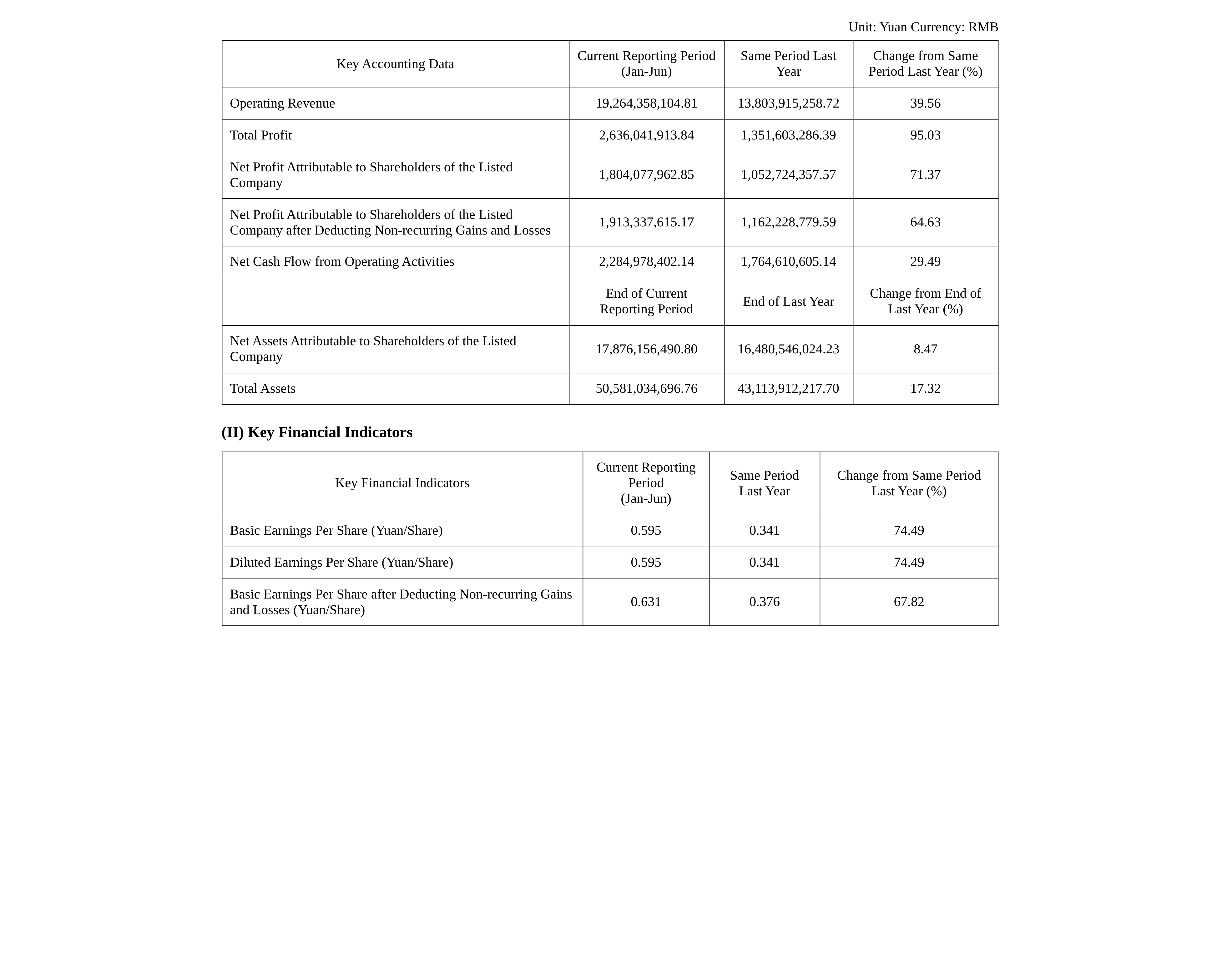
On the news front: Chengtun Mining’s 2026 semi-annual report released on July 30 showed that in H1 2026, the company achieved total operating revenue of 19.264 billion yuan, up 39.56% YoY; net profit attributable to shareholders of 1.804 billion yuan, up 71.37% YoY; and net profit after deducting non-recurring items of 1.913 billion yuan, up 64.63% YoY.
Regarding its core business, Chengtun Mining stated in its semi-annual report that the company was committed to the development and utilization of energy metal resources, especially metal varieties required for new energy batteries, while also expanding into precious metals such as gold. The company focused primarily on copper, nickel, cobalt, and gold, with its main business types being energy metals, base metals, metal trading, and others.
Chengtun Mining’s semi-annual report showed that in H1 2026, the company’s DRC copper-cobalt segment delivered stable output, with copper production reaching 132,200 mt in metal content, of which Brother Mining (BMS) achieved copper production of 74,400 mt in metal content. BMS’s specialized energy management system took shape. The Kalongwe project advanced in a coordinated manner in optimizing the production system and engineering construction; multiple technological transformation initiatives reduced material consumption, and optimized reuse of return water lowered energy consumption and enabled refined cost control. The copper-cobalt smelting projects CCR and CCM maintained stable production and operations. The company also carried out exploration in prospective areas and extension-style resource M&A to strengthen the foundation for sustainable development. In the Indonesia nickel segment, Youshan Nickel maintained stable production and operations amid global nickel market price consolidation, achieving operating revenue of 1.663 billion yuan; by improving management, optimizing processes, and strengthening industry-chain synergies, it successfully withstood market shocks. Phase I capacity of the Guizhou project was gradually released, process flows became increasingly mature, and product quality improved steadily; Phase II of the project carried out trial production. Huajin Mining operated steadily, achieving gold sales of 156.31 kg and operating revenue of 145 million yuan. During the reporting period, operating revenue from production and manufacturing was 18.756 billion yuan, accounting for 97.36% of the company’s total revenue, up 2.92 percentage points YoY, and it continued to maintain high-quality operations.
Regarding the status of its core businesses, Chengtun Mining’s semi-annual report showed:
1. Energy Metals Business.During the reporting period,the company’s energy metals business achieved revenue of 14.543 billion yuan, with a gross margin of 27.03%, basically in line with the gross margin in the same period last year. In H1 2026, output of copper products was 133,200 mt in metal content, cobalt products 3,700 mt in metal content, and nickel products 21,200 mt in metal content. (1) Copper-Cobalt Segment ① During the reporting period, the company’s DRC copper-cobalt segment delivered stable output, with copper production reaching 132,200 mt in metal content, of which Brother Mining achieved 74,400 mt in metal content. The company addressed power shortage issues through a multi-type energy mix, building a modern energy system that is specialized, intensive, and integrated, driving synchronized growth in operating efficiency and scale effects. ② Dali Sanxin actively advanced mine construction and aimed to achieve trial production in Q4. At present, land and other related procedures had been completed, shaft construction was basically completed, and surface civil works construction was being actively advanced. ③ In April 2026, the company disclosed that it planned to acquire a 50% equity interest in Nkoyi Leopard Mining and Investment Limited to indirectly obtain a 30% interest in a large, specific copper-cobalt mining right. The project completed the equity closing in July 2026, and subsequent cooperation matters regarding the mine were progressing normally. During the reporting period, the company actively sought resource security for sustainable development through exploration in prospective areas and by pursuing extension-style M&A and cooperation for copper ore resources. (2) Indonesia Nickel Segment During the reporting period, the global nickel market fluctuated amid the interplay of Indonesia policy adjustments and rising cost side pressures. Youshan Nickel maintained stable production and operations, achieving operating revenue of 1.663 billion yuan and demonstrating strong operating resilience. (3) Deep Processing and Materials Segment ① During the reporting period, Keli Xin’s operating revenue increased by 25.6% from the same period last year, with rapid growth in operating performance. Meanwhile, the company continued to expand its product lines and enrich product models to meet different battery systems’ requirements for high voltage and high safety, effectively improving client response speed and product compatibility. ② Zhonghe Nickel optimized process technologies, further advanced refined on-site production management, improved recovery rates of valuable metals, and enhanced the production system’s adaptability to multi-channel raw material sources. ③ Phase I capacity of the Guizhou project was gradually released, process flows became increasingly mature, and through various refined control measures, it ensured continuous and stable production operations, with product quality improving steadily. Phase II of the Guizhou project smoothly entered trial production.
2. Base Metals Business. During the reporting period, the base metals business achieved sales revenue of 4.213 billion yuan, with a gross margin of 9.50%, up 5.61 percentage points from the same period last year. (1) During the reporting period, Chengtun Zinc & Germanium operated steadily, with notable results in comprehensive recovery; indium and germanium recovery rates both improved. Technical breakthroughs achieved cost reductions in auxiliary material and a record high in silver recovery indicators; multi-dimensional cost reduction and efficiency enhancement significantly lowered logistics and inventory expenses, and overall production operations remained stable. (2) During the reporting period, the company actively advanced the orderly construction of domestic and overseas mines. Construction of the Baoshan Hengyuan Xinmao mining engineering project progressed steadily; Huajin Mining operated steadily, selling 156.31 kg of gold and achieving revenue of 145 million yuan. 3. Metal Trading Business and Others. During the reporting period, the metal trading business achieved operating revenue of 307 million yuan. At present, the scale of the company’s core businesses continued to grow steadily, the proportion of the trading business gradually declined, and the business structure continued to be optimized, achieving solid results on the path of high-quality development.
In addition, Chengtun Mining announced on July 23 that the cumulative deviation in the increase of its stock’s closing price exceeded 20% over three consecutive trading days on July 21, July 22, and July 23, 2026, constituting abnormal fluctuations in stock trading. After verification, the company found no media reports or market rumors that needed clarification or response, and found no other material events that could have a significant impact on the company’s share price. As of the date of this announcement, other than information publicly disclosed by the company in designated media, there was no other material information that should have been disclosed but had not been disclosed, including but not limited to planning major asset restructurings involving publicly listed firms, share issuances, major transactions, business restructurings, share repurchases, equity incentives, bankruptcy reorganizations, major business cooperation, introduction of strategic investors, and other major matters. The company’s current operating conditions were normal, and there had been no material changes in the internal and external operating environment.
Chengtun Mining announced on July 9 that the transaction in which its wholly owned great-grand subsidiary Preeminence Holdings Limited (Preeminence) acquired a 50% equity interest in Nkoyi Leopard Mining and Investment Limited (Nkoyi) had made new progress. As of the date of this announcement, Nkoyi had completed the change of its shareholder register, and all registration and filing procedures for changes involving directors and senior management in this transaction had been completed. Preeminence had now obtained a 50% equity interest in Nkoyi, and the company had, in accordance with the Share Purchase Agreement under the transaction, paid the equity acquisition consideration to the target company.
In Huafu Securities’ nonferrous metals weekly report released on July 26, its commentary on industrial metals mentioned: Industrial metals: tight inventory coupled with geopolitical tailwinds lifted copper prices strongly. From a macro perspective, the Middle East US-Iran geopolitical conflict continued to recur. Multiple parties mediated to advance ceasefire talks, but differences between the two sides were difficult to bridge quickly, and the market continued to trade the potential risk of disrupted shipping through the Strait of Hormuz. Once passage through the waterway is restricted, it would not only push up international crude oil prices and raise global smelting and logistics costs, but also affect outbound shipments of Middle Eastern sulfur, directly disrupting the supply of raw materials for ex-China hydrometallurgical copper production, continuously injecting a geopolitical risk premium into copper prices; repeated changes in news flow also amplified intraday fluctuations in LME copper. This week, tensions in the US-Iran Strait of Hormuz situation remained elevated, and shipping risks in the strait continued to affect market sentiment. Individual stocks: Copper—watch JCC, CMOC, Chengtun, Zangge, JCHX, and Beitong; for H-shares, watch NFC and Minmetals, among others. Aluminum—watch Tianshan, Hongchuang, Yunnan Aluminum, Shenhuo, Huatong, Hongqiao, and Zhongfu, among others.
Citigroup recently published a report stating that it held a constructive view on the copper market over the coming weeks, maintaining its expectations unchanged for a 0–3 month short-term copper price target of $14,500 per mt and a year-end target of $15,000 per mt. Citigroup noted that over the past month, despite a pullback in speculative long positions and overall weakness in commodities, copper prices remained resilient. While demand growth remained weak, the supply side faced greater pressure. Global mine supply remained under pressure, while year-to-date scrap supply appeared to respond weakly to high prices. Chilean mine supply risks and sulfur supply constraints could, at the margin, lift market sentiment.
A CITIC Securities research report said that multiple positive factors drove copper prices to again challenge $14,000, and that core drivers such as declining inventory and supply disruptions were expected to persist; most potential tariff paths remained positive for copper, and under a neutral assumption, copper prices were expected to challenge $15,000 within the year. The copper sector was still at the beginning of a valuation recovery, and the formation of expectations for price hike and improvements in market sentiment would continue to drive valuation recovery.