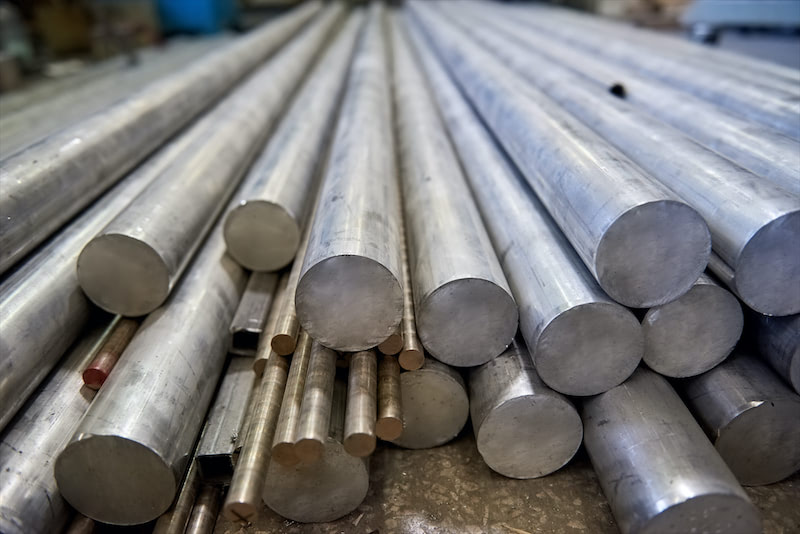
By July 11, 2026, the direct reduced iron (DRI) plant of Jindal Steel Oman in Sohar had operated continuously for 188 days without any unplanned shutdowns. This 6.5-meter shaft furnace set a record high monthly production of 185,710 mt in May 2026, with an average operating rate of 249.6 mt per hour. The facility's production exceeded its original designed capacity of 1.5 million mt by 33%, thereby setting a new global benchmark for operational efficiency.
The Sohar facility is an integrated combination of a gas-based direct reduction (using natural gas reformed syngas to reduce iron ore) unit and a 220 mt Danieli electric arc furnace. Hot DRI is gravity-fed directly into the electric furnace, touted as the world's first gravity hot DRI feeding system, achieving significant energy savings. The electric furnace side also set records in early 2026: a monthly output of 235,112 mt of liquid steel with a productivity of 324 mt/hour, a charge mix of 61% hot DRI, 37% cold DRI, and 2% hot briquetted iron (HBI), and electricity consumption of 493 kWh per mt of steel. In other words, from reduction to melting, this is a fully integrated DRI-EAF process, and the high operational stability of the shaft furnace is precisely the foundation of the entire chain's efficiency.
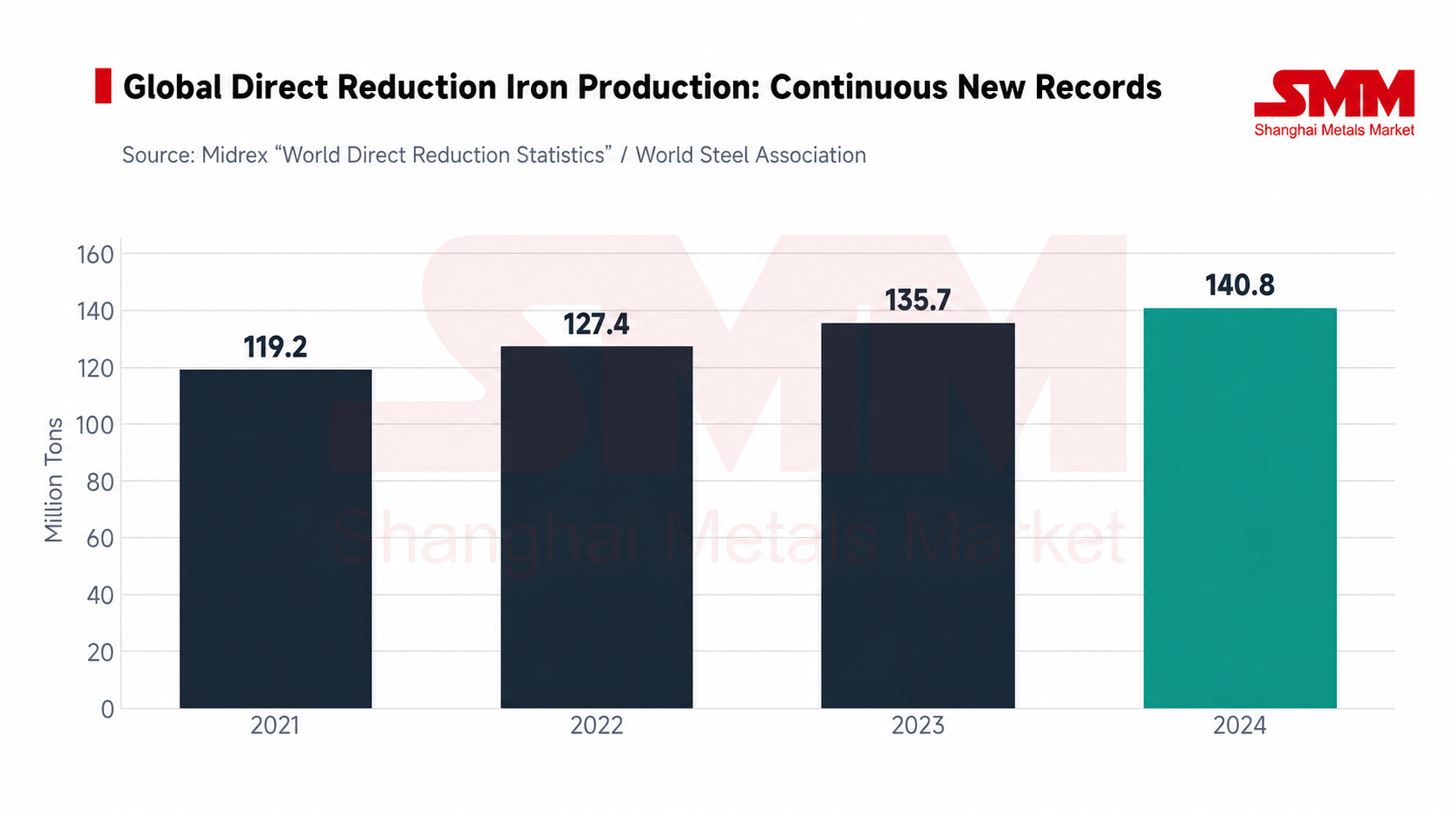
This record is significant because it falls within a continuing strong mega-trend. According to statistics from Midrex and the World Steel Association, global direct reduced iron (DRI) production reached 140.8 million mt in 2024, a new record high, up 3.8% YoY (the previous record was 135.7 million mt in 2023); since 2019, it has cumulatively increased by about 32.7 million mt, an increase of over 30%. More notably, this growth rate outpaced the mild growth of about 1% in global crude steel production over the same period, with the DRI route steadily expanding its share in the overall steel landscape. Of this, the Midrex process accounted for 54.1% of total production, and an even larger share of about 80.1% in shaft furnace DRI.
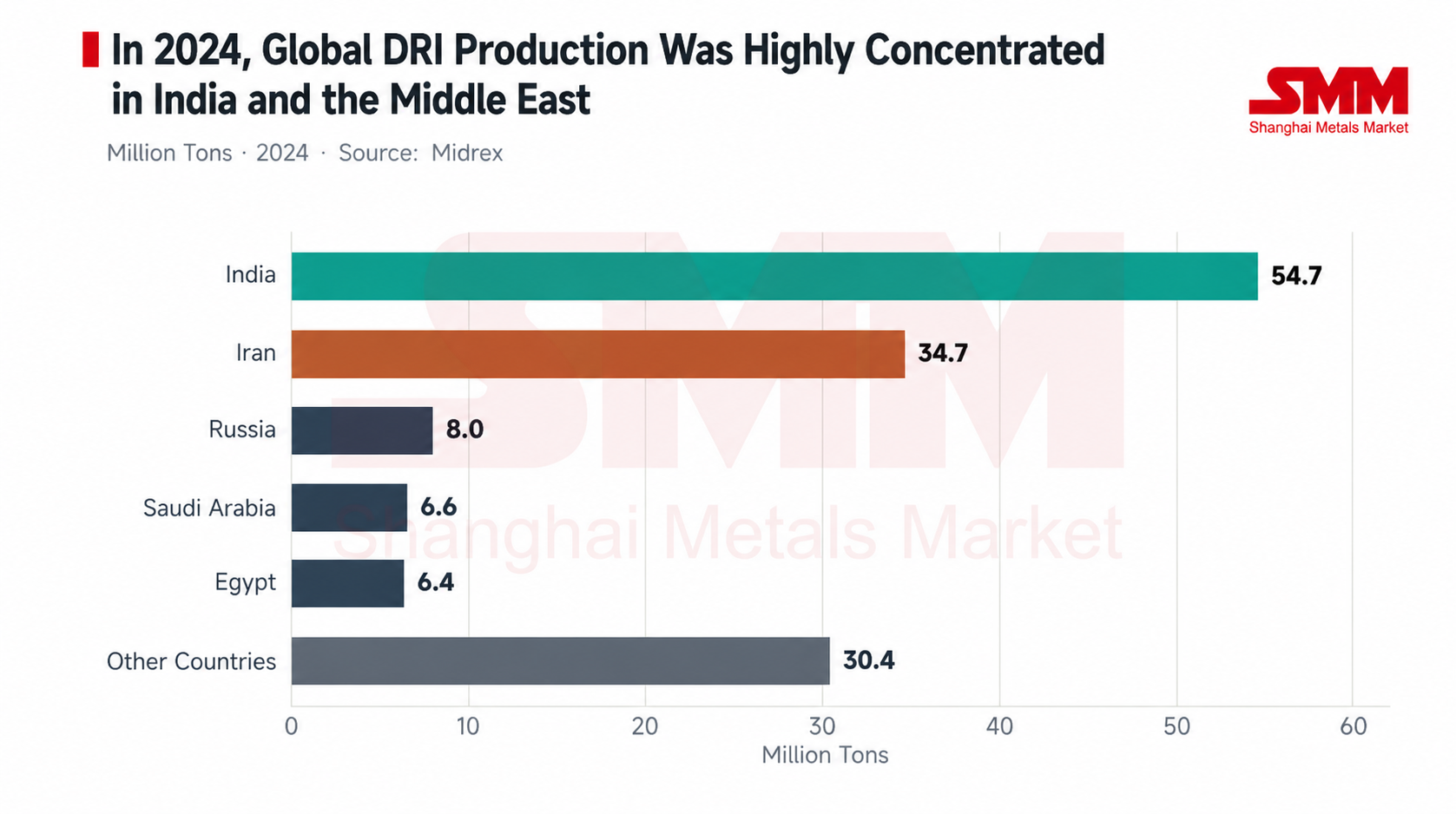
However, this growth is highly concentrated. In 2024, India ranked first globally with 54.7 million mt, accounting for over one-third of the total; Iran followed with 34.7 million mt, and together these two countries accounted for about 63% of the global total. It was followed by Russia at 8.0 million mt, Saudi Arabia at 6.6 million mt, and Egypt at 6.4 million mt. The landscape is broadly divided into two parts: one is India's massive domestic demand system primarily based on coal-based rotary kiln sponge iron, and the other is a gas-based DRI cluster in the Middle East and North Africa built on cheap natural gas, to which Jindal Steel Oman belongs. This concentration also means that any local natural gas supply, energy policy, or geopolitical disturbance will be amplified to the level of global DRI supply.
Gas-Based DRI in the Decarbonization Landscape
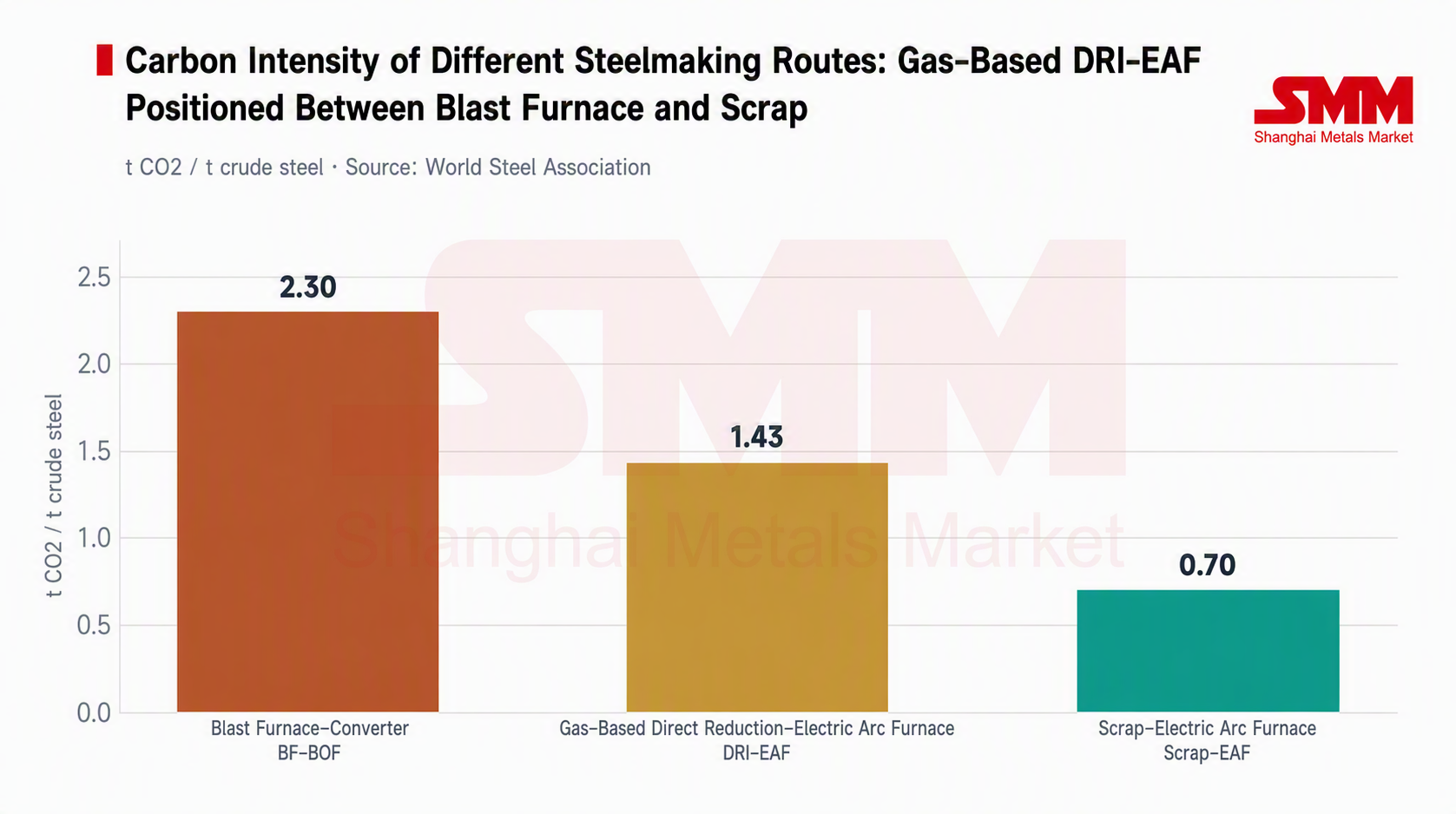
To understand the strategic value of such plants, one must place them back into the carbon intensity coordinate system. According to the World Steel Association's representative route values, the blast furnace—converter long process is about 2.3 mt CO2 per mt of steel, the scrap-based electric furnace is the lowest at about 0.7 mt, while the gas-based direct reduction—electric furnace is in the middle at about 1.43 mt. This means that, before green hydrogen-based direct reduction truly scales up, gas-based DRI is the most realistic low-carbon iron source route beyond the blast furnace. It is not zero-carbon, but it can already reduce the carbon footprint to about 60% of the long process. Gas-based DRI plants like Jindal Steel Oman, which are efficient, low-cost, and stably operated, exactly stand at the optimal point of this transitional route.
Putting it back into the trade dimension of the ferrous industry chain, gas-based DRI and HBI from the Middle East have long played the role of supplying green steel to Europe, Turkey, and the US. In 2024, the top five global DRI importers were the US (1.5 million mt), Turkey (1.2 million mt), India (900,000 mt), Mexico (800,000 mt), and Italy (700,000 mt). As the EU CBAM enters actual payment and the embedded carbon cost rises year by year, the premium space for low-carbon iron source exports to Europe is being opened up, and plants that can spread their unit fixed costs thinner and push their annualized output to 133% of designed capacity are exactly the most resilient marginal suppliers on this trade flow. From this perspective, Jindal's 188-day record is more than just a simple milestone.
![Surge in Port Arrivals Combined with Inventory Buildup at Ports, Significant Pullback in Hot Metal Production, and Iron Ore Most-Traded Contract Hitting a New Low in Over a Year [SMM Commentary]](https://imgqn.smm.cn/usercenter/JSngP20251217171719.jpg)