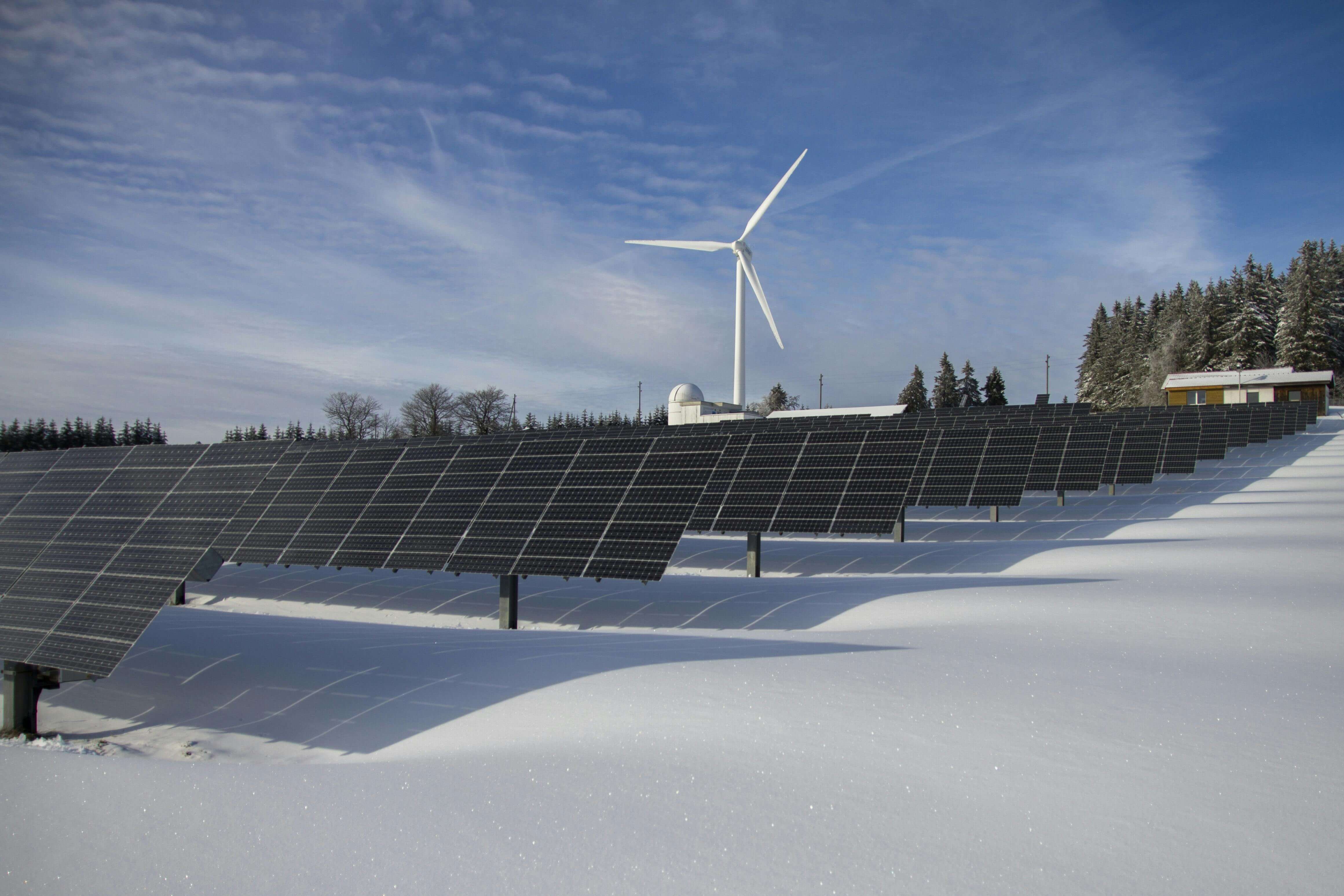
Argentina’s Puna Plateau in Catamarca Province has recently been hit by a historic snowstorm, accompanied by strong winds and extremely low temperatures. Temperatures in the Tres Quebradas area reportedly fell to around -27°C, while snowfall exceeded one metre in some locations, temporarily stranding a number of project workers at mine sites. Around Salar del Hombre Muerto, snow accumulation on certain roads reached 1–2 metres. Provincial Route 43, which connects Antofagasta de la Sierra with the surrounding salar projects, as well as several high-altitude roads, became largely impassable. Personnel transfers at Rio Tinto’s Fénix project were also affected. As of the evening of 23 July, the San Francisco international border crossing between Catamarca and Chile remained closed due to snow-covered roads.
From a project-distribution perspective, the current weather disruption is primarily concentrated in Catamarca Province rather than across the entire South American salar region. Public information has confirmed disruptions to personnel movements and mine-site access at the 3Q and Fénix projects. Fénix has existing lithium product capacity of approximately 32,000 tonnes per year, while Phase 1 of the 3Q project has lithium carbonate capacity of 20,000 tonnes per year. The broader region also hosts the 15,000-tonne-per-year Sal de Vida project, as well as Sal de Oro, Hombre Muerto West and several other operating, ramping-up or under-construction projects. No major operator has yet formally announced a complete production shutdown or lowered its production guidance. Road closures therefore should not be treated as equivalent to a total loss of salar production.
SMM believes the immediate impact will first be reflected in personnel rotations, deliveries of production inputs, equipment maintenance and outbound transportation of finished products. Fénix uses an adsorption-based direct lithium extraction process, meaning that extreme weather is more likely to affect the operation through logistics constraints and disruptions to continuous on-site operations. The 3Q project and other operations using evaporation ponds face not only transportation risks, but also potential delayed impacts on evaporation efficiency and brine concentration due to prolonged snowfall, low temperatures and subsequent snowmelt.
Should road access recover within a short period, the main impact may be a delay in shipment schedules rather than a permanent loss of annual production. However, if restrictions on major roads and mine-site operations persist for more than two weeks, the disruption could begin to affect third-quarter production and the ramp-up schedules of newer projects.
In terms of imports, China imported 25,861 tonnes of lithium carbonate in June 2026, of which 8,403 tonnes came from Argentina, accounting for approximately 32% of the total. Imports from Argentina reached 11,422 tonnes in May, marking a recent high. Argentina has become China’s second-largest source of imported lithium carbonate, with monthly volumes generally ranging between 8,000 and 11,000 tonnes. As a result, shipment disruptions at individual Argentine salar projects now have a more meaningful impact on China’s import structure than in previous years.
SMM Scenario Analysis
Based on current nameplate capacities, if only the Fénix and 3Q projects were to experience an actual 10-day production stoppage, the theoretical production impact would amount to approximately 1,000–1,500 tonnes of LCE. If the ramp-up at Sal de Vida and logistics disruptions at other projects around Salar del Hombre Muerto are also taken into account, the theoretical volume of production or shipments at risk could increase to 1,500–2,500 tonnes of LCE.
However, no operator has yet confirmed a complete shutdown, and some projects may be able to maintain short-term shipments using on-site inventories. These figures should therefore be viewed as the volume exposed to potential disruption rather than confirmed supply losses.
Under the base-case scenario, assuming the weather disruption lasts mainly for one to two weeks, the impact on Chinese imports is more likely to take the form of approximately 800–1,500 tonnes of lithium carbonate being delayed between August and September. This would be equivalent to around 10%–18% of China’s June lithium carbonate imports from Argentina and approximately 3%–6% of China’s total monthly lithium carbonate imports.
Under a more severe scenario, if production or outbound transportation at Fénix, 3Q and nearby projects remains constrained for two to three weeks, the volume of imports into China delayed within a single month could reach 2,000–3,000 tonnes. This would be equivalent to approximately 24%–36% of Argentina’s current monthly shipments to China and around 8%–12% of China’s total monthly lithium carbonate imports.
These estimates are scenario-based calculations derived from project capacities, recent import structures and different disruption durations. The actual impact will depend on the speed of road reopening, inventory levels at individual projects and the destination allocation of each producer’s shipments.
Overall, the current snowstorm does not yet represent a systemic disruption to South American salar supply. Nevertheless, it has already caused tangible disruption to personnel movements, logistics and on-site operations at several key lithium projects in Catamarca Province.
In the near term, the market should closely monitor the reopening of Provincial Route 43 and the San Francisco border crossing, the actual operating status of the Fénix and 3Q projects, and Argentina’s shipment data from late July through August. If transportation access is restored within the coming week, the principal impact is likely to be delayed arrival of imports into China. If mine-site restrictions persist, Argentina’s effective third-quarter supply and China’s lithium carbonate import expectations for August and September may need to be revised downwards.
Sources: Salar del Hombre Muerto: Miners Rescued After Being Trapped in Snow for Three Days, SMM
Lesley Yang, SMM yangle@smm.cn
Jessica Wang, SMM wangjie@smm.cn
![[Lithium Battery: Minmetals New Energy Expects H1 2026 Net Profit Of 340-400 Million Yuan]](https://imgqn.smm.cn/usercenter/wZUBk20251217171729.jpg)