I. June Import/Export Data and Market Review
According to data from China's General Administration of Customs, China's lead trade structure showed clear divergence in June. Refined lead imports reached 15,094 mt, down 58.85% MoM yet up 1,747.82% YoY, with cumulative refined lead imports in H1 at 146,900 mt, up 772.33% YoY. Refined lead exports stood at 4,173 mt, up both MoM and YoY, as trade flows shifted from one-way imports to active two-way movement. Lead alloy imports totaled 22,992 mt, down 1.8% MoM, mainly driven by the digestion of domestic inventory after earlier concentrated arrivals and the contraction of arbitrage margins.
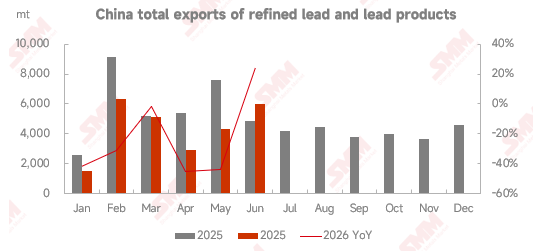
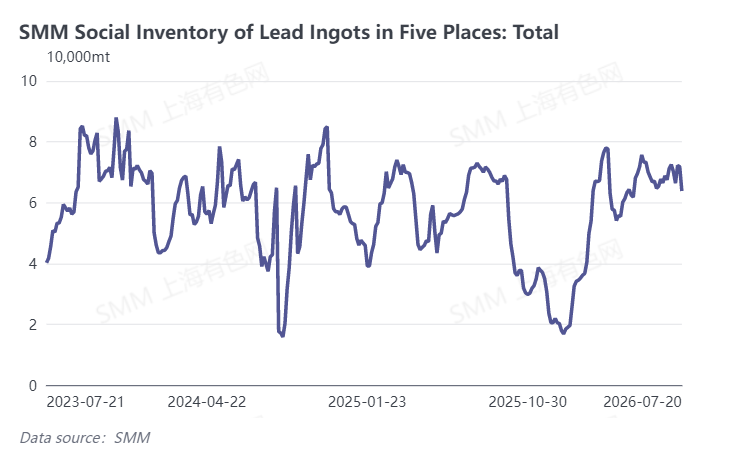
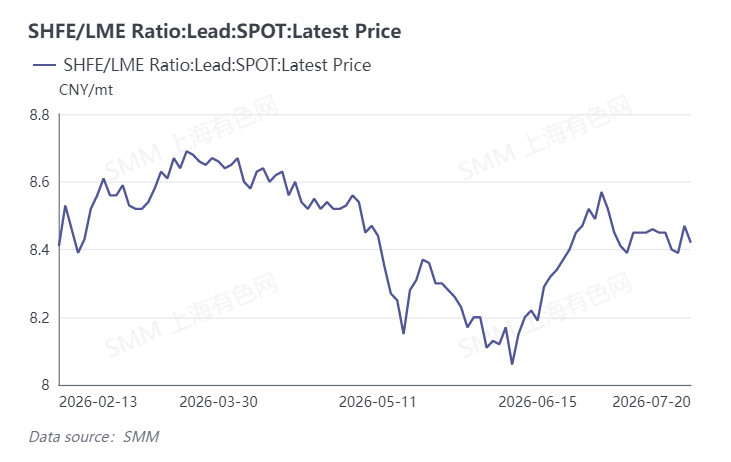
Lead prices traced a first-rise-then-fall pattern in June. Early in the month, continued destocking in LME warehouses, coupled with overseas geopolitical risk-aversion sentiment, lifted LME lead, with both domestic and overseas markets strengthening in tandem. Late in the month, macro headwinds outside China fermented, while domestic battery demand was soft in the off-season, putting lead prices under pressure and pulling them back. Fundamentals side, primary lead production was stable, while phase-based supply tightening emerged late in the month as secondary lead enterprises underwent concentrated maintenance, and domestic social inventory continued destocking, offsetting some supply pressure from imported material. The SHFE/LME price ratio saw intensified volatility during the month, and import profits were significantly compressed vs. the prior period, though a small arbitrage window remained, keeping refined lead imports elevated for this time of year.
II. July Import/Export and Full-Scale Market Outlook
Entering July, imports and exports are expected to show a pattern of "imports pulling back, exports maintaining resilience." On the import side, the persistently weakening SHFE/LME price ratio is compressing the arbitrage window, and with large volumes of imported material accumulated in H1, downstream restocking strength is limited despite the approaching traditional peak season for batteries. As a result, refined lead imports are expected to pull back in July; lead alloy imports, anchored by long-term contracts, are expected to hold in the 15,000-20,000 mt range. On the export side, while LME inventory outside China remains elevated, the deficit for high-grade lead ingot in Southeast Asia persists, and exports of refined lead and lead products will remain active.
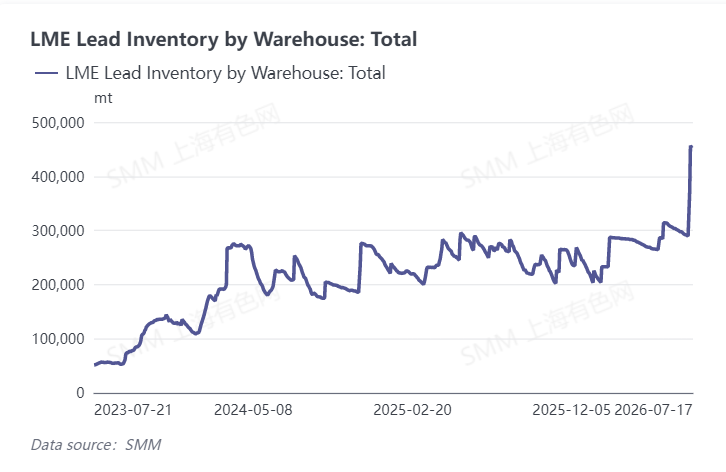
Price-wise, demand is soft in the tail end of the off-season in early July, with prices moving sideways and a low probability of concentrated downstream restocking expectations materializing, while upward momentum for lead prices will likely remain weak late in the month. Going forward, focus on four key variables: battery operating rates, scrap battery raw material supply, LME inventory and the SHFE/LME price ratio, and the sustainability of export orders for lead products. In summary, the import dividends marginally faded in June, while exports experienced a periodical recovery. The narrowing of the import window in July will cause monthly imports to decline significantly, and the annual trade pattern will enter a new phase of reduced imports and export recovery.

![In the near term, SHFE lead will move sideways, while China focuses on secondary lead production resumptions and changes in downstream operating rates. [Lead Futures Brief Comment]](https://imgqn.smm.cn/usercenter/qnyHQ20251217171721.jpeg)