SMM, July 21:
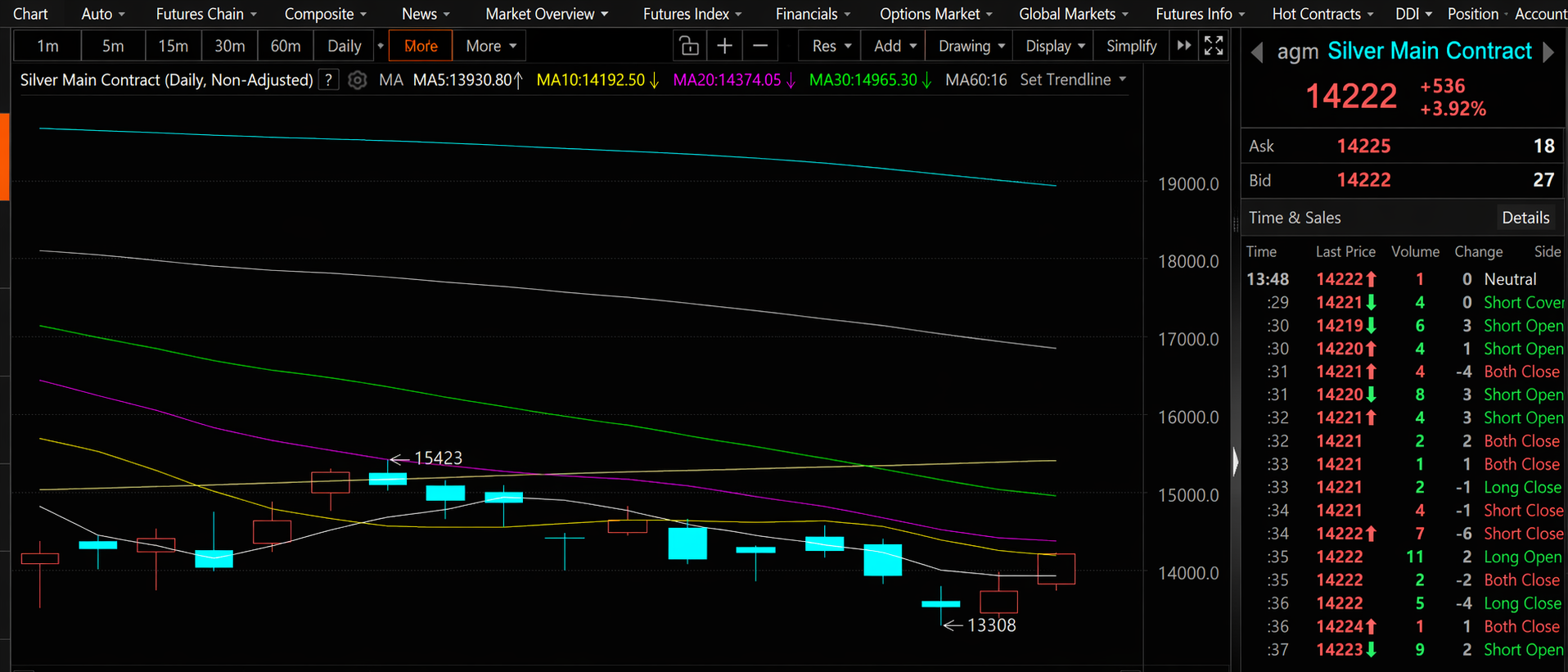
US Secretary of State Rubio stated in a media interview on the evening of the 19th that the Trump administration “remains open to a diplomatic solution.” Expectations of a negotiated settlement between the two sides in the market tug-of-war heated up, and international oil prices pulled back in tandem. Earlier inflation concerns driven by energy prices cooled, and the market’s bets on the US Fed holding high interest rates weakened marginally. Coupled with a sharp rebound in Asia-Pacific stock markets today, overall market risk appetite improved. The built-up sentiment for an oversold rebound in precious metals was released in a concentrated manner, and multiple positive factors resonated to drive a rebound in both precious metals futures and equity prices. Zhaojin Gold, Shandong Humon Smelting, Western Gold, and other precious metals enterprises reported positive H1 earnings forecasts, and the favour from some market funds also contributed to the synchronized strength in precious metals futures and stocks. As of around 13:35 on July 21, COMEX gold was up 1.07% at $4,058.7/oz; SHFE gold main contract rose 1.31% to 885.6 yuan/g; COMEX silver gained 2.13% to $58.285/oz; SHFE silver main contract advanced 3.65% to 14,186 yuan/kg; silver T+D increased 2.84% to 14,113 yuan/kg. Additionally, platinum main contract rose 1.63% to 399.3 yuan/g, and palladium main contract gained 2.87% to 302.4 yuan/g.
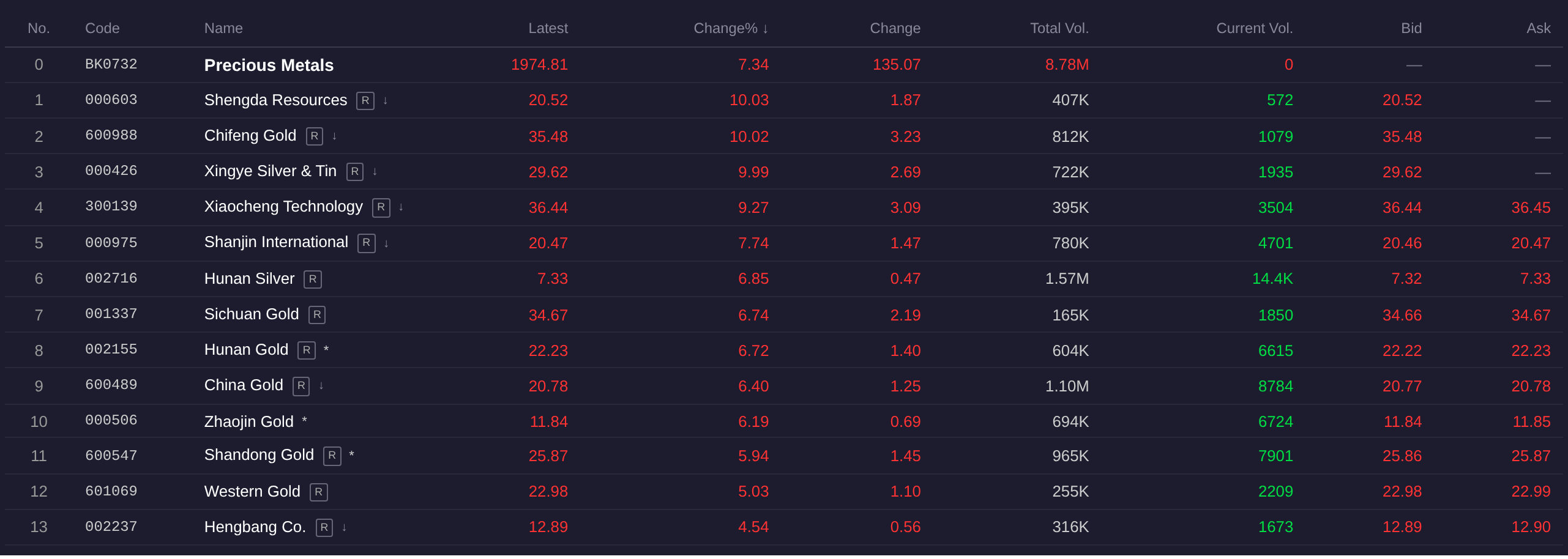
Precious metals stocks surged. As of the close on July 21, the precious metals sector rose 7.34%. Among individual stocks: Xingye Silver&Tin, Chifeng Gold, and Shengda Resources hit the daily limit up; Xiaocheng Technology, Shanjin International, Hunan Silver, Zhongjin Gold, and Shandong Gold were among the top gainers.

News
[Russia’s gold holdings fell to 73.4 million ounces in June] The Russian central bank stated on its website that as of month-end June, the value of its reserves was $299 billion, compared with $325.9 billion at the end of May.
[World Gold Council: Chinese market gold ETFs saw significant inflows in H1] According to the World Gold Council, gold prices weakened in June, erasing earlier gains, and H1 ended with a decline. Despite outflows in June, Chinese market gold ETFs still recorded significant inflows in H1, driving total assets under management slightly up to 243 billion yuan, with total holdings increasing by 29 mt to 277 mt.
[Zhaojin Gold: expects H1 2026 net profit to increase 347.48%-436.98% YoY] Zhaojin Gold disclosed its earnings forecast on the evening of July 14. It expects H1 2026 net profit attributable to parent at 200 million to 240 million yuan, up 347.48%-436.98% YoY; and non-recurring net profit of 80 million to 116 million yuan, up 490.44%-756.14% YoY.
[Shandong Humon Smelting: Estimated H1 2026 Net Profit Up 81.06%-122.36% YoY] Shandong Humon Smelting disclosed its earnings forecast on the evening of July 14, estimating H1 2026 net profit attributable to shareholders at 570 million – 700 million yuan, up 81.06%–122.36% YoY; adjusted net profit is estimated at 272 million – 402 million yuan, down 2.03%–33.73% YoY.
[Western Gold: Estimated H1 2026 Net Profit Up 280.16%-333.39% YoY] Western Gold disclosed its earnings forecast on the evening of July 13, estimating H1 2026 net profit attributable to shareholders at 500 million – 570 million yuan, up 280.16%–333.39% YoY; adjusted net profit is estimated at 490 million – 580 million yuan, up 172.96%–223.09% YoY.
[Zhongjin Gold: Estimated H1 2026 Net Profit of 4.1 Billion – 4.6 Billion Yuan, Up 52.15%-70.7% YoY] Zhongjin Gold disclosed its earnings forecast on the evening of July 13, estimating H1 2026 net profit attributable to shareholders at 4.1 billion – 4.6 billion yuan, up 52.15%–70.7% YoY; adjusted net profit is estimated at 4.05 billion – 4.55 billion yuan, up 36.96%–53.87% YoY.
Spot Market
Silver
On July 21, the SMM 1# silver ex-factory reference average price in the morning was 13,825 yuan/kg, with the average up 0.7% from the previous trading day.
In the spot market, premium/discount quotes that day extended the trend of previous days, with consumption remaining sluggish and transactions being mostly at parity to slight discounts. The spot-futures price spread on the futures market widened slightly, and some suppliers reduced shipments. Early morning quotes in the Shanghai area were mainly concentrated at TD parity to +5 yuan/kg, with some rigid demand orders supporting transactions and suppliers’ willingness to sell weakening. In the Shenzhen area, some national-standard cargoes were concentrated around TD -5 yuan/kg to parity, with low-priced cargoes existing but having limited disruption. That day, the market’s premium/discount against the SHFE2608 contract was at a discount of 20 – 30 yuan/kg; against the most-traded SHFE contract 2610, it was at a discount of 40 – 60 yuan/kg. Overall, precious metals lacked clear guidance from news, and recently both domestic and overseas futures markets have shown signs of bulls entering, so attention can be paid to changes in open interest. Spot premiums/discounts traded near parity, and the pattern of weak supply and demand persisted.
Platinum
On July 21, spot platinum was quoted at 395 – 398 yuan/g, with the average price at 396.5 yuan/g, unchanged from the previous trading day.
Spot market, mainstream quotations for platinum were at parity to a premium of 1 yuan/g against the PT2608 contract. The premiums/discounts of mainstream quotations were basically flat from the previous trading day. Today, the price spread between the GFEX platinum October and August futures contracts widened slightly. In the morning, suppliers' quotes for spot platinum were mainly at premiums of 0.5 to 1 yuan/g against the most-traded GFEX contract. Later, as the futures market rose, some suppliers adjusted their quotes to around parity, where transactions were made. Downstream users made small purchases based on orders. Overall, the spot platinum market saw normal trading volumes today. In July, a Section 232 window for platinum and palladium will open. If the US imposes tariffs on platinum and palladium after the 180-day negotiation period ends, it will support prices in the short term.
Voices from Various Sides
Regarding the future trend of precious metals, some institutions' views are as follows:
Jinyuan Futures research report stated: The recent escalating US-Iran tensions have pushed oil prices higher, lifting inflation expectations. Precious metals remained under pressure but their decline slowed. After the sharp pullback in gold and silver prices, bargain-hunting buying emerged. The correction in US tech stocks will also redirect some funds into precious metals. Although the correction trend in gold and silver is not yet over, the probability of a rebound is increasing.
Hundun Futures research report noted: As geopolitical tensions continue to seesaw, the market is not yet convinced enough to expect an overall pullback in oil prices. Inflation expectations could rebound from lows, limiting the decline in US bond yields. Hence, the rebound in precious metals remains limited under these circumstances. The US Fed's relatively cautious remarks have also capped the rebound in precious metals. Fed Chairman Warsh said the balance sheet should be kept as small as possible so that it can expand in a crisis. The labour market looks quite good, but he is not optimistic about inflation and is dissatisfied with it; Fed's Williams stated that with inflation still elevated, it must be brought back sustainably to the 2% target, and the current monetary policy stance is very well positioned to achieve that; Logan said that a modest rate hike now would help better balance the outlook and risks, and moderate tightening now is better than having to tighten significantly later. The Fed's stance is clearly cautious, unwilling to let the market overprice a relaxation of vigilance. The market dares not further trade interest rate cut expectations, and precious metals weakened again. Liquidity and risk appetite remain weak under the influence of the equity market. As AI fundamentals are being reassessed, deleveraging in funding further amplifies volatility. The continued decline in the equity market has made liquidity relatively tight and restricted the drivers for precious metals. At this stage, the overall market is still dominated by sentiment-driven trading. Geopolitics, the AI narrative, and economic/inflation resilience mean the US dollar index and US bond yields will remain volatile. A trend reversal in precious metals still needs to be observed.
Analysts at ANZ Research said in a report that physical gold demand and central bank purchases are supporting the gold market. These analysts added that while gold faces short-term headwinds from the US Fed’s tightening expectations and a strong US dollar, investment positions in gold look thin after months of exchange-traded fund outflows, suggesting that the scope for further declines may be limited. A high interest rate environment typically weighs on non-yielding assets such as gold. (Zhitong Finance)
Goldman Sachs said that despite pressure from the US Fed’s tightening-leaning expectations, central bank buying is expected to provide a floor for gold. Demand remains robust, with central banks purchasing 81 mt in May and a three-month average of 67 mt per month, well above the pre-2022 average of 17 mt, according to the firm’s estimates. Goldman Sachs analysts stated, “We believe the trend of central banks increasing gold holdings will persist for years as they diversify reserves to hedge geopolitical and financial risks.” The bank expects average monthly purchases of 50 mt and 40 mt for this year and next year, respectively. (Jinshi Data APP)
Soojin Kim, analyst at MUFG, said, “Recent price action suggests that the market is placing greater weight on the possibility of US interest rates staying high for longer rather than on gold’s traditional safe-haven demand. This leaves gold vulnerable to pressure unless geopolitical risks further translate into a broad deterioration in financial market sentiment.” (Jinshi Data APP)
Asset manager Fidelity International said it plans to rebuild its gold position, which it reduced earlier this year, at an appropriate time in the future, believing that gold’s long-term momentum remains strong. Ian Samson, multi-asset portfolio manager at Fidelity International, recently said, “We plan to add back to gold, the question is just timing.” He said he reduced the gold allocation to a neutral level during the January-February period, when the multi-year bull run in gold abruptly ended. Samson expects the gold market to re-enter a bull market sometime in 2027. The logic of a return to a bull market would only be disrupted in a scenario where “governments re-embrace fiscal discipline and central banks truly commit to bringing inflation back down,” he added, “but I don’t think we are in that world right now.” Samson also said that continued gold purchases by central banks—a key driver of the previous bull market—will continue to support gold prices.
Last Thursday, US Eastern Time, technical strategists at Bank of America warned that the pullback in gold so far this year may still have significant room to run, and its trajectory could resemble the devastating bear markets that followed the sharp rallies in gold in 1980 and 2011. They proposed a phased buying strategy, suggesting full allocation only when gold prices fall to the $3,450–$3,250 range. Bank of America analysts pointed out in a technical research report that gold prices have now accumulated a series of bearish signals, with the risk of a sustained drop increasing: a death cross pattern, elevated net long positions, a bearish topping candlestick, a TD Sequential exhaustion signal, and an RSI reading of 90 at the recent high—a level consistent with the gold price peaks in 1980 and 2011.
UBP lowered its year-end gold price target to $4,800 per ounce and, while remaining long-term bullish on gold, is not adding to positions for now. Its current gold allocation is neutral at around 5%, down from an overweight position earlier this year. Paras Gupta, head of discretionary portfolio management for Asia at UBP, said in an interview that the previous overweight position "posed the greatest risk to our portfolios." UBP would like to see the Middle East ceasefire agreement hold and more clarity on inflation and interest rate trends before adding to its positions. Gupta said that for investors currently without gold holdings, a drop below $4,000 per ounce would be an extremely attractive entry point. (Zhitong Finance)
Recommended reading: