Hyundai Motor Group Launches Global V2X Integrated Service “All Day Energy”

Published: Jul 21, 2026 13:51

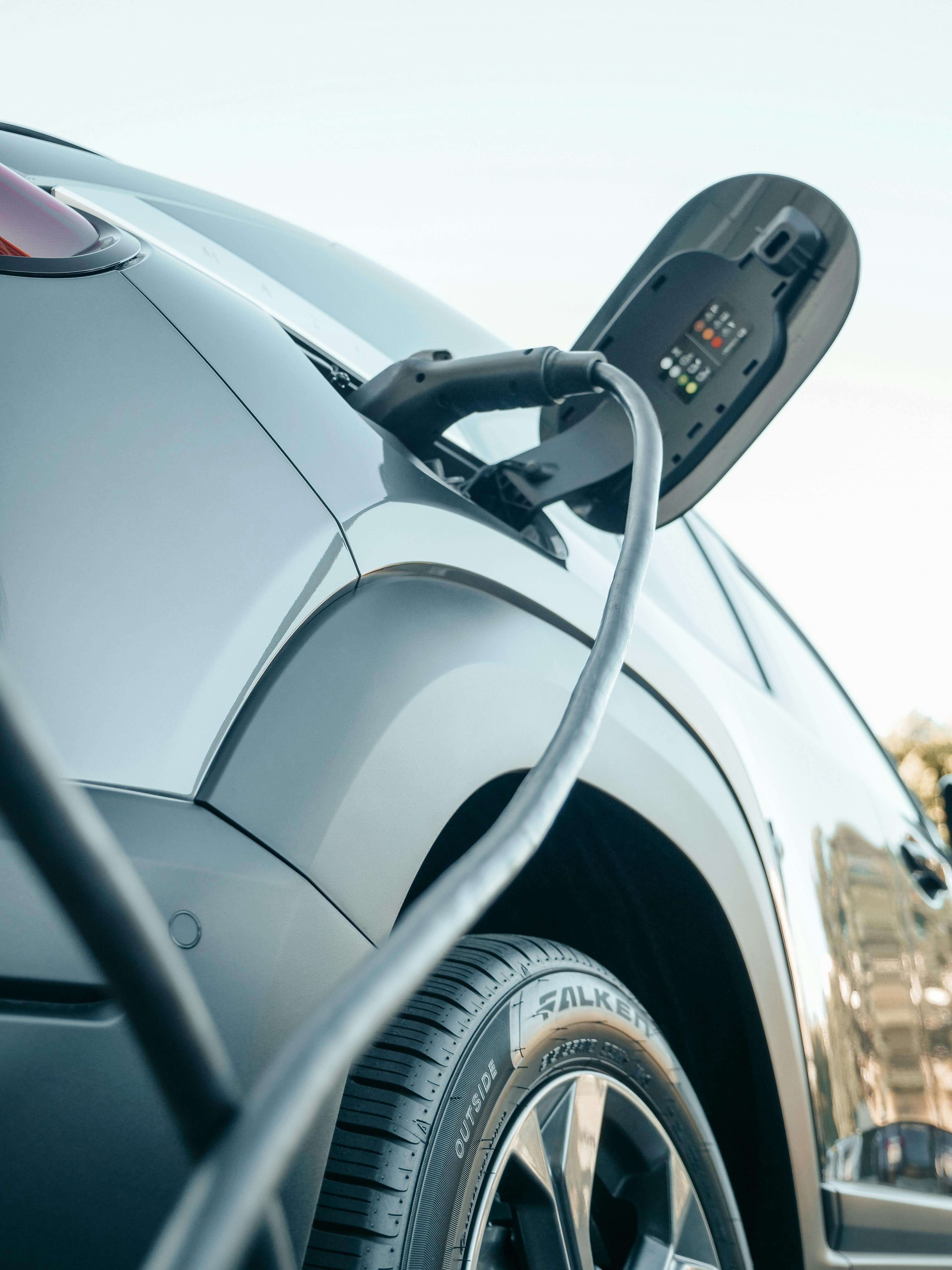
Hyundai Motor Group announced on July 21 that it will globally launch All Day Energy, an integrated V2X service that uses electric vehicles as “batteries on wheels.”

V2X, or Vehicle-to-Everything, is a technology that connects EV batteries bidirectionally with power grids, allowing vehicles to be charged during periods of low electricity prices and later send power externally when needed.

Data Source Statement: Except for publicly available information, all other data are processed by SMM based on publicly available information, market communication, and relying on SMM's internal database model. They are for reference only and do not constitute decision-making recommendations.

For any inquiries or for more information, please contact: lemonzhao@smm.cn
For more information on how to access our research reports, please contact:service.en@smm.cn
Related News
[SMM Analysis] Slower Hybrid-to-BEV Transition Eases Near-Term Pressure on Spodumene-to-Lithium Salt Supply Chain
1 hour ago
[SMM Analysis] Slower Hybrid-to-BEV Transition Eases Near-Term Pressure on Spodumene-to-Lithium Salt Supply Chain
Read More
[SMM Analysis] Slower Hybrid-to-BEV Transition Eases Near-Term Pressure on Spodumene-to-Lithium Salt Supply Chain
[SMM Analysis] Slower Hybrid-to-BEV Transition Eases Near-Term Pressure on Spodumene-to-Lithium Salt Supply Chain
SMM August 17: Battery metals demand faces a more gradual growth path as automakers and suppliers signal that hybrids and range extenders will retain a significant role well beyond earlier full-BEV transition timelines, carrying direct implications for the pace at which spodumene concentrate must convert into lithium carbonate (LC) and lithium hydroxide (LH) downstream. Industry executives argue that decarbonization progress should be measured by total emissions reduction rather than BEV penetration alone, with one powertrain executive projecting that half of passenger vehicles could still carry some form of combustion or hybrid system by 2040. For the lithium supply chain, pack size is the key variable rather than unit count. Hybrids and range extenders still require lithium-ion battery packs, but at a fraction of the capacity used in full BEVs, meaning each hybrid sold absorbs meaningfully less LC or LH per vehicle than a comparable BEV. Lithium remains structurally supported across almost every electrification pathway, unlike nickel, cobalt, and manganese, which carry closer ties to high-nickel chemistries used in longer-range BEVs. A longer hybrid phase would slow the rate at which large-format BEV packs absorb lithium units, easing the pace at which LC/LH conversion capacity needs to be brought online even as upstream spodumene mining and beneficiation projects continue ramping toward planned output targets. The demand path carries logistics implications as well. A more gradual absorption curve for battery-grade lithium salts gives converters and refiners processing spodumene feedstock from Africa, Australia, and South America greater runway to bring hydroxide and carbonate capacity online without facing the acute bottleneck pressure a steep BEV-only ramp would create, allowing producers and converters to better sequence CIF delivery schedules against a less compressed conversion timeline. Policy remains a swing factor: the EU's current framework targets a 100% cut in new car and van tailpipe emissions from 2035, effectively phasing out combustion sales absent new exemptions, though suppliers are pushing for a more technology-neutral approach that credits hybrids and range extenders. Greater EU flexibility would further extend the timeline over which spodumene supply needs to convert into battery-grade LC/LH. SMM View: A longer mixed-powertrain era points to a more forgiving supply-demand balance across the spodumene-to-lithium-salt chain in the near term, giving upstream concentrate producers and downstream LC/LH converters additional room to align capacity growth with actual offtake absorption rather than racing an aggressive BEV-only demand curve. This may moderate the urgency behind some conversion capacity expansions currently underway across major producing and processing regions, while the structural case for spodumene supply growth remains intact given lithium's exposure across virtually every electrification pathway. SMM will continue tracking how powertrain mix assumptions filter through into spodumene pricing, conversion economics, and logistics planning across key export corridors.
1 hour ago
[SMM Flash News] Sigma Lithium Reports Record Q2 Margins, Accelerates Capacity Expansion, Pressuring Global Supply
1 hour ago
[SMM Flash News] Sigma Lithium Reports Record Q2 Margins, Accelerates Capacity Expansion, Pressuring Global Supply
Read More
[SMM Flash News] Sigma Lithium Reports Record Q2 Margins, Accelerates Capacity Expansion, Pressuring Global Supply
[SMM Flash News] Sigma Lithium Reports Record Q2 Margins, Accelerates Capacity Expansion, Pressuring Global Supply
SMM August 17: Sigma Lithium Corporation, the largest producer of lithium oxide concentrates in the Americas, reported record second-quarter results with an EBITDA margin of 47%, up 39% quarter-on-quarter and the highest in company history. The producer, which operates the Grota do Cirilo project in Brazil, sold 24,400 tonnes of lithium oxide concentrate in the quarter for net revenues of $55 million, realizing an average price of $2,089/t, up 17% year-on-year. Gross and operating margins stood at 60% and 32% respectively, supported by a sharp reduction in costs: plant gate cost fell 36% QoQ to $401/t, CIF cost declined 33% QoQ to $452/t, and all-in sustaining cost eased 6% QoQ to $668/t, driven by upgraded mine operations and a 50% increase in production volumes. Total debt has been reduced 25% since Q2 last year. The margin improvement comes as Sigma moves deeper into an aggressive expansion phase. The company is targeting production of 330,000 t/y in FY2027, up from a current run-rate of 240,000 t/y, with two new plants under construction set to lift installed capacity to 580,000 t/y by end-2027 and 830,000 t/y by end-2028 more than a threefold increase from current levels. That scale of expansion means Sigma's low-cost tonnes will be entering the global concentrate market at precisely the moment African producers are ramping their own beneficiation capacity, placing the two supply regions on a more direct collision course than in previous years. Zimbabwe's Chinese-backed sulphate plants and Mali's Goulamina project are among the African assets scaling toward full production over the same 2026-2028 window, and both regions will increasingly be competing for share of a concentrate market that is set to absorb significantly more volume from multiple continents at once. SMM View: Sigma's cost trajectory illustrates how far unit economics can improve once a hard-rock operation reaches steady-state scale, and it sets a demanding benchmark against which African concentrate producers will be measured as they work through their own ramp-up curves. With low-cost Americas supply expanding rapidly, African projects still climbing toward full capacity face growing pressure to lock in cost competitiveness and secure offtake commitments before benchmark concentrate pricing comes under strain from the added global volume. SMM will continue monitoring how this expanding multi-region supplies base shapes price dynamics across the spodumene-to-hydroxide value chain.
1 hour ago
[SMM Flash News] DRC Lithium Hydroxide Leads Mineral Gains, Up 3.89% to Over $20,000/mt as Other Lithium Products Slide
2 hours ago
[SMM Flash News] DRC Lithium Hydroxide Leads Mineral Gains, Up 3.89% to Over $20,000/mt as Other Lithium Products Slide
Read More
[SMM Flash News] DRC Lithium Hydroxide Leads Mineral Gains, Up 3.89% to Over $20,000/mt as Other Lithium Products Slide
[SMM Flash News] DRC Lithium Hydroxide Leads Mineral Gains, Up 3.89% to Over $20,000/mt as Other Lithium Products Slide
On August 17th, DRC lithium hydroxide prices rose 3.89% to $20,065.63/mt in the 10-15 August 2026 pricing period, up $751.34/mt from $19,314.29/mt, making it the strongest performer among the country's key mineral exports. Tin concentrate (cassiterite) also gained, rising 1.67% to $17,531.44/mt from $17,243.55/mt. Other lithium products moved lower over the same period. Lithium carbonate fell 0.99% to $16,732.44/mt, while lithium sulphate declined by the same margin to $9,412/mt. Lithium concentrate posted the sharpest drop in the category, down 2.60% to $412/mt from $423/mt. Elsewhere, tantalum concentrate eased 0.69% to $28,171.57/mt and nickel slipped 0.88% to $15,055.74/mt. SMM View: The divergence between hydroxide and the rest of the DRC lithium complex points to differentiated demand pull along the value chain, with converted, battery-grade material commanding a premium even as upstream concentrate softens. Given mining's outsized weight in DRC export earnings, sustained hydroxide strength could bolster the case for domestic beneficiation, though the country's continued exposure to concentrate-price volatility underscores the risk of relying on raw ore exports. SMM will continue to track DRC's mineral pricing trajectory alongside broader African lithium supply chain developments.
2 hours ago
Hyundai Motor Group announced on July 21 that it will globally launch - Shanghai Metals Market (SMM)