Semi Coke Losses Raise Smelting Costs, China's Magnesium Ingot Composite Cost Up MoM in June [SMM China Analysis]

Published: Jul 9, 2026 17:16
[SMM Magnesium Market Analysis: Semi Coke Losses Raise Smelting Costs; China’s Magnesium Ingot Comprehensive Cost Rose MoM in June] At the end of May, a safety accident at the Qinyuan coal mine directly tightened the supply of raw coal in the region, rapidly driving up market coal prices. There was a significant time lag in the transmission of semi coke prices, and losses on production at semi coke plants intensified, substantially increasing the energy raw material cost for primary magnesium smelting. Enterprises mitigated fixed expenses such as plant and equipment depreciation by raising capacity, which only slightly alleviated cost pressure. The incremental cost impact from higher energy prices was stronger, pushing up the industry’s overall smelting cost. Processing profits at upstream plants continued to be squeezed, and profit margins narrowed for most enterprises.
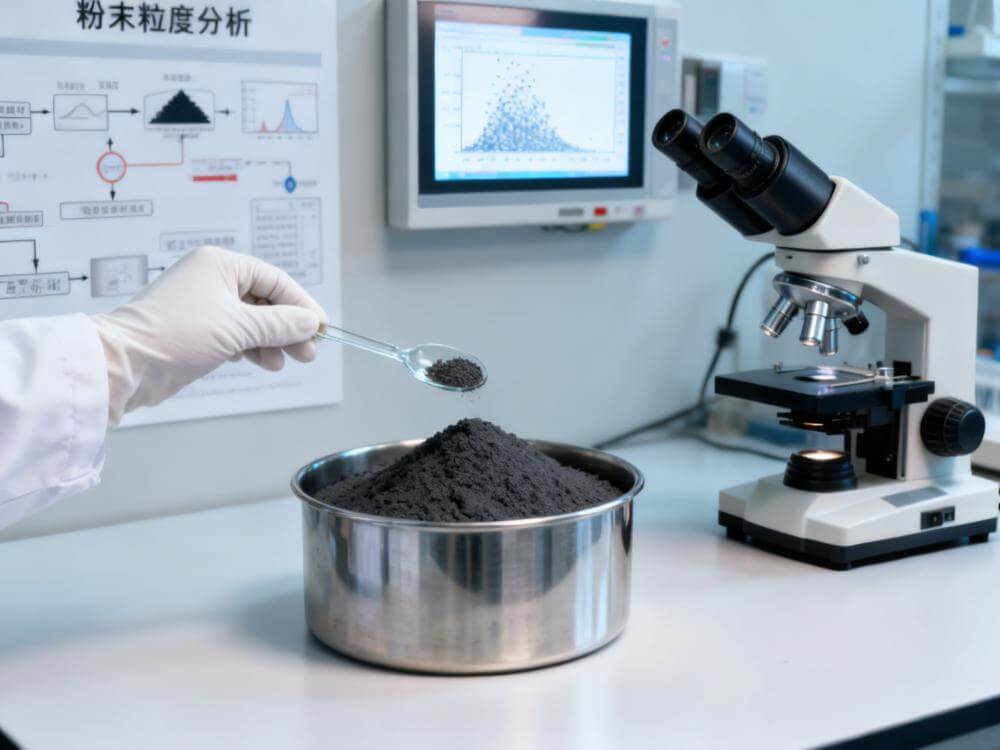
In June, the tax-inclusive full cost of China's magnesium ingot industry rose 1.18% MoM to 16,138 yuan/mt, an increase of 1.18% MoM, as the cost advantage from the previous month largely evaporated. A safety incident at the Qinyuan coal mine in late May directly tightened the supply of circulating raw coal in the region, driving market coal prices up rapidly. There was a clear time lag in the transmission of the semi coke market, which intensified production losses at semi coke plants and significantly raised the core energy feedstock cost for primary magnesium smelting. Enterprises mitigated some cost pressure by boosting capacity to spread fixed expenses such as plant and equipment depreciation, but the incremental cost impact from rising energy prices was stronger. Overall industry smelting costs trended higher, continuing to compress processing margins at upstream smelters and narrowing profit space for most enterprises.
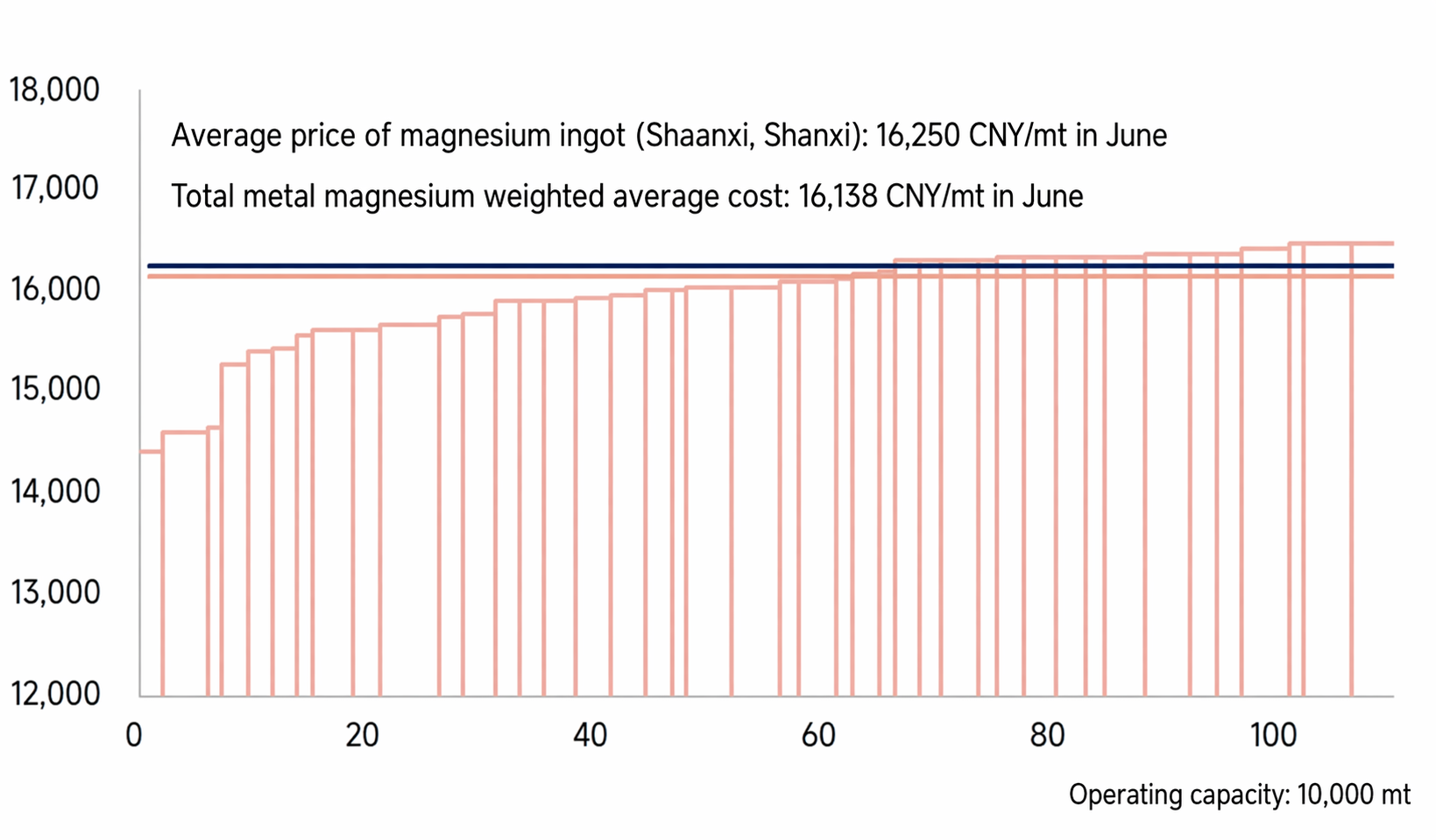
Raw material costs: Delivered prices for dolomite ore remained stable, with limited overall impact.
A leading dolomite quarry in the Wutai area of Shanxi faced a prolonged shutdown, sustaining a local supply shortage. Most magnesium smelters locked in long-term ore procurement contracts, keeping delivered dolomite purchase prices stable. Quarries in multiple regions, including Hubei, Henan, and Inner Mongolia, continued to ramp up shipments, effectively filling the market supply gap. The regional diversion of ore sources reduced the impact of supply disruptions from any single origin, leading to relatively small cost fluctuations for dolomite feedstock. This exerted a limited boost on overall magnesium ingot production costs and did not create significant upward cost pressure.
Auxiliary material costs: Ferrosilicon prices ground lower while other auxiliary materials edged higher, leaving costs basically flat MoM.
At this stage, the tug-of-war between longs and shorts is intense in the ferrosilicon market. Upstream raw coal and semi coke costs provided bottom support, suppressing downside room, but downstream demand from the steel and foundry industries remained sluggish with weak procurement enthusiasm. These opposing forces offset each other, constraining wild swings. In the short term, spot ferrosilicon prices moved sideways near 5,950 yuan/mt, with a weak trend as it continued to grind lower. Slight price increases for other smelting auxiliary materials offset concessions in ferrosilicon, leaving the comprehensive cost of auxiliary materials basically flat MoM, without imposing additional cost burdens on magnesium smelters.
Energy cost: Coal prices weakened initially before strengthening, but had a limited impact on magnesium smelting costs.
Safety rectifications at the Qinyuan coal mine in late May tightened the circulating supply of raw coal, with spot raw coal prices surging quickly in the short term and pushing up feedstock procurement costs for semi-coke plants. The pace of semi coke price transmission lagged behind the rise in raw coal, making it difficult for semi coke plants to raise their selling prices in sync. The industry generally fell into losses, directly increasing energy expenditure for primary magnesium smelting. Raw coal prices pulled back at month-end, but the full-month average coal price was still higher than in May. Based on our calculations, the industry's energy cost per mt of magnesium ingot increased by approximately 150 yuan MoM, making it the core driver of this month's cost increase.
Labour cost: With operations running at full capacity, per mt labour costs remained low and stable.
The current market magnesium price bottoming out boosted production enthusiasm at smelters. Mainstream primary magnesium enterprises in China largely maintained continuous full-capacity production, maximizing the operational efficiency of on-site personnel and equipment. After allocating total labour expenditure per mt of magnesium ingot, the figure remained low with no significant monthly fluctuations. The cushioning effect of amortized labour costs was evident, and this segment did not boost the full cost of the overall industry.
Data Source Statement: Except for publicly available information, all other data are processed by SMM based on publicly available information, market communication, and relying on SMM's internal database model. They are for reference only and do not constitute decision-making recommendations.

Images in this article contain AI-translated captions for reference only.

For any inquiries or for more information, please contact: lemonzhao@smm.cn
For more information on how to access our research reports, please contact:service.en@smm.cn
Related News
Li Auto and Changzhou Duoli Win Gold for Innovative Magnesium Alloy Rear Floor at 2026 Shanghai Die Casting Exhibition
11 hours ago
Li Auto and Changzhou Duoli Win Gold for Innovative Magnesium Alloy Rear Floor at 2026 Shanghai Die Casting Exhibition
Read More
Li Auto and Changzhou Duoli Win Gold for Innovative Magnesium Alloy Rear Floor at 2026 Shanghai Die Casting Exhibition
【SMM Magnesium Express】Recently, at the 2026 Shanghai Die Casting Exhibition, the integrated die-cast magnesium alloy rear floor jointly submitted by Li Auto and Changzhou Duoli Auto Parts won the "Gold Award Casting". Currently, the integrated die-casting in the industry mostly adopts aluminum alloy solutions, which faces a bottleneck in weight reduction space. As a strategic lightweight material, magnesium alloy can reduce the weight by about one third compared with aluminum alloy, and has outstanding vibration and noise reduction performance. However, the die-casting of large body load-bearing parts is prone to porosity and cracks, making it difficult to achieve mass production, and most projects only stay in the sample stage. Through self-developed magnesium alloy materials and optimized structure and die-casting process, Li Auto has achieved a 10% increase in casting toughness and a 40% increase in casting fluidity, breaking through the pain point of mass production of large magnesium alloy thin-walled parts. This component replaces the traditional multi-part welding structure, improving body rigidity; the weight reduction can improve the vehicle's power consumption and range; the inherent vibration reduction advantage of the material can also optimize the chassis NVH performance, balancing safety, energy efficiency and driving quietness. Li Auto has also become one of the few domestic car companies to realize the mass production of this technology.
11 hours ago
SMM Weekly: Magnesium Inventory Down 4.6% MoM, Driven by Contract Deliveries and Restocking
11 hours ago
SMM Weekly: Magnesium Inventory Down 4.6% MoM, Driven by Contract Deliveries and Restocking
Read More
SMM Weekly: Magnesium Inventory Down 4.6% MoM, Driven by Contract Deliveries and Restocking
【SMM Weekly Magnesium Inventory Express】This week, the social inventory decreased by 4.6% month-on-month, showing an inventory destocking trend. The destocking of social inventory this week is mainly affected by two factors: on the one hand, as it is the end of July, some long-term contract orders are delivered centrally, and enterprises purchase and deliver goods according to order requirements; on the other hand, some downstream end users also enter the monthly restocking stage, and a small amount of stocking purchases drive inventory digestion. At the same time, due to the recent high volatility of ex-factory prices of magnesium ingots, traders generally have low willingness to stock up except for necessary order fulfillment and replenishment, failing to timely replenish the consumed inventory. In general, the destocking of social inventory this week is relatively obvious.
11 hours ago
SMM Weekly: Magnesium Inventories Down 3.45% MoM, Boosted by Foreign Trade Orders
11 hours ago
SMM Weekly: Magnesium Inventories Down 3.45% MoM, Boosted by Foreign Trade Orders
Read More
SMM Weekly: Magnesium Inventories Down 3.45% MoM, Boosted by Foreign Trade Orders
【SMM Weekly Magnesium Inventory Express】This week, manufacturers' inventories decreased by 3.45% month-on-month. On the supply side, domestic primary magnesium output showed a downward trend this week, with output contraction at some enterprises in the early stage, which has alleviated the spot supply pressure on primary magnesium smelters to a certain extent. In terms of transactions, as the end of the month approaches, foreign trade orders have entered a centralized delivery phase, which has effectively boosted the recent market trading sentiment. With the release of spot transactions, the finished product inventories of some smelters have been consumed, accelerating the pace of inventory destocking.
11 hours ago