SMM, July 7:
In H1 2026, the Middle East geopolitical conflict became one of the decisive factors affecting aluminum prices. Before the Middle East conflict, expectations of a US dollar interest rate cut cycle were bullish for non-ferrous metal prices. In January, aluminum outside China generally held up well. High aluminum prices suppressed demand, and combined with the impact of the Chinese New Year holiday in China, domestic aluminum ingot inventory buildup exceeded expectations. In February, aluminum prices both in and outside China pulled back in tandem. On February 28, the US-Israeli coalition launched a joint military strike on Iran, officially kicking off the impact of the Middle East geopolitical conflict on aluminum prices.
The Middle East geopolitical conflict triggered production cuts in the Middle East, and expectations of a large supply deficit pushed up LME aluminum prices.
Affected by the US-Iran conflict, some aluminum plants in the Middle East cut production, and combined with the Mozambique aluminum plant entering a shutdown in March, the market expected that the overseas aluminum market would face a large fundamental deficit. Boosted by this, overseas aluminum prices climbed continuously, with the LME 3M aluminum price reaching a near three-year high of $3,787.5/mt on June 2. The timeline of production cuts at Middle Eastern and Mozambique aluminum plants is as follows:
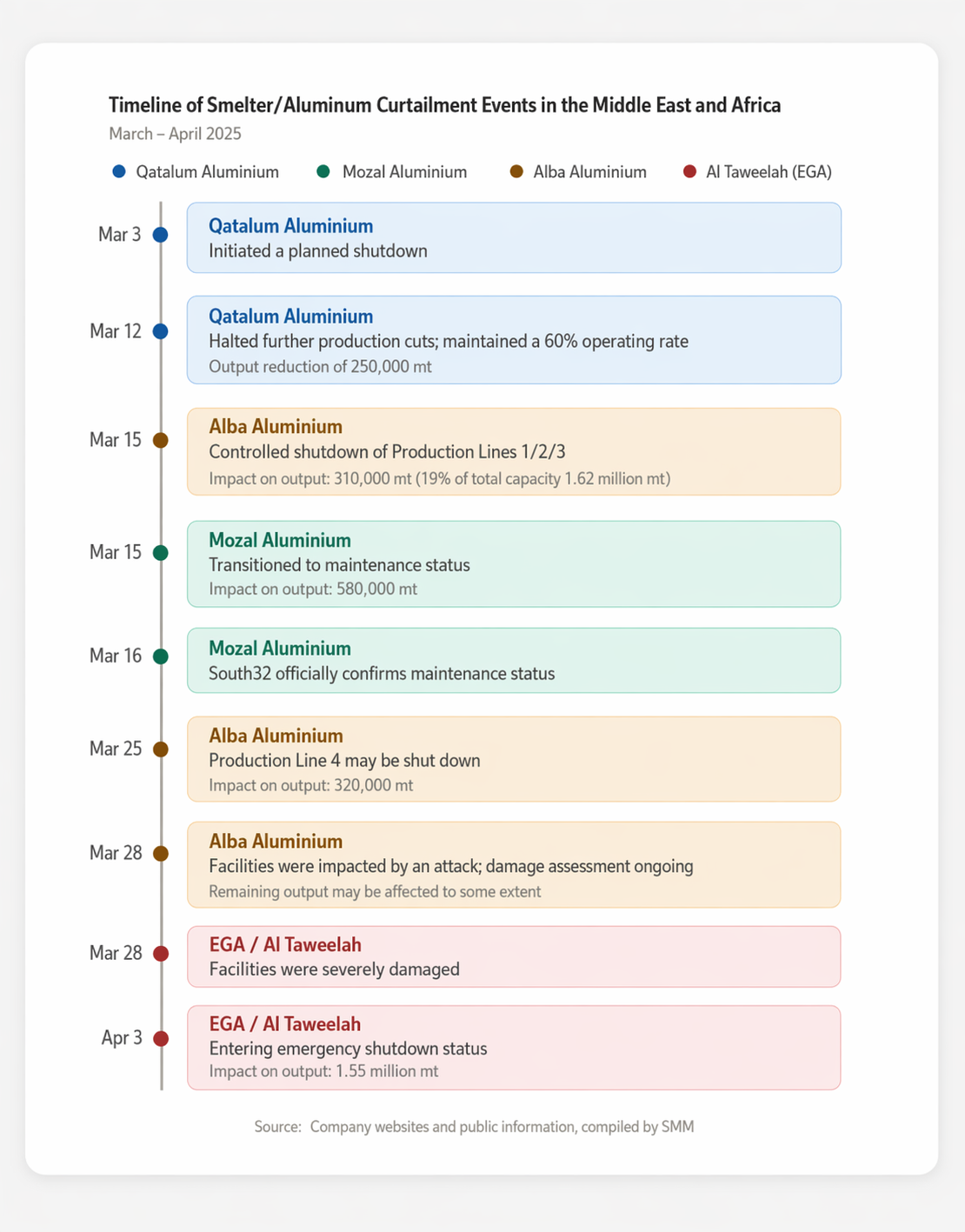
In addition, Iran's domestic power and other infrastructure were damaged, and aluminum plant production is expected to be unsustainable. However, there is no clear announcement at present, and SMM has made an assessment of production cuts.As of mid-April, SMM estimated that the total capacity affected by production cuts in the Middle East and Mozambique could reach around 3.5-4 million mt.
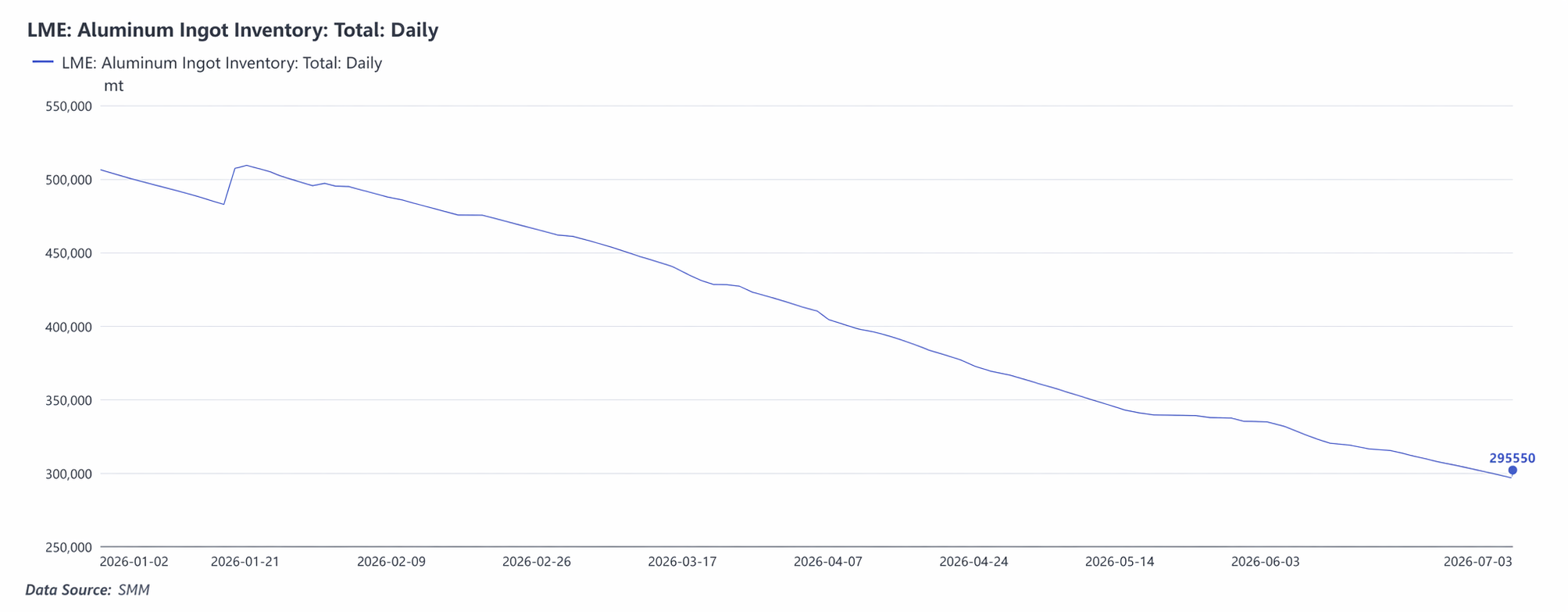
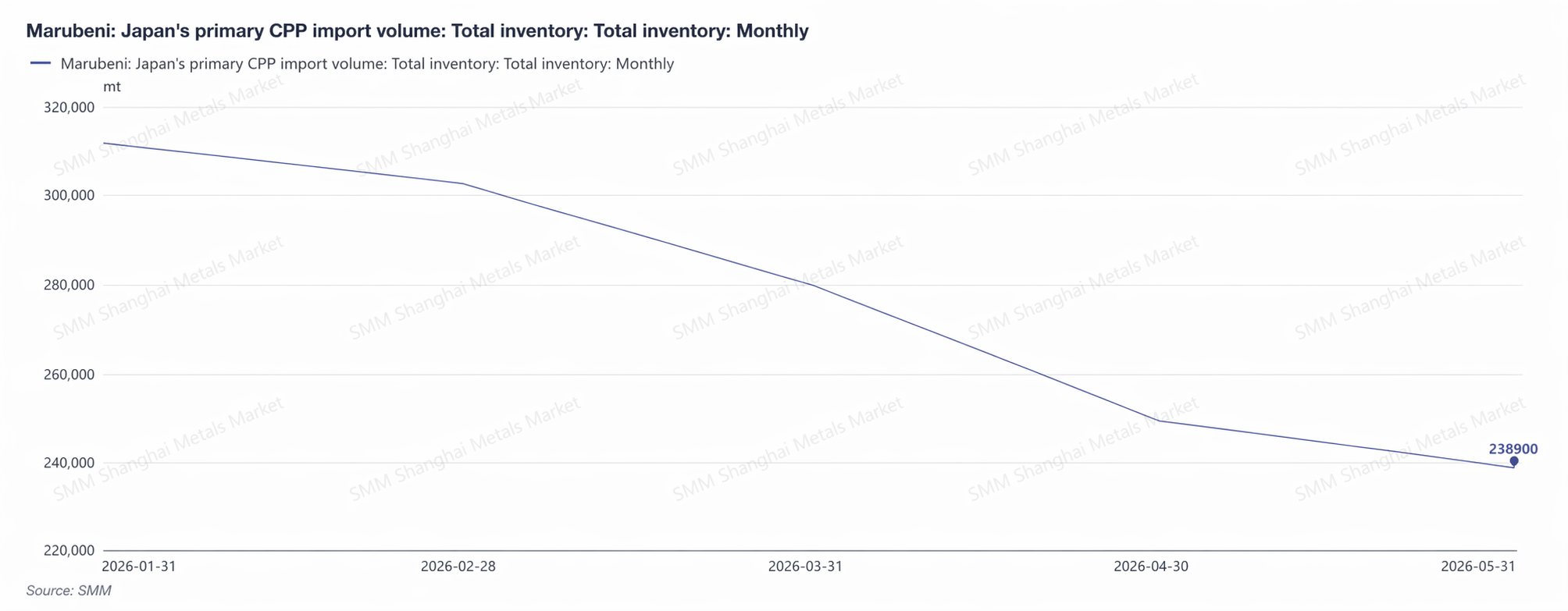
Under the impact of significant production cuts, the overseas aluminum market shifted to a deficit, with total LME aluminum ingot inventory and Japanese port aluminum ingot inventory declining continuously. As of the end of June 2026, LME global aluminum ingot inventory registered 302,000 mt, down 207,000 mt from the end of last year. As of end-May, primary aluminum inventory at major Japanese ports stood at 239,000 mt, destocking by 78,000 mt from the end of last year.
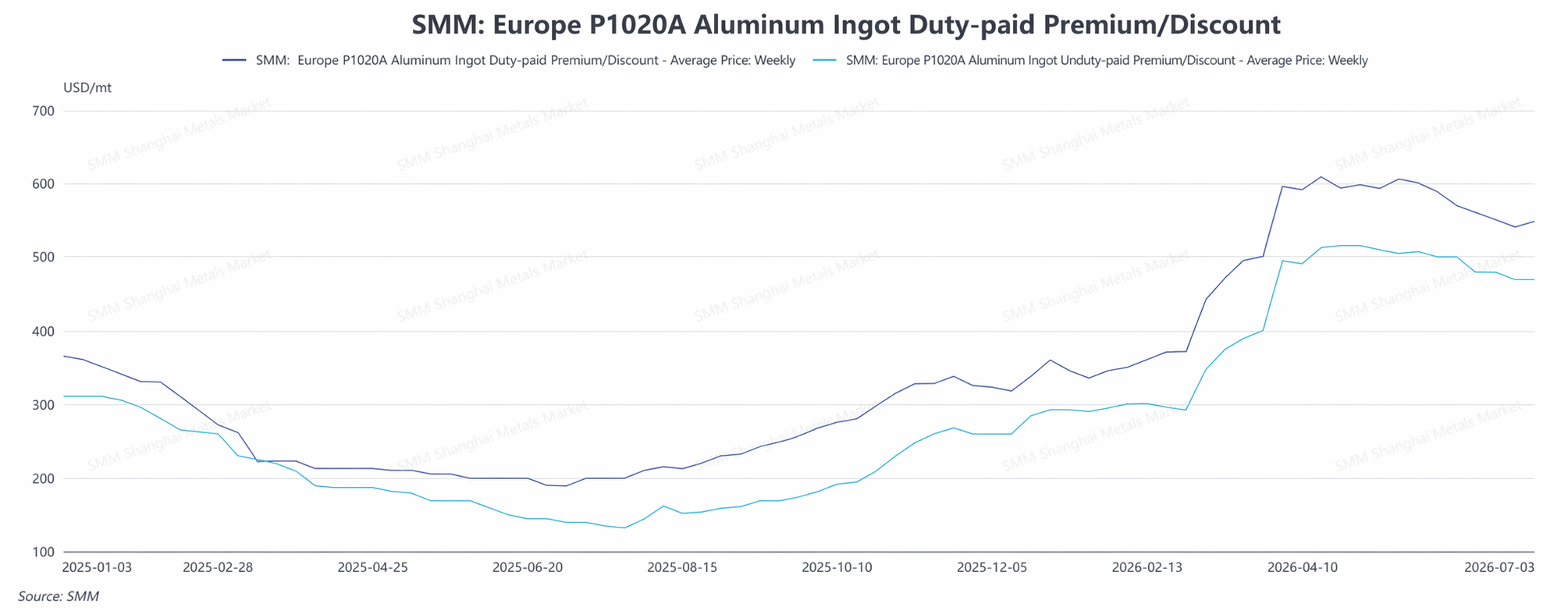
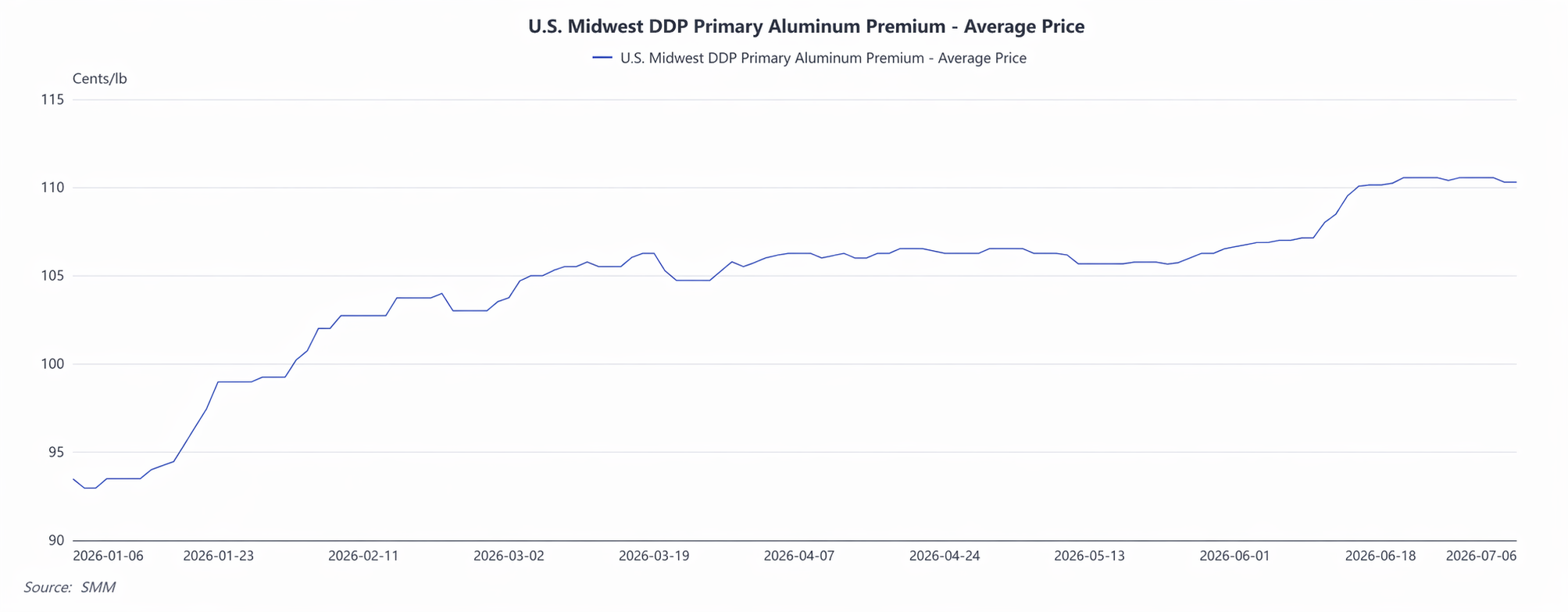
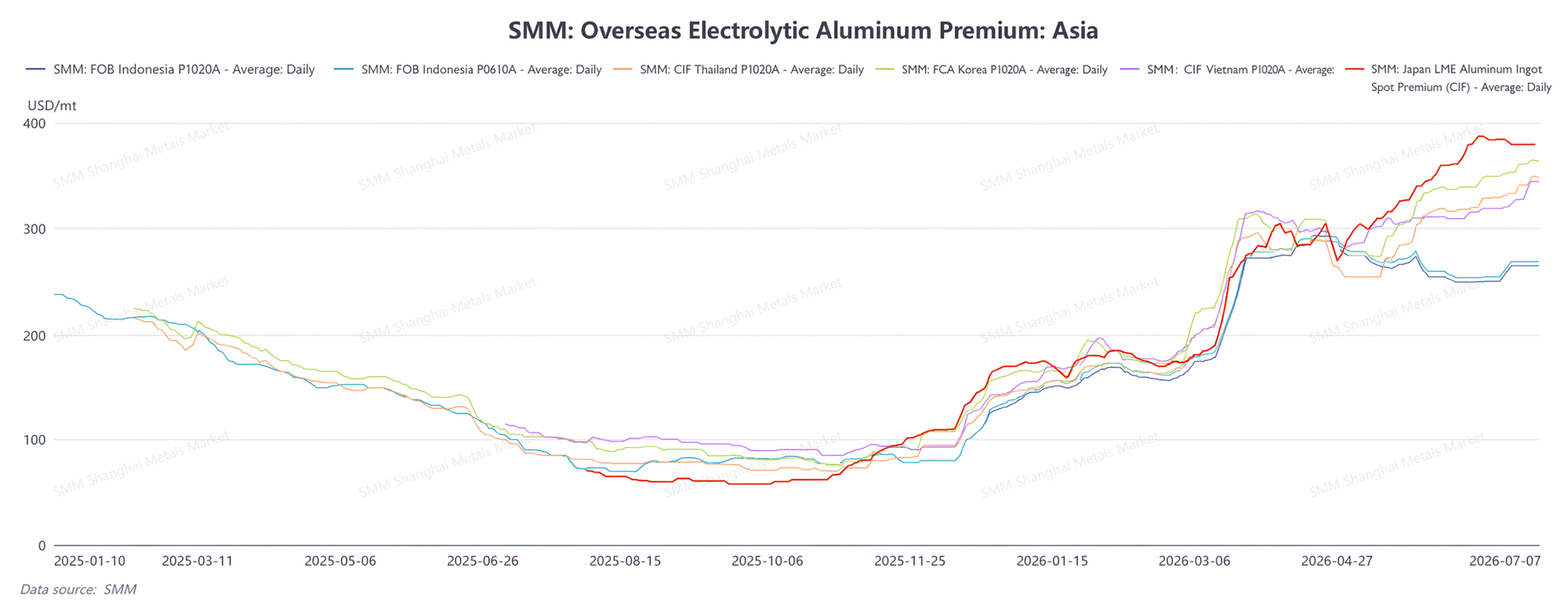
Amid expectations of supply tightening, regional premiums for overseas aluminum strengthened. As of end-June, SMM Japan MJP aluminum ingot spot premium registered $380/mt, up 123.5% from the end of last year; SMM Japan Q3 MJP aluminum ingot premium registered $395/mt, up $309/mt from Q4 2025, an increase of 359.3%. SMM Europe P1020A aluminum ingot duty-paid premium registered $547.5/mt, up 62.2% from the end of last year; SMM Europe P1020A aluminum ingot duty-unpaid premium registered $470/mt, up 64.9% from the end of last year. SMM US Midwest DDP aluminum premium registered 110.5¢/lb, equivalent to around $2,435/mt, up 18.2% from the start of the year, with an absolute increase of approximately $374.7/mt.
Although supply tightened and aluminum ingot destocking occurred, high prices dampened downstream purchase enthusiasm, and actual transactions in Asia were continuously at a discount to the Japan QMJP aluminum ingot premium. New investments in Indonesia were concentrated, and as new projects continued to ramp up production, supply increased. From Q2, Indonesia aluminum ingot FOB prices showed a slight pullback trend. As of end-June, the average SMM FOB Indonesia P0610A price stood at $270/mt, up 92.9% from the end of last year but down 8.8% from this year’s high of $296/mt; the average SMM FOB Indonesia P1020A price stood at $266/mt, up 97.0% from the end of last year but down 8.6% from this year’s high of $291/mt. In other regions, aluminum premiums maintained an overall uptrend. As of end-June, the average SMM CIF South Korea P1020A price stood at $342/mt, up 132.7% from the end of last year; the average SMM FCA South Korea P1020A price stood at $362/mt, up 119.4% YoY; the average SMM CIF Thailand P1020A price stood at $328/mt, up 120.9% YoY.
High Profits Accelerate Aluminum Production Resumptions and New Project Startups
Under high aluminum prices, aluminum enterprises enjoyed considerable profits. These high profits stimulated some idled capacity to accelerate production resumptions and also gave rise to more new aluminum projects, speeding up their startup.
In H1, three aluminum smelters restored idle capacity to varying degrees, while another two aluminum smelters announced plans to resume production in 2026. Details are as follows:
- Spain’s San Ciprián smelter safely completed its restart on April 8, with a total capacity of approximately 230,000 mt/year, representing an increase of about 150,000-200,000 mt/year compared to its 2025 operating capacity.
- Mount Holly in the US began production resumptions in April and plans to reach full capacity by end-June, involving 50,000 mt/year of capacity.
- Iceland’s Grundartangi smelter started resuming production in April and is expected to complete the process by end-July, involving 210,000 mt/year of capacity.
- Magnitude 7 Metals plans to restart potline 1 at the New Madrid aluminum smelter in the US, aiming to add 75,000 mt/year of primary aluminum capacity by the end of 2026.
- Norway’s Hydro stated that the Slovalco smelter in Slovakia plans to restart part of its primary aluminum production in Q4 2026, involving 75,000 mt/year of capacity.
For new projects, according to SMM estimates, total planned new aluminum capacity outside China in 2026 is about 2.3 million mt, of which approximately 700,000 mt has already been commissioned, and the remaining 1.6 million mt is expected to be commissioned in H2 2026. More details can be followed in the “SMM Monthly Review of Aluminum Projects Outside China” series.
In summary, although the Middle East and Mozambique experienced large-scale production cuts in H1, the acceleration of production resumptions and newly commissioned projects partly offset the supply reduction. According to SMM calculations, total aluminum production outside China in H1 2026 was 14.397 million mt, down 4.1% YoY, and total demand outside China was 13.612 million mt, down 3.1% YoY. As 1.234 million mt of aluminum from outside China is expected to have net inflows into China in H1, overall, the aluminum deficit outside China in H1 is estimated at around 450,000 mt.
H2 Outlook: Production resumptions in the Middle East combined with the ramp-up of newly commissioned projects will increase supply and put pressure on aluminum prices.
In June-July, as the geopolitical situation in the Middle East showed no clear signs of further deterioration, aluminum smelters in the region that had cut or suspended production began to report resumptions. On July 2, EGA announced progress in the resumption of operations at its Al Taweelah plant. The removal of anodes from all pots has been completed; pot shell cleaning is about 90% complete; and over 20% of the solidified aluminum blocks in the pots have been cleared. On May 26, the first pot was successfully restarted; as of July 2, 89 pots were in operation (out of a total of 1,262 pots), equivalent to a capacity of approximately 110,000 mt. In addition, Alba and Qatalum are also expected to gradually resume production.
With production resumptions in the Middle East and the ongoing ramp-up of newly commissioned projects, the global aluminum balance is expected to shift to a surplus in Q4 2026.
[Data Source Statement: All data beyond publicly available information is derived by SMM based on public information, market communication, and SMM's internal database models, and is for reference only, not constituting any decision-making advice.]
Data source: SMM
(Guo Mingxin 021-20707919)