SMM, July 2 –
On June 27, the three standards *Polycrystalline Silicon and Germanium Unit Product Energy Consumption Quota*, *Crystalline Silicon PV Module and Inverter Energy Efficiency Limits and Energy Efficiency Ratings*, and *Monocrystalline Silicon Unit Product Energy Consumption Quota* were officially published, with implementation explicitly set for January 1, 2027.
First, looking specifically at the classifications in these energy efficiency rating standards:
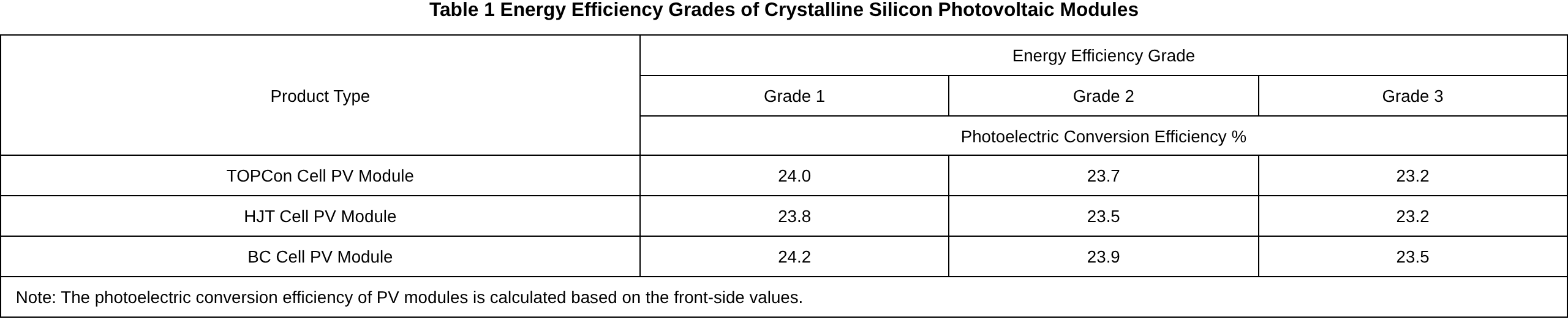
Currently, energy efficiency ratings are classified by technology route, with Level 1 being the highest efficiency. Among them, the photoelectric conversion efficiencies for levels 1, 2, and 3 shall be not less than: TOPCon modules (24%, 23.7%, 23.2%), HJT modules (23.8%, 23.5%, 23.2%), BC modules (24.2%, 23.9%, 23.5%).The document stipulates that the photoelectric conversion efficiency for each energy efficiency rating shall not be less than the value specified in the table.
In addition, the standards also impose requirements on the bifaciality and degradation rates for each technology route.
The combined environmental stress degradation rate for crystalline silicon PV modules shall not exceed 8.6%;
For bifacial crystalline silicon PV modules, the bifaciality rates shall be not less than: Topcon cell PV modules 75%, HJT cell PV modules 85%, BC cell PV modules 70%.
Corresponding module power classification by energy efficiency rating:

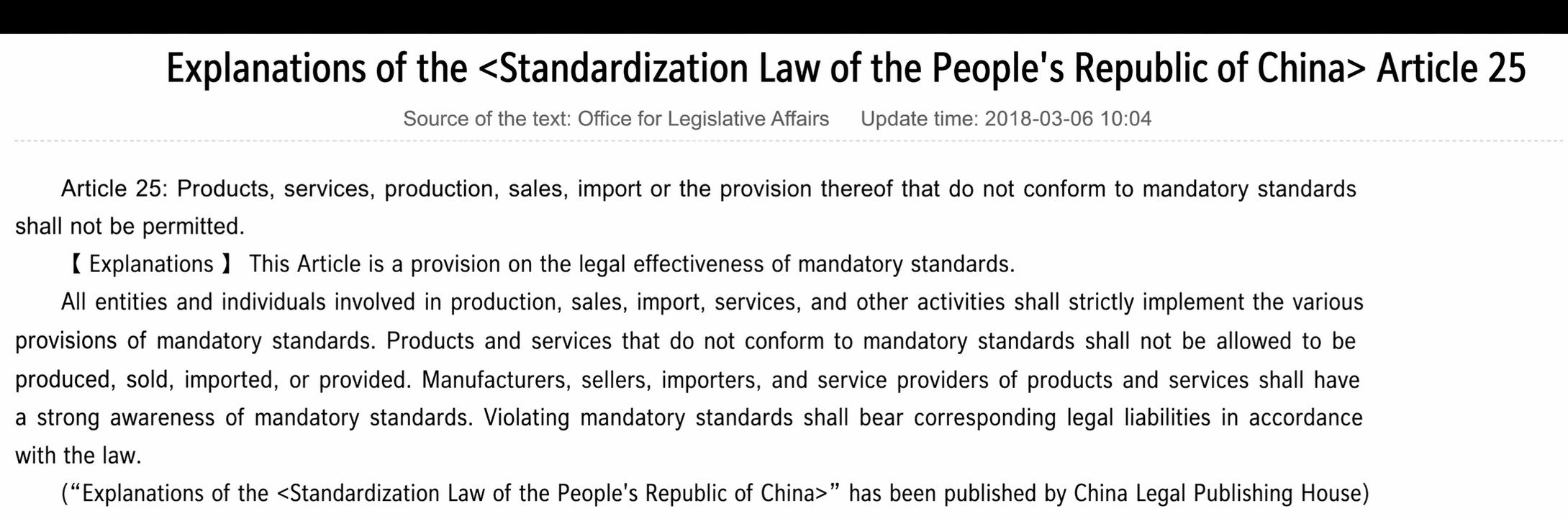
In summary, SMM offers a brief analysis. The mandatory standard is currently expected to take effect on January 1, 2027. Although the *Crystalline Silicon PV Module and Inverter Energy Efficiency Limits and Energy Efficiency Ratings* does not specify whether products below the energy efficiency rating are required to exit the market,according to Article 25 of the *Standardization Law*: Products or services that do not conform to mandatory standards shall not be produced, sold, imported, or provided.Units and individuals engaged in production, sales, import, and service shall strictly implement all provisions of the mandatory standards. Products and services that do not conform to mandatory standards are prohibited from production, sale, import, and provision. Producers, sellers, importers, and service providers shall possess an awareness of mandatory standards. Violations of mandatory standards will result in corresponding legal liability in accordance with the law.
SMM analyzes that the minimum conversion efficiencies required by these energy efficiency ratings, 23.2% and 23.5%, are basically achievable by mainstream manufacturers in China at present. However, for manufacturers with outdated capacity, an actual conversion efficiency of 23.3% remains unattainable. With the standard expected to be implemented on January 1, 2027, the timeline is quite urgent for outdated capacity, indicating that some capacity is expected to enter a countdown to being cleared, and the industry's cut-throat competition is expected to be alleviated or even improved. For leading domestic module enterprises, constraints are relatively small. Currently, mainstream products in production have basically all reached Level 3 or above, and the concentration of the module industry is expected to increase subsequently.
Overall, whether it is the previously issued "Safety Requirements for PV Modules" and "Nameplate Labeling Requirements for PV Modules", or the current "Minimum Allowable Values of Energy Efficiency and Energy Efficiency Grades for Crystalline Silicon PV Modules and Inverters", they all provide policy support for the "anti-involution" efforts in China's PV market. The old path of enterprise self-discipline is now judged to be unworkable. Combining stringent standards with enterprise technology upgrades to curb overcapacity at the source and accelerate the rationalization of outdated capacity.
However, it should be noted that although there are expectations of phase-out, the domestic supply-demand situation cannot be improved immediately. Domestically, the capacity of China's top-tier players alone can already meet the overall demand. The supply-demand structural adjustment still needs time to take effect, but the rationalization of outdated capacity has become a foregone conclusion.
![[SMM PV News]](https://imgqn.smm.cn/usercenter/TygQH20251217171742.jpg)
![[SMM PV Express] Annual carbon reduction exceeds 23,000 mt! Beihai Shipbuilding distributed PV project completed and put into operation](https://imgqn.smm.cn/usercenter/PkttC20251217171742.jpg)