

Recently, Malaysia’s Plus Xnergy Services Sdn Bhd announced that a 20MWh battery energy storage system, deployed at a large food manufacturing facility in Perak, Malaysia, has completed full-capacity grid connection and entered commercial operation. The project was jointly developed by Plus Xnergy and energy storage system supplier HyperStrong. It is positioned as a commercial and industrial self-consumption battery energy storage project, namely a SELCO BESS.
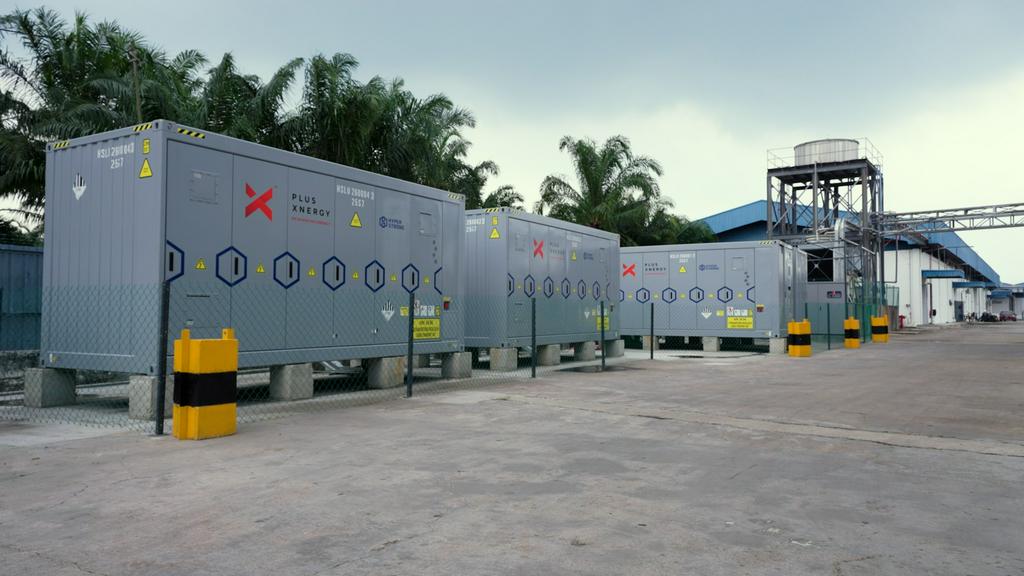
Figure 1: Plus Xnergy’s 20MWh BESS project at a food manufacturing facility in Perak
This energy storage system is not primarily designed for grid-side frequency regulation or large-scale renewable energy integration. Instead, it mainly serves the facility’s own electricity management needs. Its core operating logic is to charge during periods of lower electricity prices or lower power demand, and discharge during peak demand periods. In doing so, the system helps smooth the facility’s load curve, reduce Maximum Demand charges, and improve localised power supply stability to a certain extent.
For manufacturing enterprises in Malaysia, the practical value of such projects lies in energy cost management. As electricity tariff mechanisms adjust and industrial users face rising power cost pressure, some energy-intensive manufacturers are beginning to pay more attention to the role of energy storage in peak shaving, demand management and power stability. Continuous production scenarios, such as food processing, heavy manufacturing, chemicals and metal processing, usually have relatively high and stable electricity loads, making it easier to establish the economic basis for energy storage projects.
According to data provided by Plus Xnergy, under Malaysia’s Regulatory Period 4, or RP4, framework, this type of system is expected to generate electricity bill savings of approximately RM1.25 million per year for every 10MWh of storage capacity. However, the actual savings depend on factors such as the company’s load profile, peak-valley price spread, Maximum Demand charge structure and the operating strategy of the energy storage system. Therefore, the project’s real-world performance, particularly its actual cost-saving effect and investment payback period, will be important indicators for assessing the commercial value of C&I energy storage.
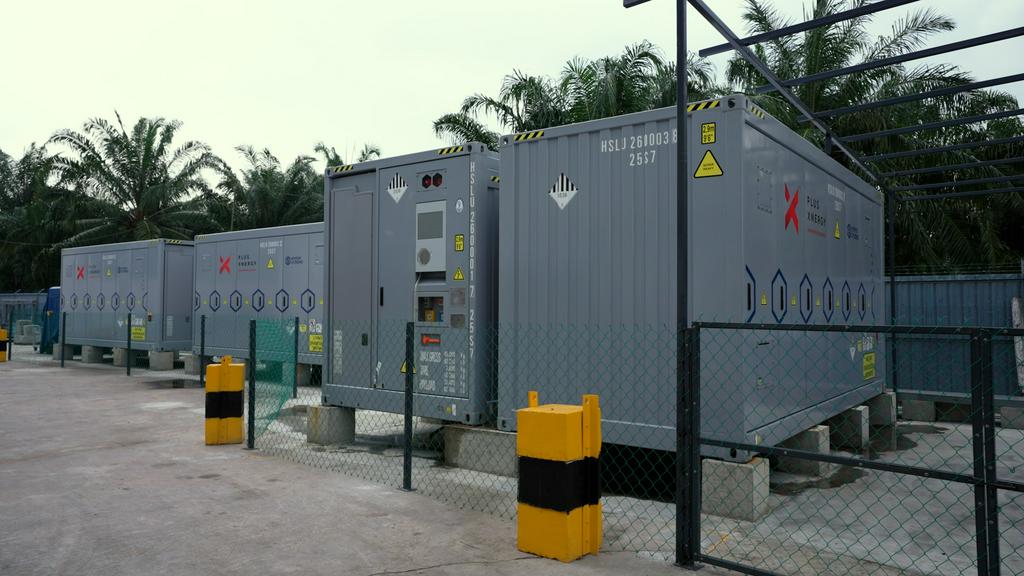
Figure 2: The project uses containerised energy storage systems and mainly serves demand-side power management for C&I users
The project uses HyperStrong’s HyperBlock III AC-coupled integrated BESS solution, with Plus Xnergy responsible for local engineering implementation. According to the company, the system integrates the direct current battery system with the power conversion system, improving system efficiency within a relatively compact footprint. The engineering, procurement, construction and commissioning process was completed in approximately 2.5 months.
Beyond the technology itself, the project’s business model deserves greater attention. Plus Xnergy said it plans to promote similar projects through a zero-capital-expenditure Performance Sharing Agreement, or PSA. Under this model, Plus Xnergy is responsible for upfront investment, engineering construction and subsequent operation and maintenance. Industrial users do not need to make initial capital investments, but instead participate in the project through subsequent electricity cost savings or a benefit-sharing mechanism.
This model can help lower the initial barrier for C&I users to adopt energy storage systems. However, its replicability still depends on whether project returns can remain sufficiently stable. For energy storage investors, factors such as the stability of the customer’s load profile, continuity of electricity tariff policies, equipment availability, O&M costs and contract duration will all affect long-term project returns. In particular, under a 15-year partnership model, managing battery degradation, changes in system efficiency and shifts in customer electricity consumption behaviour will be key to project economics.
In the Malaysian market, C&I energy storage is still at an early stage of development. In the past, the Southeast Asian energy storage market focused more on large grid-side projects, renewable energy-plus-storage applications, and certain off-grid or microgrid scenarios. The significance of this project lies in its further extension of energy storage applications into the C&I demand-side market. It suggests that energy storage is gradually moving beyond policy-driven pilots and demonstration projects, and is beginning to become a practical energy cost management tool for enterprises.
Plus Xnergy has also continued to expand its energy storage project portfolio in recent years. According to the company, its completed and ongoing BESS projects have reached 100MWh, while its grid-connected solar PV portfolio exceeds 500MWp. Previously, the company deployed a 1.45MWh sodium-sulphur battery energy storage system in Kedah and participated in the solar-plus-storage project at KLIA Aeropolis.
The commissioning of the 20MWh C&I energy storage project in Perak reflects the emergence of real commercialised user-side energy storage cases in Malaysia. In the short term, whether such projects can scale rapidly will still depend on electricity pricing mechanisms, industrial users’ load structures, financing models and the pace of equipment cost reductions. For energy-intensive manufacturers in Malaysia, the value of energy storage is no longer limited to green transition objectives, but is increasingly linked to cost control, power supply stability and long-term energy management.
![[SMM Analysis] H1 2026 Global Energy Storage Battery Cell Shipment Analysis: Behind the 486 GWh Surge—the Gap Between Bid Awards and Grid Connections and the Reshaping of the Ex-China Landscape](https://imgqn.smm.cn/usercenter/fblvS20251217171729.png)
![[Energy Storage: 100MW/200MWh! Sunwoda's Another Energy Storage Project Breaks Ground]](https://imgqn.smm.cn/usercenter/KySZv20251217171726.jpg)
![[Storage: Germany launches first 4.5GW dispatchable capacity and long-duration storage auction]](https://imgqn.smm.cn/usercenter/gcOsy20251217171726.jpg)