Brass Billet Imports Rebound Steadily MoM; High Costs Push Up Import Unit Prices

Published: Jun 23, 2026 14:22

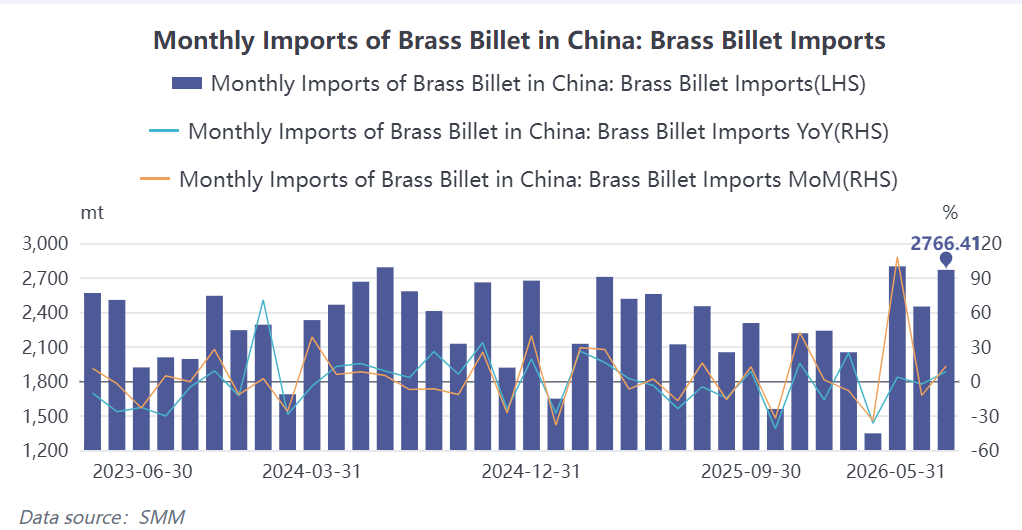
According to the latest customs data, China's imports of copper-zinc alloy (brass) bars and rods in May 2026 reached 2,766.41 mt in physical content, up 8.19% YoY and surging 13.02% MoM. In January-May 2026, cumulative imports were 11,400 mt in physical content, a cumulative decline of 1.23% YoY (HS codes 74072111, 74072119, 74072190). From April to May, downstream users in China maintained a normal restocking pace, and with steady export order deliveries, monthly imports recovered on a MoM basis for consecutive months. However, overall end-use consumption showed no significant pickup, leaving cumulative imports still weak YoY.
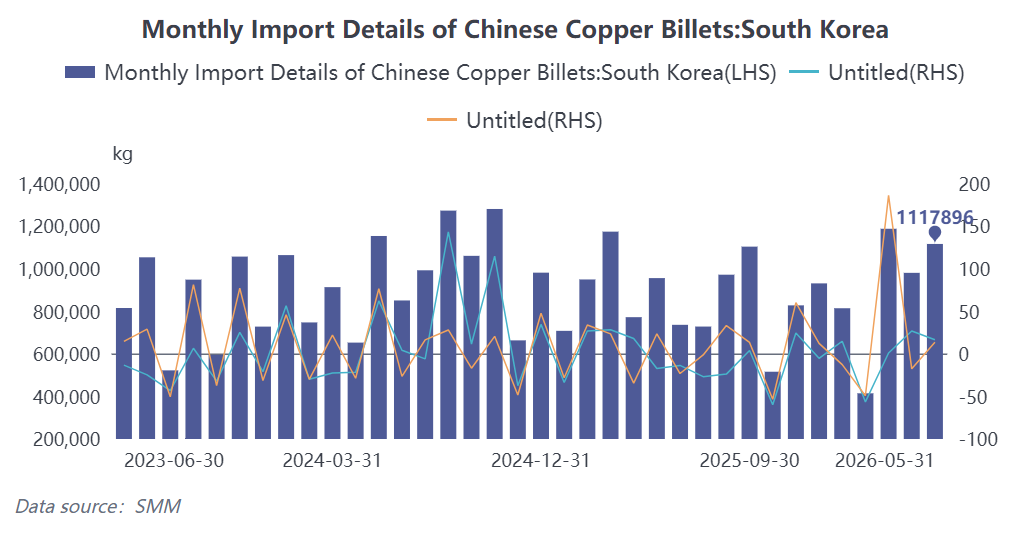
By source, South Korea remained China's largest supplier of brass billet, with imports from South Korea reaching 1,117.9 mt in May, up 13.85% MoM and 16.79% YoY, accounting for 40.41% of the total. Japan ranked second, with May imports at 439.88 mt, up 19.05% MoM but down 0.82% YoY, representing a 15.9% share. In May, imports from these two key source countries both rose MoM, as overseas producers' shipments and the domestic procurement pace picked up simultaneously. Japan and South Korea together supplied over 50% of the total, and the import source structure remained stable.
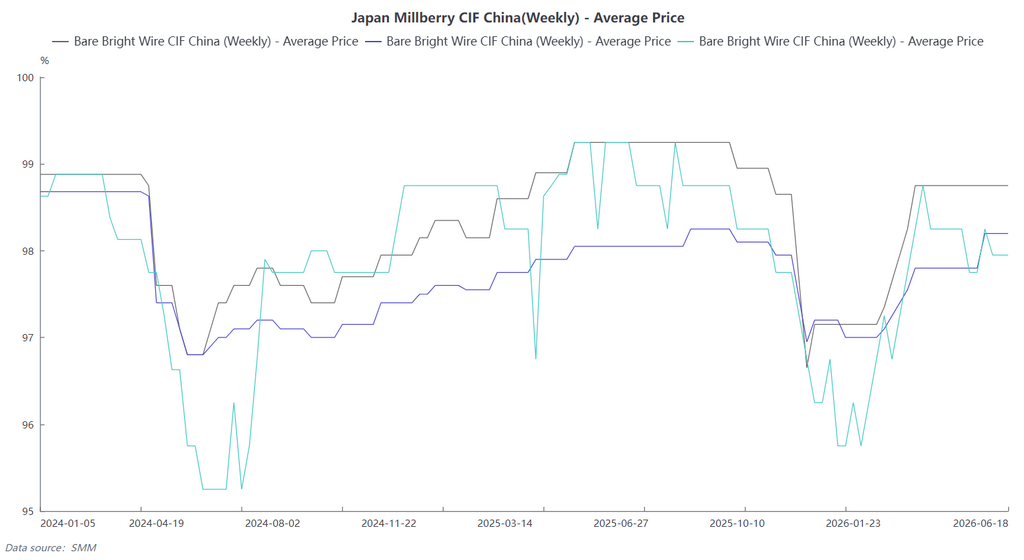
On the import value side, growth remained divergent, and cost pressures continued to stand out. Import value in May was $26.7529 million, up 18.33% MoM and 38.04% YoY. In January-May 2026, cumulative import value reached $105.7079 million, a 23.42% YoY increase. A comparison shows that while imports in January-May fell 1.23% YoY in volume, import value surged 23.42% YoY, a sharp divergence. The key reason is that international copper raw material prices have been fluctuating at highs, pushing up the ex-factory cost of overseas brass billet, which then passed through to import prices and drove up unit transaction prices. Even though total import volumes were weak, overall import value maintained high growth.
The core contradiction of "high costs, weak demand, and pessimistic expectations" in the brass billet market has not fundamentally reversed. On one hand, international copper prices have been fluctuating at highs, continuously raising production and import costs for brass billet, squeezing profits at domestic processing enterprises, and making import purchase willingness more cautious. On the other hand, end-use consumption in traditional sectors such as real estate, home appliances, and hardware has recovered slowly, downstream finished product orders have been mediocre, spot trades in the market have remained sluggish overall, and there has been insufficient drive for large-scale restocking. Based on import performance in May and downstream fundamentals, SMM expects that the brass billet import market will continue to operate at low levels for the rest of Q2 this year. Without a concentrated recovery in end-use demand, imports are unlikely to see a sustained significant rebound, and the game between high import prices and weak end-use demand will persist. 

Data Source Statement: Except for publicly available information, all other data are processed by SMM based on publicly available information, market communication, and relying on SMM's internal database model. They are for reference only and do not constitute decision-making recommendations.

For any inquiries or for more information, please contact: lemonzhao@smm.cn
For more information on how to access our research reports, please contact:service.en@smm.cn
Related News
Thailand's copper scrap exports to China pulled back MoM in May.
27 mins ago
Thailand's copper scrap exports to China pulled back MoM in May.
Read More
Thailand's copper scrap exports to China pulled back MoM in May.
[SMM Copper Scrap Flash] In May, Thailand's copper scrap exports to China totaled 26,400 mt, accounting for 13.81%, up 24.31% YoY but down 24.69% MoM. Demand for copper scrap in Southeast Asia diverted supplies, and combined with a seasonal decline in scrap collection output, the pace of shipments by traders slowed, resulting in a second consecutive monthly MoM decline in exports to China.
27 mins ago
Japan's copper scrap exports to China pulled back MoM in May.
29 mins ago
Japan's copper scrap exports to China pulled back MoM in May.
Read More
Japan's copper scrap exports to China pulled back MoM in May.
[SMM Copper Scrap Flash] In May, Japan supplied 28,400 mt in physical content of copper scrap to China, accounting for 14.86%, up 43.08% YoY but down 16.99% MoM. Domestic scrap copper recycling in Japan entered the off-season, with output from dismantling enterprises declining. Procurement by domestic smelters for their own use diverted export supplies, sharply reducing the spot cargo volumes available for China. Shipments to China pulled back significantly MoM.
29 mins ago
The brass billet market faces "high costs, weak demand, pessimistic expectations"
56 mins ago
The brass billet market faces "high costs, weak demand, pessimistic expectations"
Read More
The brass billet market faces "high costs, weak demand, pessimistic expectations"
[SMM Brass Billet Flash] The core contradiction of "high costs, weak demand, and pessimistic expectations" in the brass billet market has not fundamentally reversed. On the one hand, international copper prices hover at highs, continuously raising production and import costs for brass billets, squeezing profits of domestic processing enterprises, and making import purchase willingness increasingly cautious. On the other hand, the recovery pace of traditional end-use consumption sectors such as real estate, home appliances, and hardware remains slow, downstream finished product orders are mediocre, overall spot trades are sluggish, and there is insufficient momentum for large-scale restocking.
56 mins ago
Brass Billet Imports Rebound Steadily MoM; High Costs Push Up Import Unit Prices - Shanghai Metals Market (SMM)