In 2026, global competition for critical minerals has entered a white-hot phase, with geopolitical games continuing to intensify and global industry and supply chains accelerating their restructuring. A new round of technological revolution, centered on AI semiconductors, new energy, high-end manufacturing, and aerospace, is propelling the minor metal industry into a historic period of development opportunity and profound transformation. Globally, the EU's Critical Raw Materials Act and the US's Inflation Reduction Act (IRA) continue to be implemented, while the Minerals Security Partnership keeps expanding. The trend toward localization and regionalization of critical mineral supply chains is intensifying. The resource competition, technical barriers, and trade rule restructuring surrounding strategic minor metals such as antimony, indium, gallium, germanium, bismuth, selenium, tellurium, and rhenium have become the core focus of global high-end manufacturing competition. As the world's core supplier of minor metals, China holds a dominant global position in the smelting and supply of multiple minor metal varieties.
Against this backdrop, the 2026 SMM (14th) Minor Metal Industry Conference will bring together enterprises from across the entire minor metal industry chain—including antimony, indium, gallium, germanium, bismuth, selenium, tellurium, and rhenium—as well as scientific research institutes, government agencies, financial and investment institutions, and trade service providers, to build a high-standard, full-chain, in-depth platform for exchange and cooperation. The conference will provide in-depth interpretation of global policy shifts, diagnose supply-demand patterns and price trends, break down growth opportunities in end-use applications, and connect government-enterprise resources with cross-border cooperation opportunities. It aims to help enterprises accurately grasp industry trends, break through development bottlenecks, optimize supply chain layouts, and seize market opportunities, jointly promoting the high-quality and sustainable development of China's minor metal industry.
Hunan Zhenqiang Antimony Co., Ltd. will make a grand appearance at this conference. We will keep pace with the times, set our sights on our goals, and forge ahead with vigor and determination! Click the to sign up for attendance now. We look forward to meeting you at the conference.
Hunan Zhenqiang Antimony Co., Ltd. is located in Xikuangshan, the world's antimony capital. It is a large-scale private antimony smelting enterprise and the third producer, after Twinkling Star Antimony and Chenzhou Mining, to meet the national antimony industry access conditions for refined antimony and gold.
Founded in 2008, the company covers an area of over 50 mu and has a registered capital of 50 million yuan. Its business scope includes antimony smelting, and antimony ore mining and processing.
Following the launch of refined antimony and gold production, the company's annual sales revenue increased from 400 million yuan to 800 million yuan, doubling its annual output value.
Main Products: (1) Refined antimony, with an annual output of 6,000 mt, and antimony trioxide, 3,000 mt. (2) 99% gold, with an annual output of 1,000 kg. Main Equipment: (1) A 2 m2 blast furnace, equipped with an 8 m2 forehearth; (2) Eight refining reverberatory furnaces: including three 17 m2 refined antimony furnaces, two 12 m2 precious antimony smelting furnaces, two 8 m2 low-gold ore treatment furnaces, and one 4.5 m2 rich precious antimony converting furnace; (3) A newly built gold purification production line with an annual capacity of 1,000 kg of gold; (4) A newly built leaching and electrolysis production line with an annual capacity of 6,000 mt of antimony-gold ore. 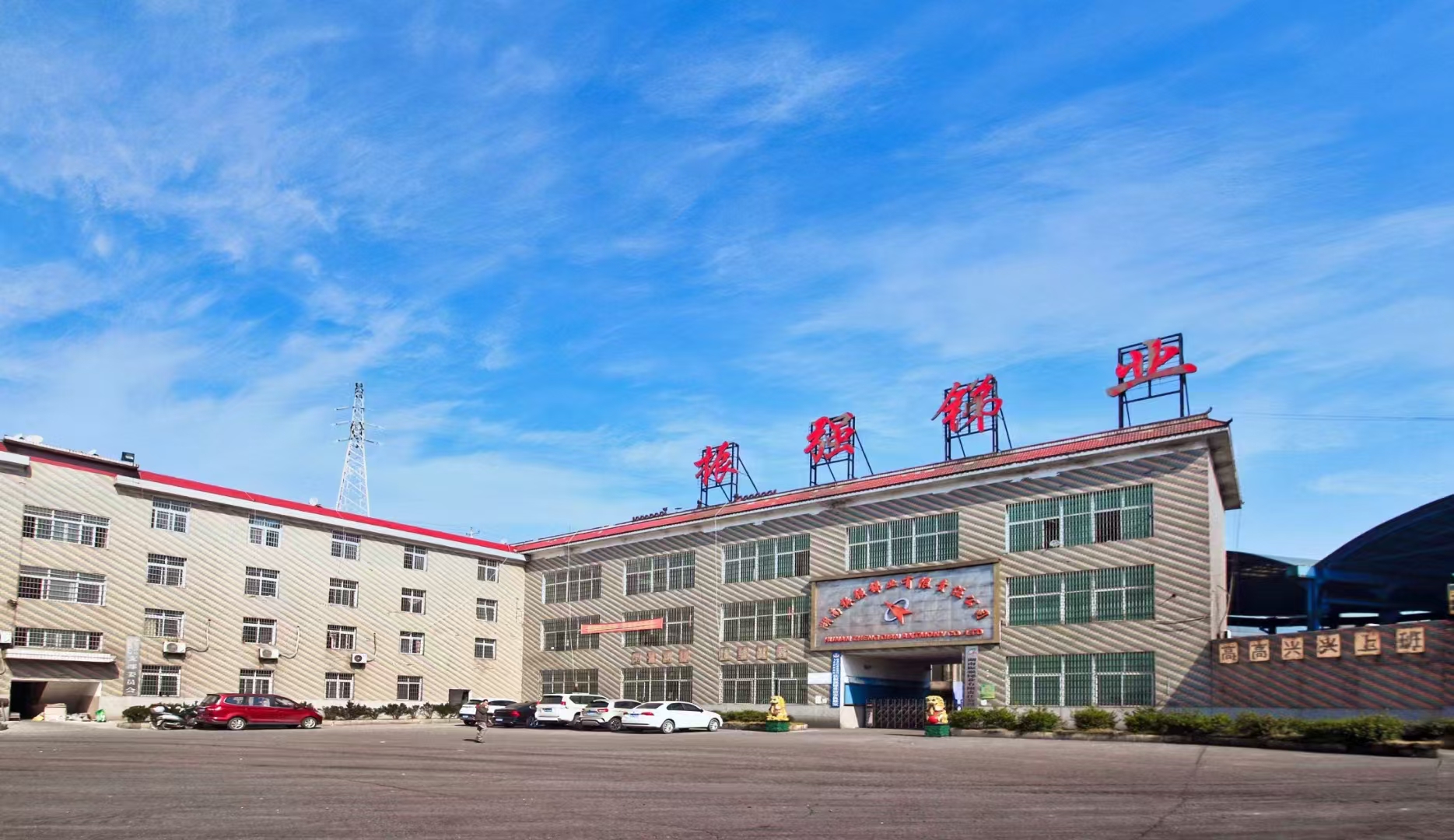
Main Products:
Refined antimony, with an annual output of 6,000 mt, and antimony trioxide, 3,000 mt.
99% pure gold, annual output of 1000 kg
main equipment:
2m2 blast furnace with a matching 8m2 forehearth
8 refinery reverberatory furnaces: three 17m2 antimony refining furnaces, two 12m2 precious antimony smelting furnaces, two 8m2 low-gold ore processing furnaces, one 4.5m² precious antimony converting furnace
newly built gold purification production line with an annual capacity of 1000 kg
newly built leaching and electrolysis production line for 6000 mt of antimony-gold ore per year
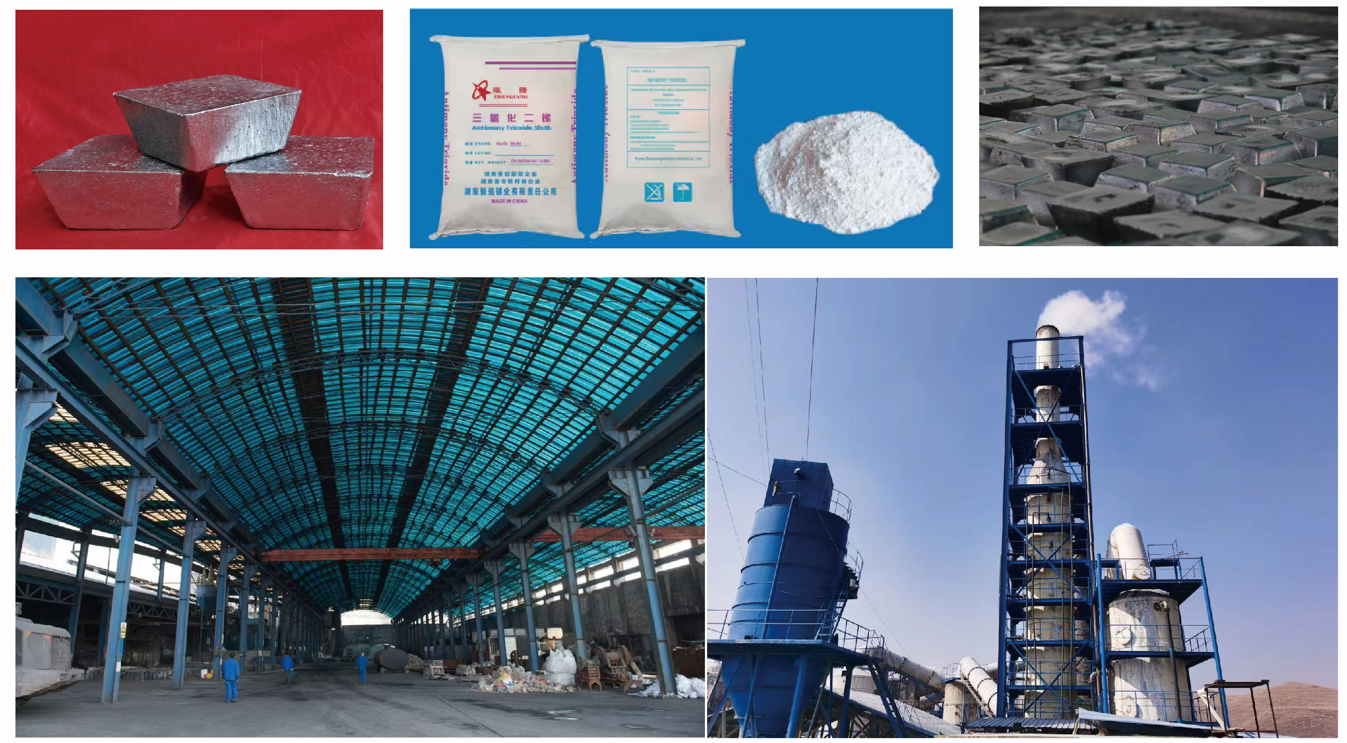 environmental protection status:
1. The company began construction in June 2008, obtained environmental impact assessment approval and commenced trial production in October 2011, focusing on processing single antimony ore and producing refined antimony. It obtained a second environmental impact assessment approval and commenced trial production in December 2020, focusing on processing antimony-gold associated ore and producing refined antimony and 99% pure gold.
2. Flue gas treatment system
(1) Built 1 set of blast furnace flue gas cooling and dust removal equipment, and 8 sets of reverberatory furnace flue gas cooling and dust removal equipment.
(2) Equipped with 1 set of SO2 flue gas treatment system featuring three-stage spraying using the "limestone-gypsum" method with fully automated control and a flue gas treatment capacity of 65,000 m3/h. Installed 1 set of mist eliminators and 1 chimney with a vertical height of 30 m.
(3) Organized emission of exhaust gas achieved: after flue gas passes through facilities such as "water cooling + surface cooling + bag dust collection" and is treated by the multi-stage spray tower, SO2 concentration is ≤200 mg/Nm3 (meeting national standards), and then discharged through the mist eliminator and chimney.
3. Wastewater treatment and reuse system
includes plant-wide clean-dirty water separation and rainwater-wastewater separation systems, rainwater collection system, and wastewater treatment system. Rainwater collection pond capacity of 200 m3, wastewater treatment capacity of 2,000 m3; treated rainwater and wastewater are reused with no external discharge.
In the newly built gold purification production line with an annual capacity of 1000 kg, wastewater is pumped into the desulfurization workshop, subjected to neutralization treatment, and then sent to the absorption tower for SO2 flue gas treatment with no external discharge.
The newly built leaching and electrolysis production line for 6,000 mt of antimony-gold ore per year achieves closed-circuit leaching and electrolysis production with no wastewater discharge.
![Manufacturers' Daily Output Increase Covered Maintenance Reductions, Yet Transaction Recovery Failed to Reverse Plant Inventory Accumulation [SMM Magnesium Weekly Data]](https://imgqn.smm.cn/usercenter/xLlnY20251217171724.jpeg)