

Middle East Tensions Drive Surge in Demand for Affordable EVs in Europe
Data Source Statement: Except for publicly available information, all other data are processed by SMM based on publicly available information, market communication, and relying on SMM's internal database model. They are for reference only and do not constitute decision-making recommendations.
For any inquiries or for more information, please contact: lemonzhao@smm.cn
For more information on how to access our research reports, please contact:service.en@smm.cn
Related News
![[Solid-State Battery: China Electronics Standardization Institute, JD.com, and Sunwoda Signed Agreement to Jointly Establish a Robot Battery Joint Laboratory]](https://imgqn.smm.cn/usercenter/smDhO20251217171726.jpg)
6 hours ago
[Solid-State Battery: China Electronics Standardization Institute, JD.com, and Sunwoda Signed Agreement to Jointly Establish a Robot Battery Joint Laboratory]
Read More
[Solid-State Battery: China Electronics Standardization Institute, JD.com, and Sunwoda Signed Agreement to Jointly Establish a Robot Battery Joint Laboratory]
[Solid-State Batteries: China Electronics Standardization Institute, JD.com, and Sunwoda Sign Agreement to Establish a Joint Laboratory for Robot Batteries] On August 7, 2026, the China Electronics Standardization Institute, JD.com, and Sunwoda signed a tripartite cooperation agreement in Beijing to establish a joint laboratory for robot batteries. The three parties will focus on standard development, product development, testing and verification, and typical applications for robot batteries. The China Electronics Standardization Institute led the drafting of China’s only existing robotic battery standard to date; JD.com leverages its logistics scenarios to provide large-scale application and iterative real-world testing; and Sunwoda will be responsible for customized battery cell development and mass production. The laboratory will target high-frequency fast charging and high C-rate discharge scenarios for warehouse logistics AGVs, humanoid robots, and other applications, conducting R&D on specialized power batteries. Following the signing ceremony, a discussion meeting on two robotic battery standards was held, attended by over 60 experts.
6 hours ago
![[Solid-State Battery: Sinocera Completes Construction of Automated Production Line for Sulphide Solid-State Electrolytes, Initial Mass Production Capacity Established]](https://imgqn.smm.cn/usercenter/QGlKw20251217171730.jpg)
Aug 6, 2026 16:23
[Solid-State Battery: Sinocera Completes Construction of Automated Production Line for Sulphide Solid-State Electrolytes, Initial Mass Production Capacity Established]
Read More
[Solid-State Battery: Sinocera Completes Construction of Automated Production Line for Sulphide Solid-State Electrolytes, Initial Mass Production Capacity Established]
[Solid-State Battery: Sinocera Materials Constructs Automated Production Line for Sulfide Solid Electrolyte, Initial Mass Production Capability Established] On August 5, 2026, Sinocera Materials stated at an analyst meeting that as the industrialisation of all-solid-state batteries advances, sulfide solid electrolytes, due to advantages such as high ionic conductivity, have become a core critical material. The company has completed the construction of an automated production line for sulfide solid electrolyte, with initial mass production capacity established, and product quality has been highly recognized by clients. The company is closely supporting the industrialisation process of key downstream clients, and will subsequently plan the expansion pace reasonably based on changes in market demand and the industrialisation progress of downstream clients, collaboratively promoting the commercial implementation of all-solid-state batteries. This marks an important period for China's sulfide solid electrolyte sector transitioning from “laboratory samples” to “production line bulk supply,” filling a critical jigsaw piece for large-scale mass production in the upstream key material segment of the all-solid-state battery industry chain.
Aug 6, 2026 16:23
Aug 6, 2026 16:08
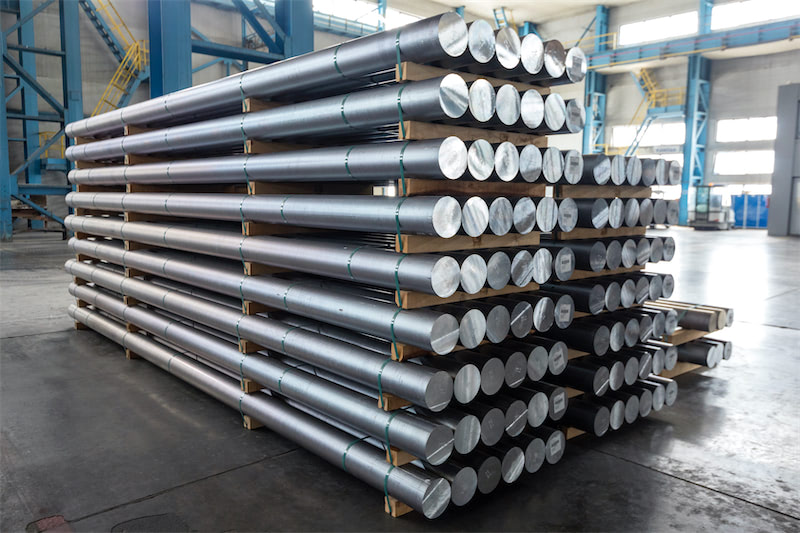
Solid-State Battery: Crown New Materials Completes Client Sample Trial of Solid-State Battery Aluminum-Plastic Film, with Substantially Improved High-Temperature Resistance
Read More
Solid-State Battery: Crown New Materials Completes Client Sample Trial of Solid-State Battery Aluminum-Plastic Film, with Substantially Improved High-Temperature Resistance
[Solid-State Battery: Crown Advanced Materials Completes Client Sample Trial of Solid-State Battery Aluminum-Plastic Film, Significantly Enhancing High-Temperature Resistance] On August 5, 2026, Crown Advanced Materials stated, while responding to investor inquiries on an interactive platform, that the company had strengthened the R&D of solid-state battery aluminum-plastic film in response to market demand and had completed client sample trials. The R&D team for the aluminum-plastic film addressed the high-temperature resistance needs of solid-state batteries by selecting a modified resin that withstands 120°C for the composite bonding material, which improved the interlayer peel strength by over 40% in an 85°C temperature environment and by over 50% in a 120°C temperature environment. This ensures the stability of the product's interlayer peel strength under high temperatures, providing a new technical solution for solid-state battery packaging materials.
Aug 6, 2026 16:08
Related News
[Solid-State Battery: China Electronics Standardization Institute, JD.com, and Sunwoda Signed Agreement to Jointly Establish a Robot Battery Joint Laboratory]
Aug 10, 2026 15:44
[Solid-State Battery: Sinocera Completes Construction of Automated Production Line for Sulphide Solid-State Electrolytes, Initial Mass Production Capacity Established]
Aug 06, 2026 16:23
Solid-State Battery: Crown New Materials Completes Client Sample Trial of Solid-State Battery Aluminum-Plastic Film, with Substantially Improved High-Temperature Resistance
Aug 06, 2026 16:08
[Solid-state Battery: Solid Power Posted a Net Loss of $23.8 Million in Q2, with Construction of the Continuous Electrolyte Trial Production Line Proceeding as Planned]
Aug 06, 2026 16:07