Magnesium Industry Advances on Two Fronts: Coordinated Empowerment of New Development Through Salt Lake Resource Security and Breakthroughs in End-Use Applications [SMM Survey]

Published: Mar 26, 2026 20:25
[Dual Momentum in the Magnesium Industry: Coordinated Empowerment of New Development Through Salt Lake Resource Security and Breakthroughs in End-Use Applications] As one of the lightest known structural metallic materials, magnesium combines outstanding properties such as light weight, high strength, and high thermal conductivity, making it a core strategic material supporting industrial upgrading in sectors such as automotive lightweighting and new energy materials. China’s magnesium industry is advancing on two fronts, simultaneously promoting breakthroughs in end-use application technologies and securing raw material supply, overcoming bottlenecks in industrial development and supporting the high-quality development of the magnesium industry.

As one of the lightest known metallic structural materials, magnesium combines outstanding properties such as lightweight, high strength, and high thermal conductivity, making it a core strategic material underpinning industrial upgrading in areas such as automotive lightweighting and new energy new materials. China’s magnesium industry is advancing on two fronts, simultaneously promoting breakthroughs in end-use application technologies and securing raw material supply, in order to overcome bottlenecks in industrial development and support the high-quality development of the magnesium industry.

Faway Wheel’s magnesium alloy base has delivered remarkable results in the field of lightweight magnesium alloys. It has completed construction of the country’s first digital semi-solid forming production line, and commissioning of the 3600T magnesium alloy injection molding unit has been completed, enabling full coverage of magnesium alloy products from 0.3 kg to 10 kg and reaching a leading level in China. The country’s first semi-solid formed magnesium alloy core seat frame component, jointly developed by the company with the China FAW R&D Institute and several other entities, has entered the bench validation stage at OEMs. This product integrates 19 steel structural parts into four magnesium alloy parts, reducing weight by 26 after substitution. At the same time, a new-type high-strength, high-toughness magnesium alloy has been successfully trial-produced, with tensile strength increased by 16.7, effectively addressing the longstanding weakness of insufficient toughness in traditional magnesium alloys and reinforcing the foundation of the automotive lightweighting industry.

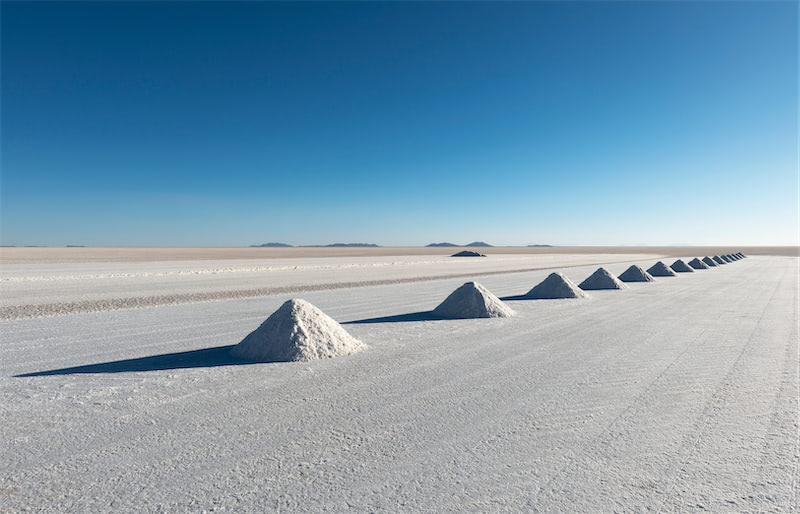
At the national Two Sessions, National People’s Congress deputy Yun Hongwei proposed that China is rich in salt lake resources. Among them, the natural inorganic salt reserves of 33 salt lakes in the Qaidam Basin of Qinghai reach 383.2 billion mt, with magnesium resources alone amounting to 7.27 billion mt, ranking first in the country and making the region the most promising raw material supply base for China’s magnesium industry. At present, Qinghai’s salt lakes have developed a series of magnesium products including magnesium chloride, magnesium hydroxide, and high-purity magnesia, with magnesium hydroxide capacity reaching 150,000 mt and magnesium metal capacity reaching 100,000 mt. However, for a long time, salt lake resource development has focused mainly on potassium and lithium, while the utilization rate of magnesium resources has remained low. Moreover, extracting magnesium from salt lakes is still a global technical challenge, constraining the stability of raw material supply for the magnesium industry. To address this, he recommended that the state increase support in talent, technology, and funding, promote breakthroughs in core technologies for magnesium extraction from salt lakes and their industrialisation, and drive magnesium resources toward higher value-added products. At the same time, ecological red lines must be upheld, and coordinated progress in salt lake resource development and ecological protection should be achieved through measures such as closed-loop production and the application of green electricity.

The two are respectively advancing from the application end and the raw material end to address shortcomings in the development of the magnesium industry, promote the transformation of China’s magnesium industry from resource advantages into industrial advantages, and support the upgrading of the new materials industry and the achievement of the “dual carbon” goals.

Data Source Statement: Except for publicly available information, all other data are processed by SMM based on publicly available information, market communication, and relying on SMM's internal database model. They are for reference only and do not constitute decision-making recommendations.

For any inquiries or for more information, please contact: lemonzhao@smm.cn
For more information on how to access our research reports, please contact:service.en@smm.cn
Related News
Northam Platinum Joins Sibanye-Stillwater & Bengwenyama in Scaling Up Chrome as PGM Producers Chase a New Revenue Stream
4 hours ago
Northam Platinum Joins Sibanye-Stillwater & Bengwenyama in Scaling Up Chrome as PGM Producers Chase a New Revenue Stream
Read More
Northam Platinum Joins Sibanye-Stillwater & Bengwenyama in Scaling Up Chrome as PGM Producers Chase a New Revenue Stream
[SMM Express] Recent developments across Northam Platinum, Sibanye-Stillwater and Southern Palladium indicate that South Africa's platinum group metals (PGM) producers are increasingly positioning chrome as a strategic co-product rather than merely a by-product, reflecting a broader shift across the Bushveld Complex. Northam recently reported record chrome concentrate production of 1.69 million mt in FY2026, up 17.4% year-on-year, while Sibanye-Stillwater plans to expand chrome production to 2.3 million mt/y by 2033 and Southern Palladium's Bengwenyama Project has nearly tripled projected chrome output through improved chromite recovery, underscoring chrome's growing contribution to project economics and revenue diversification. The trend is further reinforced by Merafe Resources' H1 2026 Trading Statement, in which the company expects significantly stronger interim earnings despite a 75% year-on-year decline in ferrochrome production, supported by higher commodity prices and increased sales volumes. SMM believes these developments point to a broader structural shift within South Africa's PGM sector, with producers increasingly leveraging chrome to strengthen earnings resilience, diversify revenue streams and enhance the long-term value of UG2 operations across the country's chromium value chain.
4 hours ago
Nigerian Tantalum Concentrate Market: Pricing, Grades and Buyers
5 hours ago
Nigerian Tantalum Concentrate Market: Pricing, Grades and Buyers
Read More
Nigerian Tantalum Concentrate Market: Pricing, Grades and Buyers
[SMM Research]   Nigeria remains a key supplier of tantalum concentrate, with exports largely priced on an FOB basis and driven by strong Chinese demand. Concentrate grades vary widely, with higher Ta₂O₅ content commanding significant premiums. Artisanal mining dominates supply, while informal trade continues to limit market transparency. SMM's research indicates that first-hand market intelligence remains essential for assessing pricing, quality and evolving supply chains.
5 hours ago
Ruthenium-Iridium Titanium Anode Market Expected to More Than Double by 2034
6 hours ago
Ruthenium-Iridium Titanium Anode Market Expected to More Than Double by 2034
Read More
Ruthenium-Iridium Titanium Anode Market Expected to More Than Double by 2034
[SMM Express] The global ruthenium-iridium titanium anode market is projected to grow from USD 1.2 billion in 2025 to USD 2.5 billion by 2034, representing a compound annual growth rate (CAGR) of 9.3% over 2026-2034, according to a recent industry market report. Demand is expected to be supported by expanding applications in chlor-alkali production, electrolysis, electroplating, wastewater treatment, fuel cells and battery technologies, as industries seek more durable and energy-efficient electrode materials. Ruthenium-iridium titanium anodes are valued for their corrosion resistance, electrochemical stability and long operating life in aggressive industrial environments. Green hydrogen production is credited to be one of the strongest long-term growth drivers, alongside stricter environmental regulations encouraging advanced water treatment and cleaner chemical manufacturing. Growth in the electronics, semiconductor and energy sectors is also expected to support demand. However, the market continues to face challenges from the high cost and limited availability of ruthenium and iridium, with supply concentrated in a small number of producing countries.
6 hours ago
Register to Continue Reading
Gain access to the latest insights in metals and new energy
Already have an account?Sign in here
Magnesium Industry Advances on Two Fronts: Coordinated Empowerment of New Development Through Salt Lake Resource Security and Breakthroughs in End-Use Applications [SMM Survey] - Shanghai Metals Market (SMM)