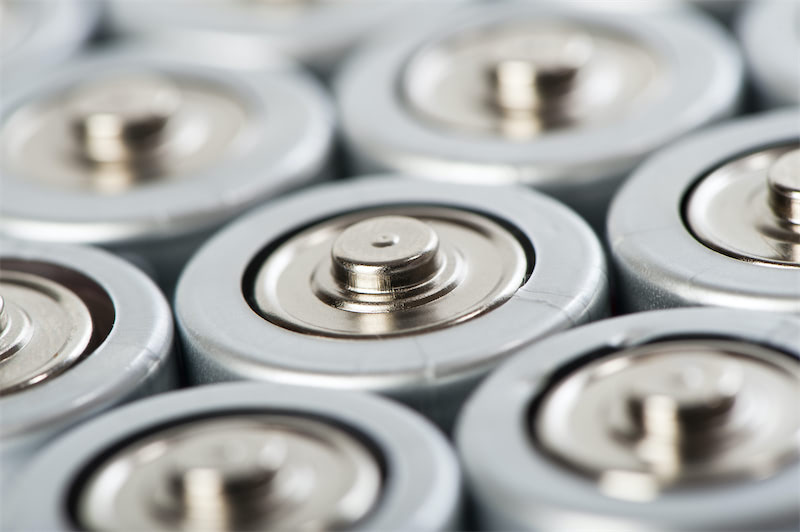
Key points: Solid-state batteries were a hot topic at the 2026 Two Sessions, where delegates noted that the industry is at a critical inflection point, moving from “samples” to “products.” Hu Chengzhong has repeatedly put forward proposals, calling for targeted efforts in five areas: improving standards, overcoming technological bottlenecks, building the industry chain, increasing funding, and carrying out demonstration projects, so as to break through the “last mile.” At the same time, he pointed out that the industry is facing “growing pains” in standards, technology, costs, and other areas, and a review of relevant views from 2025 is also included.
Regarding views and information on solid-state batteries at this year’s Two Sessions, the current discussion is focused on the industry being at a critical inflection point, moving from technological breakthroughs toward large-scale mass production. A number of delegates and committee members, especially Hu Chengzhong, a deputy to the National People’s Congress and chairman of the board of Delixi Group, have put forward systematic recommendations on this issue.
I. Key Points: The Inflection Point for Solid-State Battery Industrialisation Has Arrived
According to the observations of the delegates, the solid-state battery industry is accelerating into a critical period for industrialisation and commercial deployment. 2025 is regarded as the “inaugural year of industry breakout,” with semi-solid-state batteries already taking the lead in achieving large-scale vehicle installation, and capacity deployment by top-tier enterprises clearly accelerating. Their application scenarios are also continuously expanding. In addition to NEVs, they have already entered fields such as the low-altitude economy, electric aviation, and ESS.
II. Core Recommendations: Targeted Efforts in Five Areas to Break Through the “Last Mile”
To support the industry’s transition from “samples” to “products,” the proposals represented by Hu Chengzhong mainly focus on the following five areas:
1. Improving Standards and Policies: It is recommended that China accelerate the formulation and implementation of a series of national standards for automotive solid-state batteries, including performance, safety, and lifespan, and clarify product technical requirements and testing methods. At the same time, the direction of policy support should be optimised, shifting from the previous “broad-brush” subsidy approach to precise support for key links, such as electrolyte materials and production equipment. 2. Tackling Core Technologies: It is recommended to focus on core technologies such as solid-state electrolyte materials, interface modification, and dry electrodes, and to support enterprises and research institutions in forming innovation consortia for coordinated joint research. Priority should be given to achieving breakthroughs in the large-scale preparation technologies for solid-state electrolytes with high conductivity and high stability, so as to reduce the cost of key materials.
3. Building a Coordinated Industry Chain: It is recommended to cultivate and strengthen leading enterprises in the industry chain, and to support the establishment of long-term strategic cooperative relationships among battery, material, equipment, and vehicle enterprises, so as to form an ecosystem of coordinated development. At the same time, upstream material supply should be strengthened, such as high-purity lithium sulfide, while downstream application scenarios should be expanded to drive cost reductions through large-scale application.
4. Increasing Financial Support: It is recommended to optimize the allocation of fiscal funds and, through policies such as government-guided funds, special subsidies, and tax incentives, guide social capital toward the solid-state battery industry. At the same time, enterprises should be supported in raising funds through capital markets such as the STAR Market and ChiNext, and financial institutions should be encouraged to innovate financial products, such as intellectual property pledge loans.
5. Carrying Out Demonstration Applications: It is recommended to select key regions and enterprises in fields such as NEVs, energy storage, and electric aviation to carry out demonstration projects for solid-state battery applications. By establishing an evaluation system for demonstration projects, successful experience can be summarized and promoted, while science popularization and publicity should be strengthened to enhance consumer awareness and create a favorable market environment for large-scale deployment.
III. Industry Background: The "Growing Pains" It Faces
During the survey, the representatives also pointed out several major challenges currently facing the industry:
Gaps in the standards system: National standards for testing methods for the key performance of all-solid-state batteries have not yet been issued, resulting in higher R&D and testing costs for enterprises.
Engineering bottlenecks in core technologies: New-type manufacturing processes such as dry electrodes and isostatic pressing have not yet fully matured, and consistency and yield control in mass production are facing challenges.
Insufficient industry chain coordination and weak independent controllability: Upstream ultra-high-purity raw materials and high-end detection equipment rely on imports; in the midstream, there is a structural shortage in solid-state electrolyte capacity, and high prices for core primary materials are driving up manufacturing costs. Costs and Certification Constrain Scaling: The investment intensity of all-solid-state battery production lines is several times that of traditional lithium battery production lines, with persistently high equipment costs; product certification cycles last as long as 2-3 years, far exceeding enterprises' R&D iteration cycles.
IV. Future Outlook: Enterprise Deployment and Mass Production Timetable
Industry practice shows that solid-state batteries are developing in a pattern of "solid-liquid hybrid taking the lead, all-solid-state achieving phased breakthroughs." At present, solid-liquid hybrid batteries have entered the small-scale mass production stage and are expected to enter the large-scale mass production stage around the end of 2026. At the enterprise level (partial):
Dongfeng Motor plans to achieve mass production of 350 Wh/kg products in 2026
GAC Group's first pilot line for large-capacity all-solid-state batteries has been put into operation
CATL's all-solid-state battery pilot line has been put into operation and is expected to achieve small-scale production in 2027
Chery showcased an all-solid-state battery module with an energy density of up to 600 Wh/kg
The industry generally believes that small-scale production or vehicle installation of all-solid-state batteries will likely be concentrated from 2027 to 2029, with large-scale popularization likely after 2030.
V. Other Related Representative Views
In addition to solid-state batteries themselves, other deputies and committee members also put forward relevant suggestions from the broader perspective of energy storage and new energy industry development, for example:
Yao Jinjian, a deputy to the National People's Congress and a senior executive at Gotion High-tech, suggested concentrating efforts on tackling "bottleneck" fields such as solid-state battery electrolytes, while accelerating the deployment of frontier technologies such as sodium-ion batteries.
Zhang Tianren, a deputy to the National People's Congress and chairman of Tianneng Holding Group, suggested establishing a nationally coordinated time-of-use electricity prices and capacity compensation mechanism to provide stable return expectations for energy storage investment.
Liu Hanyuan, a deputy to the National People's Congress and chairman of the board of directors of Tongwei Group, suggested ensuring enterprises' autonomous control rights over supporting energy storage and improving a comprehensive revenue mechanism including capacity electricity prices and green electricity certificate trading.
VI. Solid-State Battery Views at the 2025 Two Sessions
During the 2025 Two Sessions, the attention of deputies and committee members to solid-state batteries mainly focused on the following aspects:
1. Clear Strategic Positioning: There is broad consensus that solid-state batteries are the core direction of next-generation battery technology and are of highly strategic and disruptive significance. 2. Focus on Core Challenges: It provided an in-depth analysis of the practical issues faced by the industry in moving from technological breakthroughs to large-scale mass production, including technological immaturity, high costs, lack of standards, and insufficient coordination across the industry chain.
3. Call for Systematic Advancement: It recommended systematically advancing industrial development through multiple dimensions, including establishing innovation centers at the national level, setting up dedicated research funding, improving the standards system, and strengthening collaboration among industry, academia, and research institutions.
According to SMM forecasts, all-solid-state battery shipments will reach 13.5 GWh by 2028, while semi-solid-state battery shipments will reach 160 GWh. Global lithium-ion battery demand is projected to reach approximately 2,800 GWh by 2030, with the EV sector's lithium-ion battery demand showing a CAGR of around 11% from 2024 to 2030, ESS lithium-ion battery demand at a CAGR of about 27%, and consumer electronics lithium battery demand at a CAGR of roughly 10%. Global solid-state battery penetration is estimated at about 0.1% in 2026, with all-solid-state battery penetration expected to reach around 4% by 2030, and global solid-state battery penetration potentially approaching 10% by 2035.
**Note:** For further details or inquiries regarding solid-state battery development, please contact:
Phone: 021-20707860 (or WeChat: 13585549799)
Contact: Chaoxing Yang. Thank you!