When the Mirador copper mine Phase II project in Ecuador, developed by a Chinese enterprise, reached a "built but awaiting approval" impasse, ten thousand kilometers away in Washington D.C., the US Export-Import Bank and the President jointly announced a historic supply chain security initiative named the "Gold Reserve Plan." In the contrast between this stalled project and newly launched initiative, a global covert struggle over critical mineral resources such as copper, lithium, cobalt, and gallium is moving from behind the scenes to center stage.
Why Did the "Final Step" Turn into an Indefinite Wait?
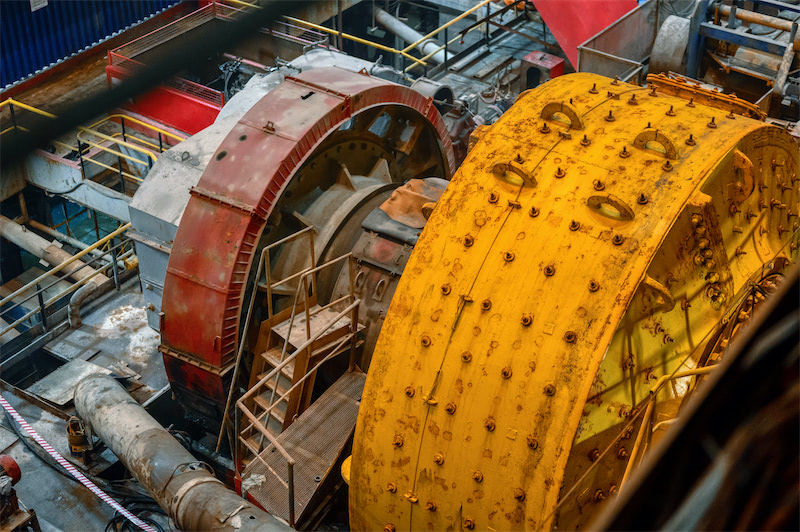
According to public information, the Mirador Phase II project was largely completed as early as May 2025, with light-load commissioning in July and successful heavy-load trial runs in December—all technical and environmental protection requirements were met. However, the process is stuck at the administrative stage of signing the Mining Contract.
The apparent reason is the ongoing political volatility in Ecuador: an early general election in 2023, another election in 2025, followed by the re-elected president forming a new cabinet, and frequent changes in officials overseeing the Ministry of Energy and Mines. As the enterprise stated, "personnel changes have significantly impacted policy continuity and administrative efficiency," causing completed contract negotiations to stall in the approval process.
US "Gold Reserve Plan": Reshaping the Supply Chain with National Power
Just as Mirador Phase II was stuck in the "built but awaiting approval" phase, the US completed a strategic pivot with unprecedented intensity. On February 2, 2026, the US Export-Import Bank, together with the White House, high-profile launched the "Gold Reserve Plan," announcing the establishment of a US strategic critical minerals reserve. Supported by $10 billion in direct loans, this public-private partnership plan includes rare earths, lithium, cobalt, gallium, and even copper in the reserve scope, explicitly aiming to "reduce dependence on foreign-controlled supply chains."
This is not merely emergency stockpiling but a systematic project covering "financing-procurement-storage-supply." Original equipment manufacturers such as Boeing and GE Vernova, along with suppliers like Hartree Partners, Mercuria Americas, and Traxys, quickly assembled. More significantly, Ivanhoe Mines directly channeled germanium and gallium produced from its Kipushi mine in the DRC to the US strategic stockpile; Glencore has already begun negotiations to sell a 40% stake in its two DRC copper-cobalt mines—Mutanda and Kamoto—with the buyer being a US capital-backed critical minerals alliance.
From Resources to Sovereignty: A Battle for "Anchoring"
These two events may seem isolated, but they point to the same core issue: critical minerals are evolving from bulk commodities into strategic assets, and their flow and ownership are being repoliticized.
In the past, competition for resources primarily manifested as commercial-level price negotiations or market share contests. Today, from Ecuador to the DRC, from South America to Africa, the "anchoring rights" for critical minerals are becoming the focal point of major power competition. The US, through its "Treasury Plan," leverages national credit as backing, capital as a link, and its alliance system as support to swiftly lock in upstream resources globally. Meanwhile, Chinese enterprises, having already invested heavily and completed projects, face "sunk risks" where returns are difficult to realize due to host countries' political shifts.
This is not merely a matter of being "targeted" or "hindered"; it reflects a profound evolution in the logic of international resource governance. When minerals are incorporated into national security strategies and supply chain resilience is prioritized over cost efficiency, the traditional market-oriented investment model inevitably encounters unprecedented institutional friction.
From a Reserve Mentality to Systemic Competition
The recent suggestion by Duan Shaofu, Deputy Secretary-General of the China Nonferrous Metals Industry Association (CNIA), Director of the Heavy Metals Department, and Director of the Mineral Resources Office, to "expand the national copper strategic reserve and explore a commercial reserve mechanism" is a clear-eyed response to this new reality. However, it must be acknowledged that the battle for resources is no longer a simple "stockpiling race" but a comprehensive contest of systemic capabilities.
The underlying logic of the US "Treasury Plan" is not about the state managing everything, but rather using policy finance to leverage private capital, integrating allied resources through diplomatic and security tools, and using end-use demand to pull upstream extraction. It constitutes a composite toolkit integrating finance, diplomacy, industry, and security.
For China, increasing the scale of strategic reserves is certainly necessary, but what is more urgent is building a globally resilient resource acquisition system. This requires not only the parallel operation of state and commercial reserves but also exploring, within complex geopolitical environments, how to use more flexible entities, more diverse capital structures, and deeper local integration to hedge against the systemic risks arising from political shifts in any single country.
As critical minerals become the "key anchor point" in major power rivalry, enterprises going global are no longer merely investors but also the forward outposts for national strategic resource security. Safeguarding these outposts requires far more than just a contract; it demands a full set of institutional designs and global collaboration capabilities deeply interlocked with national strategy.
The treasury has been opened, the game continues. Whoever gains the upper hand in this "anchoring" competition will hold the key to the lifeline of future industries and open the door to being the first to complete industrial upgrading and transformation.
![China Copper Social Inventory Continues Destocking, Regional Trends Diverge Significantly [SMM Weekly Data]](https://imgqn.smm.cn/usercenter/YIaMU20251217171711.jpg)