9th Feburary 2026:
According to SMM statistics, in January 2026, overseas metallurgical-grade alumina production decreased by 3.17% month-on-month and increased by 3.42% year-on-year; the average operating rate of overseas alumina enterprises edged down 0.04 percentage points month-on-month to 79.37%, a year-on-year decrease of 1.10 percentage points. Alumina production saw both increases and decreases during the month.
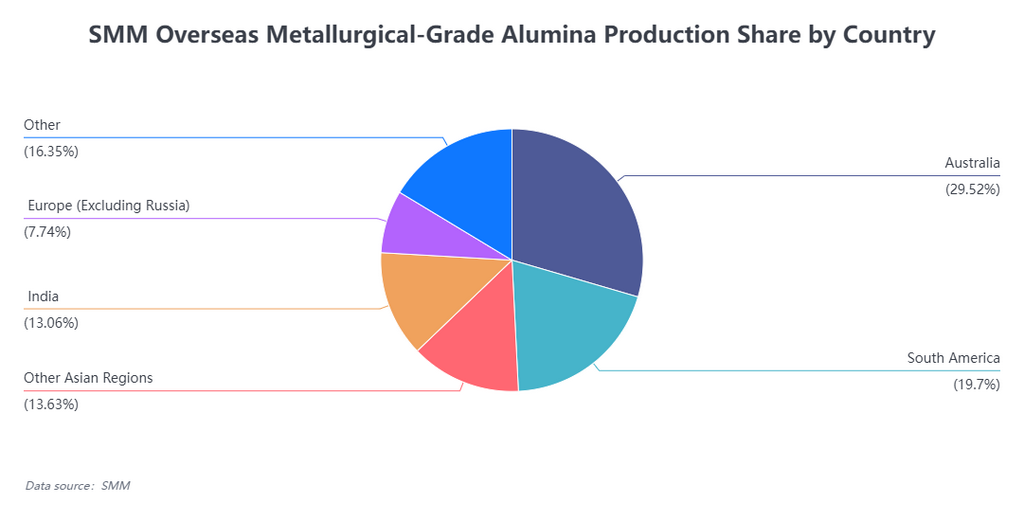
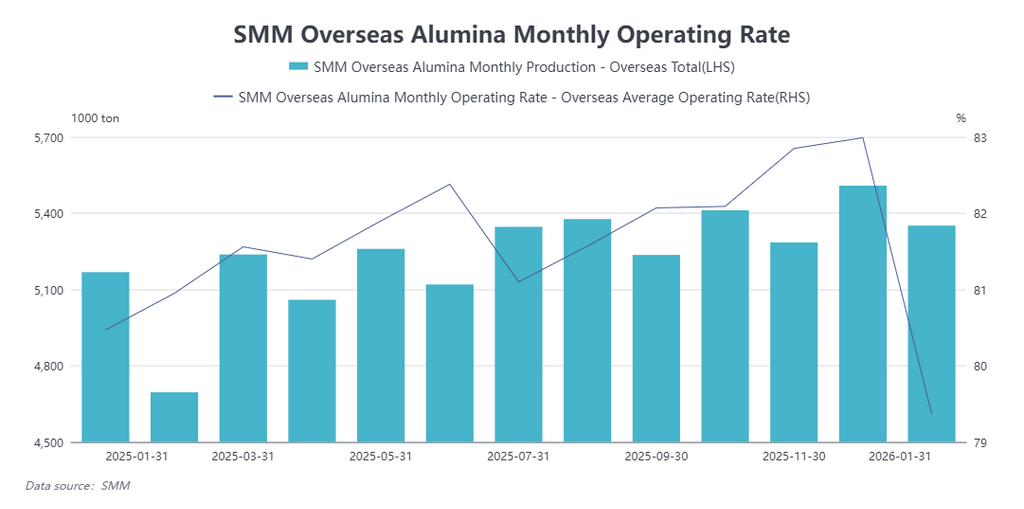
By region:
Indonesia: According to SMM research, PT Kalimantan Alumina Nusantara (KAN), approximately 80%-owned by Press Metal Group, is constructing an alumina refinery with an annual capacity of 1–1.2 million tonnes in West Kalimantan, Indonesia. The project is expected to gradually commence production in late 2026 or early 2027. Meanwhile, Indonesia’s bauxite quota has not been updated for the time being and is only sufficient to support the country’s existing 7 million tonnes of alumina operating capacity. Taking into account the newly added alumina production capacity totalling 2 million tonnes, bauxite demand stands at approximately 24 million tonnes, exceeding the bauxite quota of 18 million tonnes. The tight supply of bauxite at the raw material end will affect the ramp-up of new production capacity. SMM will continue to monitor bauxite supply and alumina production.
Middle East: Chuangyuan Metal’s “Alumina—Aluminium Smelting—Power Plant—Aluminium Deep Processing” integrated green and low-carbon aluminium industrial park project in Saudi Arabia is scheduled to begin construction by the end of 2026. Phase I of the project plans to build 500,000 tonnes of aluminium smelting capacity. The project is expected to have a construction period of 24 months and commence production before the end of 2028. Saudi Arabia currently has only one alumina refinery in operation, with an annual capacity of 2 million tonnes. Apart from meeting the production needs of its associated aluminium smelter, the surplus is mainly exported to neighbouring countries. With the commissioning of Chuangyuan’s aluminium smelting project, the trade flow of alumina in the Saudi region is set to change.
Africa: During the month, Ghana completed the review of the proposal for its first large-scale alumina refinery project. The project aims to change the country’s long history of exporting bauxite raw materials and importing high-cost finished products. By constructing a refinery, it will directly supply alumina to the Volta Aluminium Company (VALCO), laying the foundation for the downstream aluminium manufacturing industry and driving the development of related industrial clusters. The project is expected to commence in 2026, with a target to restore VALCO’s annual capacity to over 200,000 tonnes by the end of 2028.
United States: On January 15, the United States invested $450 million to rescue its last and only domestic alumina refinery and build a complete gallium supply chain. This strategic initiative aims to secure the supply of critical raw materials needed for the defence, aerospace, and high-tech sectors. The refinery will process imported Jamaican bauxite into alumina, targeting an annual output of over 1 million tonnes of alumina, which would meet nearly 40% of U.S. demand. At the same time, the investment will be used to construct a new gallium extraction production line, with a planned capacity of up to 50 tonnes of gallium per year.
Outlook for February 2026: Overseas metallurgical-grade alumina production is expected to decrease by 10.95% month-on-month and increase by 1.34% year-on-year; the operating rate is expected to be approximately 78.11%, down 0.01 percentage points month-on-month and down 2.84 percentage points year-on-year. The main reasons are the fewer days in February and the fact that some new production capacity is still in the ramp-up stage, leading to a decline in the operating rate.