Shanghai, China (January 23, 2026): Shanghai Metals Market (SMM) is thrilled to announce a strategic cooperation between the 2026 (21st) SMM Copper Industry Conference & Expo and Women in Mining Africa (WiM-Africa). This collaboration aims to deepen nonferrous metals cooperation and foster a mutually beneficial, win-win relationship between Chinese firms and the African mining sector.
By leveraging their respective strengths, the two parties will address the core development needs of Africa's nonferrous metals sector. The partnership will establish efficient communication channels to deepen practical cooperation in the China-Africa mining industry. This alliance is set to help the African copper industry overcome development bottlenecks and achieve high-quality upgrading, while simultaneously enhancing the international influence and supply chain value of the 2026 (21st) SMM Copper Industry Conference & Expo.
Africa's Big Role in the Global Copper Industry Chain
As an important global copper mining region, Africa boasts abundant copper reserves, exerting a significant influence on the global copper market landscape. Data shows that Africa's copper mine production accounts for 15%–20% of the global total.
- DRC: The DRC, the world's second-largest copper producer, produced approximately 1.5 million mt of copper in 2025, accounting for about 10% of global production;
- Zambia: Zambia has a high dependence on copper exports, with production reaching 900,000 mt in 2025;
- Others: Other countries in Africa, such as South Africa, Mozambique, and Namibia also hold significant copper ore reserves, particularly featuring low-cost open-pit mines and potential mining areas.
The development of Africa's copper mining industry is directly linked to the stable operation of the global copper market. As important sources of global copper concentrates and raw ore exports, the DRC and Zambia's copper concentrate exports directly serve numerous smelters in Asia and Europe. Fluctuations in their production, strike events, or policy adjustments can trigger short-term volatility in international copper prices. Furthermore, as most African copper mines are open-pit operations with relatively low mining costs, changes in their production significantly impact the medium and long-term supply-demand balance of the global copper market. Meanwhile, the African copper mining industry also faces supply chain risks such as political and policy changes, and port transportation bottlenecks. These factors are directly transmitted to international copper prices, becoming important elements influencing volatility in the global copper market.
Investing in Africa
Currently, the global energy transition is accelerating, driving continuously rising demand for high-purity copper from electric vehicles (EVs) and energy storage systems (ESS). "Green copper" and "low-carbon smelting" have become mainstream trends in the industry's development, and the strategic importance of African copper mines in global resource supply is increasingly prominent. Against this backdrop, Africa's copper mining industry is attracting sustained global capital investment. Notably, Chinese enterprises have invested in mines and processing plants in countries such as the Democratic Republic of the Congo (DRC) and Zambia, injecting new momentum into local industrial development. Ivanhoe Mines' Kamoa-Kakula copper smelter in the DRC has become Africa's largest and most environmentally friendly copper smelter thanks to its advanced low-carbon smelting technology, demonstrating the positive trend of Africa's copper industry transitioning towards green and low-carbon operations.
Challenges in Africa's Copper Industry
However, Africa's copper industry also faces numerous challenges amidst its rapid development.
- Despite steady production growth, issues such as supply shortages and instability of copper concentrates remain prominent. Factors including high supply concentration and fluctuations in the spot ore market continue to put pressure on the supply of African copper concentrates to international smelters.
- On the processing side, shortcomings exist, such as outdated technology and insufficient investment. Some traditional smelting and mineral processing facilities suffer from low efficiency, and new project expansions are frequently delayed due to a lack of capital and technology, directly impacting concentrate processing capacity and product quality.
- Furthermore, shortages of highly skilled technical personnel and insufficient application of advanced processing technologies constrain the scaled and high-quality development of Africa's copper industry. Market demand for efficient mineral processing, smelting, and smart mine solutions is becoming increasingly urgent.
From Copper to Critical Minerals: The Full Spectrum of African Resources
Notably, Africa's advantages in non-ferrous metal resources continue to become more prominent. Beyond copper resources, its reserves and development potential in critical minerals such as cobalt, lithium, and manganese are also significant. The copper-cobalt resources in Central and Southern Africa, and the lithium-manganese resources in West and Southern Africa, provide crucial support for the global new energy industry chain.
With the implementation of China's zero-tariff treatment for 53 African countries with diplomatic ties to China, China-Africa economic and trade cooperation welcomes new opportunities. The ease of access for African mineral products into the Chinese market has significantly improved, further broadening the scope for China-Africa cooperation in non-ferrous metals.
Simultaneously, African resource countries are accelerating the modernization and upgrading of their mining sectors, strengthening local processing of mineral products and value chain extension, which provides broad space for international enterprises to participate in local layouts. China's complete industrial system in non-ferrous metal smelting and processing, equipment manufacturing, and other areas highly complements Africa's resource advantages, laying a solid foundation for deepening bilateral cooperation.
Strategic Cooperation between SMM CCIE 2026 and WiM-Africa
Focusing on the core issues and practical needs of Africa's non-ferrous metals industry, the 2026 (21st) SMM Copper Industry Conference & Expo will collaborate with WiM-Africa to co-host the "Africa Special Salon" and "Supply-Demand Networking Sessions."
- Supply-Demand Dynamics and Development Trends of Key Non-Ferrous Metal Resources in Africa, Such as Copper, Cobalt, and Lithium
- Cooperation Opportunities Between China and Africa in Mine Development, Smelting and Processing, Trade Circulation, and Investment and Financing
- Precise Matchmaking Between African Resource Projects and Enterprises in Chinese and International Industry Chains
Through strategic collaboration with WiM-Africa, SMM will further expand its African mining cooperation network and strengthen its brand presence and market position in Africa.
About WiM-Africa
1. Basic Introduction
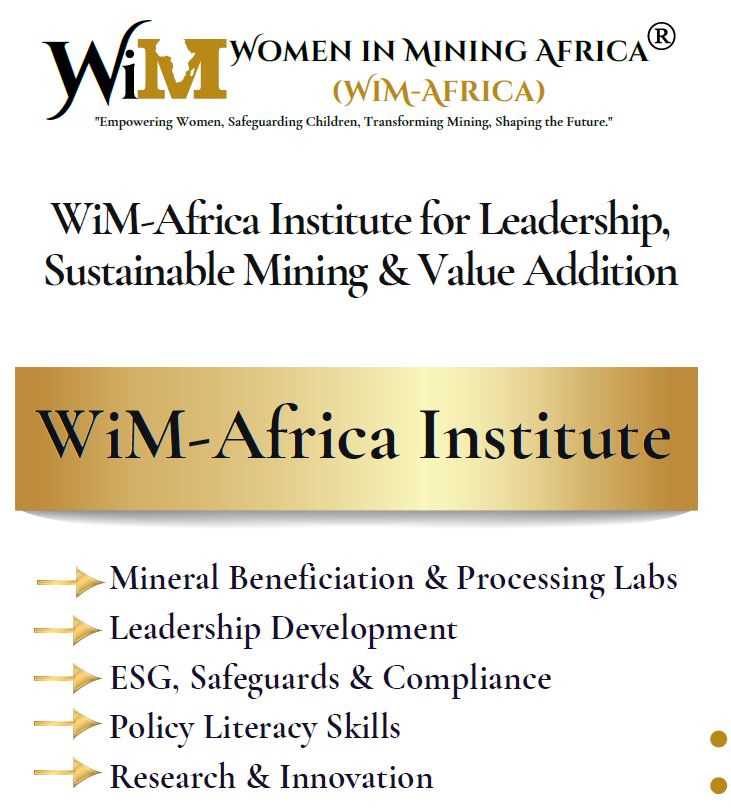
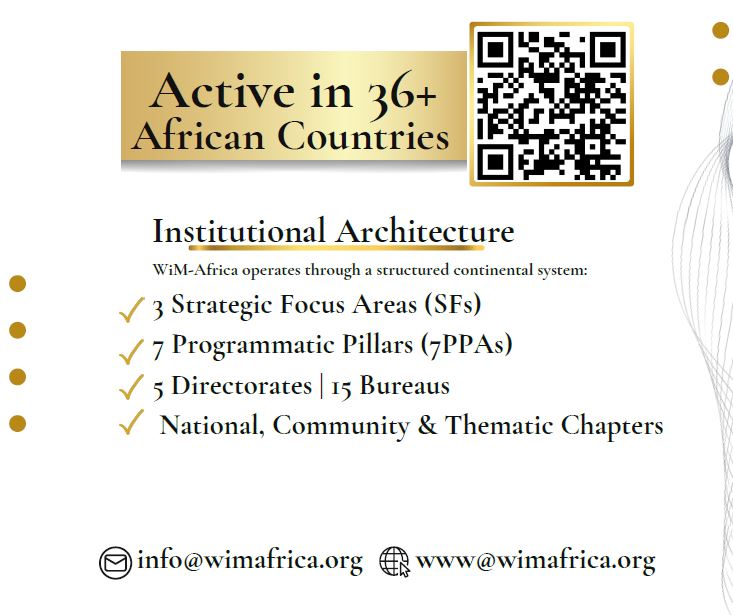
WiM-Africa is a regional mining organization active in multiple resource-rich African countries, focusing on the development and participation of female professionals and practitioners in the mining sector, while extensively serving the African mining ecosystem. Its members come from various sub-sectors such as mine development, smelting and processing, mining engineering and services, trade, investment and financing, and policy research, and maintain long-term communication and cooperation with mining enterprises, industry institutions, and relevant government departments in multiple countries. Leveraging its cross-regional network and industry influence, WiM-Africa plays an important role in promoting mining exchanges, project matching, and sustainable development practices.
2. WiM-Africa's positioning and responsibilities include:
- Serving as a collaborative platform for female practitioners in the African mining industry as a collective.
- Acting as a communication bridge in the industry, connecting miners, governments, investment institutions, and international organizations.
- Serving as a liaison point for international conferences and global mining cooperation.
- Promoting industry inclusivity, sustainable development, and technology dissemination.
3. Membership Structure
• National-level women's mining associations: (such as those in Zambia, DRC, Ghana, South Africa, etc.), covering local mine managers, technical personnel, and mining professionals.
• Mining community organizations and mining enterprises: involved in mining, processing, beneficiation, engineering services, and other segments.
• Coalition Board: involving mining companies, investment institutions, educational and research units, etc., in cross-regional collaboration and resource matching.
• Development partners mainly from African governments, associations, chambers of commerce, and miners: such as the African Export-Import Bank, the Nigerian Export Promotion Council, the Southern African Development Community (SADC), the Malawi Mining and Minerals Regulatory Authority, ECTerra, Glencore, etc..
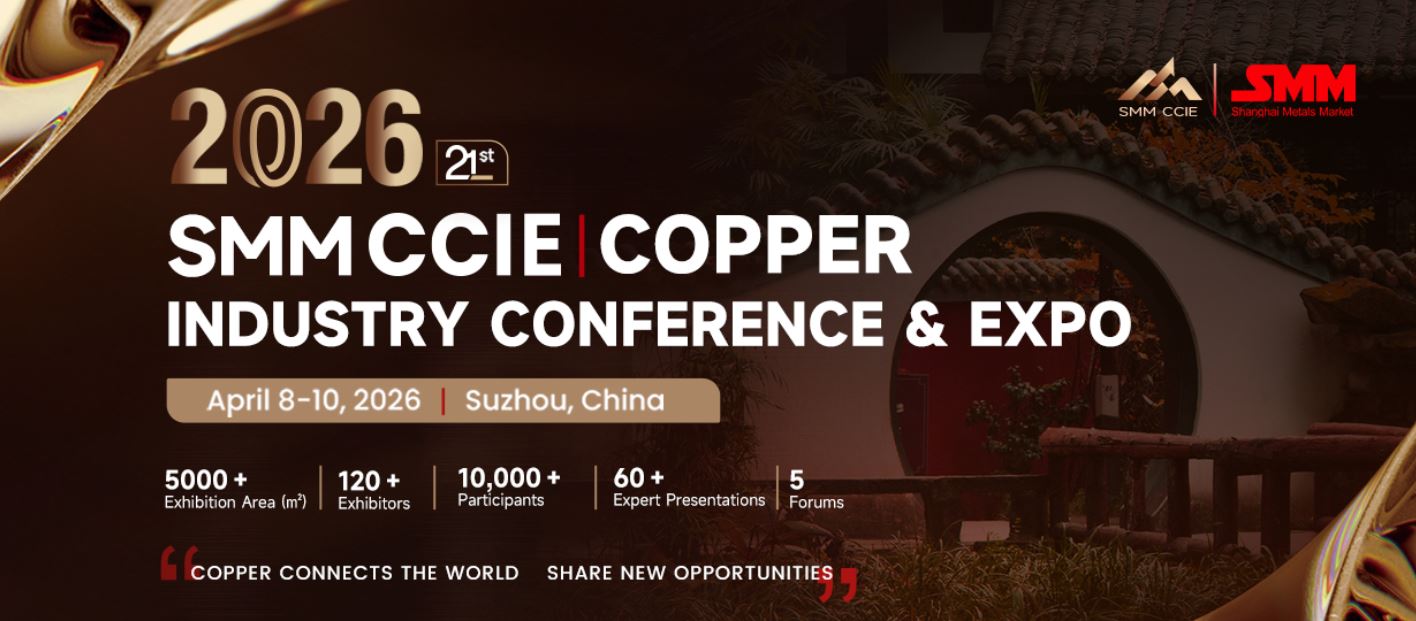
The 2026 (21st) SMM Copper Industry Conference & Expo, organized by Shanghai Metals Market (SMM), will take place from April 8-10, 2026, at the Suzhou International Expo Center in Jiangsu Province, China. We look forward to your joining us at the CCIE 2026 to navigate global copper supply chain volatility amid green transition.

![End of Strike at Chilean Copper Mine, LME Copper and SHFE Copper Rebounded in Sync Overnight [SMM Copper Morning Meeting Minutes]](https://imgqn.smm.cn/usercenter/SiNDH20251217171711.jpg)