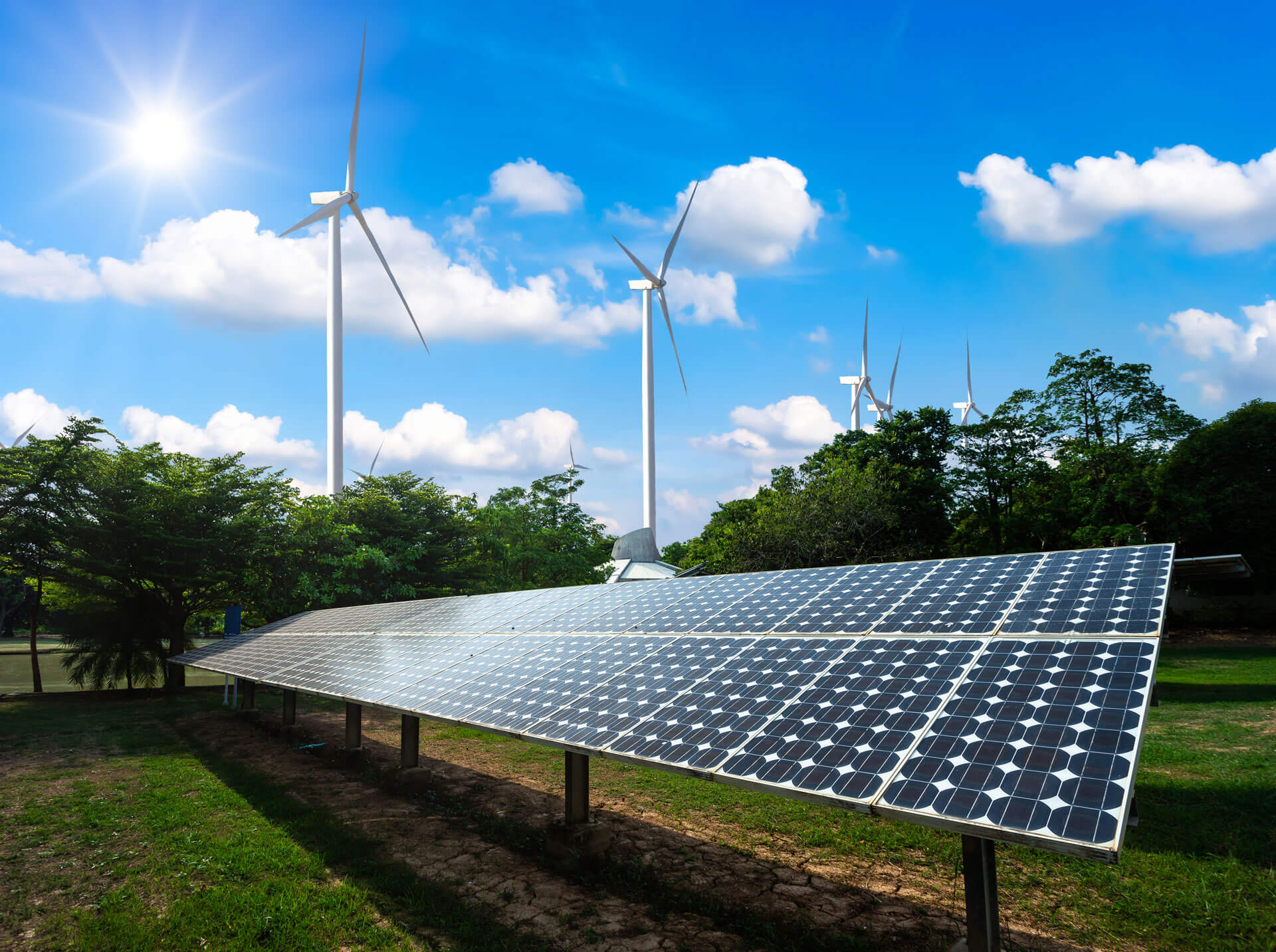
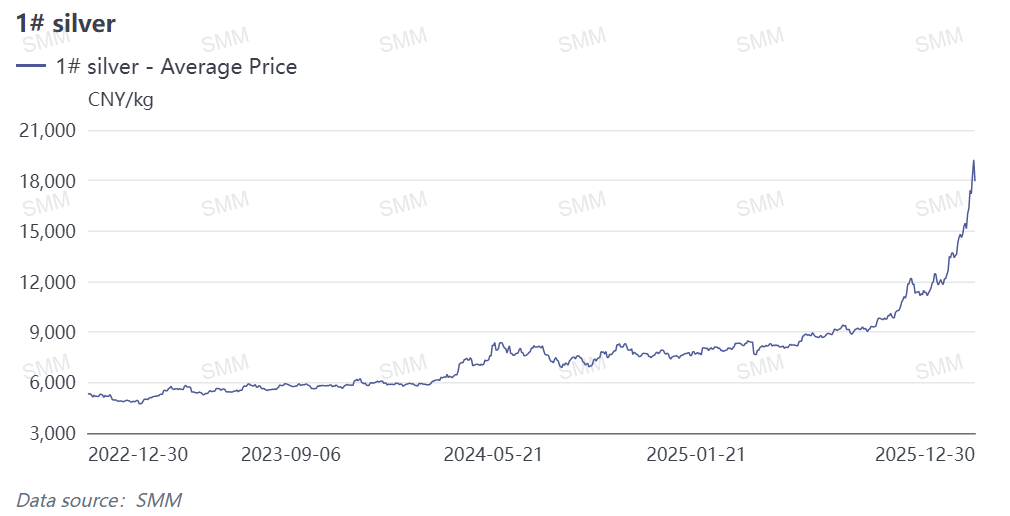
Silver prices have been climbing steadily in recent weeks, emerging as a prominent variable impacting the cost structure of the photovoltaic (PV) industry chain. This effect is rapidly transmitting to the solar cell manufacturing segment, driving significant price volatility for battery cells.
Cost Pass-Through Mechanism: Silver Drives Up Cell Prices
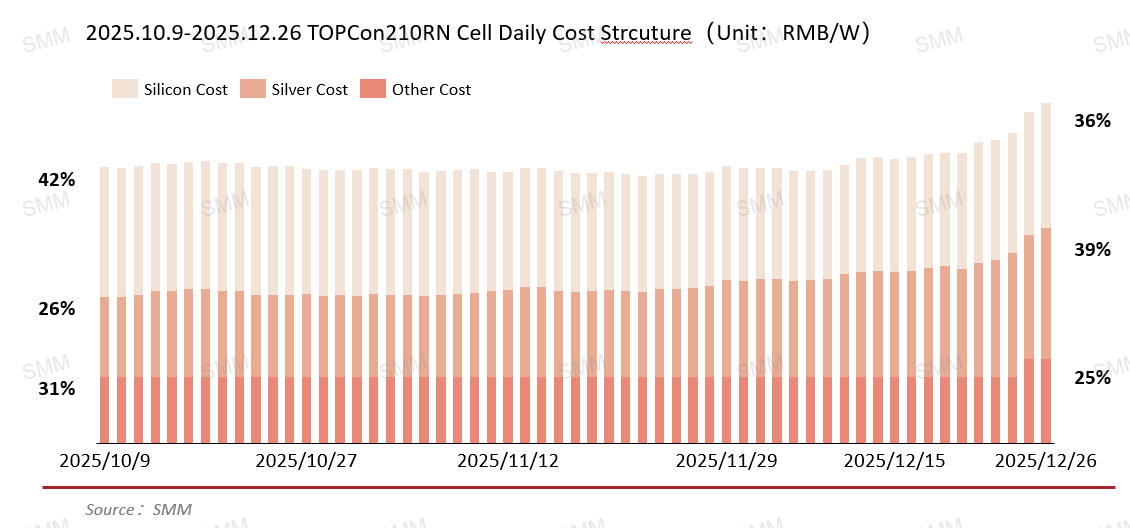
This round of price increases originated from the raw material side. The sustained rise in the spot price of domestic #1 silver has directly led to corresponding increases in the price of silver paste used for TOPCon cells, for which silver is a core material. According to SMM's cost model calculations, the production cost for 210RN cells has risen from approximately 0.27 yuan/W in October to around 0.33 yuan/W as of last Friday. From a cost structure perspective, silver paste now accounts for nearly 40% of the production cost for TOPCon cells, making the total cost highly sensitive to its price fluctuations. A rough estimate suggests that for every 1,000 yuan per kilogram increase in the silver price, the corresponding cell cost rises by about 0.01 yuan/W. The recent rapid surge in silver prices has quickly elevated the overall manufacturing cost of cells through increased silver paste expenses.
Cost Pressure Triggers Price Adjustments, Causing Short-Term Market Disruption
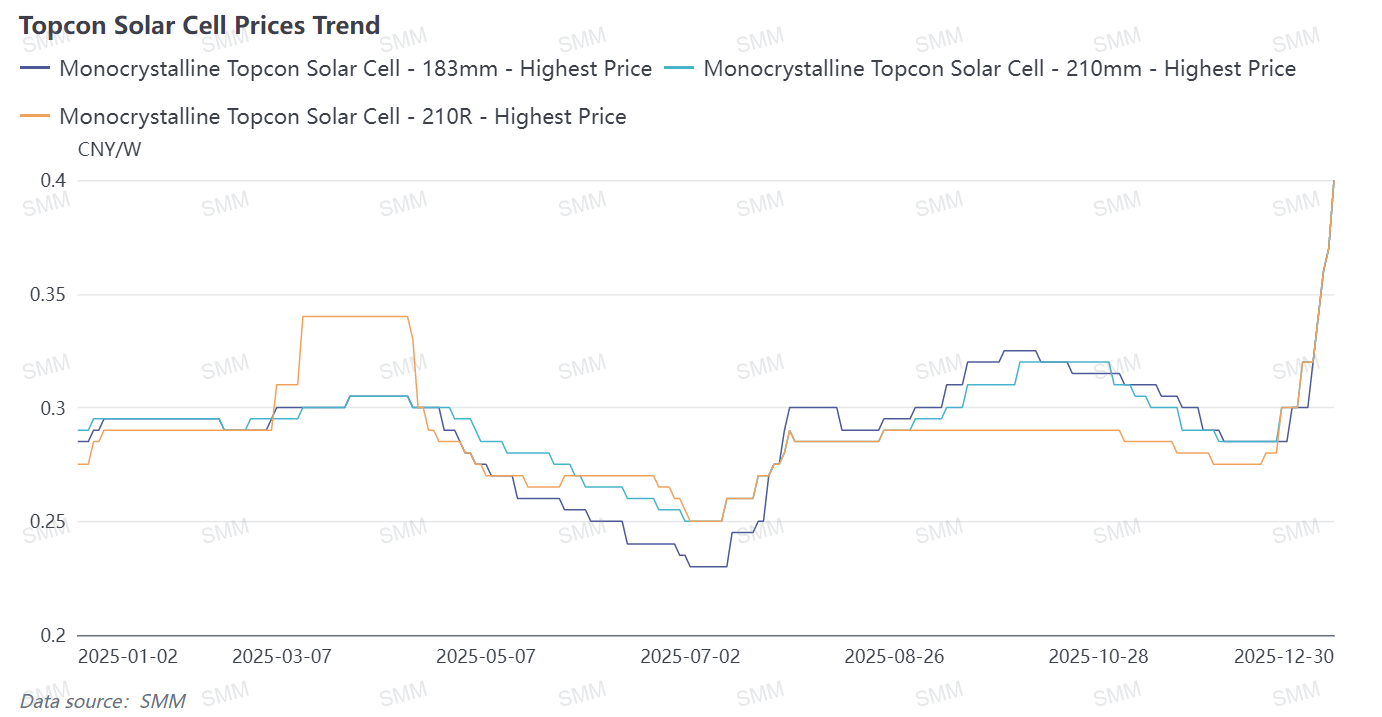
Once the solar cell cost clearly surpassed 0.28 yuan/W, pressure on producers intensified sharply. Squeezed by both rising raw material procurement costs and production depreciation (with current industry utilization rates below 60%), and coupled with industry association self-discipline requirements to "not sell below cost," leading manufacturers began raising their quotes based on production costs, sparking industry-wide follow-on increases.
Within two weeks, after four rounds of price adjustments, solar cell prices have surged by a staggering 28%. As of last Friday, quotes from leading manufacturers had reached 0.4 yuan/W, with small-volume transactions at 0.37 yuan/W also occurring in the afternoon market, reaching the annual price high. Faced with rapid and sharp price movements, the market quotation system has become chaotic: only a few leading firms retain pricing initiative, while most small and medium-sized manufacturers, unable to lock in costs, have chosen to suspend or simply follow prevailing quotes. This has led to a reduction in effective market quotes, widespread "daily price changes," and increased difficulty in conducting transactions.
Downstream Adopts Wait-and-See Amid Thin Trading
December is traditionally a low season, and within an already thin trading environment, downstream module manufacturers are highly resistant to the high prices, showing very low procurement willingness. A procurement manager from a module factory stated, "Internal notifications have been issued to temporarily suspend procurement." Unless for urgent delivery orders, module factories have generally halted the continued execution of monthly procurement contracts.
To support the price increases, some cell manufacturers proactively adopted a strategy of "warehouse lockdown" mid-week to prop up prices. A salesperson from a leading cell manufacturer revealed that even if downstream buyers accepted a price of 0.36 yuan/W, the company, from a cost perspective, still chose to temporarily withhold sales, waiting for prices to rise further. This standoff has further suppressed actual market trading volume.
Outlook
The impact of rising silver prices, combined with impending pressure from expected silicon wafer price hikes, has pushed production pressure on cell manufacturers to new highs. Although some firms have mitigated part of the shock through hedging, considering the upcoming traditional demand lull in Q1 2026, production cuts have become an industry consensus. Several companies have planned to further reduce operating rates to alleviate dual pressures from raw material procurement and inventory build-up, while also preparing for next year's production quotas.
The solar cell price surge triggered by silver has far exceeded market expectations. In the short term, as year-end demand was partly front-loaded by the mid-year installation rush, the actual impact of rising silver costs on the cell and module segments is limited under low trading volumes. However, from a medium-term perspective, this event could favor upward price movement for cells in Q1 next year. Firstly, the high cost level provides rigid upward support for prices. Secondly, increased pressure from raw material procurement is prompting cell manufacturers to cut production earlier, potentially improving the supply-demand balance in the early-year market and further supporting price increases.
![[Solar: Germany adds 1.83GW of PV in July, highest monthly level this year]](https://imgqn.smm.cn/usercenter/NWqnx20251217171739.jpg)
![[SMM PV News Flash] Jiangsu's PV installation scale first surpassed 100 million kW in the country](https://imgqn.smm.cn/usercenter/eUzyF20251217171739.jpg)
![[SMM PV News] Huaneng 120MW PV Project Announced!](https://imgqn.smm.cn/usercenter/QFClV20251217171738.jpg)