BMW Brilliance, China Datang launch green power joint venture to decarbonize auto supply chain

Published: Jul 28, 2025 22:10
Source: gasgoo
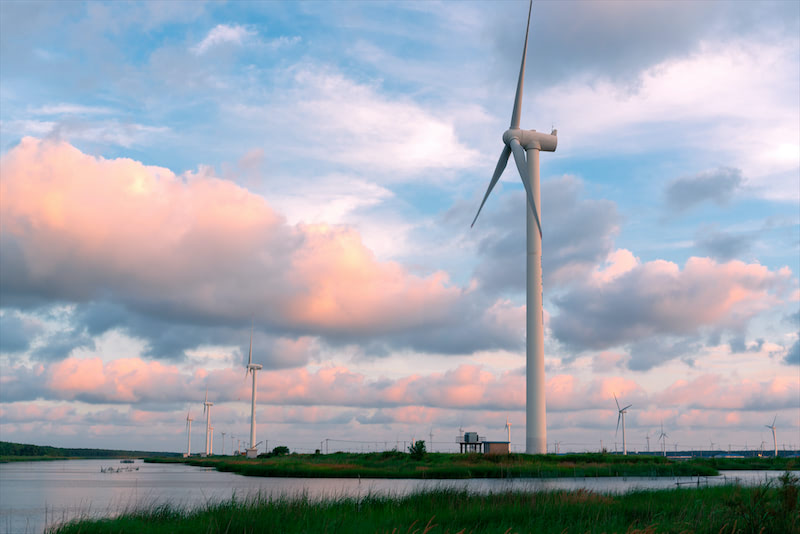
The joint venture plans to develop a 1-gigawatt onshore wind project, aimed at supplying renewable electricity directly to BMW's manufacturing operations in Shenyang.

Shanghai (Gasgoo)- BMW Brilliance Automotive Ltd. ("BMW Brilliance") has entered into a landmark strategic partnership with China Datang Corporation ("China Datang") to jointly establish a green power joint venture focused on onshore wind energy. The agreement, signed on July 24 in Shenyang, marks the first time an automaker in China has co-founded a green electricity company, signaling a bold new step in cross-sector collaboration between the automotive and energy industries.

The joint venture plans to develop a 1-gigawatt onshore wind project, aimed at supplying renewable electricity directly to BMW's manufacturing operations in Shenyang. Beyond powering its own facilities, the initiative will extend to the company's broader local ecosystem—including suppliers, dealers, and charging infrastructure operators—offering them access to clean energy as part of an integrated effort to green the entire automotive value chain.

This initiative is a key component of BMW's sustainability strategy in China, reinforcing the group's commitment to decarbonization across all levels of its operations. Through long-term green power contracts, the venture will deliver traceable and stable renewable electricity to BBA's plants, helping the company meet its Scope 1, 2, and 3 carbon reduction targets. Notably, the project is set to support the rollout of BMW's Neue Klasse electric models produced in China starting in 2026, embedding clean energy into the core of its future product line.

The new wind power development will complement BMW Brilliance's existing energy assets, including solar power installations and geothermal heating systems, creating a multidimensional clean energy solution across the production process. The integration of these technologies reflects a shift toward more resilient, localized, and diversified renewable energy sourcing strategies within the auto sector.

In addition to power generation, the two companies will collaborate on technology sharing, talent development, and green ecosystem building. Joint efforts will also explore standardized mechanisms for green power certification and carbon accounting, aiming to establish a replicable model for industrial decarbonization.

By creating accessible green power channels for upstream and downstream partners, the venture not only accelerates BMW's own energy transition but also empowers other partners across the automotive value chain to reduce emissions and align with the growing demand for low-carbon products. This cooperation is expected to set a new industry benchmark for sustainable supply chain integration.

Data Source Statement: Except for publicly available information, all other data are processed by SMM based on publicly available information, market communication, and relying on SMM's internal database model. They are for reference only and do not constitute decision-making recommendations.

For any inquiries or for more information, please contact: lemonzhao@smm.cn
For more information on how to access our research reports, please contact:service.en@smm.cn
Related News
[Automotive: BYD Reports Over 400,000 New Energy Vehicle Sales In June 2026]
Jul 2, 2026 14:06
[Automotive: BYD Reports Over 400,000 New Energy Vehicle Sales In June 2026]
Read More
[Automotive: BYD Reports Over 400,000 New Energy Vehicle Sales In June 2026]
[Automotive: BYD Reports Over 400,000 New Energy Vehicle Sales In June 2026]
On July 1, BYD Company Limited released its production and sales report for June 2026. In June, BYD produced 403,246 new energy vehicles and sold 403,472, achieving monthly sales exceeding 400,000 vehicles. Among these, passenger vehicle sales reached 397,292 units, while commercial vehicle sales totaled 6,180 units. By power type, pure electric passenger vehicle sales reached 201,472 units, and plug-in hybrid passenger vehicle sales reached 195,820 units. In terms of exports, new energy vehicle exports totaled 175,300 units in June. On a cumulative basis, from January to June 2026, cumulative new energy vehicle sales reached 1,808,511 units, a year-on-year decrease of 15.72%; among these, cumulative passenger vehicle sales reached 1,777,375 units, and cumulative commercial vehicle sales reached 31,136 units.
Jul 2, 2026 14:06
South Korea Finalizes Revised EV Charging Fee Plan
Jul 1, 2026 16:04
South Korea Finalizes Revised EV Charging Fee Plan
Read More
South Korea Finalizes Revised EV Charging Fee Plan
The Ministry of Climate, Energy and Environment announced on July 1 that it has finalized a revised public EV charging fee system, which will raise rates for ultra-fast chargers and lower rates for slow chargers. The new system will take effect on August 1. Under the revised plan, chargers with output below 30 kW will be charged at KRW 295.0/kWh, while chargers of 30 kW to below 50 kW will be charged at KRW 307.2/kWh. Chargers of 50 kW to below 100 kW will be charged at KRW 325.6/kWh, those of 100 kW to below 200 kW at KRW 348.4/kWh, and those of 200 kW or above at KRW 393.1/kWh.
Jul 1, 2026 16:04
[Two Mandatory EV National Standards Take Effect Tomorrow: Batteries Must Not Catch Fire or Explode]
Jun 30, 2026 19:44
[Two Mandatory EV National Standards Take Effect Tomorrow: Batteries Must Not Catch Fire or Explode]
Read More
[Two Mandatory EV National Standards Take Effect Tomorrow: Batteries Must Not Catch Fire or Explode]
[Two Mandatory EV National Standards Take Effect Tomorrow: Batteries Must Not Catch Fire or Explode]
On July 1, two mandatory national standards—"Safety Requirements for Traction Batteries of Electric Vehicles" (GB 38031-2025) and "Safety Requirements for Electric Vehicles" (GB 18384-2025)—will officially come into force. This marks the first time in China's new energy vehicle sector that both battery‑specific and vehicle‑level core safety standards take effect on the same day. The new battery standard establishes "no fire, no explosion" as a mandatory requirement, replacing the previous technical threshold of "providing an alarm signal 5 minutes before fire or explosion." The updated standard also adds tests including bottom impact testing and safety testing after fast‑charging cycles. The vehicle standard requires the installation of an independent physical one‑button emergency power‑off device. The two standards will be implemented in phases: all newly applied vehicle models submitted after July 1 must fully comply with the new rules, while models already approved and on sale are granted a one‑year transition period until full compliance is required by July 2027. Industry players across the supply chain have already entered the final stages of certification review and production‑line retrofitting.
Jun 30, 2026 19:44
BMW Brilliance, China Datang launch green power joint venture to decarbonize auto supply chain - Shanghai Metals Market (SMM)