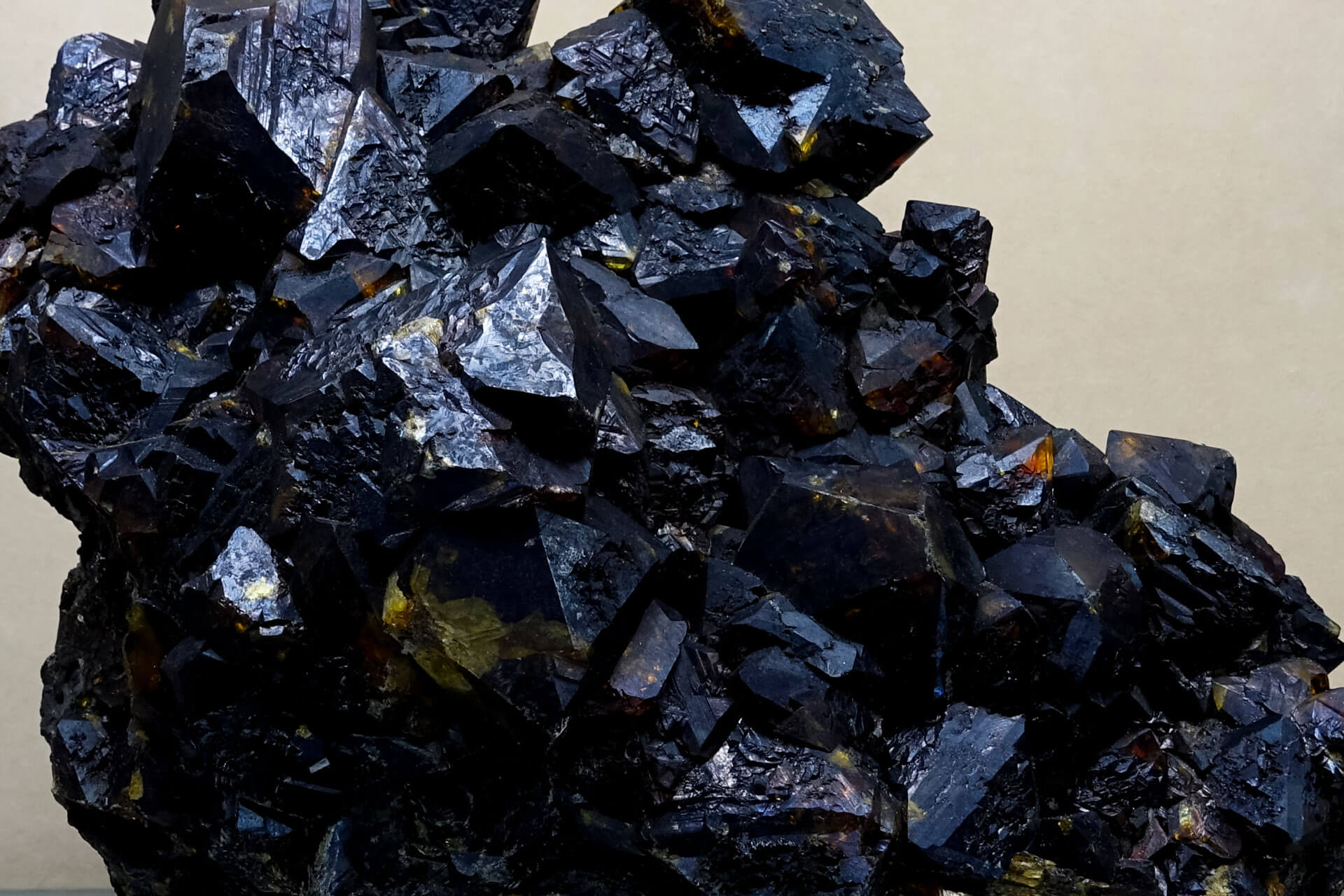
The US industrial sector is closely monitoring developments in the Sino-US trade situation, as their inventory of rare earths is running low.
On April 4 this year, China's Ministry of Commerce (MOFCOM), in conjunction with the General Administration of Customs, issued an announcement on implementing export control measures for seven categories of medium-heavy rare earth-related items, including samarium, gadolinium, terbium, dysprosium, lutetium, scandium, and yttrium, to exercise export controls over strategic resources with significant dual-use attributes. Multiple manufacturing industries in the US that rely on critical raw materials of rare earths are under considerable supply pressure.
Gracelin Baskaran, Director of the Critical Minerals Security Project at the Center for Strategic and International Studies (CSIS), stated that currently, the inventory of rare earths held by US enterprises can only sustain operations for about two to three months. If there is no new progress in the situation, the US industrial sector will be unable to carry out production activities.
She further pointed out that if export controls on rare earths are only temporarily relaxed in the future, US manufacturers may still continue to face difficulties, as it is challenging for the industry to accurately predict production conditions over the next three, six, or twelve months.
During the regular press conference of the Ministry of Commerce on June 5, a media outlet asked, "Some foreign enterprises believe that the process for obtaining export licenses for China's rare earths is slow, and their enterprises may face production shutdowns. How does the Chinese side respond to this?" In response, He Yongqian, the spokesperson for the Ministry of Commerce, stated that rare earths and other related items have significant dual-use attributes, and implementing export controls on them is an international common practice. The Chinese government reviews export license applications for dual-use items in accordance with laws and regulations. Applications that meet the requirements will be approved to promote and facilitate compliant trade.
On June 7, the spokesperson for the Ministry of Commerce again answered questions from reporters regarding the export control measures for medium-heavy rare earths: "We have noticed that with the development of industries such as robotics and new energy vehicles (NEVs), the demand for medium-heavy rare earths in civilian applications is growing continuously across countries. As a responsible major country, China fully considers the reasonable demands and concerns of various countries in civilian applications and reviews export license applications for rare earth-related items in accordance with laws and regulations. A certain number of compliant applications have been approved in accordance with the law, and the review process for compliant applications will continue to be strengthened."
The Passive US Industrial Sector
An expert pointed out that the US automotive industry is concerned about the shortage of rare earth elements, and large-scale production shutdowns may even occur in the coming months. This situation has already evoked memories of the chip shortage in previous years and may even escalate into a more severe crisis.
Four years ago, the shortage of computer chips caused by supply chain disruptions ultimately halted automobile production, pushing car prices to record highs. Limited supply has forced most people to pay higher prices for new cars.
Experts emphasize that while people believe only EVs are affected by rare earths, the reality is that every car is equipped with sensors that require rare earth elements. The motors in windshield wipers also rely on rare earths, and such sensors are needed in seat belts as well. If rare earth supply is not restored, production disruptions will occur across various industries.
Baskaran revealed that Ford has been forced to shut down its Chicago plant, which produces the Explorer, for a week. However, Ford has neither confirmed nor denied that the shutdown was caused by a shortage of rare earths.
Roderick Eggert, a professor at the Colorado School of Mines and Deputy Director of the Critical Materials Institute under the US Department of Energy (DOE), stated that because rare earths are crucial to important US industries, the US is striving to find substitutes, such as other types of magnets or motors that do not use magnets at all.
However, Eggert also acknowledged that any alternative solutions have limitations and may come at the cost of reduced performance.
![Rare Earth Prices Hold Up Well, and Market Inquiry Activity Increases [SMM Rare Earth Weekly Review]](https://imgqn.smm.cn/usercenter/AJTtH20251217171744.jpg)