No Arbitrage, No Rally: U.S. Aluminum Premium Stabilizes as Global Prices Weaken [SMM Analysis]

Published: Apr 3, 2025 23:55
Source: SMM
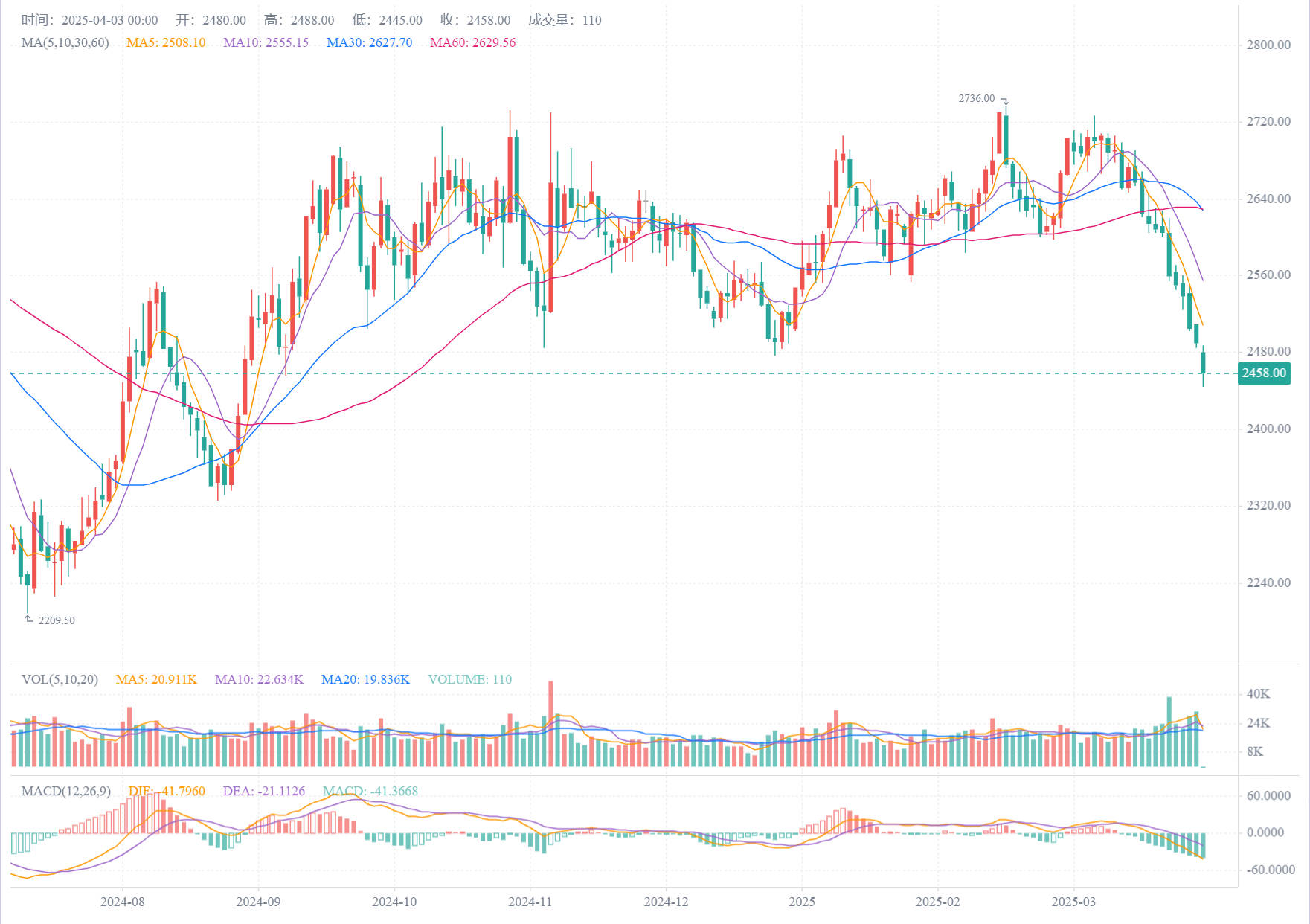
LME 3M aluminium prices came under pressure after the U.S. tariff announcement on 2 April, driven by concerns over weakening global demand and rising trade uncertainty. High tariffs are expected to disrupt Southeast Asia’s exports of aluminium products to the U.S., dampening primary aluminium consumption. Risk-off sentiment also led to long liquidation, further weighing on prices.

On April 2, President Donald Trump announced a new round of reciprocal tariffs. There is still no exemption from the existing tariff of 25% on imports of unwrought aluminium and aluminium products, and the scope was extended to imports of beer and aluminium cans.

As of April 3, the LME 3M daily average price stood at $2,460/t. In that case, the 25% tariff adds an estimated $615/t to the import cost. After factoring in ocean freight and inland transportation, the full landed cost for aluminium imports into the U.S. exceeds $800/t. At present, the U.S. Midwest premium has reached around $850/t, essentially aligning with this cost threshold. With minimal or no profit margin, the arbitrage window has effectively closed, and the premium has reached a stage of relative stability.

Back on February 12, Trump had already announced a blanket 25% tariff on steel and aluminium, with no exemptions, which officially took effect on March 12. In the weeks following that announcement, the Midwest premium rose sharply due to accelerated pre-tariff shipments. At that time, the arbitrage incentive was still strong, prompting exporters to rush cargoes to the U.S. Now that the tariff has taken effect, margins have been squeezed and market momentum has weakened. On the supply side, no major changes have occurred under the new tariff regime.

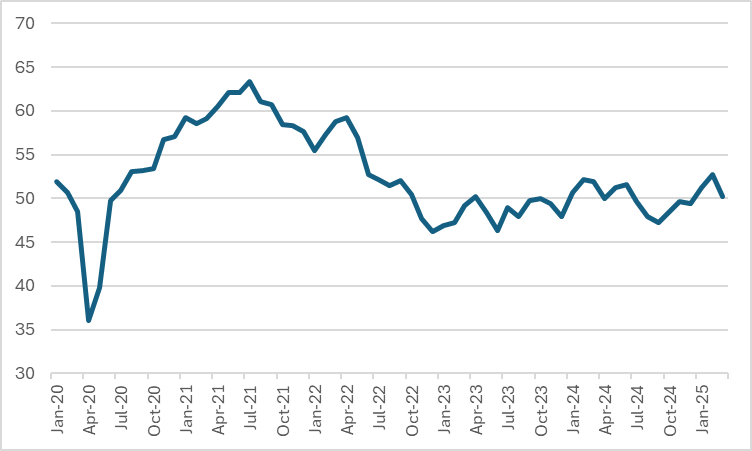
Meanwhile, U.S. domestic demand has underperformed. According to S&P Global, the February manufacturing PMI fell by 2.5 points to 50.2, and the March Consumer Confidence Index declined by 7.2 points to 92.9 (1985=100), signaling weak sentiment and sluggish demand outlook. In this context of uncertain demand and unpredictable policy developments, market participants are leaning toward just-in-time procurement instead of stockpiling, further limiting upside potential for premiums. There is even a risk of pullback in the near term.

In addition, the recently announced "reciprocal tariffs" targeting Southeast Asian countries may also dampen regional demand expectations. Since U.S. premiums are unlikely to drive meaningful structural arbitrage anymore, regional premiums in Europe and Japan may continue to face downward pressure, especially if U.S. demand weakens and more supply stays within local markets.

Fig 1. U.S. consumer confidence Index falls in March

Fig 2. U.S. manufacturing PMI index fell by 2.5 MoM in March (source: S&P Global)
There was also downward pressure on LME 3M aluminium prices. Following the release of the tariff policy, LME 3M prices moved lower, reflecting broader macro-market concerns over the outlook for global demand. It is widely believed that the high tariff policy will disrupt exports of aluminium-containing manufactured goods—particularly from Southeast Asia—to the United States, thereby weighing on actual consumption of primary aluminium. In addition, the escalation of tariffs has heightened global trade uncertainty, triggering risk-off sentiment and prompting the unwinding of some long positions, which further dragged prices down. As a result, in the short term, LME aluminium prices are likely to remain more influenced by macro sentiment and global demand expectations than by physical supply factors.


Fig 3:LME 3M aluminium prices remain under pressure


Author:Xinyi Liu | Aluminium Analyst | SMM UK

Tel: +44 07919949818 | Email: cathyliu@smm.cn

Data Source Statement: Except for publicly available information, all other data are processed by SMM based on publicly available information, market communication, and relying on SMM‘s internal database model. They are for reference only and do not constitute decision-making recommendations.

For any inquiries or to learn more information, please contact: lemonzhao@smm.cn
For more information on how to access our research reports, please contact:service.en@smm.cn
Related News
Guinea to Introduce Bauxite Export Controls Next Month, Alumina Rises in Night Session
7 hours ago
Guinea to Introduce Bauxite Export Controls Next Month, Alumina Rises in Night Session
Read More
Guinea to Introduce Bauxite Export Controls Next Month, Alumina Rises in Night Session
Guinea's Minister of Mines confirmed that the country will introduce a bauxite export control plan next month (June), with the core objective of "controlling exports and rebounding prices." Previously, Guinea's bauxite exports reached 183 million mt in 2025, surging 25% YoY, yet prices nearly halved from the early-year highs, with officials explicitly stating that "supply should not exceed demand." Driven by this news, during the night session on the 25th, the most-traded alumina futures contract on SHFE rose by over 4% at one point, with prices reaching a high of 2,837 yuan/mt.
7 hours ago
[SMM Aluminum Flash News] Vietnam’s THACO Plans USD 4.4 Billion Bauxite and Alumina Expansion
13 hours ago
[SMM Aluminum Flash News] Vietnam’s THACO Plans USD 4.4 Billion Bauxite and Alumina Expansion
Read More
[SMM Aluminum Flash News] Vietnam’s THACO Plans USD 4.4 Billion Bauxite and Alumina Expansion
[SMM Aluminum Flash News] Vietnam’s THACO Plans USD 4.4 Billion Bauxite and Alumina Expansion
Vietnamese industrial group THACO is accelerating plans to expand its bauxite and alumina business in Lam Dong Province with proposed investments worth about USD 4.4 billion. The Lam Dong 2 alumina project, valued at around USD 1.9 billion, is designed to produce 2 million tones of alumina annually, with the first 1 million-tone phase targeted for commissioning by 2030. THACO also plans a USD 2.5 billion bauxite mining project with annual ore extraction capacity of about 12 million tones. In addition, the company is studying downstream industrial parks covering aluminum smelting, titanium processing and chemical production. If approved, the projects could turn Lam Dong into one of Vietnam’s largest integrated aluminum industry hubs.
13 hours ago
[SMM Aluminum Flash News] China Studies Coal Waste as New Source of Critical Metals
13 hours ago
[SMM Aluminum Flash News] China Studies Coal Waste as New Source of Critical Metals
Read More
[SMM Aluminum Flash News] China Studies Coal Waste as New Source of Critical Metals
[SMM Aluminum Flash News] China Studies Coal Waste as New Source of Critical Metals
China is exploring the recovery of critical metals such as germanium, aluminum, lithium and gallium from coal waste to strengthen domestic strategic mineral supply. Research shows that fly ash and gangue generated during coal mining, washing and combustion may contain recoverable metals used in batteries, semiconductors, electric vehicles and defense industries. With China’s large coal sector and mature industrial network, existing coal washing plants, chemical facilities and power stations could potentially be adapted for metal extraction. However, differences in coal waste composition across regions continue to create challenges for large-scale and standardized recovery.
13 hours ago
No Arbitrage, No Rally: U.S. Aluminum Premium Stabilizes as Global Prices Weaken [SMM Analysis] - Shanghai Metals Market (SMM)