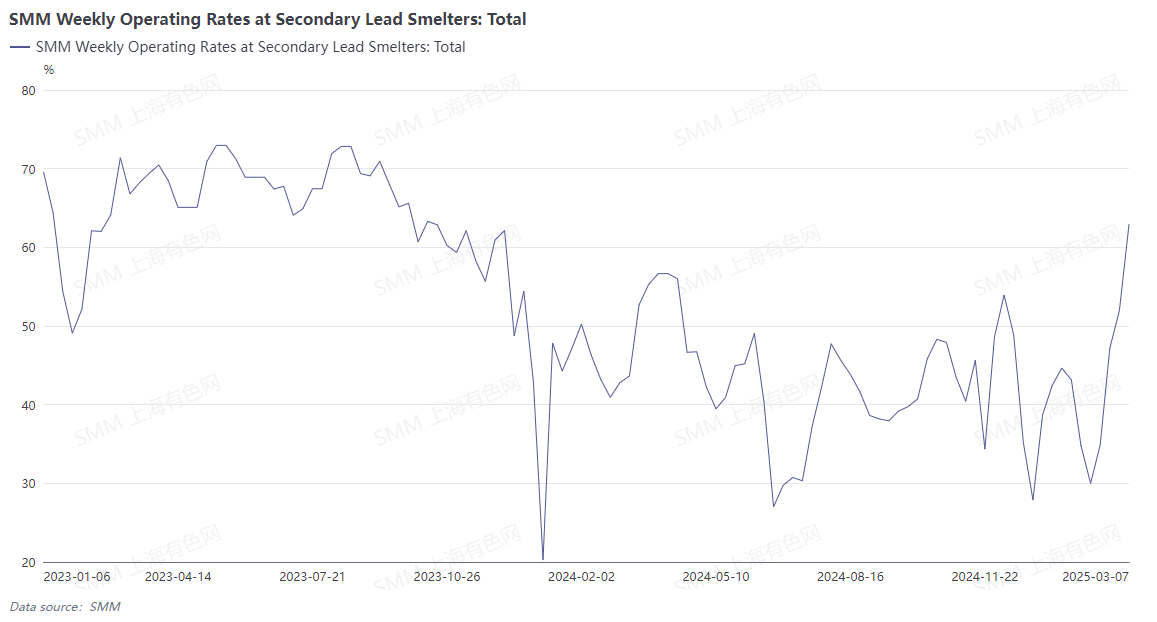
As March arrives, the resumption of production at secondary lead enterprises has entered a critical phase. By March 7, 2025, the weekly operating rate monitored by SMM (Shanghai Metals Market) reached 62.91%, the highest level in one and a half years. Recently, lead prices have finally broken free from the narrow, indecisive trading range that characterized the market previously.
The weak performance of the US Dollar Index has spurred a general increase in non-ferrous metals prices, while favorable domestic macroeconomic consumption policies have further shifted the trading center of SHFE (Shanghai Futures Exchange) lead upwards.
Additionally, several provinces in northern China have issued severe air pollution warnings, resulting in the shutdown of secondary lead smelters in regions such as Shandong and Henan. This has further propelled lead prices upward. In February, following the holiday period, lead prices performed poorly, and scrap dealers, fearing price declines, were inclined to sell off their inventories. Meanwhile, most smelters had not yet resumed production, leaving those in operation with relatively ample raw material inventories.
However, with the recent wave of smelter resumptions and the fact that it is currently the off-season for the scrapping of lead-acid batteries, raw material inventories have significantly decreased after more than half a month of consumption. Scrap dealers, now optimistic about rising prices, have become reluctant to sell, leading to a gradual decline in deliveries to smelters.
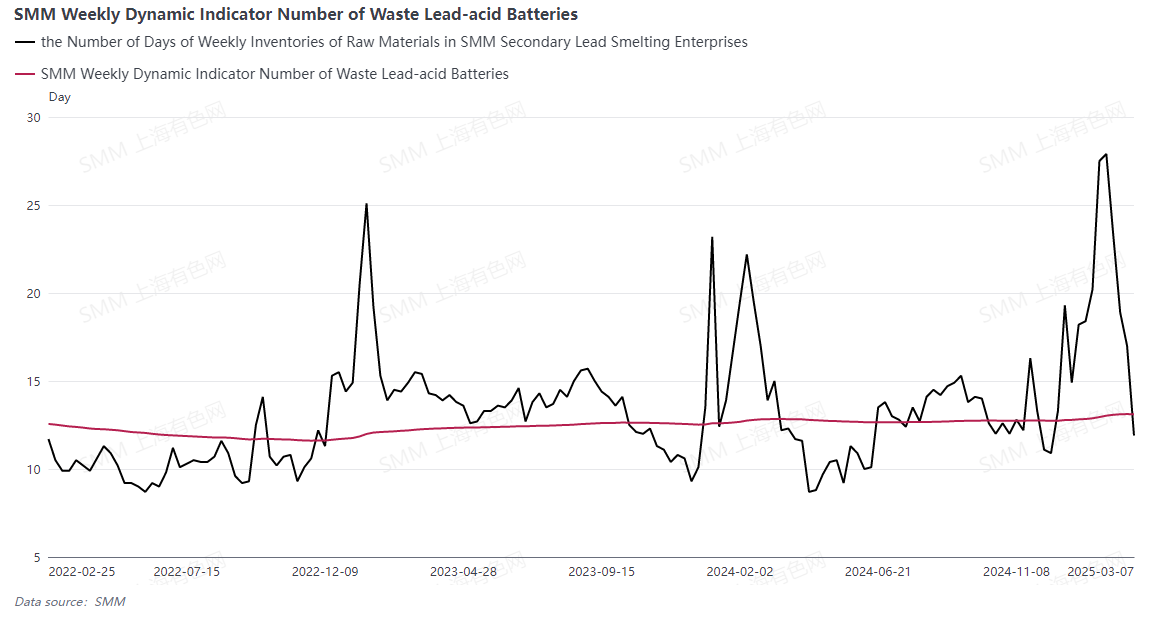
From the perspective of weekly raw material inventory days at smelters, the current level is already below the average. Yet, smelters are not eager to replenish their inventories by raising purchase quotes for scrap batteries. The reason lies in their bearish expectations for lead prices in late March. Currently, they have not engaged in large-scale inventory replenishment for three main reasons: first, to avoid the devaluation of excessive raw material inventories; second, to preserve existing profit margins; and third, to anticipate that scrap dealers will sell off their inventories when lead prices decline, allowing smelters to replenish at lower prices.
On the other hand, despite being in the off-season for scrapping, the current bullish sentiment among scrap dealers has led to a daily accumulation of scrap battery inventories, tying up a significant amount of capital. In this game of strategy, smelters, operating at such a high capacity with dwindling raw material inventories, face a choice: to reduce production or to increase raw material procurement prices. Meanwhile, scrap dealers are also under pressure to decide whether to sell quickly at current market prices or to hold onto their inventories in anticipation of further price increases. Which side will blink first? Stay tuned for the insights provided by next week's SMM survey.
![Non-Ferrous Sector Broadly Declined Combined with Increased Lead Ingot Supply, SHFE Lead Futures Center Shifted Downward [Lead Futures Brief Commentary]](https://imgqn.smm.cn/usercenter/mIbTL20251217171721.jpg)
![Under Overlapping Bearish Factors, LME Lead Pulled Back After Hitting Highs [SMM Lead Morning Brief]](https://imgqn.smm.cn/usercenter/XMxKT20251217171720.jpeg)