SMM February 11 News:
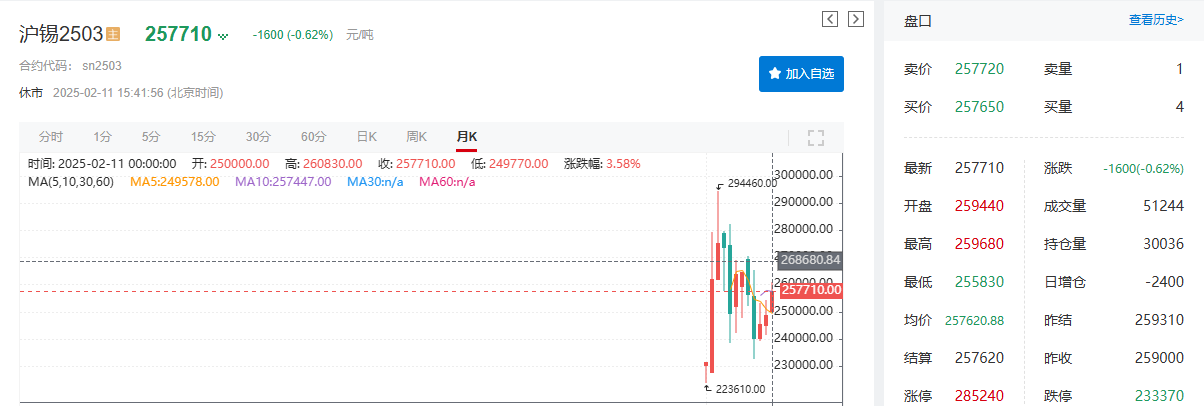
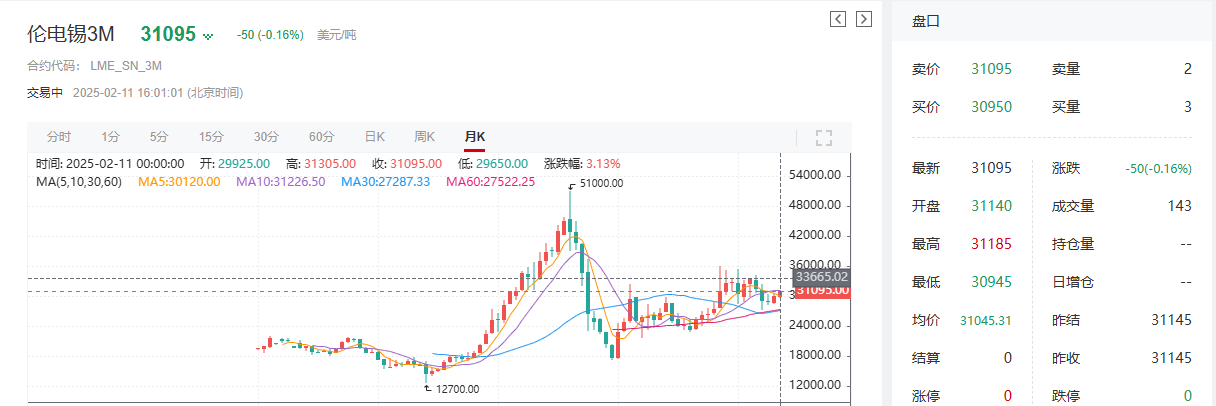
Due to the continued suspension of tin mining in Wa State and the persistently low levels of tin ore imports, raw material supply remains tight. Tin inventory is at a relatively low level, and market expectations for favorable macro policies in China, coupled with external macro sentiment fluctuations, have resonated to influence the market. Tin prices have been rising on a monthly basis since December last year, with increases observed in January and February this year as of 16:01 on February 11. Specifically, SHFE tin rose 1.16% in January and 3.84% in February so far, while LME tin increased 3.76% in January and 3.91% in February to date. On the daily chart, both SHFE and LME tin showed slight downward adjustments on February 11, as some long positions took profits and the market lacked clear directional signals. After the recent price weakening, can tin prices, which have already accumulated significant gains, achieve a three-month consecutive rise?
》Click to View SMM Futures Data Dashboard
Spot Market
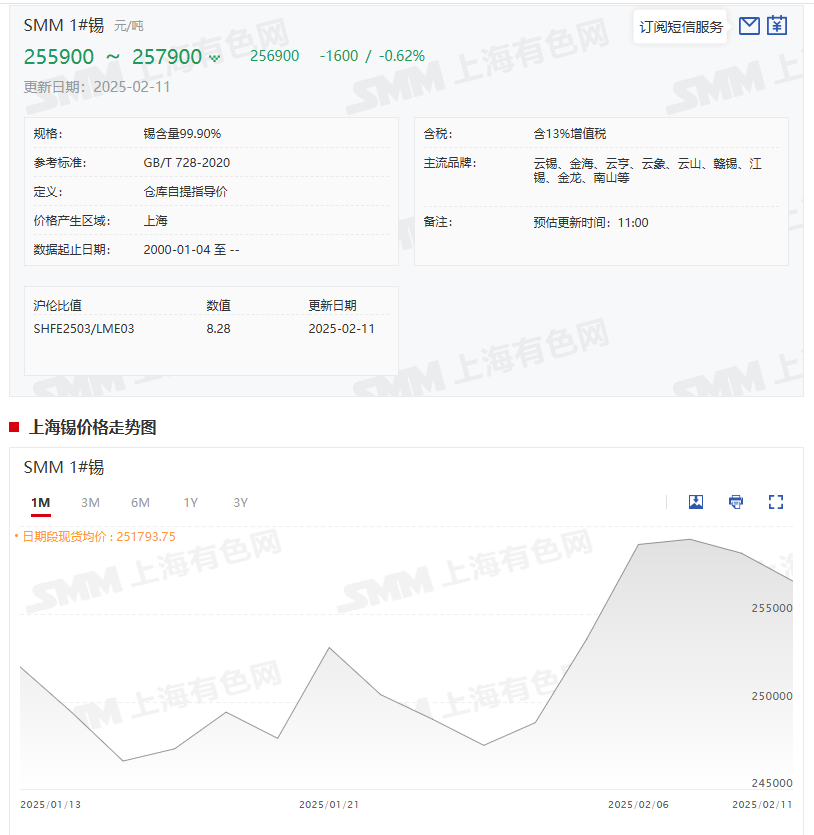
Tin Spot Prices Rose 1.14% in January, Price Center Shifted Upward in February
》Subscribe to View SMM Historical Metal Spot Prices
Regarding Tin Spot Prices: According to SMM quotes, SMM #1 Tin spot prices averaged 248,800 yuan/mt on January 27, compared to an average of 246,000 yuan/mt on December 31, 2024, marking an increase of 2,800 yuan/mt over one month, with a January gain of 1.14%. Since February, the price center of tin spot prices has generally shifted upward, with the average price of SMM #1 tin spot reaching 256,900 yuan/mt on February 11. On February 11, due to disruptions from US tariff policies, market risk aversion increased, and risk appetite declined, leading some long positions to take profits and causing tin prices to pull back. Along with the price pullback, overall trading activity in the tin spot market increased, with downstream and end-user enterprises showing stronger purchasing intentions and more inquiries in the market.
Fundamentals
Refined Tin Production Continued to Decline in January, Further Declines Expected in February
》Click to View SMM Tin Industry Chain Database
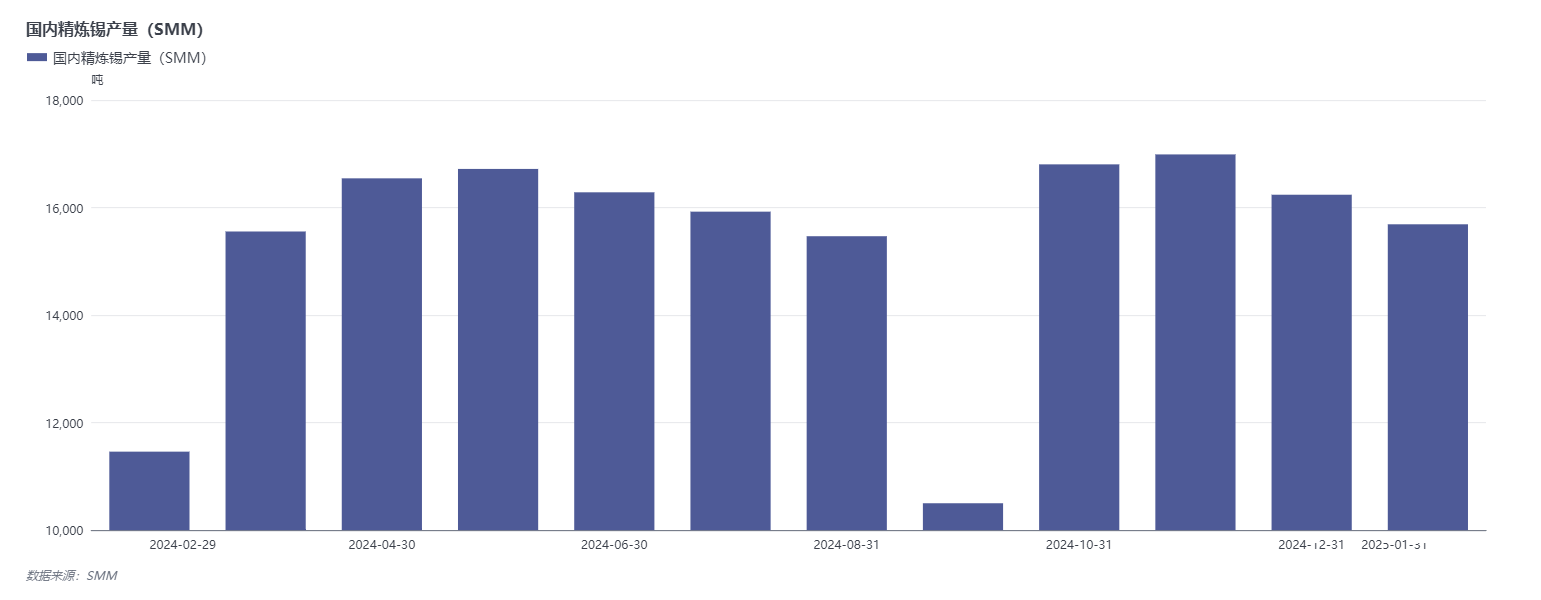
Production: According to SMM data based on market communication, China's refined tin production in January 2025 decreased by 4.62% MoM but still achieved a slight YoY increase of 0.65%. A tightening supply of tin ore and scrap contributed to the downward trend in domestic tin ingot production in January. In Yunnan, the persistently low volume of tin ore imports from Myanmar, combined with declines in imports from other countries, posed severe challenges to raw material supply for local smelters. Under these circumstances, most smelters opted to maintain current production levels or slightly reduce output. If Myanmar's tin mining suspension policy remains unchanged, SMM expects smelter production in Yunnan to continue declining. Additionally, the ongoing decline in tin concentrate TC, which has fallen below the cost line for some smelters, has forced a few enterprises to halt production for maintenance during the Chinese New Year holiday, impacting future tin ingot output. In Jiangxi, smelter production also generally declined in January. Furthermore, with most downstream and end-user enterprises shutting down for the holiday, scrap supply experienced seasonal shortages, prompting most smelters in Jiangxi to enter the holiday period, with production expected to resume gradually around the Lantern Festival. In Inner Mongolia, smelting activities remained relatively stable. However, in Anhui and other regions, difficulties in obtaining raw materials and the impact of the holiday have significantly challenged smelter production, making it difficult to maintain future output levels.
》Click for DetailsInventory: SMM Tin Ingot Social Inventory in Three Regions Decreased by 238 mt Last Week
Domestic:
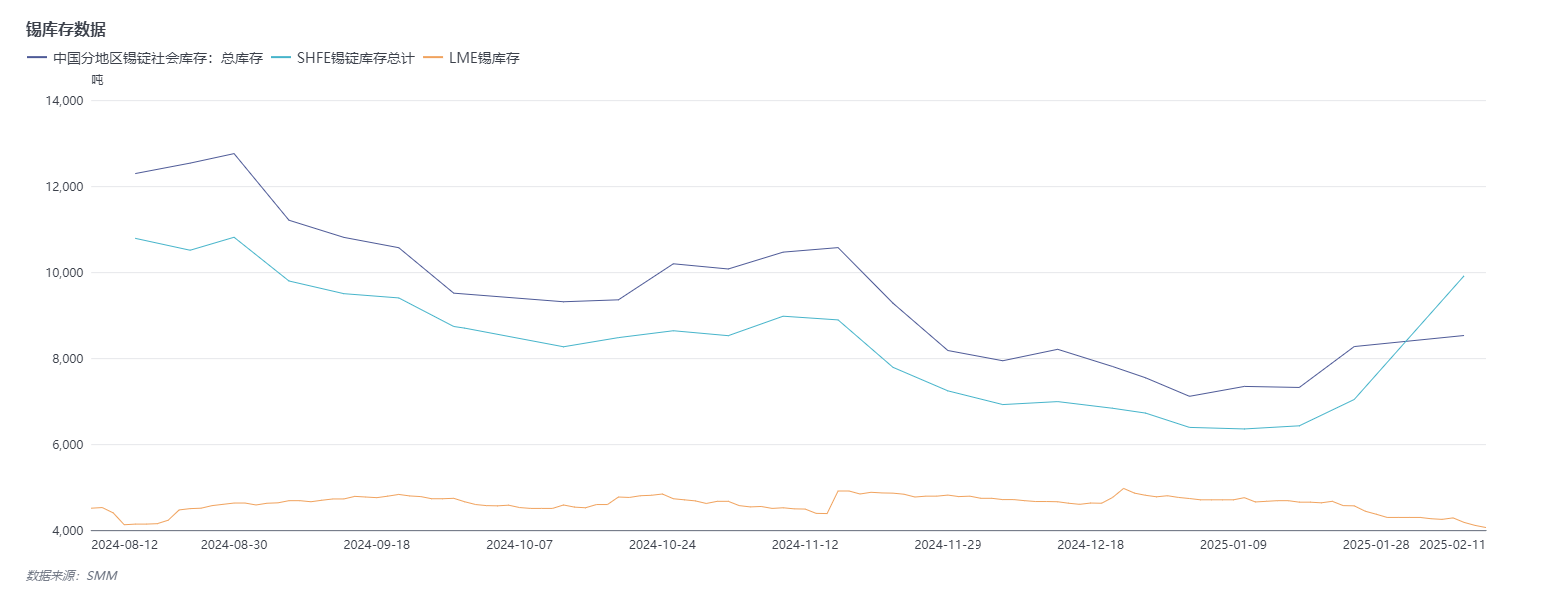
According to the SMM survey, as of February 7, the total social inventory of tin ingots in three regions tracked by SMM was 8,526 mt, representing an inventory buildup of 257 mt WoW. Although SHFE tin prices fluctuated last week, they generally stabilized and rebounded. However, spot market transactions remained weak as most downstream and end-user enterprises had not yet resumed operations. It is expected that the spot market will return to pre-holiday trading levels after the Lantern Festival. Market participants should closely monitor international market dynamics and domestic supply-demand changes to formulate appropriate trading strategies. SHFE Tin Inventory:
As of the week ending February 7, SHFE tin inventory continued to rise, reaching 7,123 mt. LME Inventory:
LME tin inventory stood at 4,440 mt on January 27, compared to 4,800 mt on December 31, 2024, reflecting a decline in January. This downward trend continued, with the latest LME tin inventory data on February 11 showing 4,050 mt. SMM Outlook
Macro Side:
The US imposed a 25% tariff on imported steel and aluminum, intensifying concerns over global economic growth, trade conflicts, and inflationary pressures. This has reduced market risk appetite and may suppress the performance of base metals. Additionally, the market will focus on Fed Chairman Powell's testimony at the Senate hearing, the US inflation data, and the manufacturing PMI data from both China and the US this month. Notably, as the Two Sessions approach, market expectations for favorable macro policies are rising, and attention should be paid to statements from relevant representatives. Fundamentals: Supply Side: Given the significant uncertainties surrounding tin ore imports from Wa State in Myanmar and the increasingly severe raw material supply issues faced by smelters, SMM predicts that national tin ingot production may further decline in February. Inventory Side: Both SMM tin ingot social inventory in three regions and SHFE tin inventory showed inventory buildup, while LME tin inventory declined.
Demand Side: The slight pullback in tin prices has increased spot market trading activity, with some downstream and end-user enterprises planning to restock when tin prices fall further. Attention should be paid to whether restocking transactions in the tin spot market will increase significantly in the future.
In summary, on the macro front, repeated fluctuations in overseas macro sentiment have heightened risk aversion, reducing market preference for risk assets like tin, which may suppress tin prices in the future. On the fundamentals side, the expectation of further declines in tin production in February may support tin prices. However, considering that Wa State authorities have expressed intentions to resume production, attention should be paid to potential disruptions to tin prices from related news. Tin spot demand has slightly recovered but has not shown significant improvement, and the inventory buildup in domestic tin stocks has weakened their support for tin prices. In the absence of new macro bullish factors and with overseas macro uncertainties continuing to affect the tin market, the tin market is expected to fluctuate downward in the future.