Capesize fleet transporting more bauxite than coal amid rising demand in China

Published: Feb 5, 2025 09:43
According to shipbroker Arrow, the surge in bauxite demand in China has resulted in capesize fleet carrying more bauxite than coal for the first time. The capesize vessels are traditionally used for coal shipments, but now, due to increased demand for the ore in the Chinese market, they are being repurposed to carry larger volumes of bauxite.
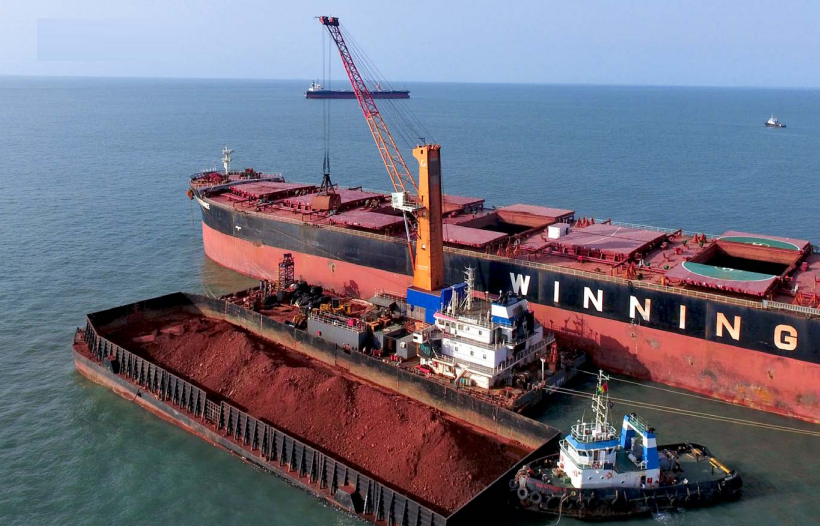
According to shipbroker Arrow, the surge in bauxite demand in China has resulted in capesize fleet carrying more bauxite than coal for the first time. The capesize vessels are traditionally used for coal shipments, but now, due to increased demand for the ore in the Chinese market, they are being repurposed to carry larger volumes of bauxite.

Capesize fleet transporting more bauxite than coal amid rising demand in ChinaImage source: MarineLink

Arrow stated in a report that bauxite shipment from Guinea to China surged at the beginning of the year as panamaxes vessels cannibalised capesize coal cargoes. That made bauxite the second-largest capesize commodity after iron ore.

In 2024, China imported 159 million tonnes of bauxite, up by 18 million tonnes from 2023, with 77 per cent of all shipments carried out on capes, leading to Guinea's higher capesize share of Australian bauxite trades to 20 per cent in 2024, whilst the African country becoming the world's dominant supplier of the primary aluminium raw material.

Another shipbroker, BRS, projects bauxite exports from West Africa to China to grow by another 20 million tonnes in 2025, stating: "Infrastructure improvements in West Africa led by Guinea and including Ivory Coast, Sierra Leone, and Ghana, are expected to drive further increases in supply for the seaborne market, and especially supply for China."

According to BRS, increased primary aluminium demand in China, driven by the 'New Three', namely electric vehicles, lithium batteries, and solar panels, is boosting the demand and consumption of bauxite in the domestic market.

"Considering the longer voyage distances, the bauxite market is expected to exert an increasing influence on the capesize segment via heightened volatility in the fronthaul route," BRS concluded.

The rise of the seaborne bauxite trades will be a vital point of discussion at Geneva Dry, the world's premier commodities shipping event, set to take place at the Hotel President Wilson on the shore of Lake Geneva on April 28 and 29, 2025.
Source: https://www.alcircle.com/news/capesize-fleet-transporting-more-bauxite-than-coal-amid-rising-demand-in-china-113134

Data Source Statement: Except for publicly available information, all other data are processed by SMM based on publicly available information, market communication, and relying on SMM‘s internal database model. They are for reference only and do not constitute decision-making recommendations.

For any inquiries or to learn more information, please contact: lemonzhao@smm.cn
For more information on how to access our research reports, please contact:service.en@smm.cn
Related News
India's Aluminum Industry Struggles with Supply Chain Disruptions and Rising Costs Amid West Asia Conflict
51 mins ago
India's Aluminum Industry Struggles with Supply Chain Disruptions and Rising Costs Amid West Asia Conflict
Read More
India's Aluminum Industry Struggles with Supply Chain Disruptions and Rising Costs Amid West Asia Conflict
[SMM Aluminum Express News] India’s midstream and downstream aluminum industry is facing a severe crisis due to the ongoing West Asia conflict and disruptions in the Strait of Hormuz, according to the Aluminum Extrusion Manufacturers Association of India (ALEMAI). The conflict has broken supply chains for raw materials and aluminum scrap, causing production in the extrusion segment to drop sharply by 40–50%. Against an installed capacity of 4.2 million tons, extrusion units are currently operating at only 1.2–1.3 million ton, while rolled products stand at around 1.5 million tons. Rising input costs, especially for aluminum scrap, combined with higher logistics expenses and cheap imports, have significantly eroded the competitiveness of domestic producers.
51 mins ago
Ceasefire Unlikely to Resolve Supply Shortcomings, Aluminum Prices Remain Supported at High Levels [SMM Aluminum Morning Meeting Minutes]
6 hours ago
Ceasefire Unlikely to Resolve Supply Shortcomings, Aluminum Prices Remain Supported at High Levels [SMM Aluminum Morning Meeting Minutes]
Read More
Ceasefire Unlikely to Resolve Supply Shortcomings, Aluminum Prices Remain Supported at High Levels [SMM Aluminum Morning Meeting Minutes]
[Ceasefire Unlikely to Resolve Supply Weakness; Aluminum Prices Retain Strong Support at High Levels] Overall, the two-week ceasefire news was unable to reverse the firm pattern underpinned by substantive supply damage and low inventory. Expectations of tangible supply contraction triggered by attacks on Middle Eastern aluminum smelters, combined with low global inventory and the recovery of peak-season demand in China, will provide strong upward momentum for aluminum prices. In the near term, aluminum prices are expected to hold up well.
6 hours ago
Weak Demand, ADC12 Spot Cargo Continued to Decline [SMM Cast Aluminum Alloy Morning Comment]
6 hours ago
Weak Demand, ADC12 Spot Cargo Continued to Decline [SMM Cast Aluminum Alloy Morning Comment]
Read More
Weak Demand, ADC12 Spot Cargo Continued to Decline [SMM Cast Aluminum Alloy Morning Comment]
[SMM Cast Aluminum Alloy Morning Comment: Weak Demand, ADC12 Spot Continued to Weaken] Spot side, the ADC12 market continued in the doldrums yesterday. Affected by aluminum prices being in the doldrums and poor demand-side performance, market sentiment turned cautious. Most market participants slightly lowered their quotes, while a few enterprises held prices steady and took a wait-and-see approach. Currently, low-priced resources increased, the transaction center shifted downward, and prices showed a passive pullback pattern. In the short term, against the backdrop of marginally weakening cost support and limited demand improvement, ADC12 prices are expected to remain in the doldrums.
6 hours ago