

Two major utility companies in Japan's capital, Tokyo Electric Power Company (TEPCO) and Tokyo Gas, have participated in the launch of a home energy battery storage aggregation project.
On Tuesday, September 3, energy management company ENERES announced the launch of a demonstration project to evaluate the remote control and dispatch of residential energy storage systems.
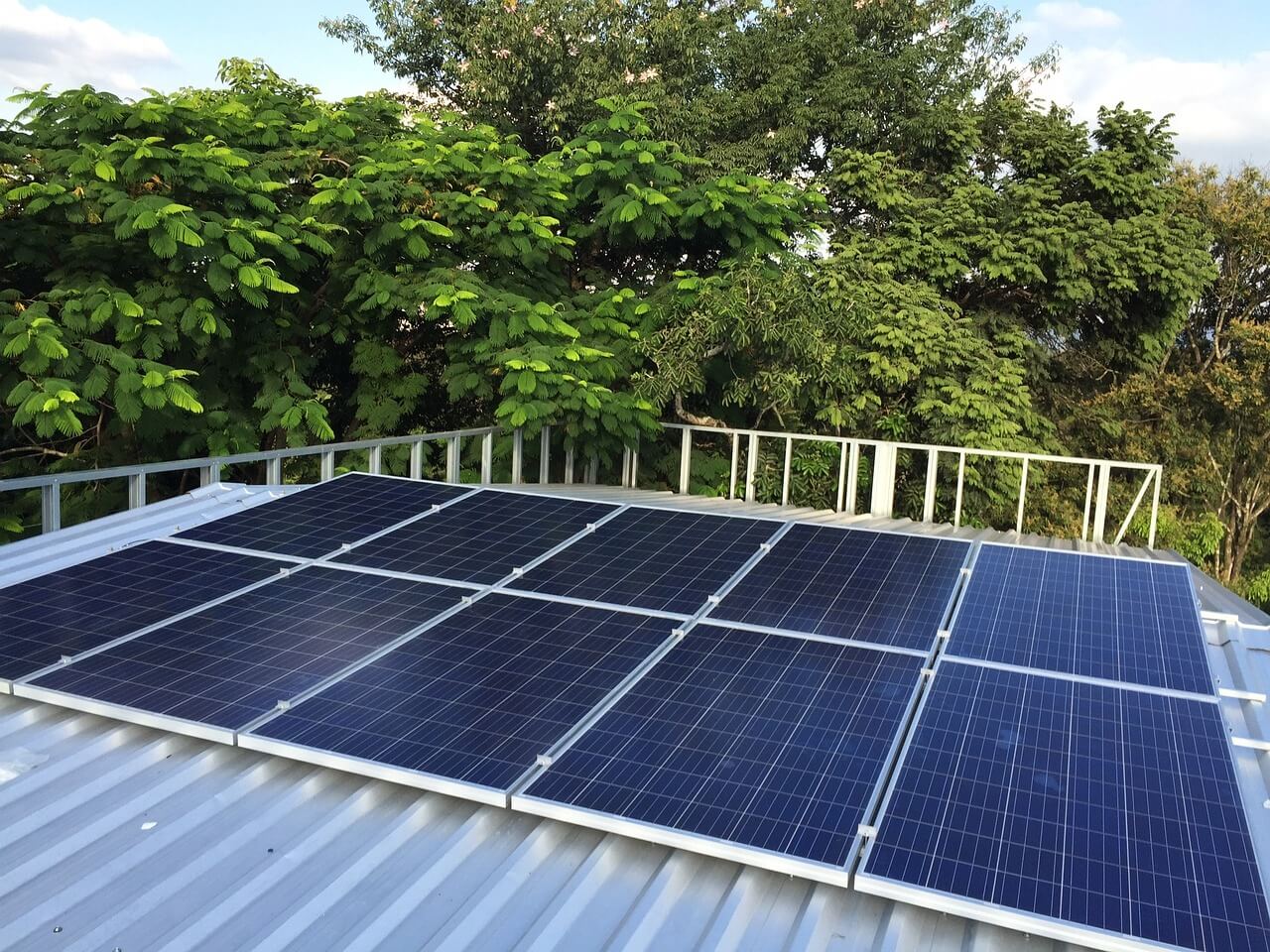
Japan installs several megawatt hours of residential battery energy storage systems each month, typically in conjunction with solar photovoltaic systems.
This is largely due to concerns about power outages at home, as Japan frequently experiences seismic activity and extreme weather events such as typhoons. Additionally, there are economic and "green" reasons, including increasing the self-consumption ratio of on-site solar generation to reduce electricity bills, especially considering that the feed-in tariff (FiT) scheme has been phased out or offers export prices far lower than before.
Customer on-site battery systems manufactured and sold by Japanese manufacturer Kyocera will be used by ENERES to help manage the grid's supply-demand balance, in collaboration with TEPCO and its distributed energy resources (DERs) subsidiary.
ENERES stated that Kyocera customers would be invited to join the project, which will run until the end of this year.
TEPCO will inform ENERES of the supply-demand situation and instruct it to charge and discharge the battery systems accordingly, while ENERES will provide Kyocera with daily control plans based on electricity spot price forecasts.
Kyocera will use ENERES's energy management system (EMS) technology to control the batteries in practice. ENERES will monitor the charging and discharging at 10-minute intervals and make corrections or adjustments as needed.
The project will evaluate the suitability of batteries for adjusting grid supply balance during peak demand and low generation periods from technical capability, required resource scale and capacity, and economic factors. Based on the evaluation results, the four collaborating companies will "continue to explore residential demand response (DR) services" and how they can contribute to Japan's goal of achieving a carbon-neutral society by 2050, ENERES stated.
ENERES Power Marketing, a subsidiary of the company, was recently selected as one of nine aggregation partners in a government-funded program aimed at expanding the demand response scale of behind-the-meter (BTM) assets, including batteries, for residential as well as commercial and industrial (C&I) customers.
Another Tokyo-based utility company, Tokyo Gas, has also begun implementing a similar residential battery program.
The company markets and installs battery energy storage systems to households and has launched a new solution service called Igniture, which participates in the supply-demand balance by controlling charging and discharging.
Tokyo Gas opened the battery control service project to customers on August 26, offering a membership fee of 10,000 yen ($70) and a subsequent monthly fee of 200 yen.
The company stated that customers would continue to use their systems for backup power and solar photovoltaic self-generation applications, while Tokyo Gas would use them for demand response applications.
The project is an updated version of Tokyo Gas's previously launched demand response service, utilizing its new brand Igniture, established last year. Tokyo Gas is also involved in Japan's utility-scale battery energy storage system (BESS) market, having signed a 20-year off-take agreement with Australian developer Eku Energy for an upcoming 30MW/120MWh project.
In another announcement released last week (August 26), ENERES stated that it had launched the third phase of a plan to evaluate how electric vehicles (EVs) and residential stationary batteries can combine to participate in supply-demand adjustments for the grid.
The Energy System Integration Social Collaboration Research Department (ESI) also involves 17 other companies and a team from the University of Tokyo. ENERES noted that this effort is being conducted before opening the power balancing market to these distributed low-voltage resources, which will open in Japan's 2026 fiscal year.
[SMM Analysis] Tokyo Utilities Incorporate Home Battery Energy Storage into Japan's Power Supply-Demand Adjustment Mix
Two major utility companies in Japan's capital, Tokyo Electric Power Company (TEPCO) and Tokyo Gas, have participated in the launch of a home energy battery storage aggregation project.
Data Source Statement: Except for publicly available information, all other data are processed by SMM based on publicly available information, market communication, and relying on SMM‘s internal database model. They are for reference only and do not constitute decision-making recommendations.
For any inquiries or to learn more information, please contact: lemonzhao@smm.cn
For more information on how to access our research reports, please contact:service.en@smm.cn
Related News
1 hour ago
Capacity and Shipments of AI Server Products Across the Entire Industry Chain Are Expected to Achieve Leapfrog Growth
Read More
Capacity and Shipments of AI Server Products Across the Entire Industry Chain Are Expected to Achieve Leapfrog Growth
The plan proposes that by 2028, the capacity and shipments of products across the entire AI server industry chain will achieve leapfrog growth, and the global market share of products in key areas such as core chips, memory, printed circuit boards (PCBs), power supply and energy storage, optical modules, and passive components will increase significantly; breakthroughs will be achieved in core chips and key products, a group of “specialized, sophisticated, distinctive, and innovative” enterprises and “single-product champion” enterprises with strong technological capabilities and significant market advantages will be cultivated in a tiered manner, and an industrial echelon featuring the coordinated development of large, medium-sized, and small enterprises will take shape.
1 hour ago
2 hours ago
Solid-State Battery Price Transmission and Commercialization Resonance
Read More
Solid-State Battery Price Transmission and Commercialization Resonance
This week solid-state battery material prices showed structural divergence: sulphide-route LPSC and lithium sulphide prices declined, while oxides remained stable. On the industrial side, the Taiblue–Yadea two-wheeler semi-solid-state battery achieved commercial rollout; BTR’s solid electrolyte orders surged; and WELION New Energy’s 2 billion yuan project was sited in Huadu, Guangzhou. Upstream price cuts resonated with downstream deployment, accelerating the commercialisation process.
2 hours ago
![[SMM Analysis] Ternary Cathode Payables May See Modest Increase in Q2](https://imgqn.smm.cn/usercenter/nVnLo20251217171728.jpg)
2 hours ago
[SMM Analysis] Ternary Cathode Payables May See Modest Increase in Q2
Read More
[SMM Analysis] Ternary Cathode Payables May See Modest Increase in Q2
Although domestic NEV sales have fallen short of expectations, seasonal recovery combined with overseas export rush demand has driven a notable rebound in domestic EV market orders during March.
2 hours ago
Related News
Capacity and Shipments of AI Server Products Across the Entire Industry Chain Are Expected to Achieve Leapfrog Growth
Mar 26, 2026 14:21
Solid-State Battery Price Transmission and Commercialization Resonance
Mar 26, 2026 13:33
[SMM Analysis] Ternary Cathode Payables May See Modest Increase in Q2
Mar 26, 2026 13:28
[SMM Analysis] Weak Trading Sentiment but Strong Cost Support, Ternary Cathode Precursor Prices Edged Up
Mar 26, 2026 11:54