Copper prices fell back after hitting new highs in May

Published: Jun 20, 2024 10:06
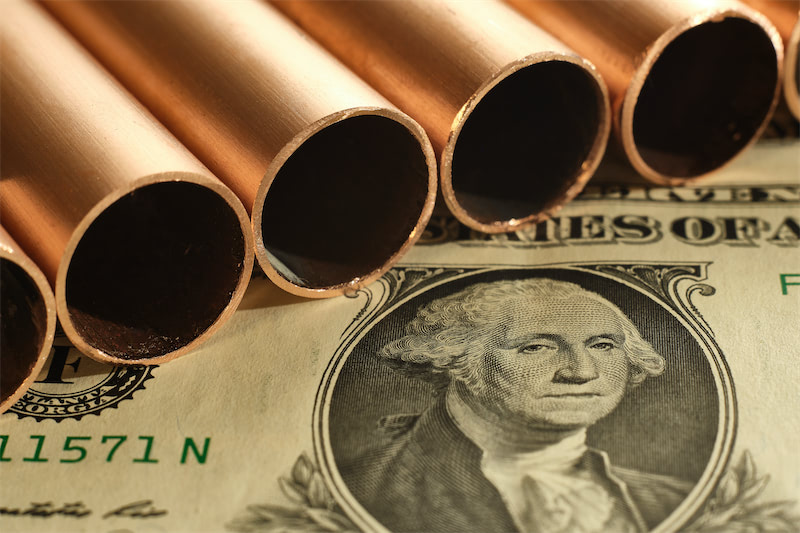
SHFE and LME copper prices, driven by multiple factors including macroeconomic factors and the COMEX copper short squeeze, continued to rise in May. However, when copper prices climbed to record highs, copper cathode consumption faced immense pressure.

SHFE and LME copper prices, driven by multiple factors including macroeconomic factors and the COMEX copper short squeeze, continued to rise in May. However, when copper prices climbed to record highs, copper cathode consumption faced immense pressure. By the end of May, as macro sentiment cooled and the COMEX short squeeze sentiment faded, copper prices began to fall back. The US Fed maintained its current policy unchanged at its May meeting, while the US April unemployment rate and non-farm payrolls far exceeded expectations. The cooling employment data led the market to anticipate an earlier rate cut by the Fed. In mid-to-late May, the US dollar index fell from above 105 to around 104, and copper futures began to accumulate upward momentum. LME copper prices exceeded $10,000/mt, while SHFE copper prices climbed above 80,000 yuan/mt. Meanwhile, COMEX copper inventory fell below 20,000 mt and continued to decrease, leading to a short squeeze in the COMEX July contract, with the price spread between COMEX and LME copper once widening to around $1,000/mt. That also boosted the sentiment in the LME and SHFE copper markets. On May 20, LME copper prices once climbed above $11,100/mt, while the most-traded SHFE copper contract almost touched the 89,000 yuan/mt mark. Shorts in the COMEX market actively prepared for delivery, and long funds withdrew, leading to a pullback in copper futures prices. At the end of May, positive news emerged again from China's real estate market, with many first-tier cities optimising housing purchase restrictions and credit policies. However, the impact of these new real estate policies on copper prices was limited. Meanwhile, China's official Manufacturing PMI for May recorded 49.5, falling below the expansion territory. Thus, copper futures prices fell.

In June, copper prices continued to decline, but downstream consumption showed a brief improvement, and social inventory slightly decreased after the Dragon Boat Festival. SHFE copper inventory remains at a historically high level, while spot discounts and contract spreads continue to attract spot traders to convert spot cargoes into futures warrants; LME copper inventory increases mainly occurred in Asian warehouses, mostly due to exports from Chinese smelters and traders in late April and early May; COMEX copper inventory continued to decline, posing a risk of another short squeeze. The SMM average operating rate of copper semis producers will slightly rebound in June, promoting a destocking cycle in social inventory. LME copper prices are expected to fluctuate between $9,600-10,500/mt, while SHFE copper prices are expected to fluctuate between 78,000-84,000 yuan/mt.

Data Source Statement: Except for publicly available information, all other data are processed by SMM based on publicly available information, market communication, and relying on SMM‘s internal database model. They are for reference only and do not constitute decision-making recommendations.

For any inquiries or to learn more information, please contact: lemonzhao@smm.cn
For more information on how to access our research reports, please contact:service.en@smm.cn
Related News
"Fluctuating Copper Prices and Tight Supply Squeeze Secondary Copper Industry, Pressuring Upstream and Downstream"
18 hours ago
"Fluctuating Copper Prices and Tight Supply Squeeze Secondary Copper Industry, Pressuring Upstream and Downstream"
Read More
"Fluctuating Copper Prices and Tight Supply Squeeze Secondary Copper Industry, Pressuring Upstream and Downstream"
This week, against the backdrop of fluctuating upward copper prices, the secondary copper industry chain showed a complex situation in which extremely tight upstream raw material supply coexisted with persistent negative margins for downstream finished products. In the secondary copper rod market, SMM data showed that the operating rate fell further to 5.45% this week, down 0.38 percentage points MoM and 25.43 percentage points YoY
18 hours ago
Chile's Water Crisis Threatens Atacama's Copper and Lithium Mining Amid 14-Year Drought
Apr 3, 2026 19:10
Chile's Water Crisis Threatens Atacama's Copper and Lithium Mining Amid 14-Year Drought
Read More
Chile's Water Crisis Threatens Atacama's Copper and Lithium Mining Amid 14-Year Drought
Chile’s most pressing crisis at present is the issue of water resources. The Atacama Desert in Chile is one of the driest regions in the world and also the core area for copper and lithium ore extraction. The local area has experienced a drought for as long as 14 years, and reservoir storage has fallen to only about 30%. For miners, water resources are not a secondary issue, but an indispensable key production factor in such processes as ore processing, dust suppression, and equipment cooling. The decline in ore grade has further exacerbated the predicament
Apr 3, 2026 19:10
Trump Adjusts Metal Tariffs, Applies 50% Rate to Consumer Prices Under Section 232, Details Unclear
Apr 3, 2026 19:09
Trump Adjusts Metal Tariffs, Applies 50% Rate to Consumer Prices Under Section 232, Details Unclear
Read More
Trump Adjusts Metal Tariffs, Applies 50% Rate to Consumer Prices Under Section 232, Details Unclear
US President Trump adjusted the national security tariffs on imports of steel, aluminum, and copper, lowering the tariff rates on derivative products made from these metals, streamlining compliance procedures, and preventing the declared value of imports from being understated.A senior Trump administration official said that, under a proclamation signed by Trump, the US would continue to maintain a 50% import tariff on imports of metal commodities such as steel, aluminum, and copper pursuant to Section 232 of the Trade Act of 1974, but would apply this rate to the price paid by US consumers. It is currently unclear how the selling price—and the resulting tariffs—would be determined.
Apr 3, 2026 19:09