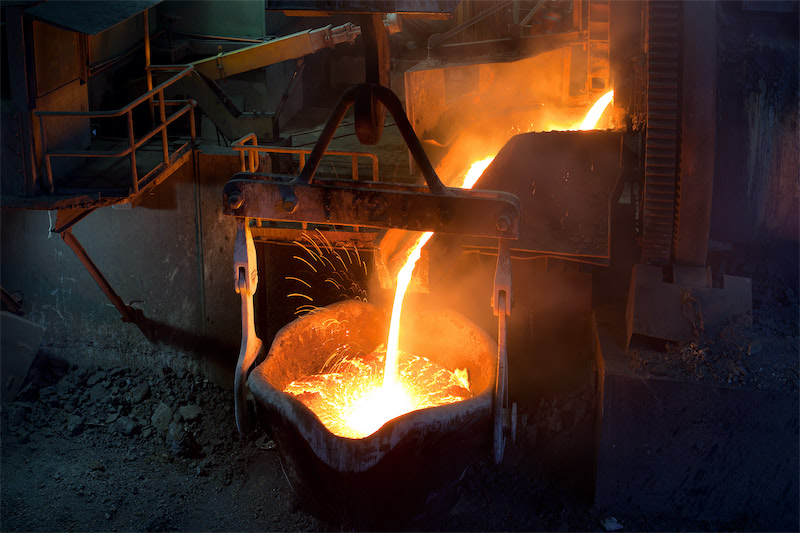
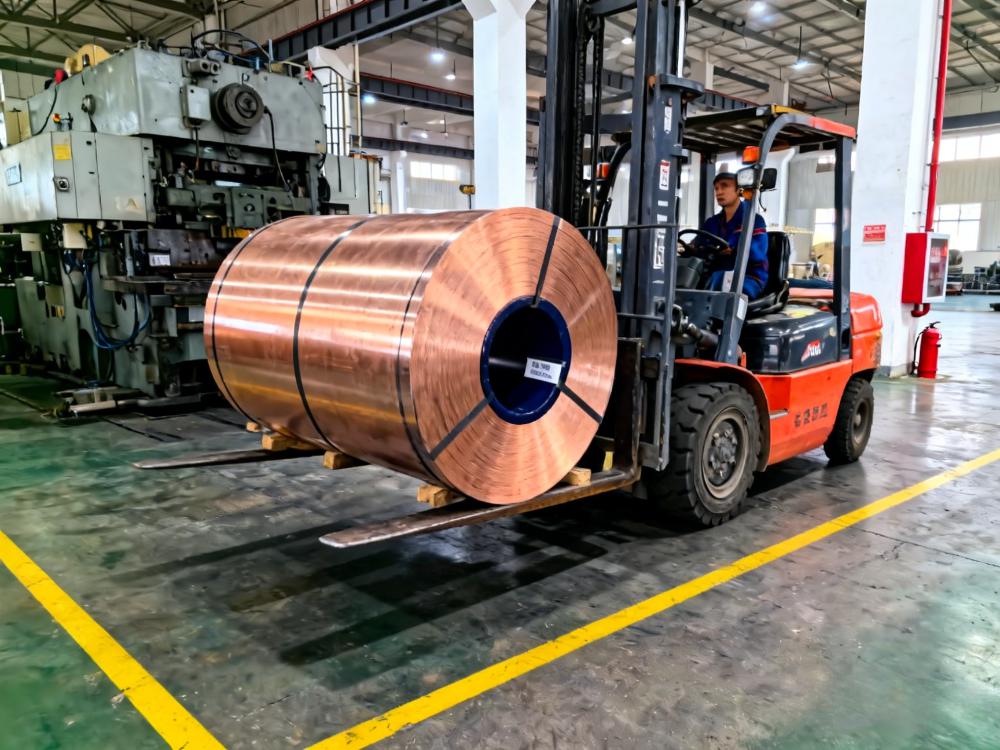
At the 2023 SMM 12th Metal Industry Annual Conference-SMM Metal Mining Forum co-sponsored by SMM, Chongqing Jiangjin District People's Government, and Shanghai Futures Exchange, Yu Hongnan, deputy general manager of PSEI Group, introduced the development of the four major international mining companies, China’s overseas joint venture iron ore projects and the advantages of Australian bauxite.
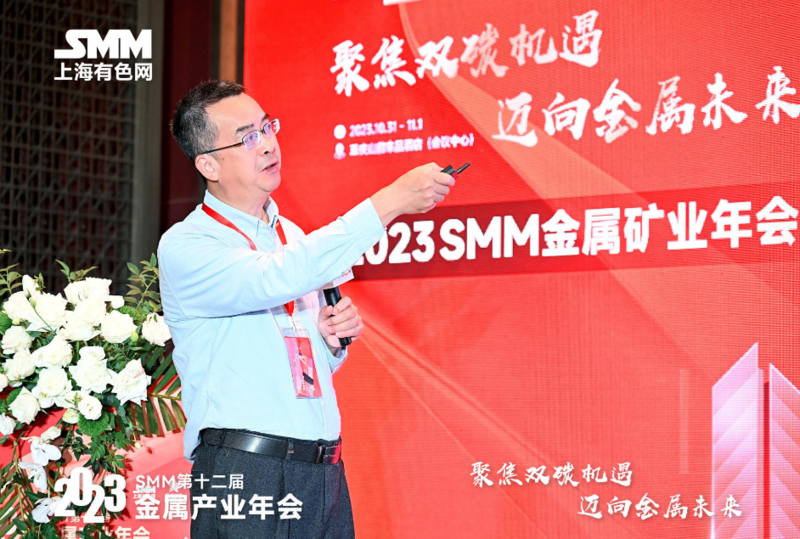
The development of the four major international mining companies
1. Rio Tinto Group
Until the 1960s-1990s, the history of iron ore development in Australia was actually the history of iron ore development of Rio Tinto and BHP.
Pilbara's iron ore deposits are mainly distributed in four major mining areas: South Central District, Hamersley District, North Pilbara District and Kimberly District. These iron ore deposits have thick ore bodies, large scale, good continuity and stable ore grade. Before the 1990s, the main companies directly engaged in iron ore development were Hamersley, Robe River and BHP.
Rio Tinto owns nine mines in Western Australia, three of which are joint ventures. At the same time, it also has about 700 kilometers of railway lines, a terminal at the port of Dampier and other infrastructure. Among them, Hamersley is the most important iron ore subsidiary of Rio Tinto. Its iron ore output reached 125 million mt in 2008 , accounting for about 65% of the group's total output. Its second largest iron ore subsidiary is Robe River, which produced 50 million mt of iron ore in 2008. In addition, the iron ore output of the Canadian branch IOC in 2008 was 16 million mt. Through the implementation of a series of expansion projects, Rio Tinto plans to increase the production capacity in the Pilbara region to 220 million mt per year in 2012, and the company's total production capacity will be close to the level of 300 million mt.
2. BHP
The mines of BHP are located in the Pilbara region of Western Australia, namely Newman, Yandi and Goldsworthy, and in the C mining area south of Yarrie.
BHP is a joint venture company, which consists of four major joint ventures: Newman (BHP 85%, Itochu 8%, Mitsui 7%), Yandi (BHP 85%, Itochu 8%, Mitsui 7%) 7%), Goldsworthy (BHP 85%, Itochu 8%, Mitsui & Co. 7%) and Jimblebar (BHP 51%, China's Wuhan Iron and Steel, Maanshan Iron and Steel, Shagang and Tangshan Iron and Steel with 10% each, Itochu 4.8% and Mitsui & Co. 4.2%).
The joint ventures are all operated by BHP which also mines and markets the products. All iron ore produced by the mines is transported to the Port of Hedland through two railway lines of 426 kilometers and 215 kilometers respectively, and then shipped to the international iron ore market for sale. The types of iron ore include Newman fines, Newman lumps, Yangdi fines, Yangdi lumps, MAC fines, etc. which are well known in China. Output in 2022 was 285 million mt.
3. FMG
The full name of FMG is Fortescue Metals Group.
FMG was established in 2003, and the first shipment of ore was shipped to China in May 2008.
In the early days, FMG invested a lot of money in Australia, building railways, storage yards, high-voltage wires, water supply pipelines, etc., and mining iron ore in the desert of Western Australia.
In 2009, mines under the Chichester production area such as Cloudbreak were put into production one after another. At the end of 2010, the annualized production (output of the month * 12 months) reached 45 million mt, which began to affect the global iron ore supply and demand balance.
From 2012 to 2013, mines such as Firetail and Kings in the Solomon production area were put into production. In 2012, the annual output exceeded 60 million mt.
In 2016, the output was 165 million mt, and in 2022, the output was 193 million mt.
4. VALE
VALE is known as the "Crown Jewel" of Brazil and the "Engine of the Amazon". It is the world's largest iron ore producer and one of the world's largest nickel producers. It also produces manganese ore, ferroalloys, coking coal and thermal coal, copper, gold, silver and cobalt and other mineral products.
VALE's iron ore production peaked at 385 million mt in 2018.
a. Southeastern system
The Southeast System mine is located in the Iron Square region of Minas Gerais and is divided into three mining complexes: Itabira (composed of two mining areas and two main beneficiation plants) and Minas Centrais.
b.Southern system
The Southern System Mine is located in Minas Gerais, Brazil. The mines of VALE's subsidiary Minerandes Brasileiras Reunidas SA (MBR) are operated at the parent company level under asset lease agreements.
c.Northern system
The Northern System, located in the Carajás region of Pará State, Brazil, is VALE's largest iron ore producing area, and the iron ore it produces (with Fe grade of 67%) is considered to be of the highest quality in the world.
d.Central-western system
The central-western system is located in the state of Mato Grosso do Sul and mainly consists of the Urucum mining area and the Corumbá mining area. In September 2009, VALE completed the acquisition of the Corumbá mine, which mainly produces lump ore.
e. Samarco
Samarco is a joint venture operated by VALE and BHP. The two companies each hold 50% of the shares. It started operations in 2000. It is located in the Iron Four Corners region of Minas Gerais like the Southeastern System and the Southern System, composed of two mines - Alegria and Germano, three beneficiation plants, three pipelines, four pelletising plants and a port.
The mines and beneficiation plants are located in Minas Gerais. The Alegria and Germano mining areas are located in Mariana in the Iron Four Corners region of Minas Gerais, in the same area as the Mariana mining area in the southeastern system. The pelletizing plant and port are located in Espirito Santo, and the two places are connected by the world's longest iron ore transportation pipeline (about 400 kilometers in length).
On November 5, 2015, one of Samarco's tailings dams (Fundao) broke, causing Samarco's production to come to a standstill. Samarco gradually resumed operations on December 23, 2020. It used one of the three iron ore beneficiation plants in the Germano comprehensive mining area to process ore, and used one of the four pelletizing plants in the Ubu comprehensive mining area to make pellets. Its annual production capacity reached 7 million mt to 8 million mt, accounting for 26% of Samarco's total production capacity.
Output in 2022 was 307 million mt.
China’s first overseas joint venture iron ore mine - Channar Iron Ore Mine
The Sinosteel and Channar projects have experienced many changes in the international iron ore market.
Sinosteel and Rio Tinto adhere to the business philosophy of mutual benefit and win-win cooperation, lead international cooperation, and provide reliable raw material support for the rapid development of China's steel industry.
The market has proven that the Channar joint venture project is a successful initiative, providing irreplaceable and valuable experience for Chinese enterprises to “go global”. For 33 years, the Channar Project has been operated in a transparent and efficient joint venture model, and is still known as a "pioneering cooperation method."
Shougang Peru Iron Ore Mine
On December 1, 1992, Shougang Corporation and the Peruvian government officially signed an equity purchase and sale contract for Peruvian Iron Ore Mine.
Since 1993, Shougang Hierro Peru has invested a total of $2 billion. Production increased from less than 3 million mt in 1992 to 13.41 million mt in 2017. More than 4,500 jobs have been created directly and indirectly.
In 2018, the completion ceremony of the 10 million mt of iron ore concentrate expansion project of Shougang Hierro Peru New Zone was held.
In 2019, after the completion of the 10 million mt of concentrate expansion project, Shougang Hierro Peru's annual production capacity will reach more than 20 million mt, reaching the world's first-class level and becoming an important support point for Shougang's overseas development strategy.
Shougang Hierro Peru is China's first mining investment project in South America. It has been a bitter experience for ten years and has provided experience for latecomers. It has made a huge contribution to Shougang’s profits.
CITIC Iron Ore Mine
In 2006, it acquired 1 billion mt of mineral rights for $415 million. Designed iron ore concentrate capacity is 24 million mt/year.
In 2013, the first batch of iron ore concentrate was shipped.
In 2021, profits were nearly $1 billion. Annual output was 21 million mt.
Opportunity and judgment
1. In 1986, Mr. Hancock, chairman of the Australian Hancock Company, came to China and requested to jointly develop the Hop Dowm iron ore mine. The resource reserves are 550 million mt and the hematite TFe grade is 57%. This mine fell into the hands of Rio Tinto.
2. In 1994, Brazil's Vale planned to jointly develop the Carajas iron ore mine with China, with reserves of 200 million mt and hematite TFe grade of 67%. It is a rich ore resource with an annual output of 7 million mt of finished ore. The investment was only $30 million, and the cooperation did not realize.
3. In 1994, Brazil's United Mining Industries Company Limited (UMI) planned to jointly develop the Kabo Xaffir iron ore mine with China. The hematite TFe grade is 65% to 66%. It is a rich ore resource with an annual output of 7 million mt of finished ore and an investment of $120 million. It took both China and Brazil half a year to compile a feasibility study report, and they lost a good opportunity to jointly develop a mine in Brazil.
4. Chinese steel mills cooperate with Australian Portman Company to develop the Curianosai iron ore mine in southern Western Australia. In order to occupy the Chinese market, Australia gaves Chinese steel mills a 25% stake. The steel mills did not need to invest, as long as they imported 2 million mt of iron ore every year for a couple years. But the project did not succeed.
5. In 2006, FMG went to China to seek cooperation and financing. Only Valin Group agreed to invest and opportunities were missed.
South American tailings pond collapses
From 2014 to 2019, there were three large tailings pond collapses in the American mining industry.
1. On August 4, 2014, the Polley tailings pond in Canada collapsed;
2. On November 5, 2015, the Fundao tailings pond in Brazil collapsed, killing 17 people and polluting a 700km river. After the tailings dam failed, 45 million cubic meters of toxic sludge gushes out like a tide, flowing into the nearby Doce River and eventually reaching the Atlantic Ocean, more than 600 kilometers away from the dam. The accident is widely considered Brazil's worst environmental disaster ever.
3. On January 25, 2019, the Feijiao tailings pond in Brazil collapsed, killing 270 people and polluting a 450km river.
Iron ore prices | influence on China’s mining and steel industries
Fluctuations in iron ore prices affect the fate of China's iron ore and steel industries.
Development of Simandou iron ore deposit, increasing the equity of Chinese enterprises by 60 million mt/year
The Simandou iron ore deposit in Guinea is an important milestone in the development of the project.
On October 7, 2023, Baowu Resources and Simangdu Win Alliance signed a confirmation letter of the shareholder agreement for the mining joint venture company of the Simangdu Northern Block Project at the Baowu Building.
Changes in bauxite mines
The current situation of the iron ore industry has provided experience for copper mines and bauxite mines.
The history of China's iron ore industry demonstrates China's bauxite global strategy.
Chinese companies are actively developing bauxite mines.
China’s bauxite imports surged
Chinese companies’ bauxite development in Guinea
Chinese companies mining bauxite include: WCS, State Power Investment Corporation, TBEA, Jinbo, Henan International, and Chinalco; foreign companies include: Alcoa, Emirates Aluminum, British Aluminium, Rusal, Guinea Mining, etc.
In 2017, the bauxite output of the Win Alliance in Guinea was 28 million mt and 42 million mt in 2018.
In March 2020, Chinalco’s first batch of Guinean bauxite arrived in China
The first batch of bauxite transported from the Boffa mine in Guinea arrived in China. The first batch of bauxite, with a scale of 55,000 mt, arrived at Rizhao Port in Shandong. The project had an annual output of 12 million mt.
In October 2020, Chinalco shipped 30 million mt from Guinea.
Advantages of Australian bauxite
(1) History of bauxite mining in Australia’s Weipa Plateau:
The Weipa Plateau has a long history of high-quality bauxite mining; COMALCO began production in Weipa in 1963; in 2008, the first long-term contract for Weipa bauxite was signed with China; Metro established the Hill bauxite mine100 kilometers north of Weipa in 2018; in 2018, Rio Tinto established the Amrun mine.
Weipa Plateau has bauxite grade: aluminum 50%+; silicon 8-12%; Rio Tinto has 571 million mt of mineral resources; with export capacity of 24 million mt/year.
Metro has 130 million mt of resources; high-alumina bauxite ore, direct shipment of ore; export capacity of about 4 million mt/year; it is expanding to 7 million mt/year.
(2) Quality and reserves:
Australia has proven bauxite reserves of about 9 billion mt, ranking second in the world, and its annual production capacity is more than 100 million mt, ranking first in the world.
Australian Metro Mining Company is a listed mining company in Australia. It plans to produce 600-700 million mt per year and has enough bauxite reserves for another 20 years of mining.
The quality of Metro's ore is similar to Rio Tinto's Weipa mine.
(3) Northern Australian bauxite has huge shipping advantages
Shipping time to China: 36 days from Guinea vs 11 days from northern Australia.
(4) Distance and time
The sea shipping time from Australia to China's northern port is 10-11 days, and the time to China's southern port is only 8.5-9 days. It takes 45-50 days for Guinea bauxite to arrive at ports in north China, and 43-48 days to arrive at ports in south China, with a gap of more than a month.
The sea transportation distance from Australian bauxite to China's North Port is only more than 3,000 nautical miles, only a quarter of the long distance from Guinea.
Development of China’s overseas copper mines—CNMC Zambia-Chambishi Copper Mine
In 1998, China took over a copper mine in Zambia, Africa, that had been dormant for 11 years.
After investing up to $1.17 billion in construction and technology upgrades, 20 years later, this notorious unfinished mine turned into the first digital mineral deposit on the African continent, achieving revenue of $2.2 billion.
In 2021, the mine's copper product output was 250,100 mt, and its sulfuric acid product output was even stronger, reaching 718,000 mt, setting the best results since the investment.
Summary of 30 years of development of China’s overseas resources
(1) Over the past 30 years, China’s rapid development has promoted the development of metal mines around the world.
(2) Iron ore resources are the distress and helplessness of China’s resource industry. The iron ore mining industry and the steel industry are in a dilemma. Whether the Simandou project can change the market situation remains to be seen.
(3) Bauxite mines that were taken over by Chinese companies avoided the same mistakes as the iron ore industry.
(4) For copper mines and other non-ferrous resources, private enterprises (Zijin, China Molybdenum) and state-owned enterprises are competing globally, and each has taken the lead and has great potential.
![Macro Factors Weigh on Copper Prices, SHFE Copper Inter-Month Spread Occasionally Sees Backwardation Structure [SMM Shanghai Spot Copper]](https://imgqn.smm.cn/usercenter/CJXfS20251217171710.jpg)
![Copper prices and inventory both declined, overall trading was slightly better than last Friday [SMM South China Spot Copper]](https://imgqn.smm.cn/usercenter/CaDcj20251217171711.jpg)