Magnesium Exports Saw Seasonal Pullback in April, Domestic and External Demand Resonance to Support Full-Year Growth Momentum
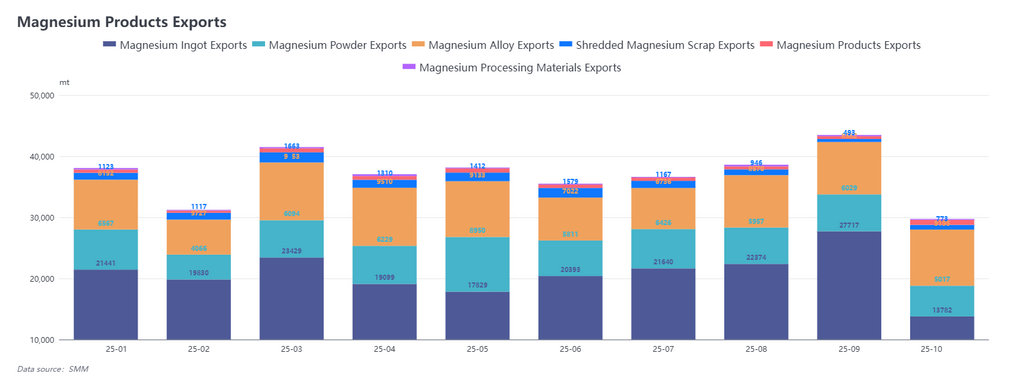
In April 2026, China's magnesium product exports totaled 39,000 mt, down 21.9% MoM and up 2.7% YoY. Cumulative magnesium product exports from January to April 2026 reached 162,000 mt, up 9.6% YoY. Data-wise, exports surged significantly in March, partly absorbing February's export demand and front-loading some orders from the following two months, making the MoM pullback in April a normal phenomenon. Overall, 2026 export volumes have consistently exceeded year-ago levels, indicating more positive factors in the export market this year and an improving overall trend.
Key favorable factors for exports included: first, continued advancement in magnesium alloy die-casting and melt-casting technologies, with Europe and North America actively developing related processes, driving demand for magnesium alloy and granule products; second, a rebound in end-user NEV production and sales, especially in the European market where automotive magnesium consumption gradually increased after weathering the impact of the tariff crisis; third, the early-year policy on dual-use items targeting Japan reversely stimulated stockpiling demand, pushing Japan's export volumes to stay high throughout Q1 and rank among the top in the Asian market.
Magnesium Product Exports Diverged in April: Magnesium Ingot Held Steady, Magnesium Powder Rose Slightly, Magnesium Alloy Pulled Back
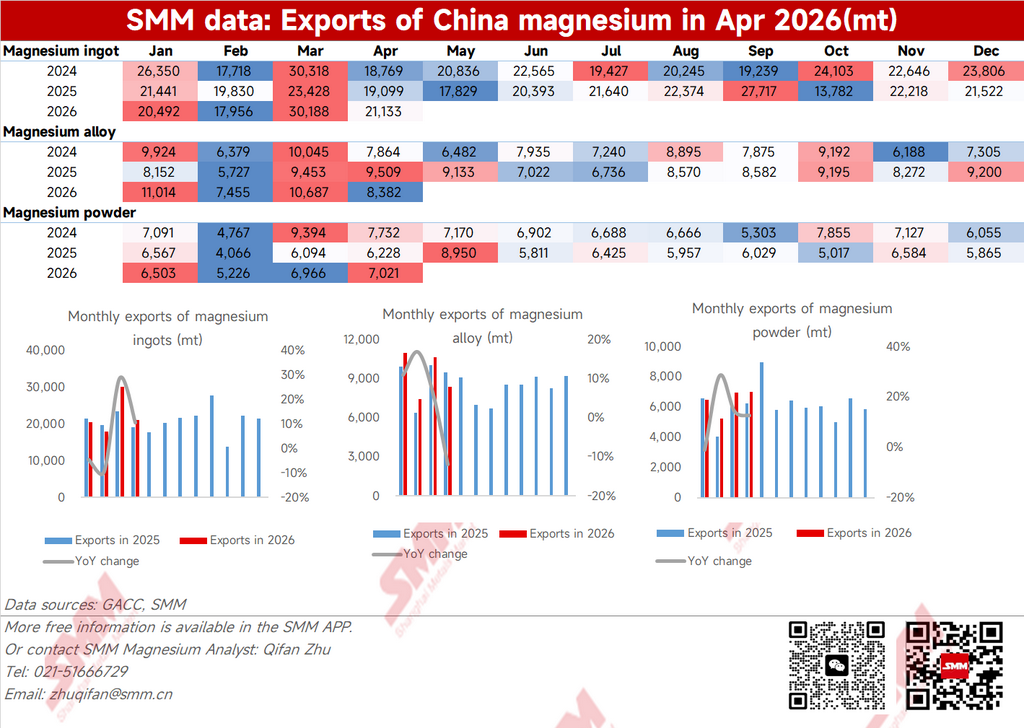
By product, magnesium ingot exports maintained normal levels in April, while magnesium alloy exports pulled back.
In April 2026, magnesium ingot exports were 21,000 mt, down 30% MoM and up 7.12% YoY on a cumulative basis. April magnesium ingot exports were primarily shipments against earlier orders. In mid-to-late March, downstream tender orders in the aluminum industry were relatively concentrated, supporting magnesium ingot exports at the monthly average level. Some Middle Eastern orders remained unshipped due to elevated ocean freight rates and were mostly postponed to May. New export orders in April were relatively small overall, and exports maintained a stable trend.
In April 2026, magnesium powder exports were 7,021 mt, up 0.79% MoM and up 12.02% YoY on a cumulative basis. North American market orders showed signs of recovery, with large export orders mostly placed in early March. Compared with the same period last year, exports increased. European market procurement volume was also gradually recovering, and the full-year outlook for magnesium powder exports remained relatively optimistic.
In April 2026, magnesium alloy exports were 8,382 mt, down 21.57% MoM and up 14.3% YoY on a cumulative basis. Since late March, the supply-demand mismatch cycle in the magnesium alloy market had largely ended, and the demand gap narrowed. The domestic trade market showed divergence, with factories in Anhui and Shanxi having relatively full order schedules, while new factories in Shaanxi had insufficient orders. On the export side, overall shipments were stable, with new orders released normally after the concentrated exports in March, mainly concentrated among major mainstream producers. On a cumulative YoY basis, magnesium alloy export demand continued to show a favorable trend.
Europe Firmly Ranks First in Magnesium Ingot Exports, Japan Shows Significant Compliance Premium, North America Leads Magnesium Alloy Demand Growth
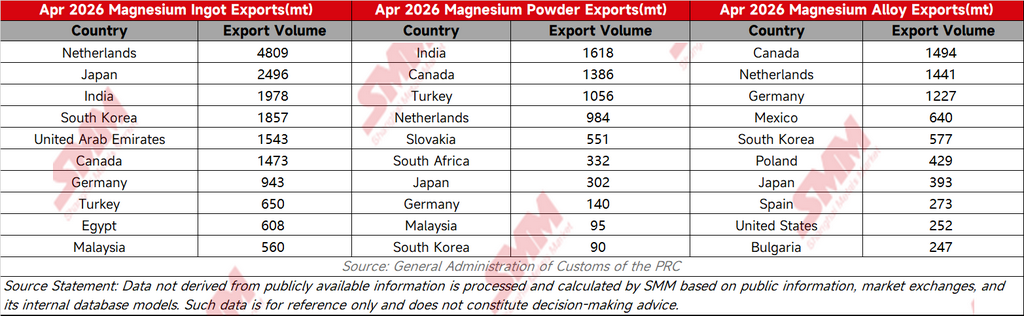
From export data by destination, the European region centered on the Netherlands remained the primary export destination for magnesium ingots. Unlike the concentrated shipments in March, April exports were mainly driven by regular monthly orders, with overall demand remaining stable.
Notably, exports to the Japanese market still ranked among the top. From January to April 2026, China's cumulative magnesium ingot exports to Japan reached 10,000 mt, accounting for 53% of the full-year 2025 total exports to Japan (19,000 mt). In terms of average export prices, the average export price to Japan in April was $2,641/mt, while the SMM magnesium ingot FOB average price during the same period was $2,500/mt. The notably higher export price to Japan reflected that the export process to the Japanese market had fully shifted toward compliance. Given that end-use demand in Japan had not changed significantly, this high-price export may still be a continuation of the panic stockpiling logic on the demand side since the dual-use items controls in January, and whether subsequent exports will pull back remains to be observed. Overall, magnesium exports are developing toward a healthier and more compliant direction.
Magnesium powder side, exports to India rose significantly in April, possibly related to its accelerating infrastructure construction and growing demand for desulfurization agents. Magnesium powder demand in the Canadian market stayed high.
Magnesium alloy side, Canada and the Netherlands continued to rank among the top export destinations. Currently, driven by leading traders in the North American market, magnesium die-cast parts have formed substantial market demand and sales channels. North America is expected to lead magnesium alloy market demand and application development this year. As an important hub in North America, Canada is taking on more distribution and processing functions for deep-processed magnesium products.
Magnesium Exports See Positive Resonance Between Domestic and External Demand, Deep Processing Transformation Has a Long Way to Go
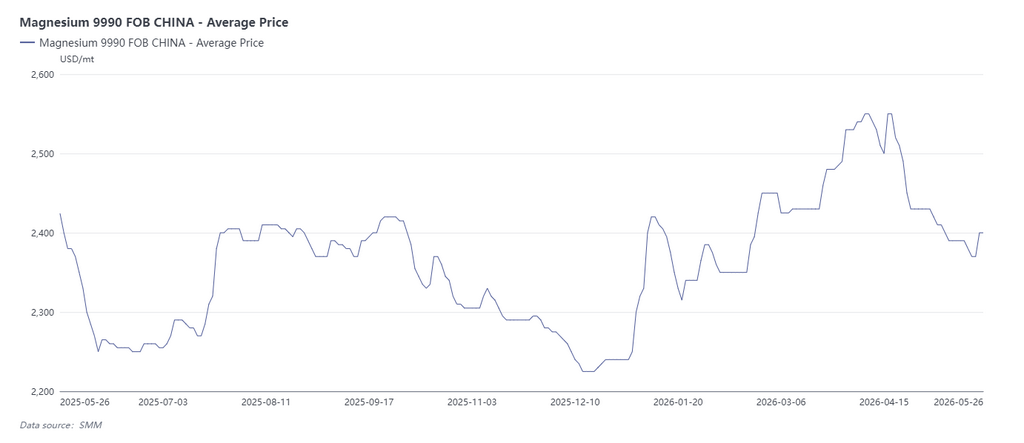
Returning to the magnesium ingot FOB price level, prices fluctuating at highs from late March to mid-April suppressed the placement of large-volume orders. Large foreign trade orders were notably insufficient at the beginning of Q2, and May exports are expected to remain under pressure, mainly fulfilling previously placed orders. It is worth noting that ocean freight rates to the Middle East pulled back somewhat in May, and some goods ordered in February are expected to be shipped. Magnesium prices retreated from highs since mid-to-late April and have now approached the lows seen at the beginning of the year. Supported by both costs and demand, downside room is limited. As prices gradually return to a reasonable range, foreign trade orders are expected to shift from a wait-and-see stance to active placement, thereby boosting a rebound in ex-China demand in Q3.
Overall, April magnesium export data released positive signals of sustained improvement throughout the year. The export window continues to stay open, and market demand is gradually shifting from being primarily driven by domestic trade at the beginning of the year to a joint effort of both domestic and external demand. Judging from export prices to Japan, some markets are accelerating toward compliance, which is also an inevitable trend for the medium and long-term magnesium foreign trade market. However, China's export products currently still mainly consist of raw material products such as magnesium ingots, magnesium alloys, and magnesium powder, with deep-processed products still accounting for a relatively low share. Promoting high-value-added magnesium products to the international market remains a key direction for the future development of China's magnesium industry.