On March 31, 2026, India's Ministry of Steel issued an order extending mandatory Bureau of Indian Standards (BIS) certification requirements for stainless steel flat products through September 30, 2026. The exemption covers three Indian standards — IS 6911, IS 5522, and IS 15997 — and applies to all imports with bills of lading dated no later than the end of September. The document was brief, offering no stated rationale beyond the mechanical continuation of the previous waiver.
Read in isolation, the order looks routine. Read against the past three months of Indian industry and policy activity, it tells a more complicated story.
A Contradiction That Isn't
The timing creates an obvious tension. In the same period that New Delhi has been quietly extending import flexibility, the Indian Stainless Steel Development Association (ISSDA) has been publicly pressing the government to strengthen trade defenses, push back against Chinese overcapacity, and crack down on transshipment through Vietnam. Simultaneously, Jindal Stainless — India's largest stainless steel producer — disclosed that fuel shortages had forced its plants to operate at reduced loads, while the Ministry of Steel was separately lobbying the Ministry of Petroleum and Natural Gas to prioritize LPG allocations for steel mills.
Protecting domestic industry on one hand, extending import relief on the other. How does that add up?
It does — if you step back far enough to see the full picture. India's stainless steel sector is in the middle of a long capacity transition, scaling from roughly seven million metric tons toward an eleven-million-ton target. Domestic demand is expanding at seven to eight percent annually. But production capacity in the 200-series and 300-series flat product categories is still ramping up, and the supply gap is real. What the government wants, eventually, is tighter control over imports. What the economy currently needs is room to breathe. The BIS exemption extensions are not a softening of the protectionist position — they are an acknowledgment that pulling the lever too fast would cause domestic shortages and downstream disruption.
India is not oscillating between two positions. It is moving in one direction, just more slowly than it would prefer.
The Supply Gap Behind the Waiver
The clearest explanation for the current extension comes from the previous one. When India's Press Information Bureau announced the November 2025 deferral, it cited two specific reasons: importers had already made large advance payments to overseas mills, making an abrupt cutoff legally and commercially disruptive; and more fundamentally, domestic supply of 200-series and 300-series flat products remained insufficient to meet demand.
This round, the official order offers no such explanation — but the underlying logic is unchanged. The supply gap has not closed.
The structural reasons are not hard to find. India currently produces only around fifteen to eighteen percent of its domestic nickel requirements. The remainder is imported. Nickel is the critical input for 300-series stainless steel, and a self-sufficiency rate that low means every incremental ton of 300-series capacity added domestically creates additional raw material exposure abroad. ISSDA's calls to designate chromium as a critical mineral and to permanently remove import duties on scrap and ferroalloys are a direct reflection of this vulnerability — to protect the finished product, you first have to secure the raw materials, and for now, that still means relying on imports. It is the classic industrial policy chicken-and-egg problem: you cannot close the door on imports until domestic capacity is ready, but domestic capacity cannot be fully ready until the upstream supply chain is stable.
An Energy Crisis Undermines the Protectionist Narrative
If raw material dependency is India's chronic condition, the industrial gas shortage is the acute one.
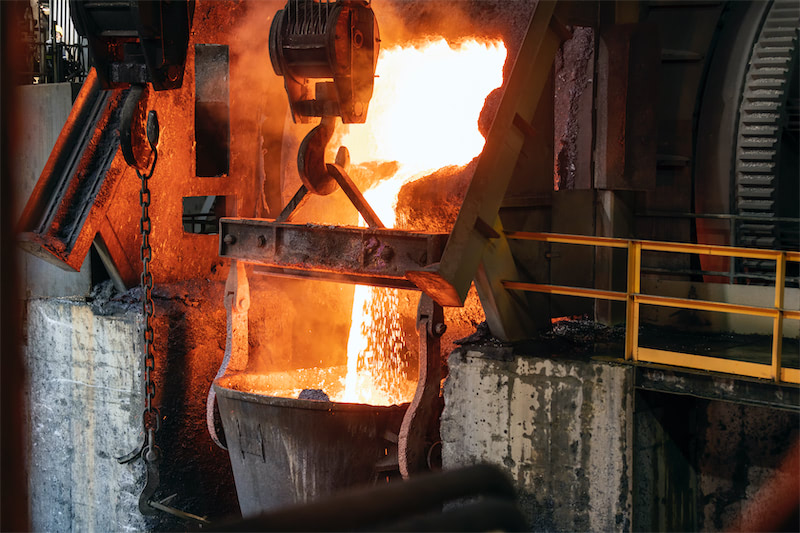
In mid-March, Jindal Stainless disclosed publicly that its facilities had been forced to operate at what it termed "rationalized lower loads" due to fuel shortages. The company confirmed that stainless steel production is heavily dependent on propane, LPG, and natural gas across multiple process stages. By late March, the situation had escalated to the point where the Ministry of Steel was formally requesting emergency LPG priority for steel mills from the petroleum ministry — a request that has not yet translated into relief, as the current priority framework assigns preferential access to other critical-use sectors.
The irony is sharp. At the very moment the government is working to build walls around the domestic stainless steel industry, it is also scrambling to keep the furnaces of that same industry lit. Trade barriers can buy time; they cannot fix an energy supply problem. If India's industrial gas constraints are not addressed systematically in the near term, actual production ramp-up will lag behind planned capacity additions — and the import gap will remain wider for longer, not narrower.
What This Means for Overseas Suppliers
For international stainless steel suppliers monitoring the Indian market, the picture through the end of September 2026 is relatively clear: the import window remains open, compliance flexibility for BIS-exempted shipments is still available, and supply shortfalls in 200-series and 300-series flat products continue to create genuine commercial space.
But this is not a signal that India is opening its market. It is a signal that India is not yet ready to close it. The distinction matters.
India is simultaneously expanding domestic capacity, reinforcing its trade defense architecture, and pushing for upstream raw material localization. Each of those tracks, as it matures, narrows the space that currently exists for overseas suppliers. As domestic flat product capacity comes online, as BIS certification requirements are enforced across more product categories, and as India strengthens its ability to detect and penalize transshipment, the flexibility embedded in today's exemptions will progressively shrink.
The more defensible strategy for overseas suppliers is to use the current window to build genuine compliance capability — product certification, supply chain documentation, stable customer relationships — rather than to treat each exemption extension as a signal that the next one is guaranteed.
The Bigger Question
India's situation is not unusual. Any emerging industrial nation pursuing rapid capacity expansion in a capital-intensive sector will face the same sequence: ambitious targets, infrastructure that cannot keep pace, and a policy apparatus pulled in multiple directions at once. Trade protection buys time. It does not build nickel mines, stabilize gas supply chains, or accelerate standards infrastructure.
On the three dimensions that will ultimately determine whether India's stainless steel expansion reaches its targets — nickel self-sufficiency, reliable industrial energy supply, and comprehensive BIS implementation — none appears close to resolution. The road from seven million to eleven million metric tons runs through all three.
The exemptions continue. Capacity targets hold. Trade barriers rise. India's stainless steel story is entering its most consequential — and most uncertain — chapter yet.
Written by: Bruce Chew | bruce.chew@metal.com | +601167087088 | Nickel & Stainless Steel Analyst