Russia Launched Industrial Production of Rare-Earth Magnesium Alloys, While Germany’s "Magnesium-Based Hydrogen Slurry" Technology Faced Systematic Questioning [SMM Survey]

Published: Mar 19, 2026 14:56
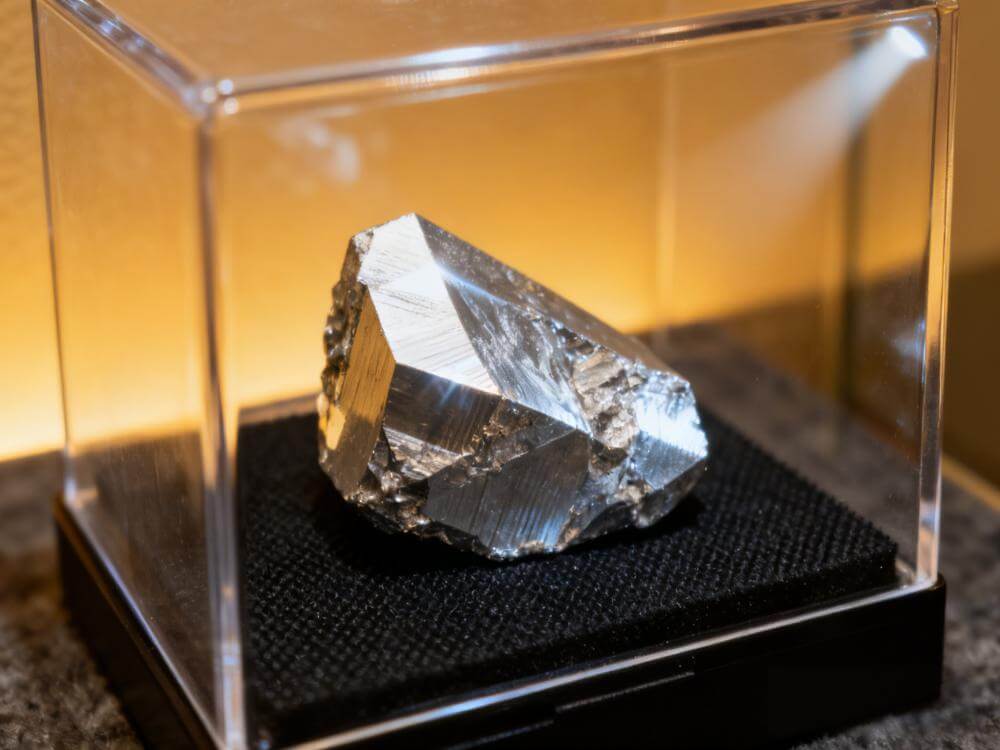
Russia’s Solikamsk Magnesium Works recently launched industrialised production of magnesium alloys containing rare earth elements such as neodymium, cerium, and lanthanum. The products combine lightweight properties with high strength and are mainly targeted at sectors including aerospace and automotive manufacturing. The plant accounts for 100% of Russia’s rare earth compound production and 75% of its magnesium capacity, and this capacity expansion further consolidates its position in the strategic metals sector. Meanwhile, the “magnesium-based hydrogen slurry” technology developed by Germany’s Fraunhofer Institute has sparked controversy. Independent analysis indicated that the technology’s overall system efficiency is only about 10, its energy density is comparable to that of lithium batteries, its cost is far higher than expectations, and its recycling chain has yet to form a closed loop. It is only suitable for demonstration scenarios at the hundred-watt level and is unlikely to achieve commercial application. The two pieces of news reflect the different technological pathways and industrialisation prospects of magnesium-based materials in high-end manufacturing and energy storage.

Russia’s Solikamsk Magnesium Plant Launches Industrial Production of Rare Earth-Containing Magnesium Alloys

Solikamsk Magnesium Plant (SMP), a subsidiary of Russia’s Rosatom, recently announced that it has launched industrial production of magnesium alloys containing rare earth elements such as neodymium, cerium, and lanthanum. These new-type materials combine lightweight and high-strength properties, can significantly reduce structural weight and improve equipment energy efficiency, and are recyclable, classifying them as “green engineering” materials. The products are mainly targeted at aerospace, automotive manufacturing, energy, and the oil and gas industries. The introduction of rare earth additives enhanced the material’s load resistance and extended the service life of key components. Solikamsk Magnesium Plant began magnesium production in 1936 and started extracting rare earth metals from loparite concentrate in 1958. At present, the plant accounts for 100% of Russia’s capacity for rare earth compounds, niobium, and tantalum, as well as 75% of magnesium and 4% of titanium production.

Fraunhofer’s “Magnesium-Based Hydrogen Paste” Technology Faces Questions Over System-Level Efficiency and Cost

The Powerpaste technology developed by Germany’s Fraunhofer Institute recently sparked renewed discussion. Based on magnesium hydride, the technology releases hydrogen through reaction with water for use in fuel cells, aiming to avoid the safety and cost challenges of high-pressure hydrogen storage. However, independent analysis indicated that its full-system performance fell far short of promotional claims.

The core issues lie in energy density and efficiency. According to estimates, producing 1 kg of hydrogen requires about 10 kg of hydrogen paste and 9 kg of purified water, for a total weight of 19 kg, corresponding to a system-level energy density of only about 0.3-0.4 kWh/kg, comparable to lithium batteries rather than superior to them. Upstream magnesium production consumes as much as 80-110 kWh/kg hydrogen, resulting in an electricity-to-electricity full-chain efficiency of only about 10%. The reaction process releases a large amount of heat, about 19 kWh/kg hydrogen, requiring complex thermal management. Hydrogen output rates are limited, and purification is required to make it compatible with proton exchange membrane fuel cells. On the cost side, magnesium production energy consumption alone raised costs by $4-$11/kg hydrogen, not yet including system hardware and logistics.

Fraunhofer’s claimed cost of 2 euros per kilogram of hydrogen paste covers only raw materials, while the full system cost is an order of magnitude higher. The recycling chain has also not been closed, as smelting magnesium hydroxide back into magnesium requires high energy consumption. The analysis held that the technology is suitable only for demonstration scenarios in the hundreds-of-watts to kilowatt range and cannot meet large power demands such as ships. In essence, it is “energy destruction” rather than energy storage, and no system-level advantage exists.


Data Source Statement: Except for publicly available information, all other data are processed by SMM based on publicly available information, market communication, and relying on SMM‘s internal database model. They are for reference only and do not constitute decision-making recommendations.

For any inquiries or to learn more information, please contact: lemonzhao@smm.cn
For more information on how to access our research reports, please contact:service.en@smm.cn
Related News
Magnesium Market Holds Up Well as Cost Support and the Tug-of-War Between Sellers and Buyers Continues [SMM Magnesium Weekly Review]
Common.Time.hoursAgo
Magnesium Market Holds Up Well as Cost Support and the Tug-of-War Between Sellers and Buyers Continues [SMM Magnesium Weekly Review]
Read More
Magnesium Market Holds Up Well as Cost Support and the Tug-of-War Between Sellers and Buyers Continues [SMM Magnesium Weekly Review]
[SMM Magnesium Weekly Review: Magnesium Market Held Up Well, With Cost Support and a Tug-of-War Between Sellers and Buyers Continuing] This week, the overall magnesium industry chain held up well, with prices of all products generally raised. The raw material dolomite market remained stable, with ample supply and steady demand. Magnesium ingot prices consolidated at highs. At the beginning of the week, supported by rising energy costs such as ferrosilicon and coke and tight spot availability, prices jumped by 300 yuan/mt. Subsequently, downstream fear of high prices emerged, transactions failed to keep pace, and prices consolidated at highs. In foreign trade, the center of magnesium ingot FOB quotes moved up to $2,440-2,470/mt. Wait-and-see sentiment outside China remained strong, but influenced by bullish expectations in China, forward orders were gradually locked in. Magnesium powder prices remained firm, with strong cost support. Export data increased YoY, while domestic trade was mainly driven by just-in-time procurement. The benchmark price of magnesium alloy held up well, but the release of new capacity led to increased supply, processing fees stayed in the doldrums, and the market showed a pattern of strong supply and weak demand. Overall, cost support remained the core driver behind magnesium prices fluctuating at highs, while downstream acceptance of high prices was limited, and the market may continue this tug-of-war in the short term.
Common.Time.hoursAgo
[SMM Analysis] China's Magnesium Exports Surge in Jan-Feb 2026, Geopolitical Turmoil Threatens Q2 Outlook
Mar 23, 2026 17:59
[SMM Analysis] China's Magnesium Exports Surge in Jan-Feb 2026, Geopolitical Turmoil Threatens Q2 Outlook
Read More
[SMM Analysis] China's Magnesium Exports Surge in Jan-Feb 2026, Geopolitical Turmoil Threatens Q2 Outlook
[SMM Analysis] China's Magnesium Exports Surge in Jan-Feb 2026, Geopolitical Turmoil Threatens Q2 Outlook
Jan-Feb 2026 China magnesium exports reached 72.7kt, up 3.4kt YoY. Magnesium alloy led with +33.1% YoY, orders booked through April. Magnesium ingot fell 6.8% due to weak European demand, while powder grew 10.3%. However, US-Israel conflict disrupted Middle East aluminum plants, halting regional magnesium orders and pressuring Q2 outlook despite the strong start.
Mar 23, 2026 17:59
Magnesium Market Tug-of-War: Geopolitics, Cost Support, Demand Surge vs Ample Supply [SMM Analysis]
Mar 20, 2026 15:56
Magnesium Market Tug-of-War: Geopolitics, Cost Support, Demand Surge vs Ample Supply [SMM Analysis]
Read More
Magnesium Market Tug-of-War: Geopolitics, Cost Support, Demand Surge vs Ample Supply [SMM Analysis]
[Magnesium Prices Stuck in Dilemma: Geopolitical Tensions, Cost Support, and Demand Surge Clash with High Supply] Reviewing the recent magnesium market, magnesium prices repeatedly fluctuated within the 16,600-16,700 range, with a relatively slow pace.
Mar 20, 2026 15:56
Register to Continue Reading
Gain access to the latest insights in metals and new energy
Already have an account?sign in here