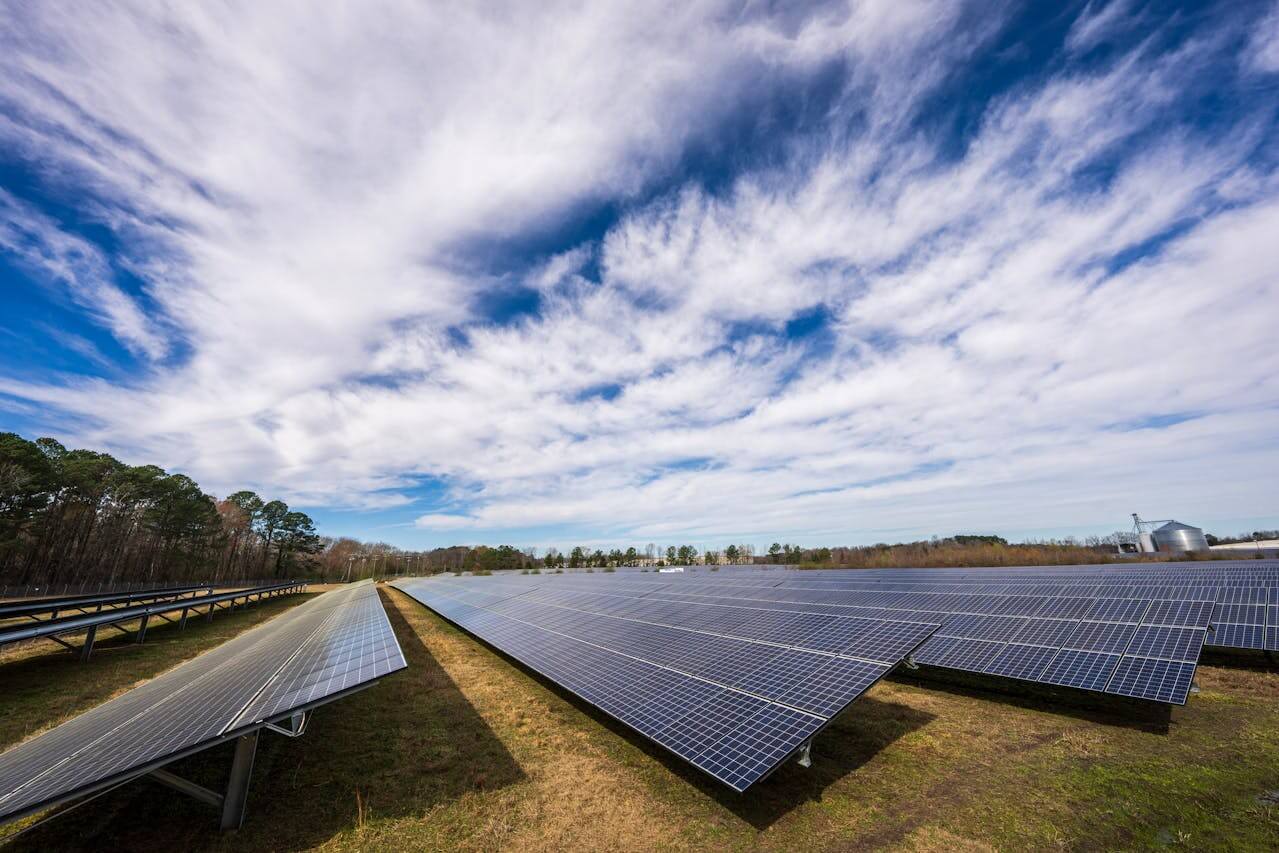
At the end of March 2026, the Philippine Department of Energy (DOE) officially announced that, in response to the severe volatility in global fossil fuel prices triggered by geopolitical conflicts in the Middle East, it is urgently advancing the accelerated grid connection of 22 renewable energy projects by April 2026. This batch of projects has a total installed capacity of 1,471 MW, within which 12 solar photovoltaic (PV) projects hold absolute dominance, accounting for a cumulative capacity of 1,284 MW.
This accelerated grid integration is an unconventional capacity release, serving as an emergency mechanism launched under multiple pressures. The Philippine power structure has long been highly dependent on imported coal and oil. Recent tensions in the Middle East have directly driven up the risk premium of global fossil fuels. The DOE explicitly stated that accelerating the grid integration of domestic renewable energy is a strategic necessity to "manage supply risks and protect consumers from the shock of high electricity prices." Philippine President Ferdinand R. Marcos Jr. previously committed to prioritizing 200 power generation projects over the next three years. The 22 projects expedited in this round are all in the late stages of construction or final testing. The intervention of administrative power has forcibly bypassed the historically tedious compliance and grid approval processes.
Viewing this 1,471 MW emergency grid connection list holistically, the distribution of technological routes exhibits extreme asymmetry:
|
Energy Type |
Number of Projects |
Installed Capacity (MW) |
Percentage |
|---|---|---|---|
|
Solar PV |
12 |
1,284 |
87.3% |
|
Hydropower |
6 |
48.23 |
3.3% |
|
Biomass Energy |
2 |
38 |
2.6% |
|
Integrated Renewable Energy Storage System (IRESS) |
1 |
20 |
1.4% |
|
Wind Power |
1 |
13.56 |
0.9% |
Among them, solar PV has established a monopolistic position as a "rapidly deployable energy source" by virtue of its short construction cycle and highly modular engineering characteristics. Hydropower and wind power projects, constrained by complex environmental assessments and lengthy civil engineering cycles, are incapable of undertaking short-term emergency power supply tasks. However, the staggering 87.3% share of intermittent power generation, coupled with a mere 20 MW of standalone energy storage connecting to the grid concurrently, exposes an extreme imbalance in the storage-to-capacity ratio. This structural defect will directly transfer the absorption pressure onto the transmission and distribution networks.
The commercial closed-loop of PV assets lies in power absorption, not merely in grid connection. The DOE is currently conducting urgent cross-departmental coordination with the National Grid Corporation of the Philippines (NGCP), the Energy Regulatory Commission (ERC), and the Independent Electricity Market Operator of the Philippines (IEMOP) to resolve legacy transmission and interconnection issues. This concurrently reveals the deep-seated infrastructure bottlenecks in the Philippine market. System Impact Studies (SIS) for the Philippine grid have been severely backlogged. With 1.28 GW of PV capacity injecting centrally into localized grids (particularly high-load areas like Luzon), the projects are highly susceptible to passive curtailment risks post-connection due to line thermal stability constraints, provided there is an absence of matching transmission line expansion.
In the absence of synchronized commissioning of utility-scale Battery Energy Storage Systems (BESS), the grid's frequency regulation and the "duck curve" effect of the net load curve will deteriorate sharply, placing immense pressure on peak-shaving capabilities. Although the Philippines is recently advancing mega-scale independent projects such as MTerra (targeting 3.5 GW PV / 4.5 GWh storage), the NGCP will be forced to dispatch higher-cost fossil fuel units for deep peak-shaving to manage this dispersed 1.28 GW of newly added capacity.
The DOE's acceleration of 1.28 GW of PV grid integration is a quintessential energy control maneuver of "trading time for security." For upstream equipment manufacturers and EPC enterprises, this policy green light expedites the Commercial Operation Date (COD) of existing under-construction projects, significantly shortening the payback period for investors and confirming the improvement in the Philippine market's policy fulfillment capabilities. Furthermore, it exerts a catalytic impact on mid-to-long-term market development. With the abrupt leap in installed scale, the core dynamic of the Philippine renewable energy industry will rapidly shift from "permit acquisition and project development" in the early stages to "grid access and flexible resource allocation" in the later stages. Grid upgrades and grid-side standalone energy storage will represent the next blue-ocean segments in the Philippines, demanding urgent capital injection and offering extremely high investment certainty.
![[SMM PV News] RayGen Deploys 1 MW Solar and Thermal Storage System in Brazil](https://imgqn.smm.cn/usercenter/QGlKw20251217171730.jpg)
![[SMM PV News] JinkoSolar Terminates Vietnam Solar Cell Project Amid 'US' Tariffs](https://imgqn.smm.cn/usercenter/Lttjf20251217171742.jpg)
![[SMM PV News] Italy's 'ARERA' Backs 16 GWh Target for 2029 'MACSE' Storage Auction](https://imgqn.smm.cn/usercenter/rnXTf20251217171741.jpg)