Humanoid Robots Have Arrived—What New Opportunities Are There for Automotive Lightweight Materials? IRON Humanoid Robot Materials Expert Huang Jiaqi Confirms

Published: Jul 13, 2026 18:33

The development of NEVs is driving lightweight materials toward higher performance and greater efficiency. Now, the rapid growth of the humanoid robot industry is also prompting automotive material enterprises to focus on new application directions.

What new requirements do robots have for lightweight materials?

Which mature automotive material systems can be directly applied to robots?

What new application opportunities will emerge for materials such as aluminum alloys, magnesium alloys, and composites?

How should automotive supply chain enterprises plan ahead to enter the robot industry chain?

These questions are becoming the focus of attention for an increasing number of material enterprises and R&D teams.


From September 10 to 11, ASCC2026·SMM (8th) Automotive Supply Chain Conference will invite IRON humanoid robot material expert Huang Jiaqi to deliver a keynote presentation titled “Automotive & Humanoid Robot Lightweighting Challenges and Material Selection Analysis.”
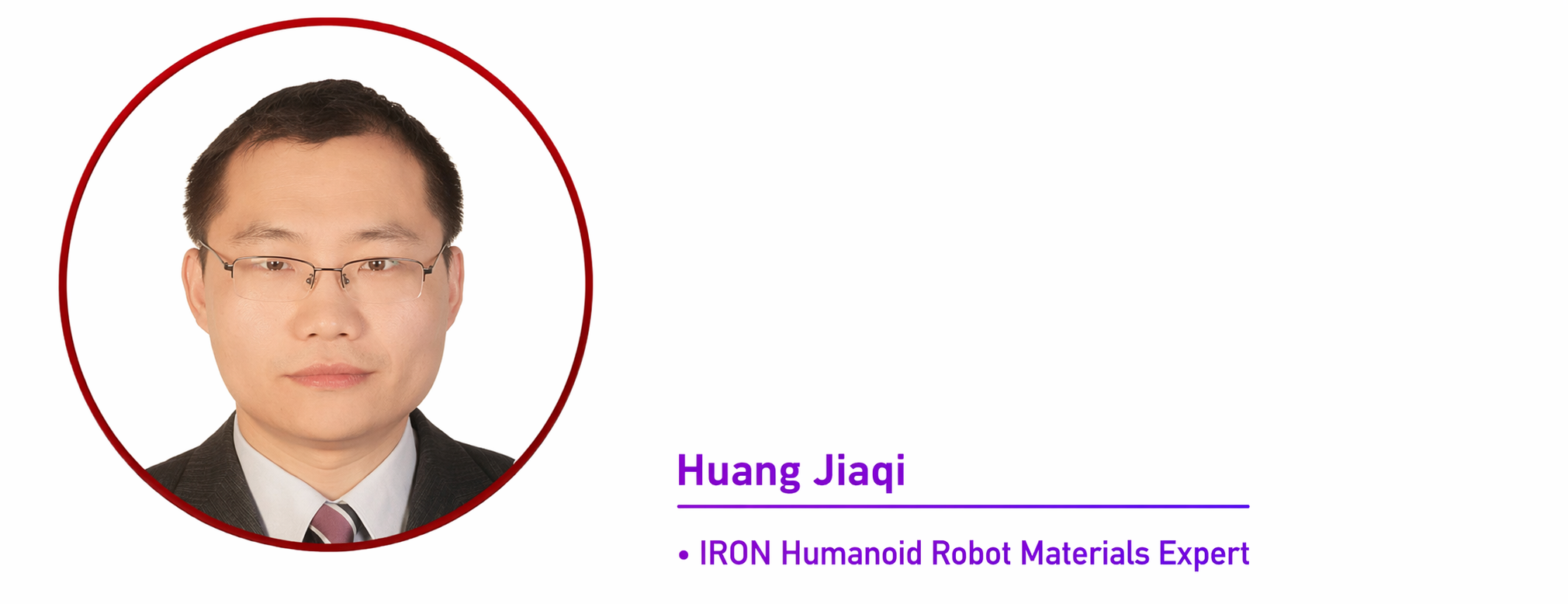

Dr. Huang Jiaqi graduated from the School of Materials Science and Engineering at Harbin Institute of Technology and previously served as Director of the Materials Department at JAC Group and XPeng Motors, with long-term research on automotive materials and lightweighting technologies and extensive experience in developing and applying NEV materials.

He currently serves as Distinguished Expert at the National Industrial Energy Conservation and Green Development Evaluation Center, Expert for National High-tech Enterprise (New Materials) Evaluation, Expert for Unified Local Standards in the Yangtze River Delta Region of Shanghai Municipal Administration for Market Regulation (Energy Conservation and Environmental Protection), Evaluation Expert for Manufacturing Strong Province Projects of Guangdong Provincial Department of Science and Technology and Anhui Provincial Department of Industry and Information Technology (NEV), and also Secretary General of the Anhui Composite Materials Industry Association.


In this presentation, he will combine automotive industry lightweighting practices and revolve around the similarities and differences in material applications between automobiles and humanoid robots, lightweight material selection strategies, and future development directions to exchange ideas, offering valuable industry insights for material enterprises, processing enterprises, and vehicle R&D teams.


For conference attendance and inquiries, contact Manager Jiang at 13258390905 (same number on WeChat).

Data Source Statement: Except for publicly available information, all other data are processed by SMM based on publicly available information, market communication, and relying on SMM's internal database model. They are for reference only and do not constitute decision-making recommendations.

Images in this article contain AI-translated captions for reference only.

For any inquiries or for more information, please contact: lemonzhao@smm.cn
For more information on how to access our research reports, please contact:service.en@smm.cn
Related News
[JSW Steel posts Q1 crude steel production growth]
Common.Time.minsAgo
[JSW Steel posts Q1 crude steel production growth]
Read More
[JSW Steel posts Q1 crude steel production growth]
[JSW Steel posts Q1 crude steel production growth]
JSW Steel reported consolidated crude steel production of 6.59 million tonnes for the June quarter, up 3% year-on-year. This includes 6.35 million tonnes from Indian operations and 240,000 tonnes from its Ohio plant. A lengthy maintenance shutdown of Blast Furnace 3 at Vijayanagar limited overall growth. Excluding this, production grew around 15%, driven by full ramp-up of JVML and improved utilization at Dolvi. Domestic operations maintained 94% capacity utilization during the quarter. The quarterly comparison excludes Bhushan Power and Steel, transferred to JSW-JFE Steel in March 2026.
Common.Time.minsAgo
[South Korea's steel exports rebound on AI data center demand]
Common.Time.minsAgo
[South Korea's steel exports rebound on AI data center demand]
Read More
[South Korea's steel exports rebound on AI data center demand]
[South Korea's steel exports rebound on AI data center demand]
South Korea's steel exports showed signs of recovery amid strong global demand for AI data center construction. According to South Korea's Ministry of Trade, Industry and Energy, steel exports reached 2.14 billion USD in June, up 9.6% year-on-year, marking the first export growth in 14 months. The US market was the main driver, with steel export volume to the US rising 58.3% in the first half to 2.2 million tonnes from 1.39 million tonnes. Notably, exports of reinforcing bars used in data center framework construction surged to about 483,500 tonnes from 14,560 tonnes a year earlier.
Common.Time.minsAgo
[AISI: US raw steel production in week ending July 11 increases y-o-y]
Common.Time.minsAgo
[AISI: US raw steel production in week ending July 11 increases y-o-y]
Read More
[AISI: US raw steel production in week ending July 11 increases y-o-y]
[AISI: US raw steel production in week ending July 11 increases y-o-y]
US raw steel output reached 1.84 million net tons (approx 1.669 million tonnes) for the week ending July 11, 2026, at 79.7% capability utilization, up 3.9% from 1.771 million net tons (78.2%) a year earlier, but down 0.9% from the previous week. Year-to-date production through July 11 totaled 49.952 million net tons (approx 45.31 million tonnes) at 78.8% utilization, up 5.9% from 47.171 million net tons in the same period last year.
Common.Time.minsAgo