I. Event Characterization: Not a Sudden Move, but a Long-Planned Institutional Response
On June 22, 2026, China’s Ministry of Commerce (MOFCOM) issued Announcement No. 23 of 2026, adding 10 US entities to its export control list pursuant to the Export Control Lawand the Regulations on the Export Control of Dual-Use Items. The list includes not only eight defense-oriented firms—such as Aveox, Inc. (drone/defense motors), Red Cat Holdings, Inc., Teal Drones, Inc., IMSAR, LLC (military radar), Jaia Robotics, Inc., Ball Aerospace & Technologies Corp., Oshkosh Defense, LLC, and L3Harris Maritime Services, Inc.—but also the two pillars of the US rare earth industry: MP Materials Corp. (operator of the Mountain Pass mine) and USA Rare Earth, Inc. (developer of an integrated magnet supply chain). The measures are unequivocal: a ban on exporting dual-use items to these entities, a prohibition on any global party transferring or supplying China-origin dual-use items to them, and an immediate halt to ongoing exports unless special permission is granted by MOFCOM. In its statement, the Ministry characterized this action as a reciprocal countermeasure against the US abuse of export controls and disruption of global supply chains—signaling that the Sino-US contest over the “definition of supply chain security” has evolved from tariffs and entity lists into a precision strike on critical minerals.
II. The Trigger: The Dangerous Expansion of the US Section 1260H List
To understand Beijing’s move, one must look back to June 8. On that date, the US Department of Defense updated its “Chinese Military Companies List” (CMC List) under Section 1260H of the FY2021 National Defense Authorization Act, adding 80 parent companies and 188 affiliated Chinese entities in a single sweep. What crossed Beijing’s red line was not the existence of the list itself, but its qualitative shift: First, the erosion of boundaries, as the US broadly redefined “military” to ensnare purely civilian and commercial enterprises—including BYD, NIO, CATL, EVE Energy, Hesai Technology, ChangXin Memory Technologies, WuXi AppTec, Alibaba, Baidu, and leading PV manufacturers—even citing participation in routine industrial policies such as the “Little Giant” program as evidence of military links. Second, the escalation of effect, moving from mere labeling to supply chain severance: a ban on direct US military procurement effective June 30, 2026, followed by a prohibition on indirect procurement via third parties by June 30, 2027. As Washington sought to “weaponize” China’s most competitive private industrial chains through administrative fiat, Beijing’s response via the Export Control Law became an inevitable exercise of sovereignty.
III. Target Deconstruction: Why MP and USAR? Striking at the Achilles’ Heel of US Rare Earth Autonomy
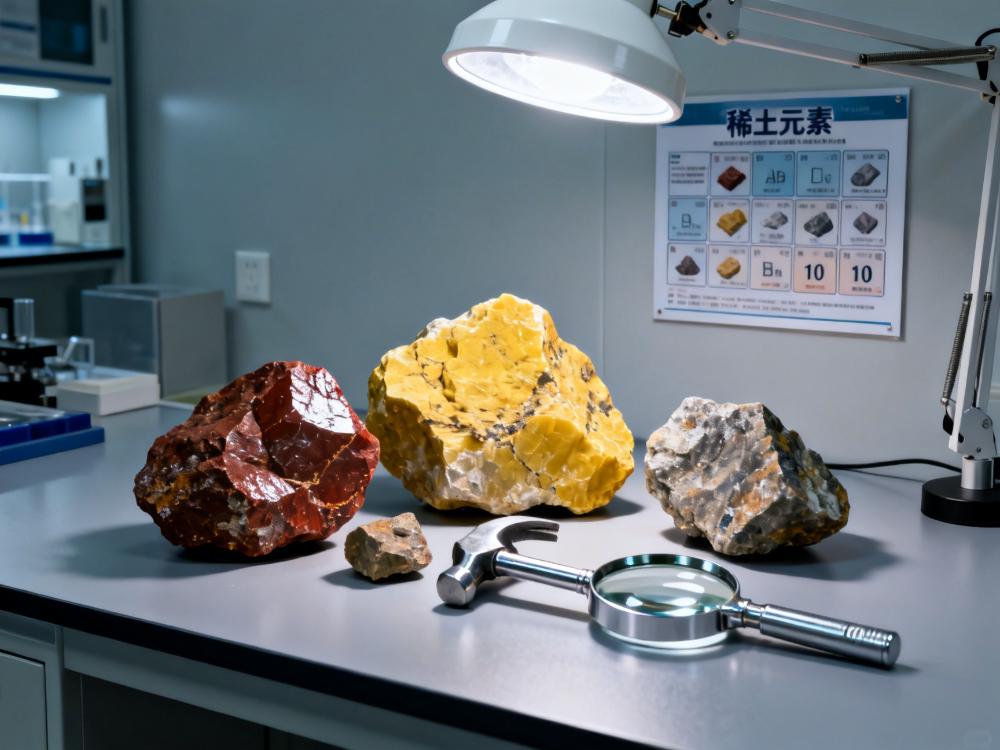
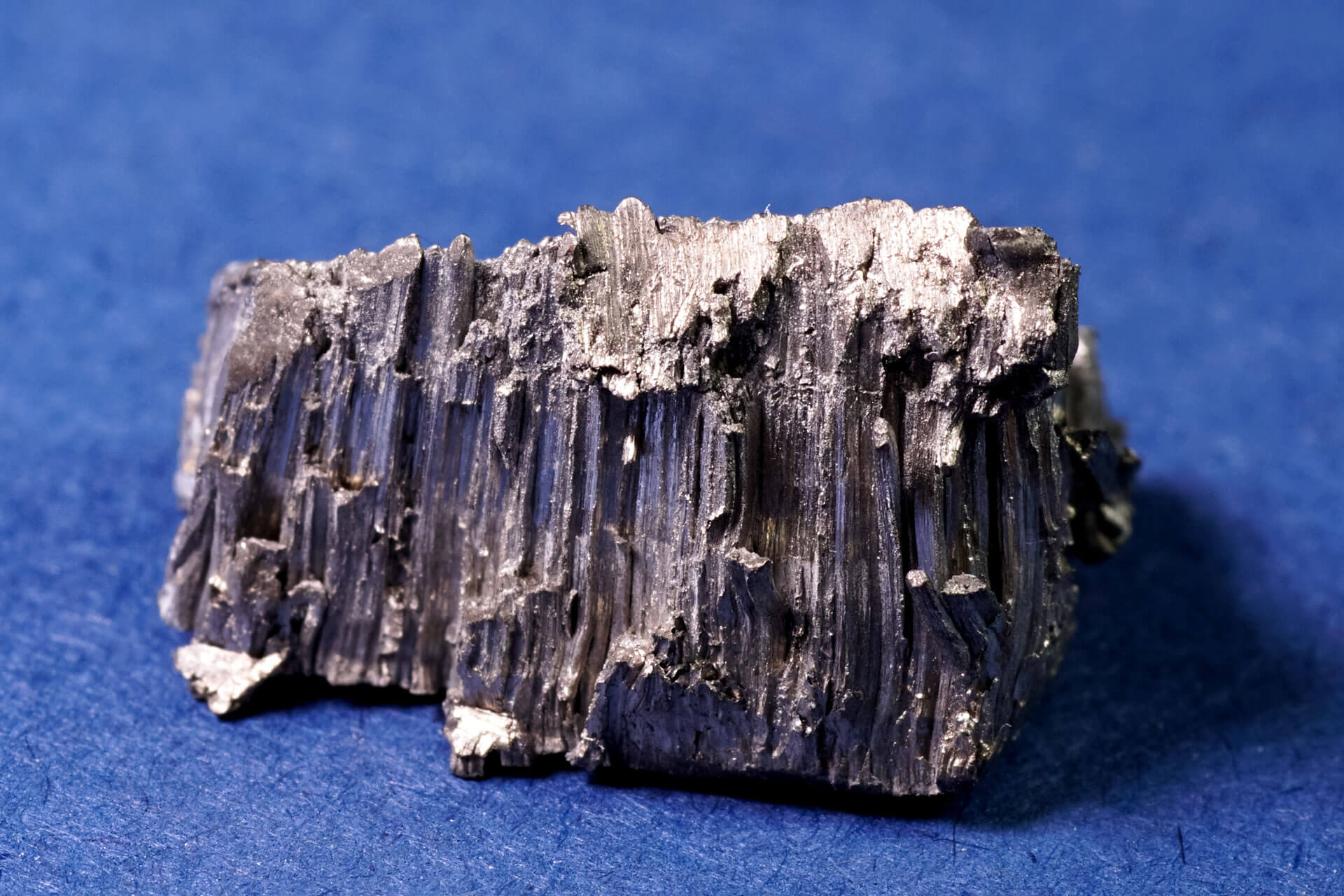
The most strategic element of the list lies in the inclusion of MP Materials and USA Rare Earth. MP Materials operates the Mountain Pass mine—the only operating rare earth mine in the United States and the cornerstone of America’s “rare earth independence” narrative. Its fatal vulnerability, however, is that it is rich in ore but poor in processing capacity. Approximately 90% of global rare earth separation and refining capacity resides in China, and Mountain Pass concentrates have long relied on Chinese facilities for high-purity processing. Heavy rare earths (dysprosium, terbium) separation remains a near-monopoly of Chinese technology. This control does not ban rare earth ore exports per se; rather, it severs access to critical China-origin processing aids, specialty chemicals, and technical collaboration networks. For USA Rare Earth, the blow is even more structural. Its flagship Oklahoma magnet manufacturing facility is not scheduled to commence production until 2028, meaning its 2026–2028 construction window is critically dependent on Chinese process validation and material support. Inclusion on the control list significantly increases the risk of further delays, trapping the project in a vicious cycle of rising costs and financing difficulties.
IV. Impact Assessment: Minimal Disruption to Chinese Exports, Structural Pressure on US Industry
Addressing market fears of “self-inflicted damage,” the data suggests a measured reality: the impact of this control on China’s total rare earth magnet exports is negligible. The US market accounts for only about 10% of China’s monthly magnet export volume, primarily destined for civilian sectors like EVs and industrial robots, with minimal direct military consumption. This targeted action against 10 specific entities does not affect exports to other US civilian customers or non-US markets. Moreover, MOFCOM has retained a “special licensing” valve to prevent collateral damage. Conversely, the US faces mounting long-term pressure. In the short term, MP Materials may leverage its “victim” status to secure more government funding and defense contracts—a pyrrhic victory. Over the longer term, stripped of low-cost Chinese processing inputs, MP’s unit costs will rise, undermining its fragile commercial competitiveness. USA Rare Earth faces the specter of construction delays and missed 2028 targets. Washington’s attempt to coerce China by sanctioning its civilian champions overlooks the deep structural dependence of its own rare earth supply chain on Chinese processing capabilities—a dependency no amount of subsidies can quickly erase.
V. Supply Chain Reconfiguration: Bottlenecks in Diversification and the Return to the Negotiating Table
Some speculate that US defense orders will simply pivot to non-Chinese suppliers such as Germany’s Vacuumschmelze (VAC), Canada’s Neo Performance Materials, or Australia’s Lynas Rare Earths. This overlooks hard physical constraints. These alternative producers lack the aggregate effective capacity to absorb sudden US demand shifts. More critically, the supply bottleneck for heavy rare earths (dysprosium, terbium) remains firmly under Chinese control, and Japan—which possesses magnet manufacturing capacity—is itself subject to Chinese export control logic. Furthermore, MOFCOM’s explicit ban on third-party transshipment closes off “origin-washing” loopholes. The most probable scenario is not successful decoupling, but a period of chaos and costly adjustment: US defense primes will face supply instability and price premiums over the next two years, ultimately discovering that the cost of a China-free supply chain is prohibitive, forcing a return to negotiations with Beijing.
VI. Conclusion: The New Normal in the Contest for Rule-Making Power
The swift two-week response from June 8 to June 22 indicates that China’s countermeasure toolbox was prepared well in advance. This episode transcends routine trade friction; it represents a contest for global rule-making authority over critical mineral supply chains. For industry participants, emotional rhetoric is obsolete. The focus must shift to three tangible metrics: the practical enforcement posture of Chinese authorities regarding dual-use item licensing, the real financial health of MP Materials and USA Rare Earth absent Chinese support, and the genuine technological and cost breakthroughs of non-Chinese supply chain routes. Rare earths are no longer merely a commodity; they are the unit of account in great power competition. In this new normal, he who controls the refining capacity holds the pricing anchor.