2026 Smelting Losses under Pressure, H2 Production and Price Trend Analysis [SMM Analysis]

Published: Jul 9, 2026 18:27
In H1 2026, the refined zinc industry struggled under multiple pressures. Ore supply remained tight, with both domestic and imported zinc concentrate TCs falling to record lows since data records began in 2013, directly squeezing smelter profits, and some enterprises have already fallen into losses. How will the refined zinc market develop in H2?
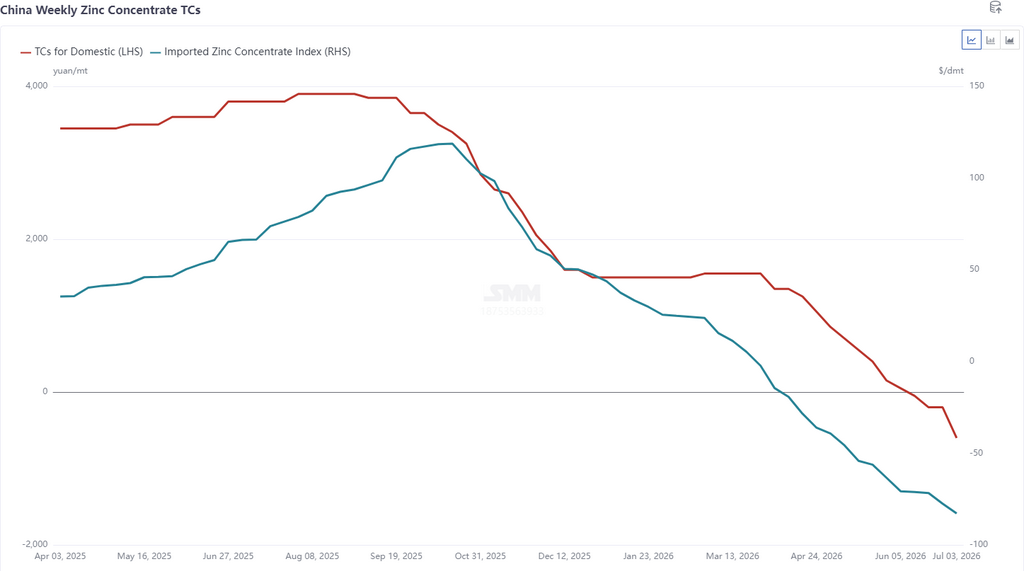
In H1 2026, the refined zinc industry struggled under multiple pressures. Ore supply remained tight, with both domestic and imported zinc concentrate TCs falling to record lows since data records began in 2013, directly squeezing smelter profits, and some enterprises have already fallen into losses. How will the refined zinc market develop in H2?


Reviewing H1, domestic zinc concentrate TCs fell to -600 yuan/mt in metal content, while imported TCs dropped to a historic low of -$82.83/dmt. Raw material shortages constrained smelters' production release. As of June, SMM's cumulative refined zinc production exceeded 3.37 million mt, up 130,000 mt YoY, below expectations.
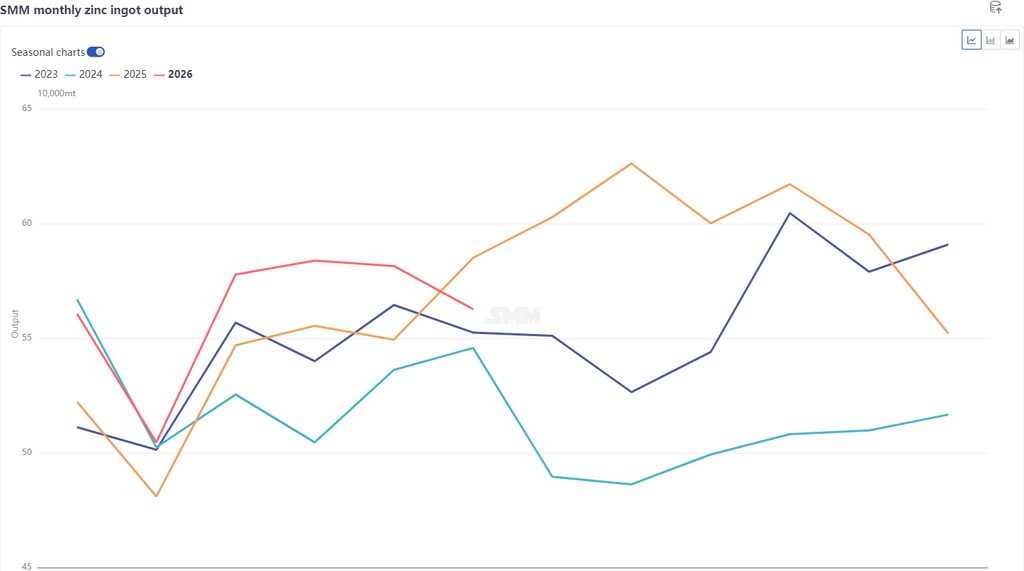
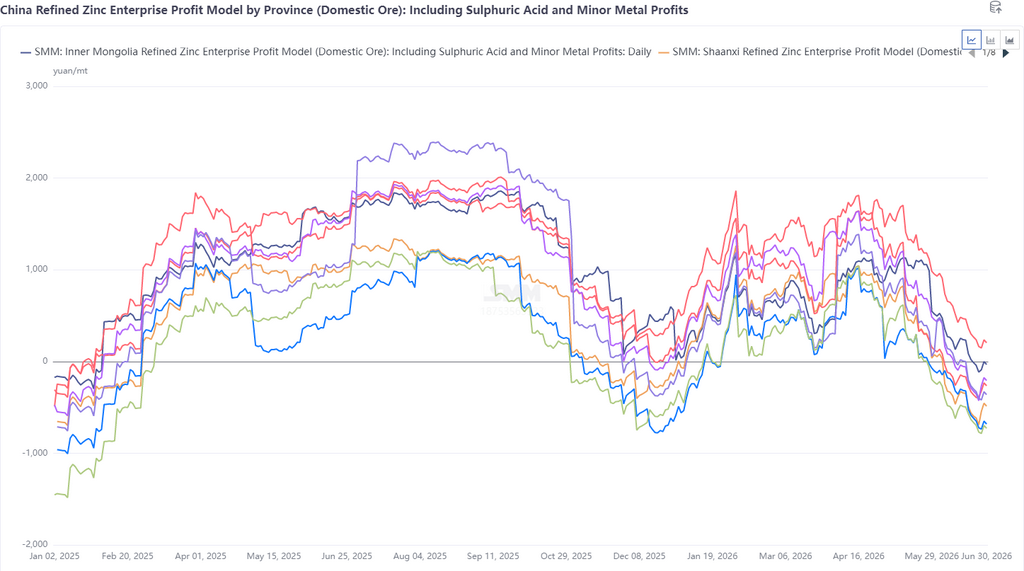
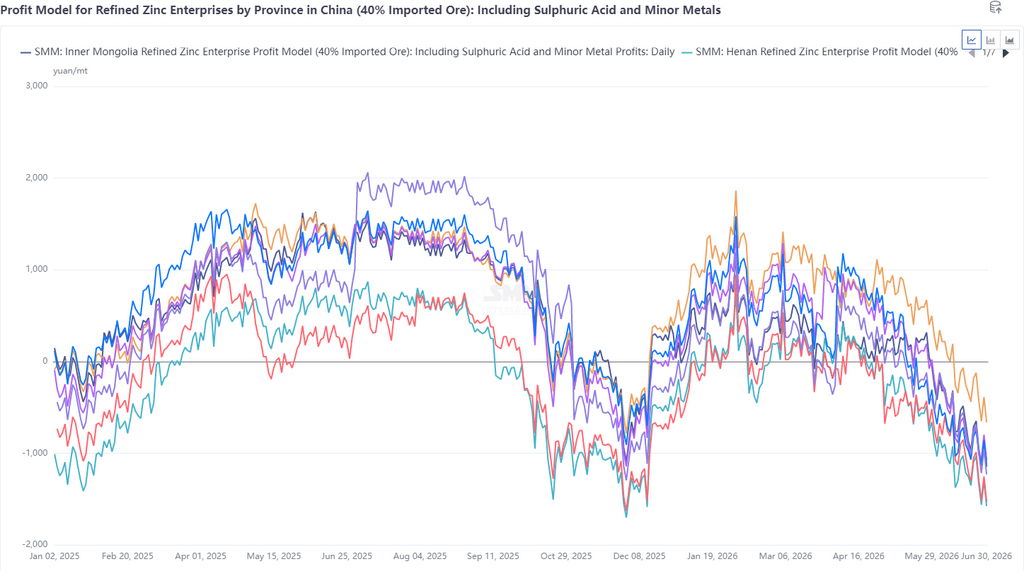
In H2, from a profit perspective, although high sulphuric acid and minor metal prices provide support, TCs have hit new lows. Currently, some smelters are incurring losses after comprehensive recovery. According to SMM calculations, smelters using domestic ore incur an overall loss of around 300 yuan/mt after deducting full costs. For smelters using a mix of 40% imported ore and 60% domestic ore, the overall loss after deducting full costs is around 1,000 yuan/mt. However, on a cash-cost basis, smelters' loss margins narrow. Those with strong comprehensive recovery still retain a small profit. Furthermore, based on SMM's cost-profit model estimates, the profit center of smelting relies heavily on by-products—the revenue contribution share of sulphuric acid and minor metals has climbed above 81%, rendering TC income almost nominal. If TCs stop falling and sulphuric acid prices stay high going forward, the likelihood of smelting losses widening further is low; from a profit standpoint, the probability of production declining after concentrated H2 maintenance is limited, with full-year growth still expected to be nearly 100,000 mt.
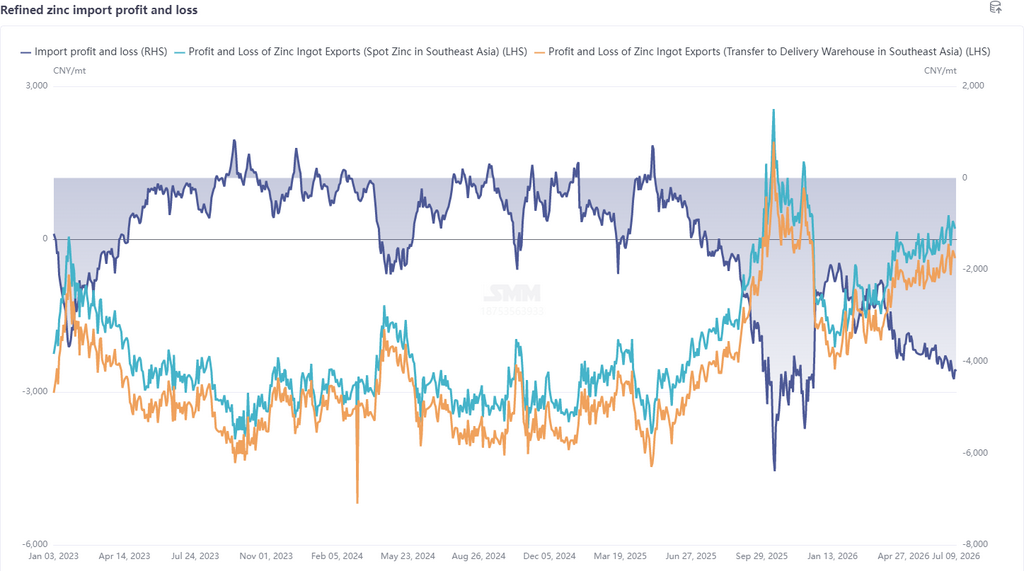


Additionally, from a price perspective, the price spread between Chinese and overseas markets is significant: inventories diverged, with China's social inventory breaking 260,000 mt to a three-year high, while LME inventory stood at only about 100,000 mt, a relatively low level. Coupled with overseas production disruptions, the overseas market outperforms the domestic market, keeping the SHFE/LME price ratio low. The spot export window for zinc ingots to Southeast Asia has already opened, and the window for shipping to delivery warehouses is expected to have further chances to open in Q3. In H2, key focuses include the periodic production constraints from concentrated smelter maintenance, the marginal support of sulphuric acid price resilience on profits, and whether the export window can remain open to adjust the supply-demand mismatch between domestic and overseas markets. Arbitrage suggestions: focus on domestic calendar spreads, and consider cross-market reverse arbitrage when the export window opens.

Data Source Statement: Except for publicly available information, all other data are processed by SMM based on publicly available information, market communication, and relying on SMM's internal database model. They are for reference only and do not constitute decision-making recommendations.

For any inquiries or for more information, please contact: lemonzhao@smm.cn
For more information on how to access our research reports, please contact:service.en@smm.cn
Related News
Fire Breaks Out at Sulphuric Acid Facility of YP’s Seokpo Smelter; Main Zinc Production Lines Unaffected
1 hour ago
Fire Breaks Out at Sulphuric Acid Facility of YP’s Seokpo Smelter; Main Zinc Production Lines Unaffected
Read More
Fire Breaks Out at Sulphuric Acid Facility of YP’s Seokpo Smelter; Main Zinc Production Lines Unaffected
On July 9, a fire broke out at an air pollution control facility in the sulphuric acid production area of the No. 1 plant at Young Poong’s Seokpo Smelter in South Korea. According to the company’s preliminary statement, the affected facility is located at the tail end of the roaster off-gas treatment system and is not part of the smelter’s core zinc production equipment. No casualties or leaks of hazardous substances have been reported, while production is currently unaffected. The cause of the fire and the extent of the equipment damage remain subject to a joint investigation by the relevant authorities. Attention should be paid to whether repairs to the facility could subsequently constrain roasting operations. Given that the smelter is already undergoing routine maintenance, the overall impact of the incident on refined zinc output is expected to be relatively limited.
1 hour ago
Canadian Government Funds Miner to Recover Germanium from Zinc Ore
1 hour ago
Canadian Government Funds Miner to Recover Germanium from Zinc Ore
Read More
Canadian Government Funds Miner to Recover Germanium from Zinc Ore
1 hour ago
SMM Flash
Common.Time.hoursAgo
SMM Flash
Read More
SMM Flash
SMM Flash
According to market sources, a fire broke out at South Korea's Young Poong Seokpo at around 12:36 local time on the 9th. The South Korean fire department raised the fire response level to "Level 2" at around 13:10. It is understood that the fire has been extinguished, and the specific impact is still under assessment.
Common.Time.hoursAgo
Register to Continue Reading
Gain access to the latest insights in metals and new energy
Already have an account?Sign in here
2026 Smelting Losses under Pressure, H2 Production and Price Trend Analysis [SMM Analysis] - Shanghai Metals Market (SMM)