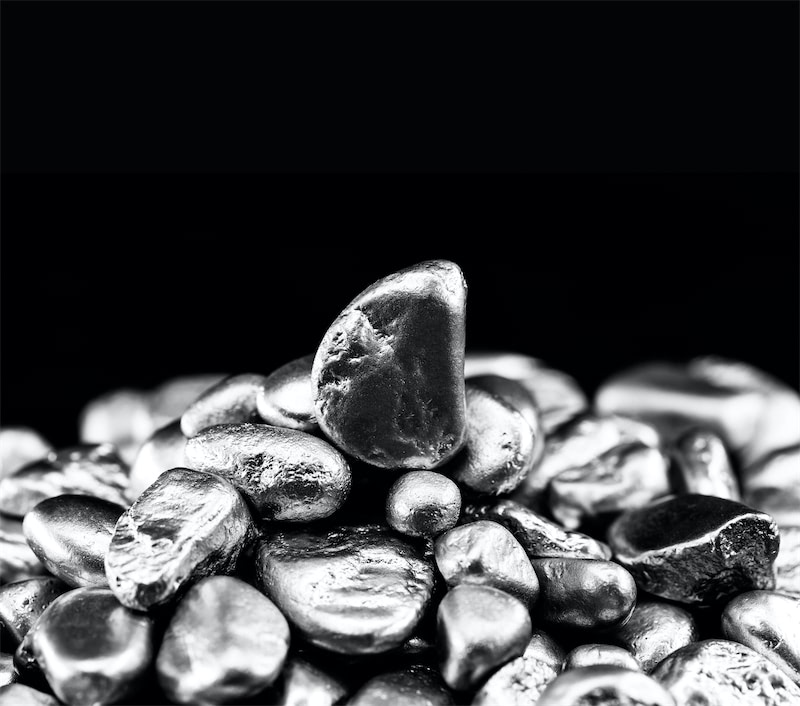
Nickel Ore
1. Price Dynamics and HMA Revisions The Indonesian nickel ore price remained stable this week. The Ministry of Energy and Mineral Resources (ESDM) has officially released the Nickel Mineral Benchmark Price (HMA) for the second half of May 2026.
-
Nickel HMA: $18,849.3/dmt (up $1047.15 or 5.88% from $17,802.14 in early May).
-
Cobalt HMA: $55,854/dmt.
-
Iron Ore HMA: $1.58/dmt.
-
Chrome Ore HMA: $6.37/dmt.
Current port-delivered prices for 1.6% grade pyrometallurgical ore (saprolite) stand at $77.8-80.8/wmt. In contrast, 1.2% grade hydrometallurgical ore (limonite) is priced at approximately $28-33/wm..
2. Supply-Demand Fundamentals and Weather Impacts
-
For pyrometallurgical ore, unseasonal, abnormally heavy rainfall in the Central and South Sulawesi regions (Morowali and surrounding mining areas) has severely disrupted land transportation and barge transshipment. A series of micro-earthquakes (reaching up to magnitude M$1.9$) that occurred near Morowali between May 17 and 18 further exacerbated this impact. The combination of highly saturated soil moisture and minor crustal tremors has significantly increased the risk of landslides and slope instability, forcing mines to slow down their extraction and heavy-truck transportation pace for safety reasons. Therefore, even though the approval rate of regulatory quotas (RKAB) has reached approximately 90%, the spot supply of high-grade ore remains tight.
To cope with exorbitant costs and tight supply, smelters are actively adopting cost-reduction strategies. These include blending low-grade ores into raw materials to lower the overall grade, promoting a unified premium pricing model of "HPM + USD $7–$10/wmt," and implementing standardized benchmarks for the chemical specifications of pyrometallurgical ore (Cobalt 0.05%, Iron 20%, Chrome 1%) to eliminate additional premiums for individual ore components.
Meanwhile, the hydrometallurgical nickel ore market continues to suffer a severe disconnect from official pricing. The price of low-grade hydrometallurgical ore is under severe pressure and has completely failed to follow the upward trend of the new HPM. This price depression is primarily driven by the dual contraction of smelter operating rates and immediate raw material demand, with the core trigger being a potential production cut in Mixed Hydroxide Precipitate (MHP) caused by a sulfuric acid supply shortage in May. Against a backdrop of relatively stable inventory levels, MHP refineries are leveraging this low-capacity operating environment to aggressively suppress procurement bids, causing hydrometallurgical ore prices to continue hovering at low levels.
3. SMM Internal Estimates The new pricing formula has led to increased price divergence and amplified volatility, particularly influenced by higher associated cobalt content in certain ores. SMM calculations show that the new HPM for 1.2% grade limonite is approximately $49.95, significantly higher than current market assessments. The new HPM for 1.6% grade saprolite is $70.83; the inclusion of higher cobalt content in the new formula has markedly amplified price fluctuations. While actual market transaction prices currently remain above this benchmark, the gap is steadily narrowing.
4. Regulatory Quotas (RKAB) and Market Outlook According to the ESDM, RKAB approvals for 2026 have reached approximately 90%. SMM statistics indicate that the total approved quota for Indonesian nickel ore stands at roughly 240 million wmt.
The macroeconomic and policy focus of the market has recently shifted, primarily concentrating on the following two major export and contract regulatory policies:
-
DSI's Full Takeover of the Export Mechanism: The Indonesian government has confirmed that starting January 1, 2027, DSI will fully take over the export business of coal, palm oil, and ferroalloys. This policy will facilitate a smooth transition of the export mechanism in two phases. Since ferroalloys (including ferronickel, NPI, etc.) fall within the scope of this takeover, the market is closely evaluating the impact of this transition period on the export logistics and compliance costs of Chinese-funded smelters.
-
Crackdown on Under-Invoiced Long-Term Contracts: The Indonesian government emphasized that it will honor existing, valid long-term export contracts to maintain commercial credit. However, at the same time, the government will strictly investigate and punish long-term contracts suspected of "under-invoicing" (low-price customs declarations). It is reported that relevant Indonesian departments will soon hold consultations with major industry associations to ensure a smooth policy transition while plugging loopholes that lead to tax revenue losses from underpricing.
Nickel Pig Iron
"Supply-Demand Price Gap Widens; Short-Term Prices to Fluctuate within a Range"
The average price of SMM 10-12% NPI average price fell by RMB 5.7 per nickel unit week-on-week to RMB 1140.3 per nickel unit (ex-works, tax included), while the Indonesia NPI FOB index dipped by USD 1.37 USD per nickel unit to an average of USD 146.52 per nickel unit.
Downstream purchasing sentiment dropped even more visibly, intensifying the divide in market mindsets between buyers and sellers.
On the supply side, existing NPI production cutbacks, coupled with recent disruptions from Indonesian export policy updates, have gradually tightened spot availability. Consequently, upstream producers are holding back cargo to defend their asking prices, generally keeping their offers firm. Sellers only slightly softened their quotes under the weight of weak futures markets, and their willingness to offload cargo at lower price levels remains low. This expectation of tighter market supply provides a solid floor for prices.
On the demand side, pressure remains acute. The stainless steel market lacks upward momentum, forcing steel mills to adopt a highly cautious procurement stance centered strictly around hand-to-mouth restocking. Furthermore, as the price-to-performance advantage of stainless steel scrap expands, downstream buyers are pushing hard for discounts. Target buying prices remain heavily clustered between RMB 1,120 and 1,130/mtu, leaving a massive spread against upstream asking prices that makes reconciling the two sides very difficult.
Market Outlook: While expectations of tightening supply will support spot prices, the weak futures market and competitive pricing from alternative raw materials will continue to cap upside gains. Accordingly, high-nickel pig iron prices are expected to exhibit a high-level, range-bound volatile trend next week.
![[SMM Nickel Market Flash] Korea's Spear Advances Indonesia HPAL Nickel Smelter with Tsingshan and NIC as Partners](https://imgqn.smm.cn/usercenter/Btmsv20251217171733.jpg)
![[SMM Nickel Market Flash] Viridian Metals Launches 50-Hole Drill Program at Kraken Cu-Ni Project in Labrador](https://imgqn.smm.cn/usercenter/fzwTi20251217171733.jpg)
![[SMM Market Flash] Australia's Proposed CGT Overhaul Sparks Industry Warnings Over Junior Mining Funding](https://imgqn.smm.cn/usercenter/PuSOO20251217171732.jpeg)